
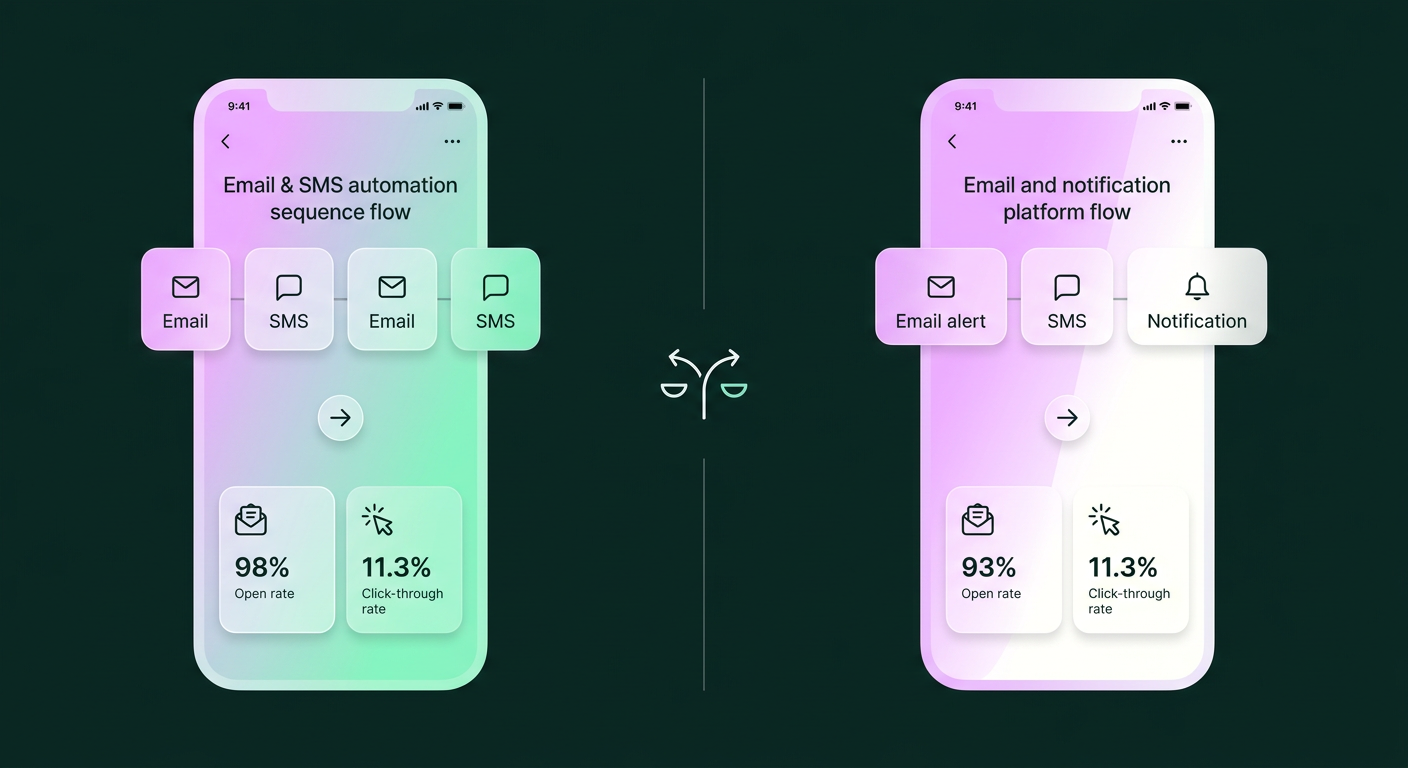
Your all-in-one marketing platform is likely failing at its most crucial job: recovering high-intent abandoned carts before they’re gone for good. Even after setting up the email flows, segmenting your lists, and following all the best practices, a staggering number of shoppers add items to their cart only to disappear. This isn't a minor leak in your sales funnel; it's a significant drain on preventable revenue, and it’s happening at the very last step. The problem isn’t that these shoppers lose interest. It’s that the channels you’re using to reach them, primarily email and SMS, have become too noisy and impersonal to make an impact.
Why Your Cart Recovery Emails Go Unread
Your cart recovery emails are going unread because customer inboxes are overwhelmed, and standard automation feels impersonal. This failure to connect with high-intent shoppers leads to significant, preventable revenue loss, as your messages get lost in the noise or are ignored entirely.
Every e-commerce manager knows the frustration of cart abandonment. Shoppers browse, find something they love, and add it to their cart in a clear signal of purchase intent. Then, nothing. While there are many reasons a customer might hesitate, the core issue with recovery is often the delivery method itself. All-in-one marketing suites rely heavily on email and SMS, but these channels are now saturated with promotional content. Your carefully crafted message lands in an inbox already overflowing with offers and notifications, making it incredibly easy to overlook or dismiss.
The reasons people abandon carts in the first place are often tactical and solvable. According to 2025 Statista data (opens in a new tab), 40% of shoppers leave due to unexpectedly high shipping costs, while 21% are put off by slow delivery times. These are objections you can overcome with a timely offer or a simple clarification. But you can't solve a problem if your message never gets read. When your recovery attempt is buried on page three of a promotion tab, you've lost the opportunity to have that critical conversation. A shopper who was moments away from buying simply moves on, and your potential revenue vanishes along with them.
How to Choose a Modern Recovery Tool: 4 Criteria
So if email is failing, what makes an alternative successful? A modern recovery tool has to excel in four key areas: reaching customers on channels they actually use, offering personalization that scales, proving a direct impact on revenue, and being built specifically for recovery, not general marketing. These criteria shift the focus from a simple feature checklist to the outcomes that truly matter for your bottom line.
Channel Effectiveness: Where do customers actually see you?
The single most important factor for any messaging strategy is whether the message is actually seen. Traditional marketing platforms were built around email because, for a long time, it was the primary digital channel. Today, customer attention has fragmented. People spend their digital lives inside messaging apps like Instagram and WhatsApp. A modern recovery tool must meet customers where they are, using channels where they treat messages with more urgency and attention than a promotional email.
Personalization at Scale: Can you sound human without manual work?
A generic message like, "Hey, you forgot something!" is both lazy and ineffective. True personalization goes beyond inserting a first name into a template; it involves referencing the specific items in the cart, understanding the customer's potential hesitation, and communicating in a tone that feels like a helpful 1:1 conversation, not an automated blast. The challenge is doing this for hundreds or thousands of abandoned carts without an army of support agents. An effective tool must use automation to create this sense of personal outreach at scale.
Direct Conversion Impact: Does it drive sales or just opens?
High open rates are a great start, but they don't pay the bills. The ultimate measure of a cart recovery tool's success is its direct impact on completed purchases and recovered revenue. Any platform should be evaluated on its ability not just to start a conversation but to guide that conversation toward a sale. This means providing clear calls-to-action, simplifying the path back to checkout, and tracking which messages lead directly to conversions, proving a clear return on investment.
Revenue Focus: Is it built for general marketing or for recovery?
Many all-in-one platforms treat cart abandonment as just another automated workflow among dozens. A tool built specifically for revenue recovery, however, approaches the problem with a different level of intensity and specialization. It prioritizes the features, analytics, and strategies that are most effective for this single, high-stakes moment. This focus ensures that the entire platform is optimized for one goal: turning abandoned carts into completed sales.
All-in-Ones vs. DM Recovery: A Head-to-Head Comparison
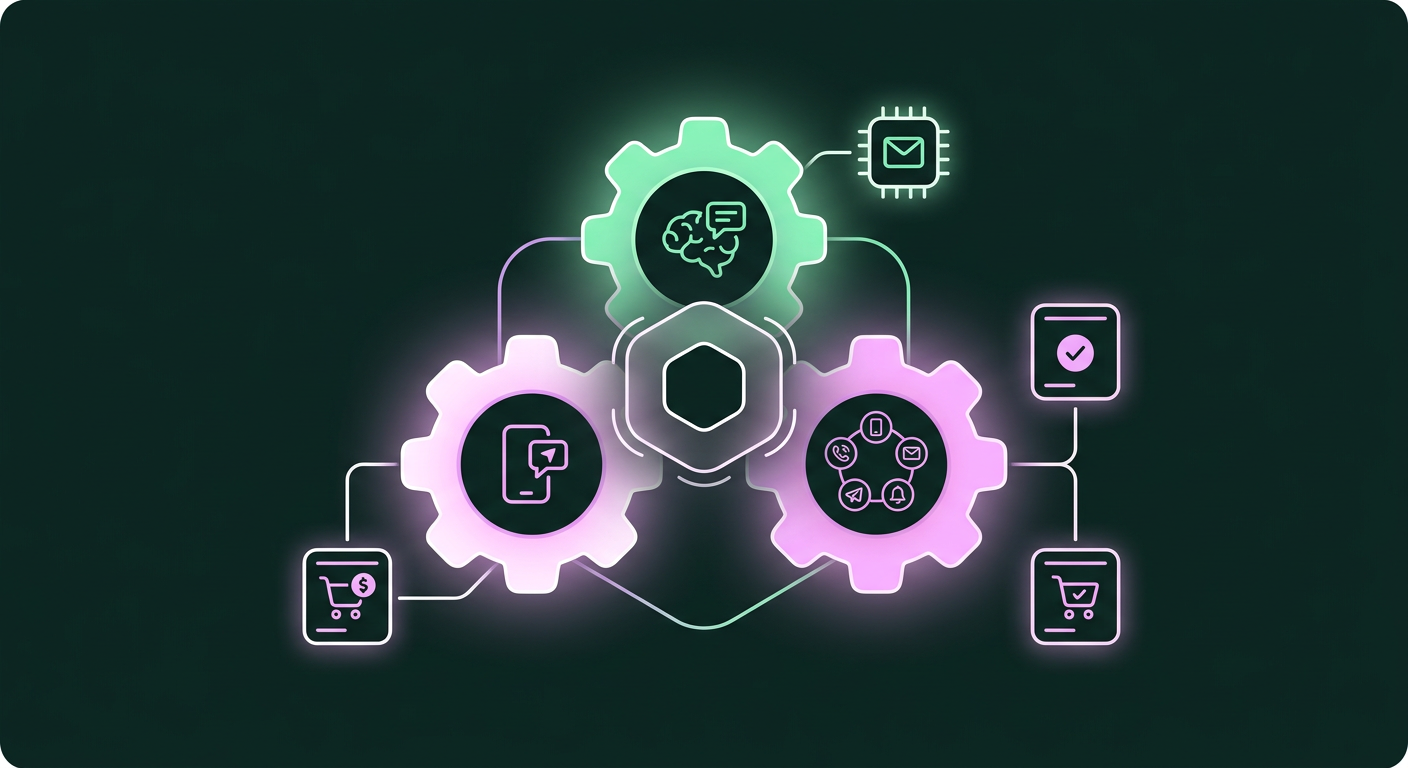
With these criteria in mind, the differences between marketing suites and specialized tools become stark. While all-in-one platforms offer broad functionality, specialized DM recovery tools are far more effective for abandoned cart recovery because they win on channel penetration, personalization, and direct conversion impact. This makes them a better choice for businesses focused on maximizing revenue.
To be fair, automated emails have historically been a powerful tool for e-commerce brands and can be remarkably profitable when they connect.
"Automated emails account for just 2% of total sends, yet generate 30% of all email-attributed revenue." , Omnisend Blog, "Shopping Cart Abandonment Statistics 2024"
Furthermore, a single automated email can earn $2.87 per send (opens in a new tab), which is significantly more than a standard promotional campaign. The data shows that when these messages find their audience, they work. The problem, as we've seen, is getting them to connect in an increasingly crowded digital world. This is where a specialized approach focused on a different channel completely changes the game. While email open rates for marketing messages often hover in the 20-30% range (on a good day), direct messages on platforms like WhatsApp and Instagram boast open rates of 80% or higher. You're simply reaching four times as many high-intent shoppers from the start.
This fundamental difference in channel effectiveness leads to different outcomes across all our key criteria. Here is how the two approaches compare directly:
| Criterion | All-in-One Suites (e.g., Omnisend) | Specialized DM Recovery (e.g., Dynamo) |
|---|---|---|
| Channel Effectiveness | Saturated channels (email/SMS) | High-penetration DMs (IG/WA) |
| Personalization at Scale | Template-based, feels automated | AI-generated, feels 1:1 personal |
| Direct Conversion Impact | Tracks opens/clicks, indirect | Drives direct sales, high conversion |
| Revenue Focus | General-purpose marketing | Purpose-built for recovery |
The table makes the tradeoff clear. An all-in-one platform is a jack-of-all-trades. It can send your weekly newsletter, manage your welcome series, and run a basic abandoned cart flow, providing a wide range of functions that are "good enough" for general marketing. But at the critical moment of conversion, its reliance on email makes it a master of none. The messages just don't have the standout power needed to bring a distracted shopper back from the brink.
A specialized DM recovery tool, on the other hand, is built for this exact moment. It forgoes broad, general-purpose features to double down on what works for recovery. By focusing on direct messaging, it uses channels where it can break through the noise and start a real conversation. This is one of the new rules of abandoned cart recovery software: you have to be where your customer is actually listening.
Recommendation: Who Needs an Omnisend Alternative?
If you need a single platform for all general email and SMS marketing and are content with average recovery rates, an all-in-one suite might suffice. But if your primary goal is to maximize recovered revenue from abandoned carts by reaching customers where they actually engage, a specialized, DM-based Omnisend alternative is the clear winner.
The right choice depends on where you see the biggest opportunity for growth in your business.
Stick with an all-in-one suite if… your company is just starting out and needs a single, budget-friendly tool to handle all marketing communications. If your primary need is sending newsletters and running simple promotions, and cart recovery is just one of many tasks on your list, the simplicity of a single platform can be appealing. You are, however, accepting that your cart recovery performance will be capped by the inherent limitations of email.
Choose a specialized Omnisend alternative if… you are an established e-commerce brand that sees a significant amount of revenue being left in abandoned carts. You’ve likely already tried optimizing your email flows and found that the returns are diminishing. Your focus is squarely on conversion, and you're looking for a solution that can deliver a material lift in recovered sales. For you, the exceptional engagement and 8% drip conversion rates possible through DM automation represent a clear path to boosting your bottom line. Investing in a tool that excels at this one critical job is a strategic move to stop leaving money behind and build direct marketing channels that lower acquisition costs in the long run.
Stop Losing Carts. Start a Conversation.
The most effective way to stop losing carts is to shift from one-way, easily ignored notifications to personalized, two-way conversations on the platforms your customers use every day. This approach doesn't just recover a sale; it builds a stronger customer relationship.
The era of simply blasting customers with automated emails and hoping for the best is over. Success in modern e-commerce requires a more thoughtful, personal touch, especially when a customer is on the verge of a purchase. Instead of sending a message that feels like it came from a machine, you can send one that feels like it came from a person. By using a dedicated platform for personalized 1:1 DMs, you can turn a moment of hesitation into a positive brand interaction.
This is what Dynamo was built for. It works within Instagram and WhatsApp to reach shoppers where they are most active, delivering context-aware messages that feel human. The result is not just higher engagement but a meaningful increase in revenue. Data shows that DM-based recovery generates conversion rates that are 3-5x higher than traditional push notifications. By choosing to have a conversation instead of just sending a notification, you rescue the sale and show the customer you're paying attention. You can see exactly how it works (opens in a new tab) to turn abandoned carts into revenue. The choice is between continuing to use a tool that gets ignored or adopting an Omnisend alternative that starts conversations that convert.
Frequently asked questions
Why aren't my abandoned cart emails working?
Your abandoned cart emails are likely underperforming for two main reasons: channel saturation and a lack of relevance. Customer inboxes are flooded with promotions, making it hard for your message to stand out. Even if it is opened, a generic "you forgot this" message often fails to address the real reason for abandonment, like high shipping costs. For instance, 2025 data shows 40% of users abandon carts due to high extra fees, an issue a generic email rarely solves.
Are abandoned cart emails still effective?
Yes, but their effectiveness is limited and likely diminishing. When an automated cart recovery email does get opened, it can be very profitable. Automated emails earn around $2.87 per send, far more than standard campaigns. The problem is that with declining open rates across the board, getting the customer's attention in the first place is a huge challenge. They are worth having as a baseline, but relying on them as your sole recovery strategy means leaving significant revenue on the table.
What is the best way to recover abandoned carts today?
The most effective method for cart recovery today is through personalized direct messages (DMs) on platforms like Instagram and WhatsApp. These channels bypass the clutter of email and have dramatically higher engagement. With DM open rates exceeding 80%, and WhatsApp reaching as high as 98%, your message is far more likely to be seen and acted upon. This direct line allows for a conversational approach that can resolve customer issues and guide them back to checkout more effectively.
Are Instagram bots a good way to increase sales?
It's important to distinguish between a simple, spammy bot and an intelligent automation platform. Basic bots that send unsolicited, generic messages can damage your brand's reputation. However, sophisticated Instagram DM automation tools that enable personalized, 1:1 conversations are incredibly effective for increasing sales. Leading platforms have shown that when used thoughtfully for customer-initiated conversations or high-intent moments like cart recovery, automated DMs can be a powerful revenue driver. For example, some platforms in this space moved to flat-rate pricing by 2026 to make these advanced capabilities more accessible.
What kind of conversion rate can I really expect from DMs?
While results vary by industry and offer, the performance of DM-based recovery is consistently higher than traditional channels. You can generally expect DM open rates of over 80%. More importantly, the conversion lift is significant, with brands often seeing recovery rates 3-5 times higher than with email or push notifications. Specific automated DM sequences, or drips, for cart recovery have been shown to achieve an 8% conversion rate, turning a much larger percentage of abandoned carts into completed purchases.