
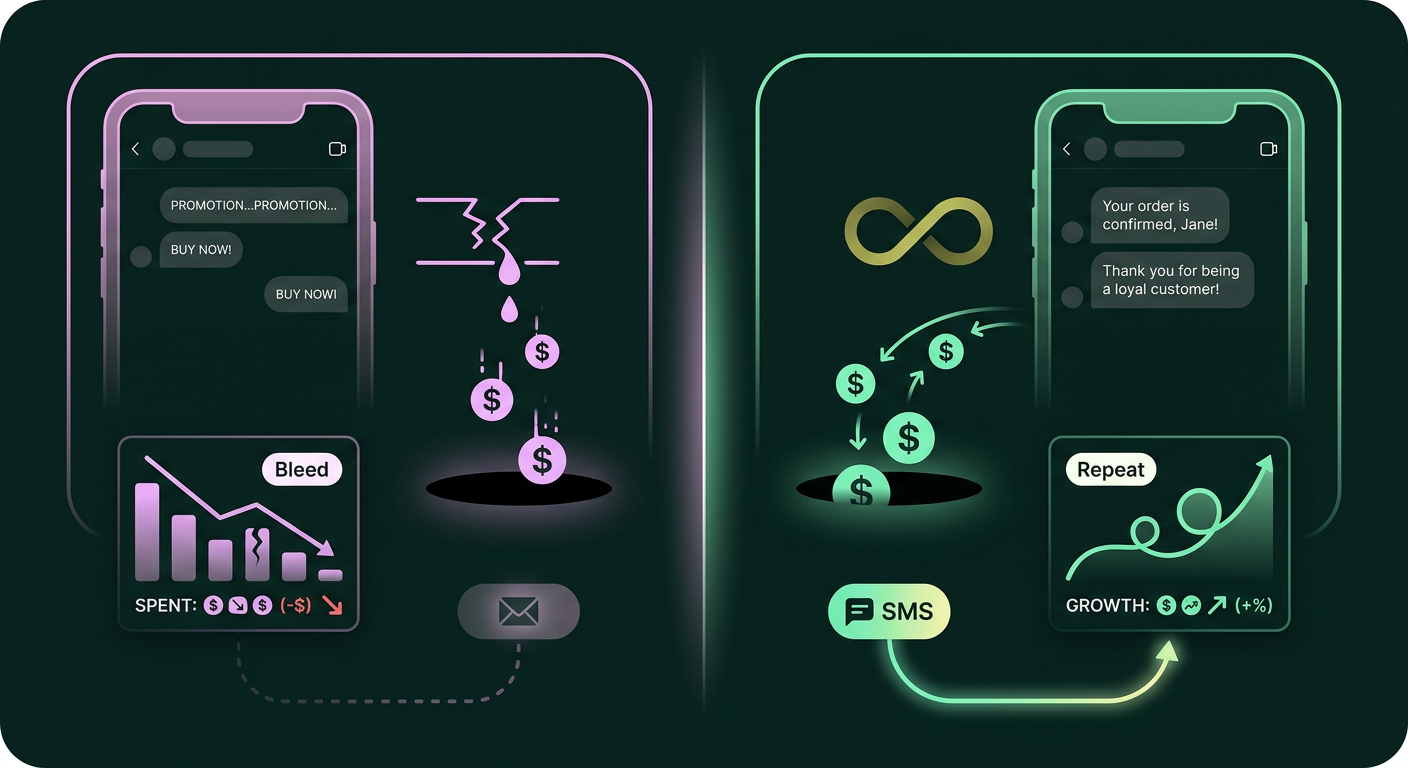
If your direct-to-consumer brand is like most, you did everything right. You found product-market fit, built a passionate following, and mastered paid acquisition, likely with Klaviyo at the heart of your email strategy. But now, growth has flatlined. The only lever left to pull is spending more on ads, and the math just isn't working anymore. You’re trapped on an expensive acquisition treadmill, constantly pouring money into finding new customers because the ones you already paid for aren't coming back.
This isn't a sign that your product is failing or that your market has dried up. It’s a classic symptom of a growth engine hitting its structural limits. The very strategy that got you here, a sharp focus on top-of-funnel acquisition, is now what's holding you back. The choice isn't about finding a slightly better ad platform or a cheaper email tool. It's about fundamentally rethinking growth by finding a true Klaviyo alternative built for modern retention marketing.
Why Your Klaviyo-centric Strategy is Hitting a Wall
A growth model built almost exclusively on paid acquisition eventually becomes unprofitable, leading to the exact revenue plateau many DTC brands experience. While Klaviyo is an excellent tool for email, relying on it and paid ads alone creates a "leaky bucket" where you're constantly paying to re-acquire customers who don't stick around.
For many DTC brands, this slowdown happens right around the $8 to $12 million annual revenue mark (opens in a new tab). The plateau occurs because acquiring a new customer costs vastly more than keeping an existing one. Depending on the study, it can be anywhere from five to 25 times more expensive to attract a new buyer than to sell to a current one (opens in a new tab). When your entire budget is geared toward that more expensive activity, your customer acquisition cost (CAC) inevitably rises until your margins evaporate. You find yourself paying Meta or Google to bring back the same people who bought from you once and then disappeared.
The brands that successfully break through this barrier all make the same critical pivot. They don't just find new acquisition channels; they strengthen their retention and lifecycle marketing (opens in a new tab) to dramatically increase customer lifetime value (LTV). This isn’t a problem you can solve with a better email template or new ad creative. It requires a strategic shift and a new class of tools designed not just to capture customers, but to keep them. This is where the search for a true Klaviyo alternative begins, not one that simply replaces email, but one that adds the missing retention layer to your stack.
What Matters in a True Klaviyo Alternative?
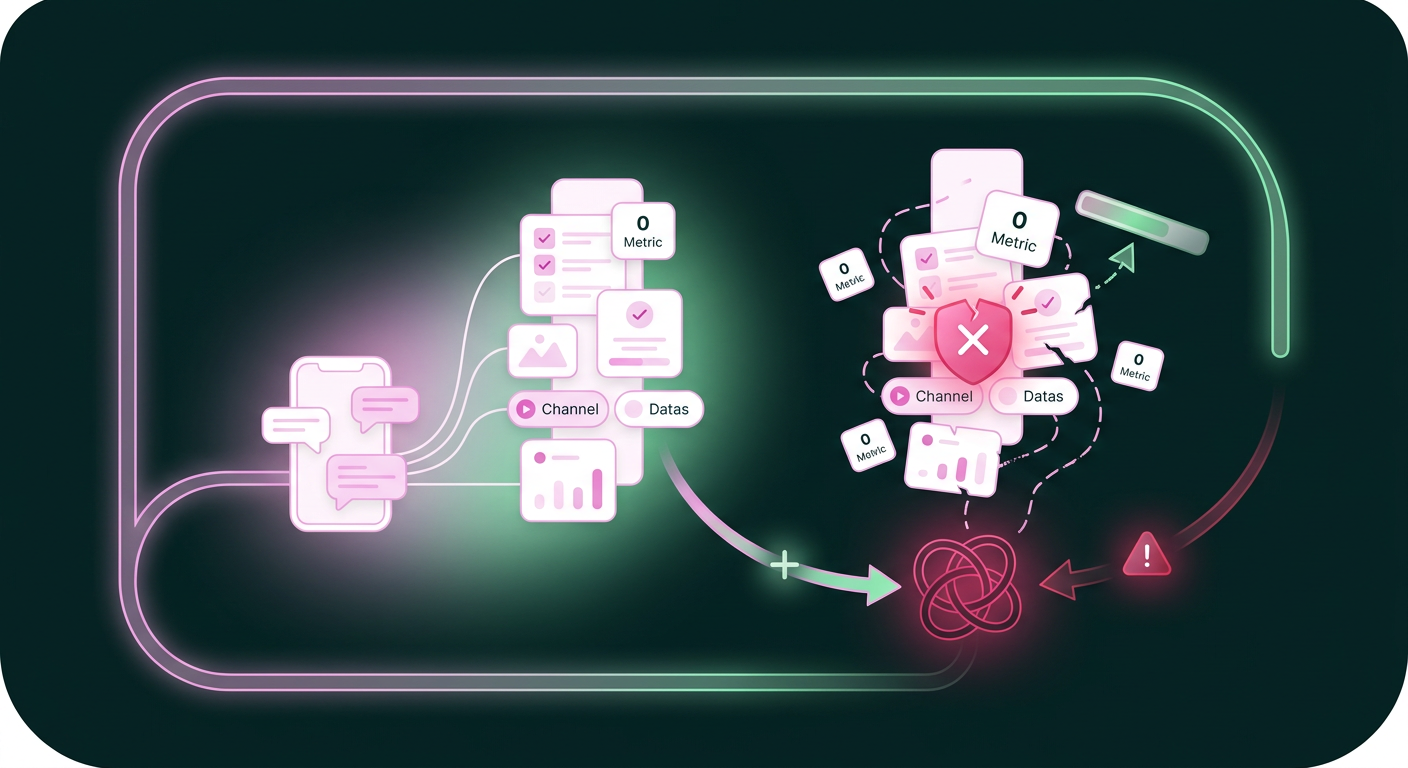
To make that strategic shift a reality, you need a platform built for retention, not just acquisition. A true Klaviyo alternative for a scaling DTC brand must be able to engage customers on modern channels like DMs and use sophisticated automation to increase lifetime value, not just trigger one-off campaigns. The goal is no longer just getting the first conversion; it's about systematically engineering the second, third, and fourth. That means you need to evaluate potential tools against a new set of criteria.
Focus on Retention, Not Just Acquisition
The first and most important criterion is the platform's core purpose. Many marketing tools are designed for top-of-funnel activities: capturing leads, driving initial sales, and growing a list. A genuine retention platform, however, is built around the post-purchase journey. Its features are geared toward increasing LTV and creating loyal customers who buy again and again. This aligns with the Pareto Principle, which suggests that 80% of your revenue will come from 20% of your customers (opens in a new tab). A retention-focused tool is designed to nurture that vital 20% and grow it over time.
Engagement on Modern Channels (DMs)
Email is a cornerstone of digital marketing, but its effectiveness for personal, urgent communication is waning. Your customers live in their DMs on Instagram and WhatsApp. This is where they talk to friends, follow creators, and increasingly, interact with brands they love. A modern retention platform must meet them there. This isn't about sending mass promotional messages, but about creating personalized 1:1 conversations that feel native to the channel. The platform should be an expert in DM-based communication, delivering open rates and engagement that far surpass traditional channels like email or push notifications.
Seamless Integration with Your Existing Stack
A powerful retention tool shouldn't force you to rip out the systems you already rely on. It shouldn't be a "Klaviyo killer" but a "Klaviyo enhancer." The ideal platform plugs directly into your existing CRM or ESP, whether that's Klaviyo, Braze, or another system. It should pull the rich customer segments you've already built, like "first-time buyers," "high-value customers," or "lapsed purchasers", and use that data to power automated DM campaigns. This integration is what transforms a simple messaging tool into a sophisticated lifecycle marketing engine.
Automation That Drives Lifetime Value
Finally, the automation capabilities must go far beyond simple triggers. Many tools can send an automatic message when someone comments a keyword on a post. While useful for lead generation, that's a top-of-funnel tactic. True retention automation is about creating complex, multi-step, full-funnel journeys. Think of a 30-day post-purchase flow that educates a new customer, an automated win-back campaign that activates six months after a customer's last purchase with a personalized offer, or a loyalty sequence that rewards your best customers. This level of personalized 1:1 automation is what turns one-time buyers into profitable, long-term fans.
Comparing Klaviyo Alternatives: Dynamo vs. Traditional Platforms
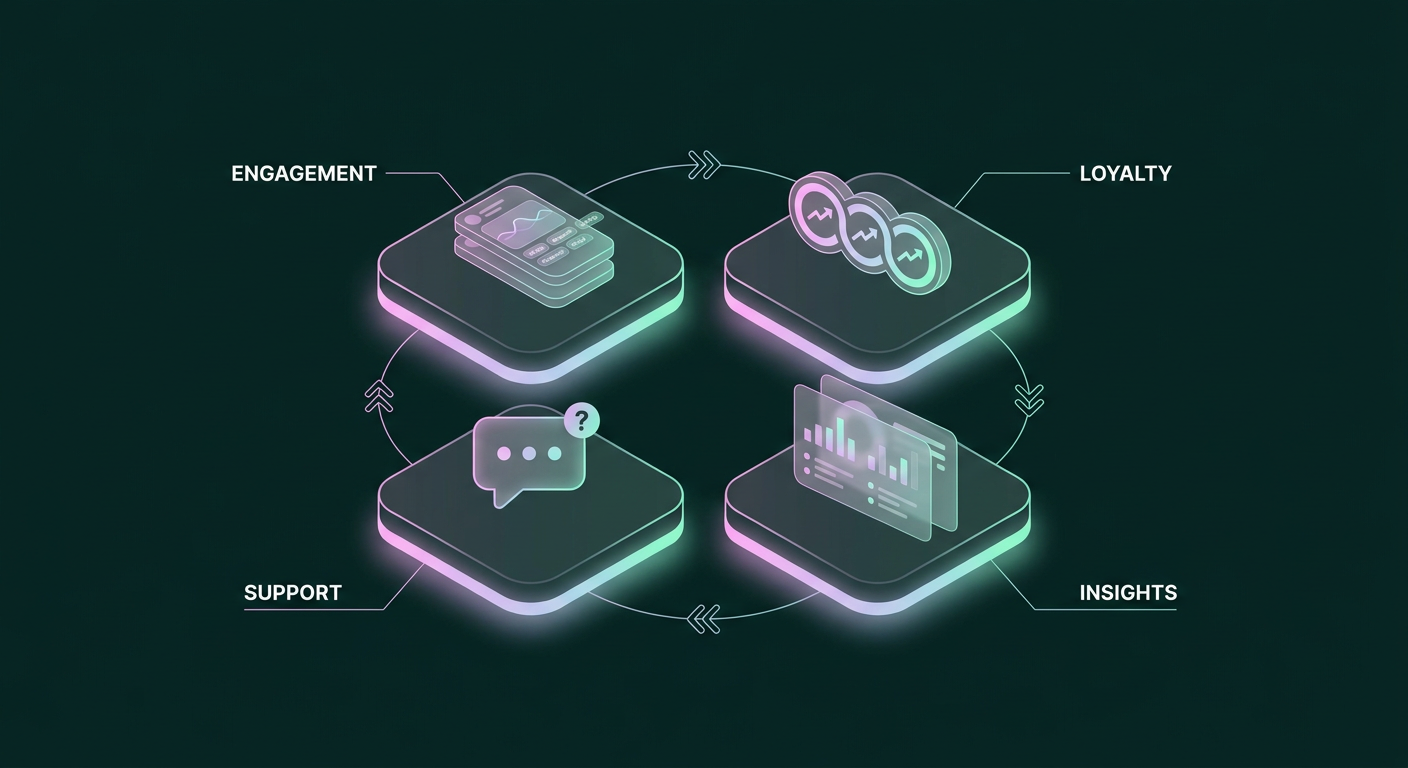
When you apply these criteria, the market of "Klaviyo alternatives" splits into two distinct categories. Dynamo is built from the ground up for full-funnel lifecycle marketing via personalized 1:1 DMs, making it ideal for retention. In contrast, traditional platforms are primarily designed for top-of-funnel, keyword-based automations and lack the deep integration needed for sophisticated LTV-driving campaigns.
On one side is Dynamo, a platform purpose-built for the specific job of driving retention and LTV through conversational, CRM-integrated DM automation. On the other side are what we can call "traditional automation platforms," tools that often began as simple bot builders and have since expanded their features.
Dynamo’s entire philosophy is centered on enhancing your existing customer data. It connects to your CRM, ingests your carefully crafted customer segments, and executes full-funnel lifecycle campaigns via personalized DMs on Instagram and WhatsApp. The goal isn't just to get a click; it's to guide a customer from their first purchase to their fifth, automatically. This is the heavy-duty machinery required to solve the retention problem for a scaling DTC brand. The focus is on depth: creating dynamic, long-term customer journeys that adapt based on user behavior and CRM data. You can explore some of these specific retention-focused use cases (opens in a new tab) to see how this approach works in practice.
Traditional platforms, many of which started out in 2015 focused on Facebook Messenger bots, operate on a different model. They are often celebrated for their ease of use, with reviews praising the ability to build simple flows in under five minutes. Their strength lies in broad, top-of-funnel engagement, excelling at tasks like comment-to-DM automation for lead magnets or running simple quizzes. While they have expanded to support channels like Instagram, WhatsApp, TikTok, SMS, and email as of 2026, their core architecture is often oriented around these simpler, trigger-based flows rather than deep CRM integration for lifecycle marketing. Their accessible pricing, sometimes starting around $14-$29 per month, makes them a great entry point for smaller businesses or solopreneurs whose main goal is basic social media engagement.
The distinction becomes clear when you map them against our criteria.
| Criterion | Dynamo | Traditional Platforms |
|---|---|---|
| Primary Focus | Retention & LTV | Top-of-funnel acquisition |
| Core Mechanism | CRM-integrated lifecycle automation | Keyword triggers & broadcast flows |
| Main Channel Use | Personalized 1:1 DM journeys | Broad multi-channel engagement |
| Automation Depth | Full-funnel, dynamic segmentation | Simple, single-path automations |
| Ideal User | Scaling DTC with retention goals | Solopreneurs & small businesses |
This table doesn't suggest one is "good" and the other "bad." It highlights that they are built for different jobs. A traditional platform is like a versatile multi-tool, handy for a variety of small, straightforward tasks. Dynamo is specialized equipment designed to solve a specific, complex problem: turning one-time buyers into repeat customers at scale.
Which Option Is Right for You?
Choosing the right platform comes down to correctly diagnosing your primary business challenge. If you're a scaling DTC brand hitting a revenue plateau and need a robust retention engine to increase LTV, Dynamo is the purpose-built solution. If you're a smaller business focused on simple lead capture from social media, a traditional automation platform will be more suitable. Your decision should be guided by your scale, your goals, and the specific problem you're trying to solve.
You should choose Dynamo if...
- You have an established brand with a growing list of customers, but your repeat purchase rate is low.
- You're stuck on the ad-spend treadmill, and your profitability is suffering because of a high CAC.
- You already use a CRM like Klaviyo or Braze and want to activate your customer segments on more engaging channels like Instagram DMs.
- Your primary goal is to increase customer LTV and build a sustainable, profitable growth model that isn't entirely dependent on paid ads, shifting to a new direct to consumer marketing strategy.
You should choose a traditional automation platform if...
- You're a solopreneur, creator, or very small business just starting out.
- Your main marketing challenge is generating leads from your social media posts and automating initial responses.
- Your automation needs are simple, like sending a discount code to everyone who comments on a Reel.
- Your budget is limited, and you need an accessible, easy-to-use tool for basic engagement without the need for deep CRM integration.
Ultimately, the choice depends on the job at hand. Are you looking for a simple tool to manage comments, or are you looking for a strategic partner to help you build a multi-million dollar retention engine?
Your Next Move: Stop Renting Customers, Start Owning Them
Continuing with an acquisition-only model means accepting diminishing returns and a leaky customer bucket. The clear next step is to pivot your strategy and tooling toward retention, using personalized 1:1 DMs to build owned relationships that drive predictable, profitable growth.
You've seen how over-reliance on paid acquisition leads to a growth ceiling. You understand the criteria that define a true retention-focused platform, and you've seen how different tools stack up. The path forward is clear. Sticking with the status quo means continuing to "rent" your customers from ad platforms, paying more and more for access to the same people. The cost of inaction is staying on that treadmill, perpetually struggling with thin margins and unpredictable revenue.
The alternative is to start owning your customer relationships. This means communicating with them directly, personally, and in the channels where they spend their time. It's about building a system that automatically nurtures first-time buyers into loyal advocates. This is the key to breaking through the plateau and building a truly resilient DTC business. By implementing a system to increase your second purchase rate with DM automation, you build a powerful economic engine that works for you long after the initial ad click.
"It can cost five to 25 times more to acquire a new customer than to retain an existing customer. And a commonly cited benchmark is that you have a 60%, 70% chance of selling to an existing customer, compared to 5%, 20% for a new customer." , Shopify, 2024
This isn't just a theoretical advantage; it's a fundamental shift in how you grow. Instead of competing for attention in crowded email inboxes and social feeds, you can create helpful, one-on-one conversations that drive real business results. This is your chance to get off the acquisition treadmill and build a future based on owned, profitable customer relationships.
Frequently asked questions
Why am I stuck at a revenue plateau even with high ad spend?
Many direct-to-consumer brands hit a revenue wall, often between $8 million and $12 million annually, because their growth engine is built entirely on paid acquisition. This model has structural limits. As you scale, the cost to acquire each new customer rises, eventually making growth unprofitable. Brands that break through this plateau do so by diversifying their strategy to include a strong focus on retention and lifecycle marketing, which increases the lifetime value of each customer and makes the business more resilient.
Should I focus my budget on acquiring new customers or retaining the ones I have?
While you always need a mix of both, a retention-focused budget is almost always more efficient. It can cost 5 to 25 times more to acquire a new customer than to retain an existing one. Furthermore, the Pareto Principle suggests that 80% of your future revenue will likely come from just 20% of your current customers. Investing in keeping that 20% happy and engaged provides a much higher and more predictable return than constantly chasing new, unproven buyers.
How do I increase my customer lifetime value without just running more ads?
The key is to shift your focus to the post-purchase experience. Instead of just using ads to bring people back, you can use automated, personalized communication on channels like Instagram DMs to build a relationship. This includes sending post-purchase onboarding flows, offering relevant cross-sells or upsells, creating loyalty programs, and running targeted win-back campaigns for customers who haven't purchased in a while. This creates repeat business organically, increasing LTV without increasing ad spend.
How can I use Instagram DMs to get my first-time buyers to come back?
You can set up an automated post-purchase DM sequence. For example, a few days after a customer's order arrives, you can send a personalized DM checking in to see how they're enjoying the product. A few weeks later, you can follow up with tips on how to get the most out of their purchase. A month later, you can send a personalized offer for a related product. This kind of thoughtful, automated follow-up feels personal and dramatically increases the likelihood of a second purchase.