
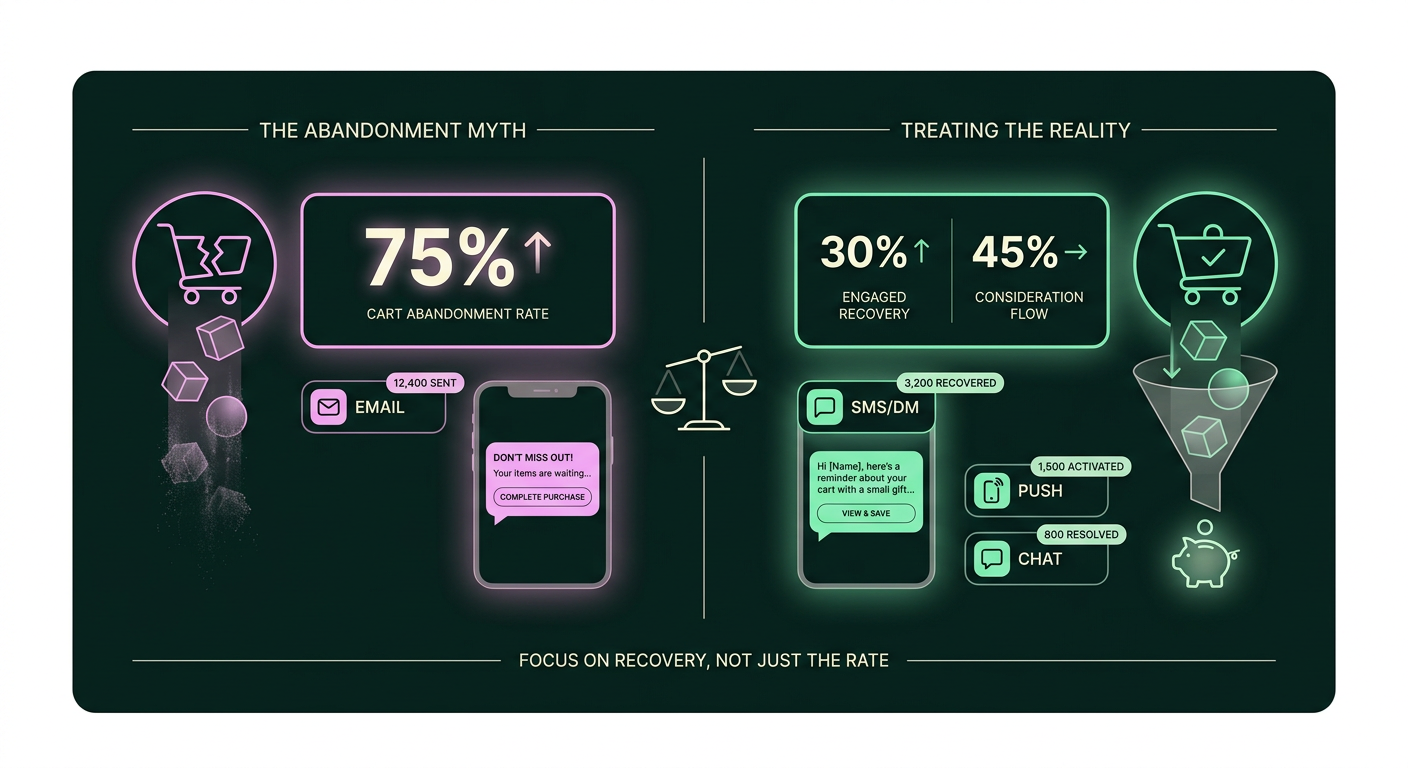
You’ve been told to obsess over your cart abandonment rate, but you shouldn't. For years, e-commerce leaders have treated this one number as the ultimate sign of a leaky funnel, but focusing on trimming this top-line metric is a distraction. It misdiagnoses the problem and pushes you toward solutions that barely move the needle, all while your most valuable, highest-intent customers slip away. The real goal isn't to prevent every abandonment; it's to get exceptionally good at recovering the right ones.
You think you need to lower your cart abandonment rate. You don’t.
The hard truth is that a high cart abandonment rate is a permanent feature of e-commerce, not a bug you can eliminate. It's a vanity metric. While you're busy trying to nudge a global average down by a few tenths of a point, you’re ignoring the more important and solvable problem: your recovery strategy for high-intent shoppers is broken because it relies on channels they ignore.
For over a decade, the story has remained stubbornly the same. No matter the year, the technology, or the economic climate, roughly seven out of every ten shopping carts are left behind. In fact, recent analysis from 2026 shows a global average of 70.22% (opens in a new tab), a figure that has been remarkably stable for years. Trying to fundamentally change this baseline human behavior is like trying to hold back the tide. People will always browse, compare prices, get distracted, or use their cart as a wishlist. Fighting this is a waste of resources. The real opportunity isn't in stopping them from leaving, but in giving them a compelling, personal reason to come back.
Why obsessing over the rate feels so right
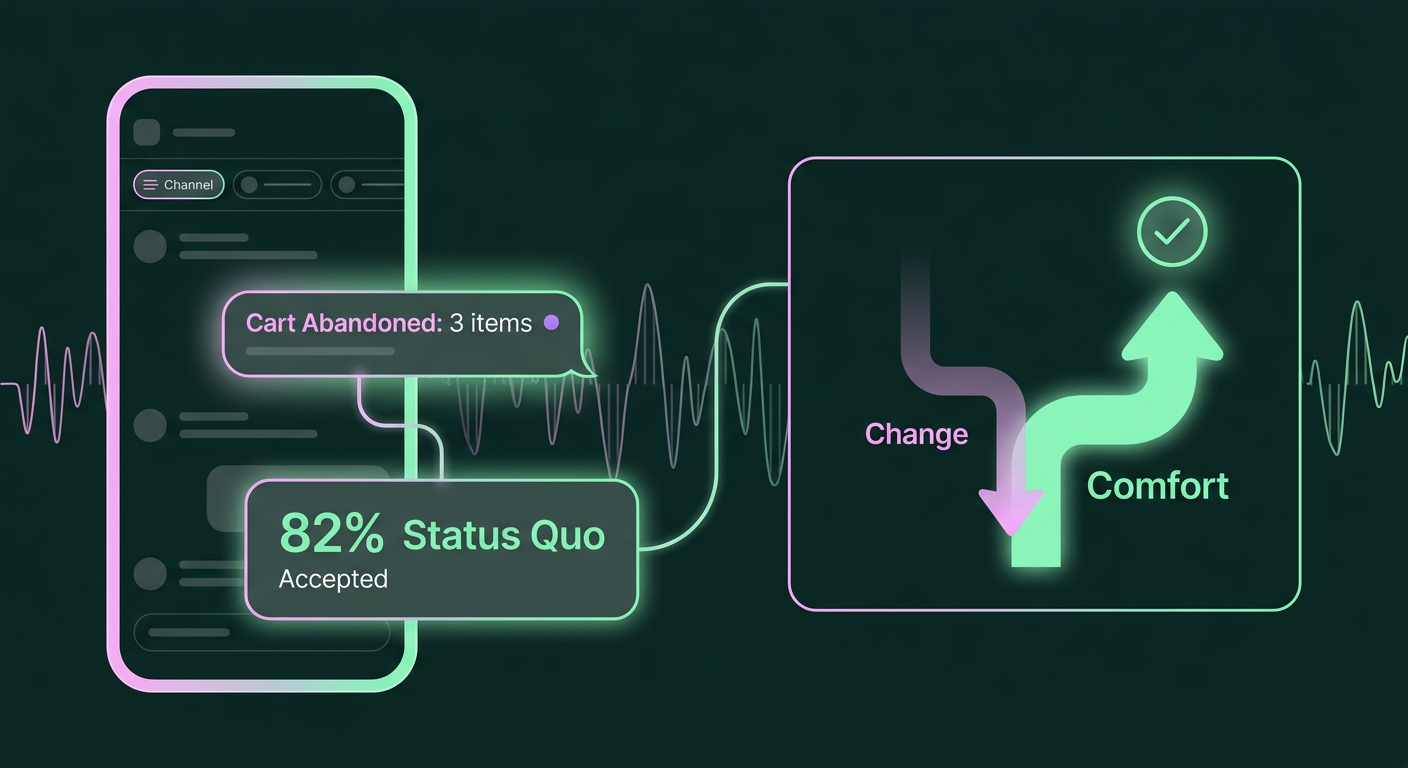
Obsessing over the cart abandonment rate feels right because it’s a simple, universal, and painfully large number that seems to represent pure, lost revenue. It’s one of the first metrics any e-commerce manager learns, and seeing that 70% figure on a dashboard feels like a direct failure, a tangible number that quantifies a massive gap in your conversion funnel, making it an irresistible target for optimization.
The feeling is amplified because the carts being abandoned are often the most valuable ones. A 2025 study of e-commerce benchmarks found that the average abandoned cart was valued at $141 (opens in a new tab), significantly higher than the $117 average for carts that actually converted.
"The average abandoned cart was $141 versus $117 for the average placed cart, because larger baskets carry more purchase hesitation." , Metorik Blog, 2025
This data point makes the problem feel even more acute: you aren't just losing the majority of your potential orders, you're losing the biggest ones. The logic seems simple: if you could just shave a few points off that abandonment rate, the revenue impact would be enormous. This thinking is reinforced by the fact that many abandonments happen for seemingly fixable reasons. For instance, around 48-49% of shoppers abandon carts due to unexpected costs like shipping and taxes that appear at checkout.com/blog/statistics/cart-abandonment-statistics-2026) that appear at checkout. The combination of a big, scary number and apparently simple causes makes the cart abandonment rate a deeply compelling, if ultimately misleading, metric to chase.
The numbers show your recovery emails are mostly ignored
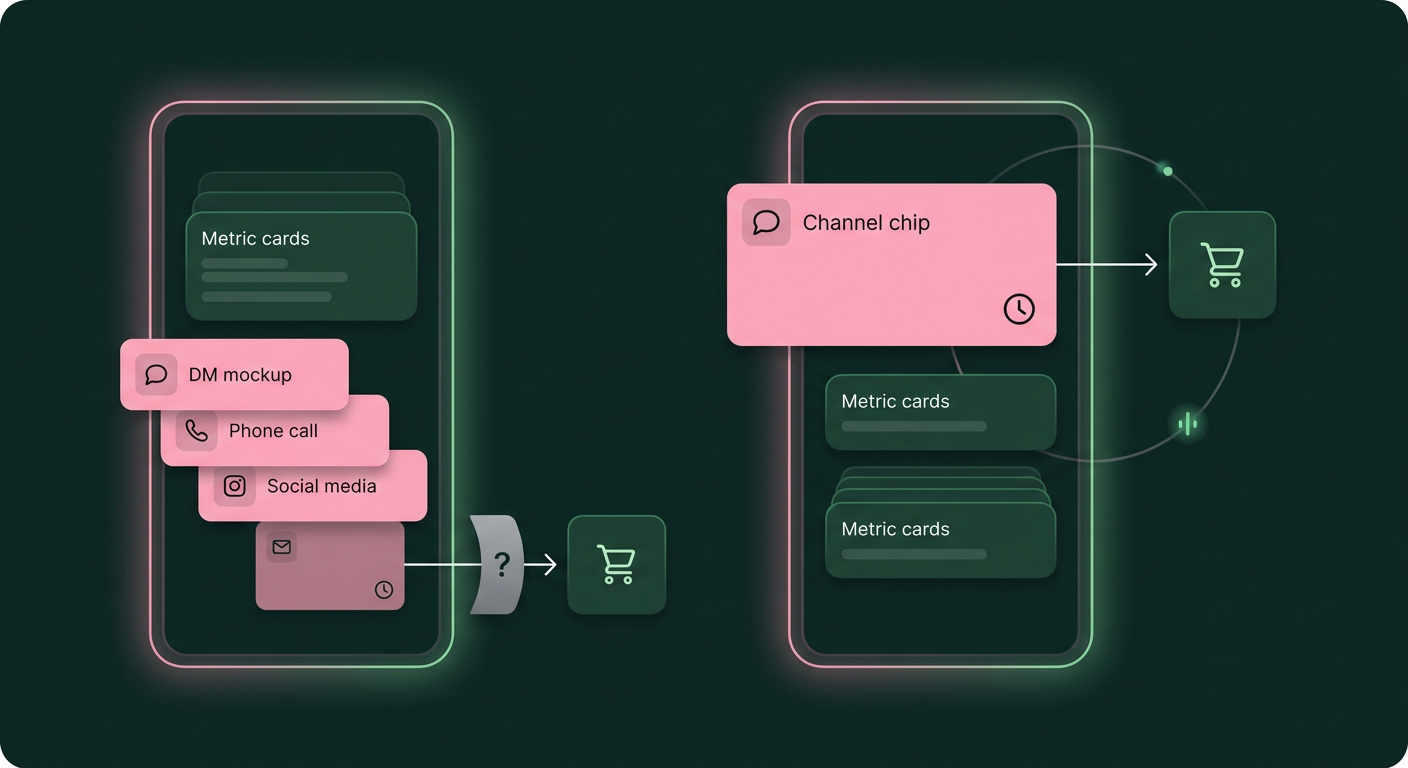
Even if your abandoned cart emails have high open rates, the dismal recovery rates prove the channel itself is failing to drive action. This is the data-backed gut punch that breaks the traditional playbook. You see the high open rates and think your strategy is working, but the revenue tells a different story.
For years, the standard response to an abandoned cart has been that sequence of automated emails. On the surface, the logic holds. Data shows that the average open rate for cart abandonment emails is 50.5%, which is more than double that of a typical marketing email. This gives brands a false sense of security; it feels like you’re reaching the customer and that your message is being seen. But seeing is not buying.
The crucial metric is recovery, and this is where email falls apart. Despite those impressive open rates, the average email recovery rate for abandoned carts is a mere 3-5%.com/blog/cart-abandonment-statistics-2025). Some analyses are even more conservative; a detailed look at WooCommerce stores in 2025 found that automated emails helped recover just 3.6% of placed carts. Think about that: for every 100 high-intent shoppers who added items to their cart and left, your email sequence convinces only three or four of them to return and complete their purchase. You're doing all that work for a 96% failure rate. If you're wondering why your cart abandonment rate isn’t budging, this is the reason. The channel you're relying on is fundamentally misaligned with the task of immediate, personal persuasion.
It’s not about the rate, it’s about the channel
The core issue isn't the rate of abandonment, but the channel you're using for recovery. High-intent shoppers don't abandon carts because they've lost all interest; they abandon them while living their lives on their phones, in apps where a marketing email feels like an interruption, not a conversation. To recover them, you have to meet them where they actually are: in their direct message inboxes.
The failure of email isn't a failure of messaging, but of context. Email is a cluttered, asynchronous channel that most people, especially younger demographics, don't treat as a platform for urgent, personal communication. It’s where receipts, newsletters, and promotional offers go to be archived or ignored. A message about a cart left behind an hour ago is buried under a dozen other low-priority emails and simply lacks the immediacy needed to bring a shopper back in that moment of high intent.
Contrast this with a channel like SMS or a social media DM. While email recovery languishes in the low single digits, channels offering a more direct line to the customer perform dramatically better. For example, SMS abandoned cart messages boast a staggering 98% open rate (opens in a new tab), and that visibility translates directly into action. The recovery rate for abandoned carts via SMS is between 8-12% (opens in a new tab), double or even triple that of email. This proves that when you reach a shopper in a channel they use for real-time conversation, they are far more likely to re-engage. The discussion about DM vs. email for cart abandonment recovery is settled when you look at the performance data. It's time to stop optimizing for a failing channel and start using one that actually works.
What to do instead: Focus on recovery, not reduction
It's time to shift your entire strategy. Instead of a broad, top-of-funnel effort to lower the overall abandonment rate, you need a targeted, surgical effort to recover specific, high-value carts. This means accepting that most abandonments are just noise from window shoppers, price checkers, and low-intent visitors. Your focus should be on identifying the subset of shoppers who are genuinely on the brink of purchase and engaging them in a more effective way.
Instead of pouring resources into small site optimizations or generic discount pop-ups, reallocate them toward a robust recovery engine. This starts with segmentation, because not all abandoned carts are created equal. A first-time visitor who adds one low-cost item is very different from a returning customer who abandons a cart with three high-value products, and your recovery strategy should reflect that.
For your highest-value segments, customers with large carts, repeat purchasers, or shoppers who have engaged with your brand before, the generic email sequence isn't good enough. This is where you deploy your best tools. A personalized 1:1 message sent via Instagram DM or WhatsApp can restart the conversation in a context that feels helpful, not automated. It allows you to address potential concerns, answer questions, and provide a direct link back to a pre-filled cart, all within the app they already have open on their phone. Explore different use cases for conversational recovery (opens in a new tab) to see how this approach can be tailored to your specific customer journey. The goal is no longer to prevent abandonment, but to master the art of the win-back.
Your first step: Stop sending one-size-fits-all emails
The most practical action you can take today is to audit your existing cart recovery flows and stop treating every abandoned cart the same. Your default, low-performing email sequence shouldn't be the only tool in your toolbox; it’s time to segment your shoppers and test a more personal, effective channel for the customers who matter most.
Begin by defining what a "high-value" cart looks like for your business, whether it's based on cart total, the number of items, specific products, or customer history. Once you have this segment defined, carve it out of your standard email automation. Instead of lumping these valuable shoppers into the same generic flow that gets a 3% recovery rate, design a separate, more personal outreach strategy. While a standard 3-email sequence can generate significantly more revenue than a single email, the real gains come from changing the channel entirely.
For this high-value segment, pilot a recovery campaign using a direct messaging channel like Instagram DMs or WhatsApp. Craft a message that is conversational and helpful, not just a blatant coupon offer. For example: "Hey [Name], saw you were checking out the [Product Name]. Did you have any questions about sizing before you grab it?" This simple, personalized approach cuts through the noise and treats the shopper like a person, not a data point. By testing this new channel on your most valuable abandoned carts, you can directly measure the lift in recovery rate and revenue, giving you the hard data needed to move beyond the outdated obsession with a vanity metric.
Frequently asked questions
How do I actually recover abandoned carts if not with email?
The key is to use channels that offer more direct and immediate communication. While email is often ignored, channels like SMS have proven to be far more effective. For instance, SMS messages for abandoned carts have a 98% open rate, which means your message is almost guaranteed to be seen. This visibility translates into much higher engagement and recovery compared to email.
Why do my abandoned cart emails feel so backward and ineffective?
They feel ineffective because, for the most part, they are. Even though abandoned cart emails often get high open rates, the crucial metric is the actual recovery rate, which is typically very low. On average, email sequences only recover about 3-5% of abandoned carts.com/blog/cart-abandonment-statistics-2025). This means over 95% of your email recovery efforts are failing to bring customers back, which is why the entire process can feel so unproductive.
Are abandoned cart emails even worth the effort anymore?
They can still be worth it as a baseline effort, but they shouldn't be your primary or only recovery strategy. Data from 2025 showed that automated emails recovered about 3.6% of carts in one large study, so they do contribute some revenue. However, relying solely on them means you are leaving a significant amount of money on the table that could be captured by more effective channels like SMS or direct messaging on social media.
What's the difference between someone who abandons browsing versus someone who abandons a cart?
The primary difference is intent. A user who abandons a browsing session is typically in the discovery or research phase, exploring options without a strong intention to buy. By contrast, a user who abandons a cart has taken a critical step that signals higher purchase intent. They have selected a specific product, chosen variants like size or color, and made the conscious decision to add it to their cart, bringing them much closer to a purchase.
Why is e-commerce so fragile when it comes to checkout?
E-commerce checkout is fragile because the digital environment has very low friction for leaving. Unlike in a physical store where a shopper has invested time and effort just to be there, a digital shopper can leave with a single click. This is why the global cart abandonment rate has hovered around 7 in 10 carts for a decade.com/blog/cart-abandonment-statistics-2025). The top reason for abandonment is often friction at the last moment, with unexpected costs like shipping and taxes accounting for 48-49% of all abandoned carts.com/blog/statistics/cart-abandonment-statistics-2026).
Can I really use Instagram bots to help with conversions?
Yes, but it's helpful to think of them not as "bots" but as automated systems for sending personalized, 1:1 DMs. Instead of generic, robotic messages, you can use automation to send timely, context-aware messages on Instagram that feel like they're coming from a real person. For cart recovery, this could be a friendly nudge asking if the customer has a question about a product they left in their cart, which is far more engaging than a standard email.