
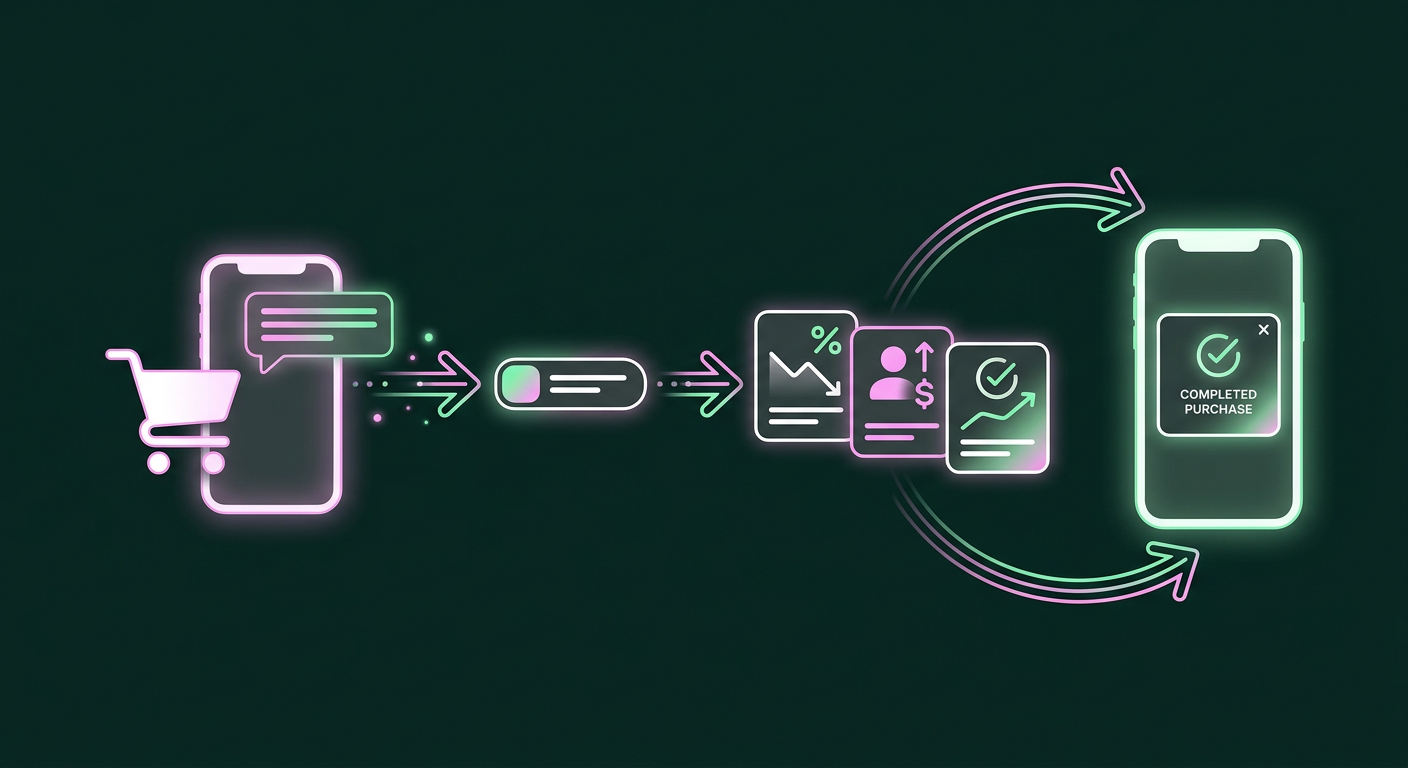
It's one of the most common pieces of advice in e-commerce: to recover lost sales, you absolutely must have an abandoned cart email and SMS flow. But while this is a necessary starting point, many brands find themselves frustrated when their carefully crafted campaigns deliver low open rates and even lower recovery. The reality is that shoppers are inundated with marketing messages, and the standard automated reminders often fail to cut through the noise, leaving significant, recoverable revenue on the table.
Why Your Cart Recovery Emails Are Falling Flat
Your cart recovery emails are falling flat because shoppers' inboxes are overloaded, and generic messages fail to capture the attention of high-intent buyers. While email is a start, its effectiveness is waning as customers become numb to standard marketing tactics, leading them to ignore even the messages they might have once found helpful.
The problem of cart abandonment is enormous. Data shows that the average cart abandonment rate was 70.19% in 2023 (opens in a new tab), a staggering figure that highlights just how many potential sales are lost at the final step. For many brands, the problem feels even more acute; the average Shopify store, for instance, loses a shocking seven out of every ten carts (opens in a new tab). This isn't a minor leak in the funnel, it's a major breach that directly hits your bottom line.
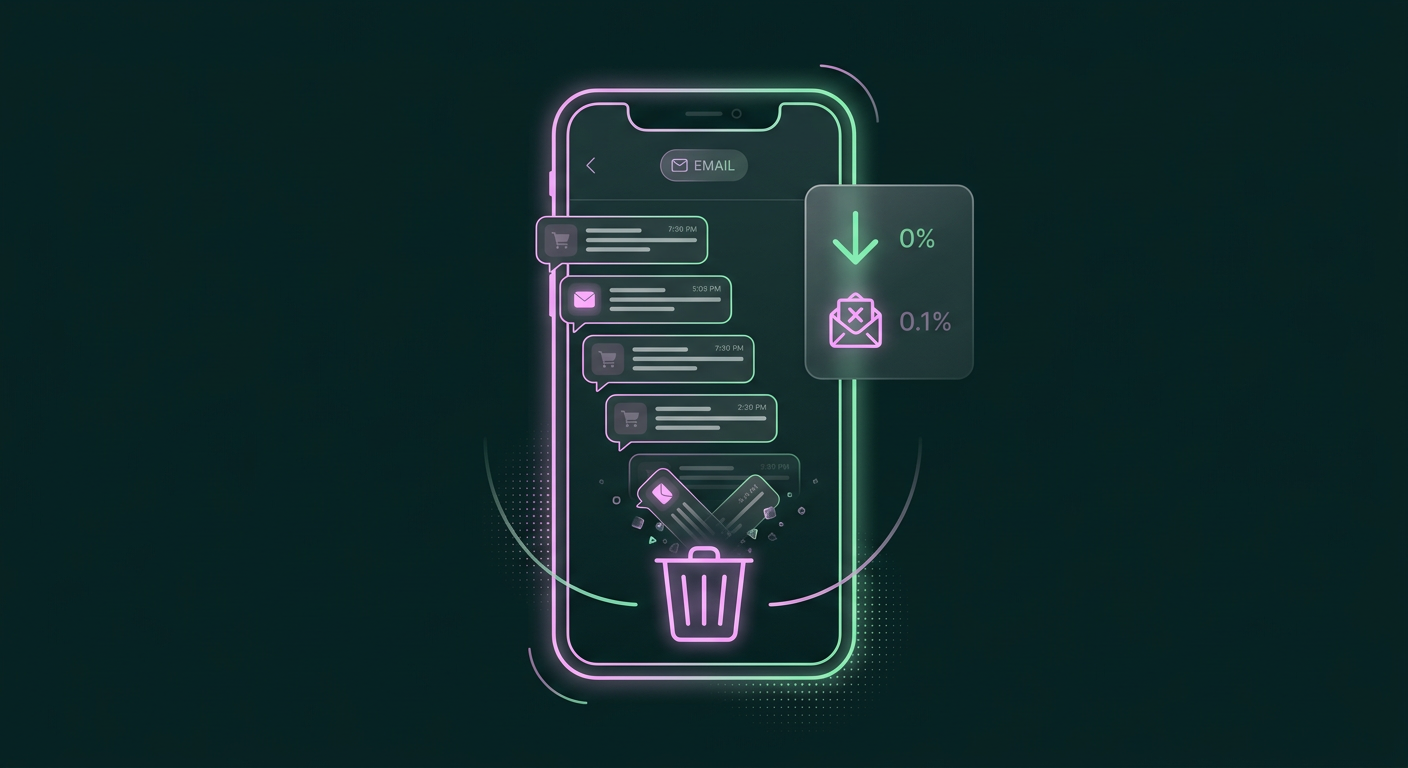
For years, the default response has been an automated email sequence, perhaps supplemented by an SMS message. This strategy is built on the sound logic that a gentle nudge can bring an interested shopper back. But the digital environment has changed. Your customers' inboxes are now battlegrounds for attention, where your abandoned cart email competes with hundreds of other promotional messages, newsletters, and notifications. Even if your subject line is perfect and your offer compelling, there's a high chance it will be overlooked, deleted unread, or filtered into a promotions folder. This is a key reason why your cart abandonment rate isn’t budging despite your best efforts with conventional tools. The old playbook simply isn't as effective as it used to be.
The Real Cost of a Leaky Funnel
Those falling-flat emails aren't just frustrating; they carry a significant financial cost.
The real cost of a leaky funnel is the direct loss of revenue that could have been recovered with a better strategy. While abandoned cart emails do generate some income, relying on email alone means you're likely leaving more than half of your recoverable revenue behind compared to a more modern, multi-channel approach.
To be clear, abandoned cart emails still have value. In fact, they remain one of the most profitable automated campaigns a brand can run. According to data from Klaviyo, these flows are remarkably effective when they do manage to connect with a customer.
“Abandoned cart email flows generated average revenue of $3.53 per recipient, the highest across all email marketing campaigns and flows.” , Postscript, analyzing Klaviyo data (opens in a new tab)
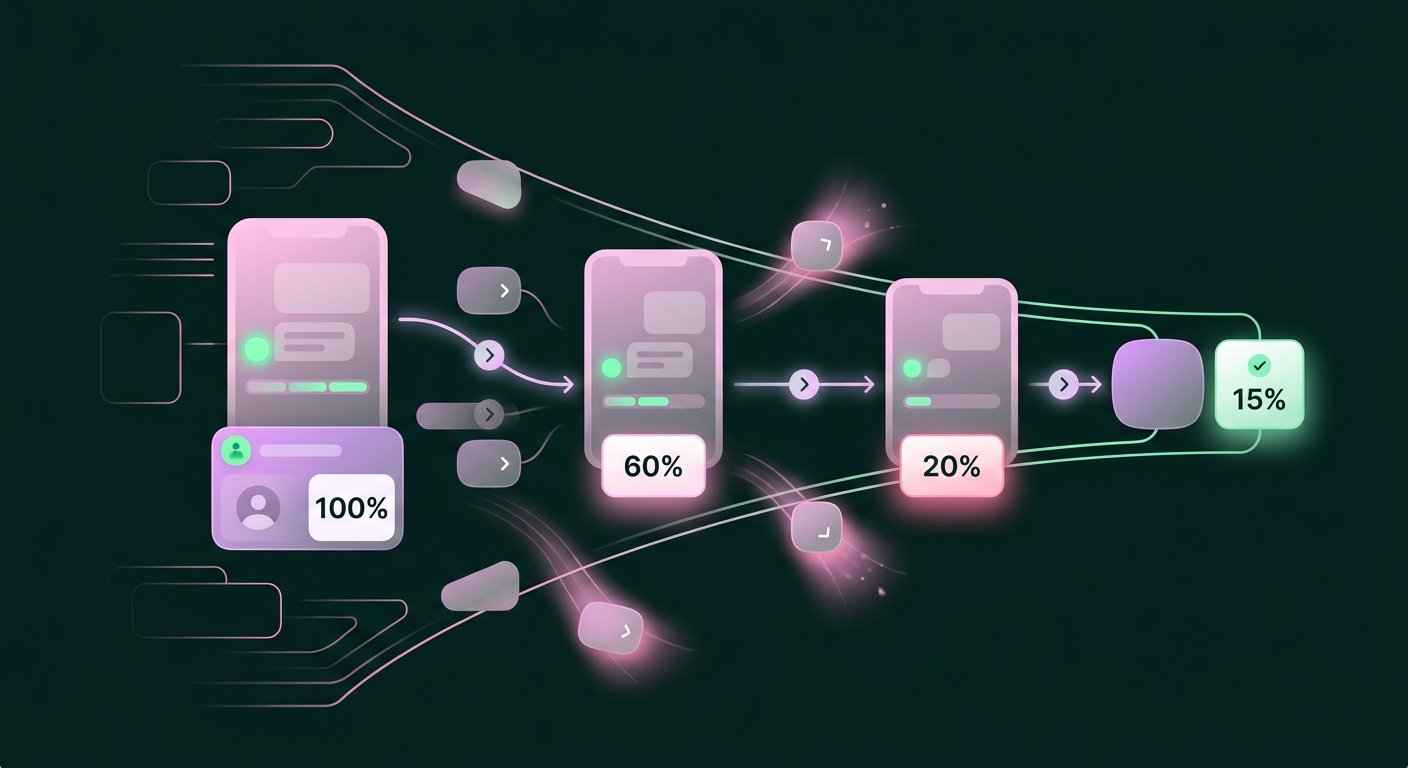
This statistic shows that when the message lands, it works. The problem is the sheer number of messages that don't land, which means the revenue you see from email is only a fraction of what's possible. Data shows that programs relying only on email typically recover between 10-15% of abandoned carts.io/abandoned-cart-recovery). However, multi-channel programs that coordinate email, SMS, and retargeting can recover 25-30% of those same carts. By sticking to a single, overcrowded channel, you are effectively forfeiting up to half the sales you could be winning back.
The reasons people abandon carts are varied, from unexpected shipping costs to simple distraction. A significant portion of shoppers, around 15-25%, abandon their purchase because of "unexpected costs" discovered at checkout.com/reduce-cart-abandonment-shopify). At the same time, rising security concerns can cause hesitation; reports show that credit card fraud cases increased by 65% in 2024 (opens in a new tab) compared to 2019, making some customers wary of completing transactions. A generic email does little to address these deeper issues, but a well-timed, personal interaction can.
Recover Carts Where Customers Actually Are
If email and SMS aren't cutting it, the answer isn't to send more of them, it's to shift channels.
To effectively recover abandoned carts, you need to reach customers on the high-engagement channels they use for personal conversations, like Instagram and WhatsApp. Shifting to automated, personalized DMs on these platforms turns a passive reminder into an active, helpful conversation that drives conversions.
The fundamental principle of good marketing is to meet customers where they are, and today, that's in their direct message inboxes. While SMS boasts an impressive open rate of 98%, its format can feel impersonal and transactional. Messaging platforms like Instagram and WhatsApp, however, are where people have real conversations. By engaging customers there, you shift from being just another brand sending a marketing message to a helpful presence offering 1:1 assistance. For example, Dynamo's platform sees open rates of 80% and higher for DMs, with conversion rates often 3-5x higher than push notifications, because the interaction feels native and personal.
This conversational approach is proven to work. On Shopify, for instance, a remarkable 70% of all Shopify Inbox conversations are with shoppers who are in the process of making a purchase. This shows that when customers can easily ask a question or get a quick confirmation, they are far more likely to complete their order. An automated DM serves as the perfect conversation starter to achieve this. Here’s how to build a system that gets it done in three phases.
Phase 1: Integrate High-Open Rate Channels
The first step is to establish a presence on the platforms where your customers spend their time. This means going beyond email and SMS to integrate your e-commerce store with messaging apps like Instagram and WhatsApp. The reason is simple: you need to communicate in a space where your messages will actually be seen. Instead of fighting for attention in a cluttered inbox, your reminders will appear alongside messages from friends and family, dramatically increasing the likelihood of engagement. Connecting your store to these channels is the technical foundation for a modern, conversational recovery strategy and opens up many other use cases (opens in a new tab) for customer communication.
Phase 2: Automate Personalized, Context-Aware DMs
Once you're connected, the next phase is to automate messages that don't feel automated. The key is combining personalization with context. A generic "You left something in your cart!" message is only marginally better than an email. A truly effective DM should use the customer's name, show the specific items they left behind, and offer a clear, easy path back to their cart. With a platform like Dynamo, you can generate these context-aware DMs at scale. The message can be tailored to sound human and helpful, perhaps asking if they had any questions about the product or ran into trouble at checkout. This small shift in tone changes the dynamic from a sales pitch to customer service, which is far more effective at overcoming hesitation.
Phase 3: Track Recovery and Optimize Your Messaging
No strategy is complete without a way to measure its success. The final phase involves closely tracking your recovery rates, the revenue generated from your DM flows, and customer engagement. This data is crucial for optimization. You can A/B test different versions of your messages to see what resonates most with your audience. Does a simple reminder work best, or does including a small discount drive more conversions? Should you send one message or a short series? We've seen that a multi-step email series often performs much better, with some stores seeing 153-231% more revenue won back compared to sending just one message.io/abandoned-cart-recovery) compared to sending just one message. By continuously testing and refining your approach based on hard data, you can build a highly effective recovery engine and truly understand the difference in DM vs. email effectiveness for your specific audience.
What to Avoid: Common DM Outreach Mistakes
As you make the shift to DMs, it's crucial to avoid the mistakes that can undermine this powerful channel.
When using DMs for cart recovery, avoid sounding robotic, sending generic messages, and failing to offer real help. The goal is to start a 1:1 conversation that feels personal and supportive, not to send automated messages that mimic the low-engagement marketing they already ignore in their email.
Moving your cart recovery efforts to DMs is powerful, but it comes with its own set of potential pitfalls. Because these platforms are so conversational, a poorly executed strategy can feel even more jarring than a generic email. The most critical mistake is sounding like a robot. A message full of corporate jargon or one that feels cold and impersonal will be immediately ignored, so use natural, human language that reflects your brand's personality.
Another common error is sending generic, unpersonalized messages. A DM that just says "Forgot something?" is a wasted opportunity. The message needs to be context-aware, mentioning the customer by name and referencing the specific items in their cart. This demonstrates that you're paying attention and makes the interaction feel like a genuine 1:1 conversation.
Finally, don't treat the DM as a one-way street. These are conversational platforms, and customers may reply with questions or concerns. If you're not prepared to engage, you'll create a frustrating experience. Your system should be set up to either handle replies automatically or flag them for a human team member to address. This is your chance to resolve a final hesitation or provide a missing piece of information that can close the sale. A thoughtful, helpful reply can turn a near-abandonment into a loyal customer.
What 'Done' Looks Like: A Proactive Recovery Engine
Once you have the right channels and guardrails in place, you can build a much better system.
A finished cart recovery system is a proactive, multi-channel engine that automatically engages shoppers on their preferred channels with personalized, helpful messages. Instead of reactively sending emails that get lost, you'll be actively starting conversations that recover sales and build customer relationships.
When you successfully move beyond the limitations of email-only recovery, your entire approach to cart abandonment transforms. The "before" picture is a passive, reactive system that sends messages into an already crowded space and hopes for the best, a low-engagement model that accepts significant revenue loss as a cost of doing business. The "after" picture is a dynamic and proactive recovery engine that intelligently engages customers where they are most active.
This new system doesn't just send a single reminder; it orchestrates a thoughtful sequence of messages across different channels, optimized based on what works. You might start with a helpful DM on Instagram, follow up with a WhatsApp message if there's no response, and use email as a final fallback. As we've seen, stores that use a multi-step series can see dramatically more revenue won back, and applying this logic to DMs is even more powerful.
Ultimately, a well-implemented DM strategy for cart recovery does more than just claw back a few lost sales. It turns a moment of potential friction into an opportunity to build a stronger customer relationship. By offering personalized, 1:1 help in a conversational format, you show customers that you value their business and are there to support them. This proactive, service-oriented approach not only reduces cart abandonment but also fosters the kind of loyalty that creates repeat customers.
Frequently asked questions
Why do my abandoned cart emails feel so useless?
While abandoned cart emails are statistically the highest-performing automated emails, generating an average of $3.53 in revenue per recipient, they can feel useless if your open and click-through rates are low. This often happens because your customers' inboxes are extremely competitive. Your message is likely getting lost among dozens of other marketing emails, sent to a promotions tab, or simply deleted without being read. The strategy itself isn't useless, but the channel is becoming less effective due to oversaturation.
How can I reduce my cart abandonment rate on Shopify?
To reduce your cart abandonment rate on Shopify, where the average store loses 7 out of 10 carts, you should implement a multi-channel recovery strategy. Instead of relying only on email, integrate your store with messaging apps like Instagram and WhatsApp to send personalized DMs. Because these messages are more conversational and have much higher open rates, they are more effective at re-engaging shoppers. Additionally, ensure your checkout process is transparent about all costs, as unexpected fees are a major reason for abandonment.
What's the difference between abandoned browse and abandoned cart?
Abandoned browse refers to when a visitor looks at product pages on your site but leaves without adding anything to their cart. They showed interest in specific items but didn't take the next step. Abandoned cart, on the other hand, occurs when a shopper adds one or more items to their cart but leaves the site before completing the purchase. This signifies a much higher level of intent, making these shoppers the most valuable group to re-engage with recovery campaigns.
Why do shoppers with high intent ignore my cart recovery emails?
Shoppers with high intent, who have gone as far as adding items to their cart, often ignore recovery emails due to "banner blindness" for marketing messages. Their email inboxes are filled with promotional content, and they have become conditioned to tune it out. Even with strong intent, your email may not be compelling enough to cut through the digital noise. A DM on a platform like Instagram or WhatsApp, however, arrives in a more personal, conversational context, making it much more likely to be seen and acted upon.
What kind of ROI can I expect from using DMs for cart recovery?
While specific ROI varies by industry and implementation, you can expect a significant lift compared to email-only strategies. Data shows that multi-channel programs that coordinate email, SMS, and retargeting recover 25-30% of abandoned carts, whereas email-only programs recover just 10-15%.io/abandoned-cart-recovery). Given that DMs have open rates of 80% or higher, they contribute significantly to this lift by ensuring your message is actually seen. This allows you to capture revenue that would have otherwise been lost in an unread email inbox.