
For years, the inbox was the primary battlefield for customer retention. Brands poured resources into optimizing subject lines, segmenting lists, and designing beautiful emails, all in a relentless effort to win back lapsed buyers and encourage repeat purchases. But a quiet shift has been underway, signaled not by a new technology but by a simple lack of response. The effectiveness of email for lifecycle marketing is cratering, with key campaigns like re-engagement emails achieving just a 12% average open rate (opens in a new tab). Faced with this growing silence, smart brands are no longer trying to shout louder in the inbox. Instead, they’re moving the entire conversation to the channels where their customers actually are: messaging apps.
The Unread Email: A Signal of a Deeper Shift
The problem isn't that customers don't want to hear from the brands they like. It’s that email has become a fatally overcrowded and impersonal channel. Today’s customers are conditioned to see their inbox, particularly the promotions tab, as a repository for one-to-many broadcasts, not a place for genuine connection. As a result, even the most loyal customers are ignoring lifecycle messages about restocks and special offers, which forces brands to pay for expensive retargeting ads just to speak to their own audience.
This decline in email engagement stands in stark contrast to the personal nature of messaging platforms. While marketers struggle to break a 12% open rate on a win-back campaign, customers are actively communicating in places like WhatsApp. This is far from a niche behavior, as WhatsApp has a staggering user base of two billion people worldwide (opens in a new tab). More importantly, messaging a business is already a normal, accepted activity. In fact, over 175 million people send messages to business accounts on WhatsApp every single day (opens in a new tab), showing a clear preference for direct interaction over the passive experience of scanning an inbox. The writing on the wall is clear: lifecycle marketing's center of gravity has moved.
From Broadcasts to Conversations: The Old vs. The New Playbook
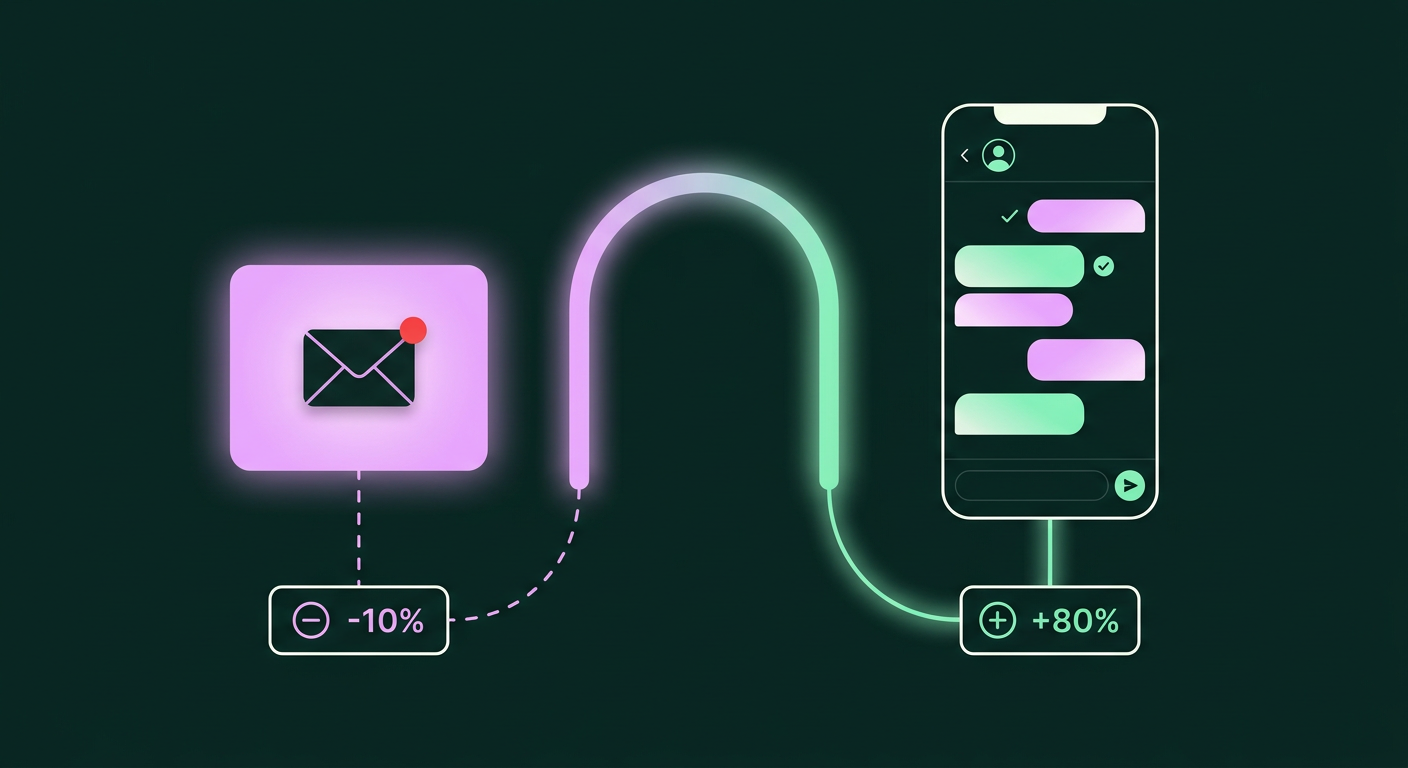
This shift from the inbox to the DM changes more than just the channel; it rewrites the entire playbook. The old playbook was fundamentally about optimizing within a broken system. Lifecycle marketers became experts in list hygiene and elaborate re-engagement sequences, with some brands seeing 20-30% better overall email performance from these systematic efforts (opens in a new tab). While commendable, this approach amounts to running faster on a treadmill. It focuses on marginal gains for messages that, by and large, customers still aren't opening.
The new playbook scraps the treadmill entirely by meeting customers where they already are. Instead of fighting for a 12% open rate in an email, it moves the conversation to SMS or direct messaging apps where engagement is an order of magnitude higher. For comparison, SMS marketing consistently boasts an open rate of 98%, a figure that makes the email inbox feel obsolete. The same dynamic holds true for DMs on platforms like Instagram and WhatsApp.
This isn't just about swapping one channel for another. It’s about shifting from a "broadcast" mindset to a "conversational" one. The old model involved sending the same email to a segment of thousands. The new model uses automation to send a personalized 1:1 message to an individual at the exact moment they show intent, like when they ask about a product or a subscription is about to lapse. It transforms marketing from a monologue into a dialogue, making it feel more like a helpful concierge service than a generic advertisement.
What This Means for Your Customer Strategy (and Budget)
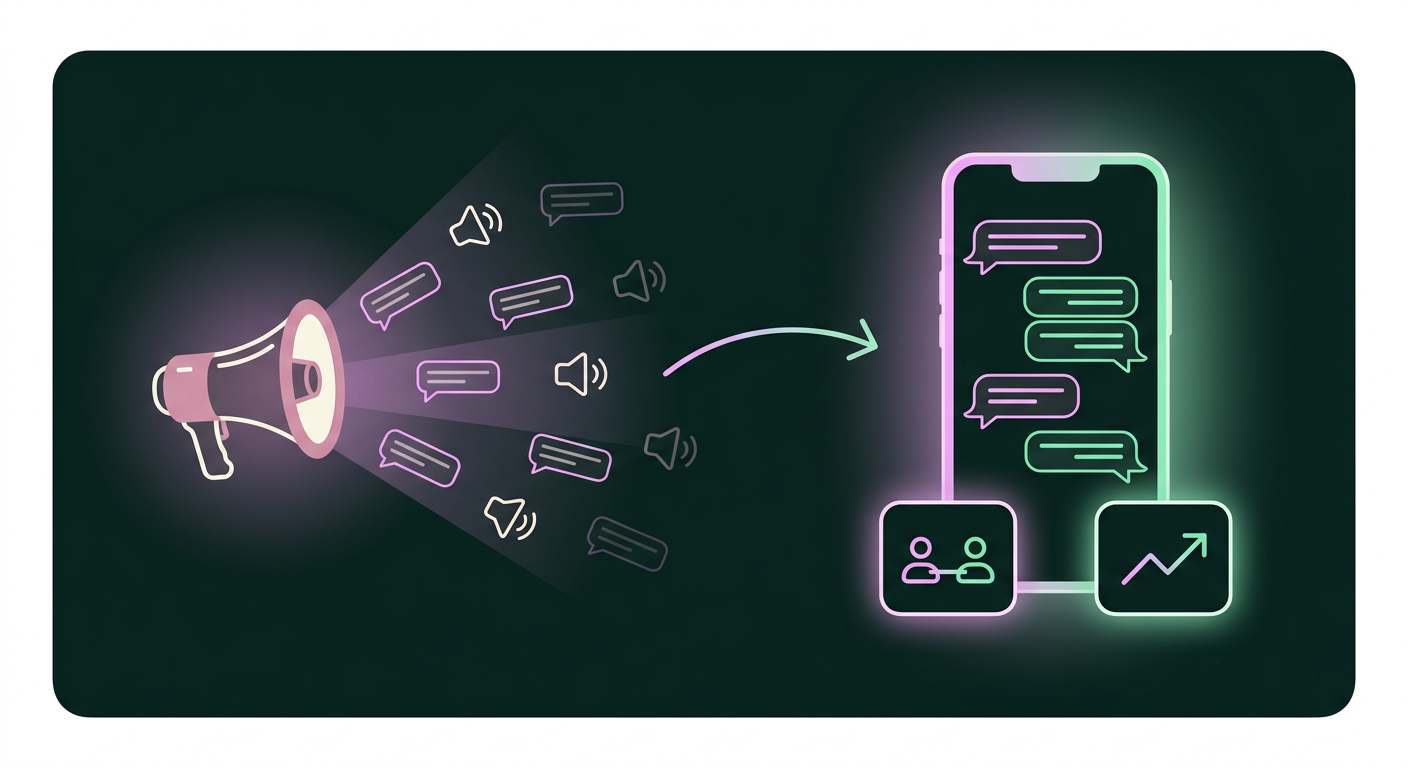
Adopting this conversational playbook has immediate consequences for both your strategy and your budget. For starters, it forces a re-evaluation of your customer database. A large list of email subscribers who don't open your messages isn't an asset; it's a silent liability. It creates a false sense of security while forcing you to spend heavily on paid retargeting just to communicate with a list you supposedly own. You end up paying platforms like Facebook and Google for the privilege of speaking to your own customers.
By shifting the primary point of contact from email to conversational channels, you transform that dormant database into a high-engagement, owned media channel. Instead of paying to re-acquire a customer's attention, you can reach them directly with a personalized DM for a fraction of the cost. This strategic shift is why the conversational marketing software market is projected to grow at a compound annual rate of 16.6% for large enterprises. The budget is following the engagement.
The results of this pivot are tangible, going beyond just ad savings to generate better business outcomes. A recent analysis found that conversational strategies built around customer intent, known as high-intent playbooks, sourced three times more opportunities than other approaches. When you can speak directly to a customer with a timely, relevant message about a product they care about, the path to conversion becomes dramatically shorter and more efficient.
Where This Shift Is Already Happening
This change isn't theoretical; it's already happening at a massive scale. The pivot to conversational channels is being led by the very platforms customers use every day. The WhatsApp Business app, for instance, is already used by over 50 million users in over 5.25 million organizations.com/en-us/blog/conversational-marketing-guide). This isn't a fringe movement but a widespread adoption of a new way to interact with customers.
Brands are using these tools for the entire customer lifecycle. A customer might see an ad on Instagram and start a conversation via DM. Based on their questions, the brand can send an automated, personalized follow-up about a new product line. If the customer makes a purchase, the brand can later send a WhatsApp message asking for a review or offering a VIP discount on their next order. If they go dormant, a personalized win-back offer can be sent directly to their DMs, a place where it's almost certain to be seen.
Leading brands have moved beyond manual DMs and are deploying sophisticated platforms to manage these interactions at scale. Our platform at Dynamo, for example, handles billions of DMs annually for nearly 100 brands, automating personalized 1:1 messages across the full funnel. We see firsthand how this approach turns a passive audience into an active, revenue-driving community, effectively eliminating the need for wasteful retargeting spend. To see how this applies to different scenarios, you can explore some of our primary use cases (opens in a new tab). This model works because it aligns with existing human behavior instead of trying to change it.
How to Recalibrate Your Lifecycle Marketing
So, how can you make this shift yourself? The first step is a mental one: stop defining success by email open rates. Your new primary goal should be driving valuable customer actions through direct, personalized conversations. This requires a recalibration of both your strategy and your technology.
Strategically, this means mapping out key moments in your customer lifecycle (first purchase, cart abandonment, subscription renewal, churn risk) and designing automated conversational "playbooks" for each one. The question is no longer "What email should we send?" but "What is the most helpful message we can send to this specific customer, on their preferred channel, at this exact moment?" This is the key to how to increase customer lifetime value and cut ad waste simultaneously.
Technologically, this requires a conversational marketing platform that acts as the messaging layer on top of your existing CRM or customer data platform. The right platform shouldn't replace your single source of truth; it should integrate with it. It needs to sync with customer data to trigger messages based on behavior and attributes, enabling you to send a personalized restock alert via an Instagram DM or a VIP offer through WhatsApp just as easily as you once sent an email. By focusing on these high-intent interactions, you can build a more resilient and profitable relationship with your customer base.
What to Watch: The Future is AI-Powered and More Personal
While moving from email to DMs is the critical first step, the next evolution is already underway. The future of lifecycle marketing lies in using AI to make these one-to-one conversations even more relevant, timely, and effective.
Simple automation can trigger a message based on a defined event, but AI can interpret intent and personalize the content of that message in real time. Imagine an AI that not only knows a customer's subscription is lapsing but also understands from past conversations that they prefer a specific product flavor. It can then generate a unique win-back offer that speaks directly to that preference, creating a hyper-personalized interaction that feels genuinely helpful, not automated.
This is where the true power of the new playbook lies. It's not just about sending DMs; it's about having smarter, more contextual conversations at scale. As AI capabilities grow, platforms will be able to manage increasingly complex playbooks that drive meaningful business results, from accelerating conversions to sourcing more valuable sales opportunities. The market's significant growth reflects this potential, as brands prepare for a future where every customer interaction is a personalized, AI-powered conversation.
Frequently asked questions
How can I reach my existing customers if they aren't opening my marketing emails?
If your marketing emails are going unread, the most effective strategy is to move the conversation to channels where your customers are already highly engaged. While email open rates for re-engagement campaigns can be low, messaging apps like WhatsApp and SMS have extremely high visibility. For instance, SMS marketing has an open rate of around 98%, and over 175 million people actively message businesses on WhatsApp every day. By using these channels for lifecycle messages, you can connect with customers in a space they already check constantly.
How do I make my marketing to existing customers feel more personal and less like spam?
The key to making marketing feel personal is to shift from a one-to-many broadcast model to a one-to-one conversational approach. Instead of sending a generic message to a large segment, use data from your CRM to trigger messages based on an individual's specific behavior and timing. A message that says, "We noticed you just ran out of your favorite product, here's a link to reorder," delivered at the right moment in a direct messaging channel feels like a helpful, personal conversation, which is the opposite of a mass message.
Why would I switch my budget from email marketing to something like Messenger or WhatsApp?
The main reason to shift your budget is return on investment. You may be spending significant resources trying to optimize email campaigns that achieve an average 12% open rate for re-engagement. That budget could be reallocated to campaigns on a platform like WhatsApp, which has a global user base of 2 billion people and near-perfect open rates. You're effectively trading a low-engagement channel for a high-engagement one, allowing you to get far more value from your existing customer base.
Is it really possible to reduce what I spend on retargeting ads to my own customers?
Yes, it is absolutely possible. Many brands are forced to run paid retargeting campaigns because their owned channels, like email, are no longer effective at reaching their audience. By building an audience on a high-engagement, conversational channel like Instagram DMs or WhatsApp, you create a direct line of communication. When you want to announce a new product or win back a lapsed customer, you can send them a DM that they will actually see, eliminating the need to pay a third-party ad platform to regain their attention.
What kind of platform do I need to send personalized lifecycle messages on Instagram or WhatsApp?
To do this effectively, you need a conversational marketing platform designed for one-to-one messaging at scale. This type of software should integrate directly with your existing CRM or customer data platform to pull in customer information and behavioral triggers. Its core function is to use that data to automatically send personalized lifecycle messages, like win-backs, restock alerts, or VIP offers, through APIs for Instagram, WhatsApp, and Messenger. The growth of this conversational marketing software market shows how many brands are adopting this technology.
How can I sync my current customer data from my CRM to a conversational marketing platform?
Modern conversational marketing platforms are built to integrate with the tools you already use. They typically offer pre-built integrations with major CRMs and e-commerce platforms like Shopify, Klaviyo, or Braze. The sync is usually handled via APIs, which allow the two systems to share data automatically. Once connected, your conversational platform can "listen" for triggers in your CRM, like a new purchase or a long period of inactivity, and use that event to send the appropriate personalized message without any manual effort.