
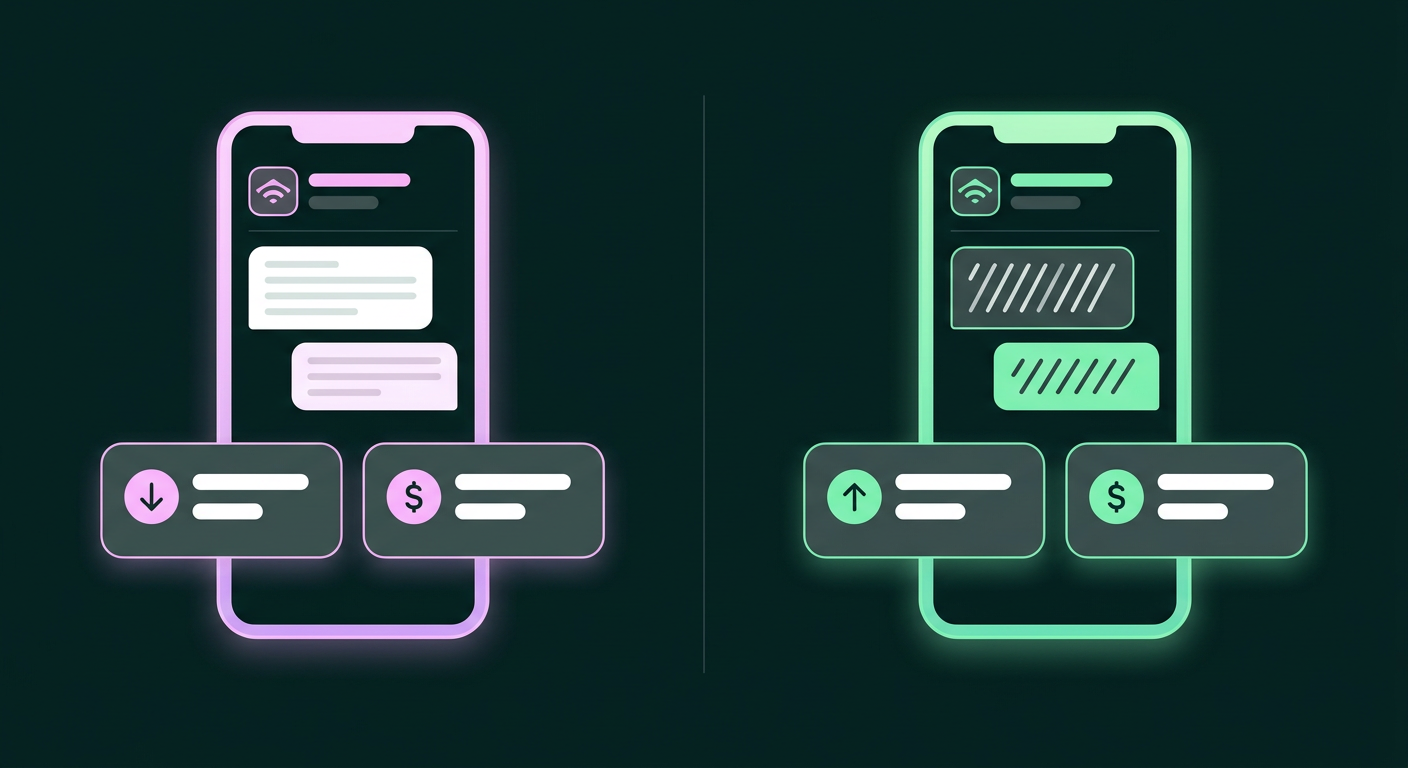
Many marketing leaders are stuck on an acquisition treadmill, pouring budget into finding new customers only to watch most of them buy once and then disappear. This forces brands back to platforms like Meta and Google to pay for the same customers all over again, a model that’s becoming completely unsustainable. The hard truth is that it can cost 5 to 25 times more to acquire a new customer (opens in a new tab) than to retain an existing one, yet most marketing stacks are still built for top-of-funnel acquisition, not profitable repeat business.
This leaves brands at a strategic fork in the road. Do you stick with the traditional playbook of email and SMS flows that get lost in the noise, or do you pivot to a retention engine designed to re-engage customers where they actually spend their time? The choice isn't just about tools; it's about whether you want to keep renting your audience from ad platforms or finally own the relationship yourself. This isn't a minor optimization. Studies show that increasing customer retention by just 5% can boost profits by a staggering 25% to 95%. The difference between a thriving brand and one constantly struggling for growth lies in solving the one-time buyer problem.
How to Choose: 4 Lenses for Evaluating Retention Tools
With the stakes this high, you need a clear way to evaluate your options. A true retention platform should be judged on four key business outcomes: its primary channel of engagement, its direct impact on profitability, its capacity for personalized interaction, and the operational lift required from your team. Forget vendor-supplied feature lists. To break the cycle of unprofitable acquisition, you have to assess tools based on what actually drives repeat purchases and customer loyalty.
The first and most critical lens is the Channel of Engagement. Where do you want to have conversations with your customers? Traditional platforms have long relied on email and, more recently, SMS, but their effectiveness for driving genuine engagement is waning. Today’s customers live in messaging apps, which makes direct message channels like Instagram and WhatsApp the new frontier for building relationships.
Next up is Profitability & Payback. Your retention tool shouldn't just be another line item; it needs to be a profit center. This means evaluating how quickly its activities translate into revenue that covers both the tool's cost and the initial customer acquisition cost (CAC). A long payback period means you're still losing money, even on a second purchase. This is especially vital when you consider that repeat customers spend 67% more on average (opens in a new tab), and your tool needs to unlock that value efficiently.
The third lens is the Degree of Personalization. Customers can spot a generic, automated message from a mile away. Real retention is built on conversations that feel 1:1, referencing a customer's specific history and behavior. Does the tool enable templated, one-to-many messages, or can it support dynamic, full-funnel conversations that adapt to the user? The answer determines whether your message feels like helpful guidance or just more marketing noise.
Finally, consider the Operational Lift. Your team is already stretched thin, so a powerful tool that requires a dedicated team to manage its complexities isn't a scalable solution. The ideal retention engine should automate the heavy lifting, running your lifecycle marketing in the background so your team can focus on strategy instead of manual campaign execution.
Klaviyo vs. Dynamo: A Head-to-Head Comparison
Using these criteria, let's assess two fundamentally different approaches. Klaviyo represents the all-in-one marketing suite, which excels at broad communication across email and SMS but can struggle with the high costs and low engagement those channels deliver for retention. Dynamo is a specialized DM retention engine that focuses exclusively on generating profitable repeat purchases through personalized 1:1 conversations in high-engagement channels like Instagram and WhatsApp. It's a contrast between a general-purpose toolkit and a purpose-built machine.
| Decision Criterion | All-in-One Suite (Klaviyo) | DM Retention Engine (Dynamo) |
|---|---|---|
| Channel of Engagement | Email & SMS (crowded) | Instagram & WhatsApp DMs (direct) |
| Profitability & Payback | Very long CAC payback | Fast payback on repeat sales |
| Degree of Personalization | Segment & template-based | Truly 1:1, behavior-driven |
| Operational Lift | High; requires active management | Low; automates lifecycle in DMs |
Interpreting the Showdown
The table shows two different strategies. An all-in-one suite like Klaviyo serves as a foundational system of record, which is essential for organizing customer data and executing broad campaigns across email and SMS. It lets you build foundational flows for welcome series, newsletters, and basic abandonment campaigns. When viewed through a retention lens, however, its limitations become clear. These channels are incredibly crowded, the economics are challenging, and the model often relies on the same old acquisition-centric thinking. For example, some analyses show that for a platform like Klaviyo, the customer acquisition cost can take 29 months to pay back (opens in a new tab), a timeline that simply doesn't work for brands needing profitable growth now.
"The CAC payback period is 29 months. This is a tough one! 29-month payback period for an acquired customer." , Clouded Judgement
In contrast, a DM retention engine like Dynamo is built for one job: turning one-time buyers into profitable repeat customers. It doesn’t try to replace your CRM; it plugs into it. Dynamo takes the rich customer segments you've already built in a platform like Klaviyo and activates them in a channel where conversations actually happen. By focusing on Instagram and WhatsApp DMs, it reaches customers with 80%+ open rates, a world away from email's performance. The personalization isn't based on static templates but on dynamic, AI-powered conversations that guide a user through their entire lifecycle, from re-engagement to their next purchase. This specialized approach is designed to directly increase customer lifetime value, which is critical when you consider that repeat customers are projected to spend up to 70% more than new ones. The focus is entirely on converting existing customers again, which provides a much faster and more reliable path to profitability.
Recommendation: Who Should Use Klaviyo vs. Dynamo?
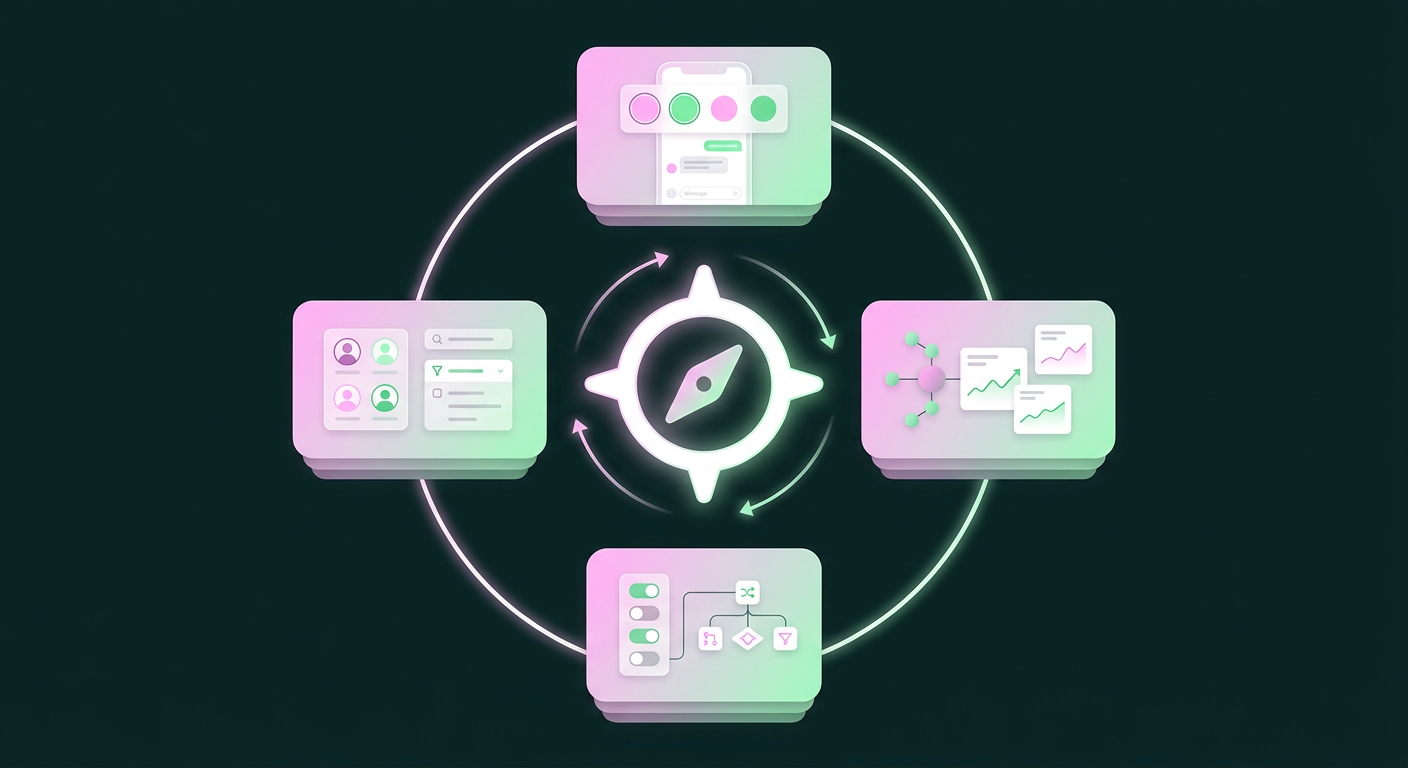
So which platform is right for your brand? The choice hinges on your current stage of growth and your most pressing bottleneck. If you're building your marketing infrastructure from scratch, an all-in-one suite is your starting point. If you've hit a growth plateau and are being crushed by acquisition costs, a specialized DM retention engine is the logical next step.
Choose the All-in-One Suite If...
You're in the early stages of building your marketing function and need a central system of record. Your primary goal is getting foundational automations running across email and SMS. You need one platform to manage your customer list, send newsletters, and build basic lifecycle flows like a welcome series or a simple cart abandonment email. At this stage, your focus is on breadth, establishing a baseline of communication across the most common channels before the cost and complexity of a specialized tool is justified.
Choose the DM Retention Engine If...
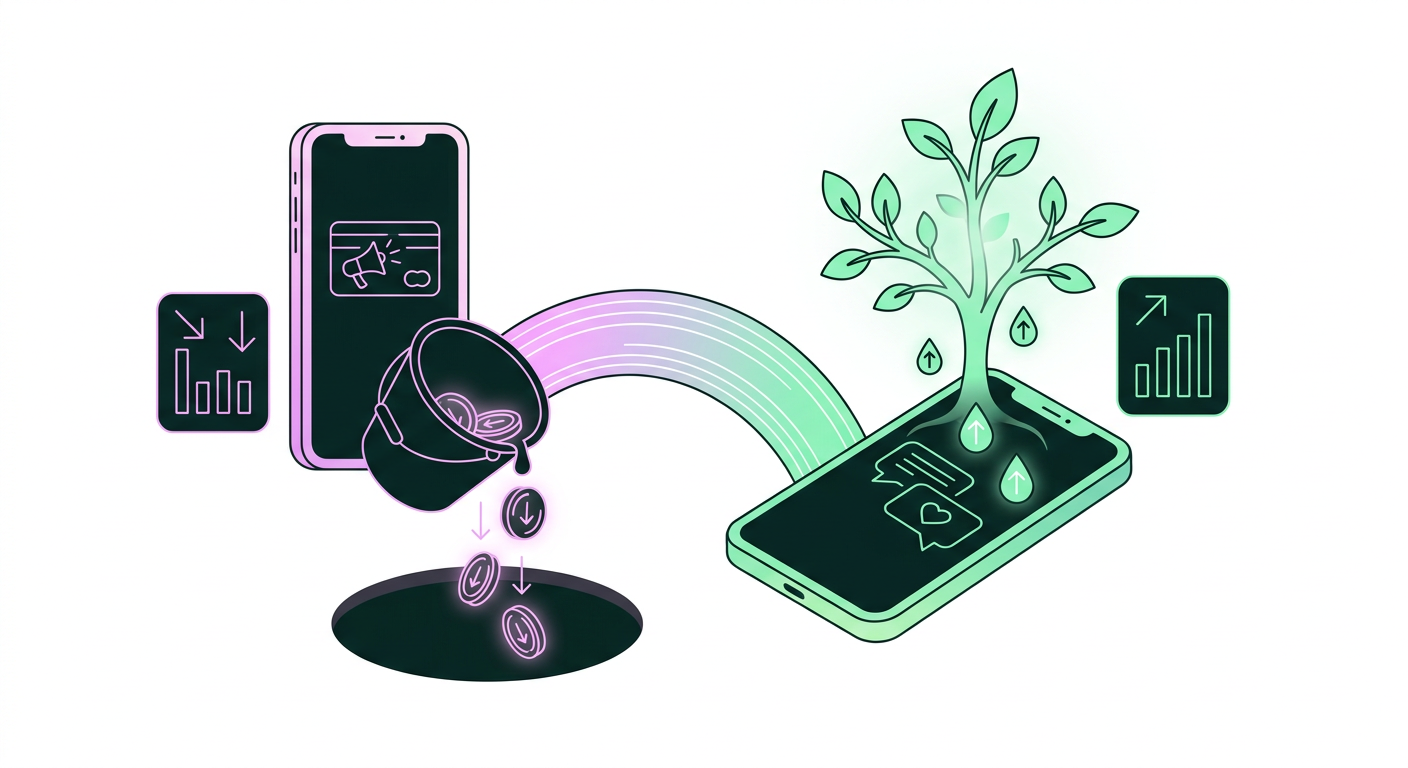
You have an established marketing system but have hit a wall. Your email open rates are stagnant, your SMS list is expensive to maintain, and your paid social budget keeps climbing just to bring back people who have already bought from you. Your core problem is no longer acquisition; it's the "leaky bucket" of one-time buyers. You recognize that your most valuable growth opportunity lies in convincing existing customers to buy a second, third, and fourth time. Because repeat customers spend significantly more (opens in a new tab), a tool purpose-built to facilitate that second purchase is the highest-leverage investment you can make. You need a way to cut through the noise and have real conversations, which is why many brands in this spot seek one of the key Klaviyo alternatives to escape the acquisition treadmill that focuses purely on retention. Dynamo is built for this exact scenario, providing a range of use cases for automated DM conversations (opens in a new tab) that drive repeat sales without additional ad spend.
Stop Renting Customers, Start Owning Your Audience
Ultimately, this decision is less about comparing two software products and more about choosing a go-to-market strategy. You can either continue to rent your customer relationships from ad platforms month after month, or you can build an owned channel to drive profitable retention on your own terms. The all-in-one model often keeps you on the acquisition treadmill, where even your "retention" efforts are burdened by long and often unprofitable 29-month payback periods on customer acquisition.
The path to sustainable, profitable growth doesn't come from finding a cheaper way to acquire yet another first-time buyer. It comes from building a reliable engine that turns your existing customers into loyal, repeat purchasers. By moving the conversation to the direct, personal, and high-engagement environment of Instagram and WhatsApp DMs, you create a direct line to your audience that you control. This approach allows you to systematically increase your second purchase rate with DM automation, breaking the dependency on costly ads and finally making your customer base a true asset.
Frequently asked questions
How do I decide whether to prioritize acquisition or retention right now?
You should prioritize retention as soon as your acquisition engine is functional but becoming too expensive. While acquisition is always necessary, it costs 5 to 25 times more to get a new customer than to keep an existing one. If your cost-per-acquisition is rising and your growth is slowing, it's a clear signal to shift focus to retention, which offers a more profitable and sustainable path to growth.
How can I actually increase my customer lifetime value (LTV)?
The most direct way to increase LTV is to generate more repeat purchases from your existing customer base. This means focusing on re-engagement, cross-selling, and upselling through high-engagement channels like Instagram DMs where your messages are personal and behavior-driven. Since studies show that repeat customers can spend up to 70% more than new ones, every successful repeat purchase has a significant impact on LTV.
What's the best way to turn my one-time buyers into repeat customers?
Engage them where they are most active with messages that feel personal. For many brands, this means moving beyond email and using Instagram or WhatsApp DMs. Instead of sending generic promotions, use data from your CRM to trigger automated, 1:1 conversations that could offer a complementary product, provide usage tips for their first purchase, or share exclusive early access to a new collection. The goal is to start a real conversation, not just send another ad.
How does focusing on retention help me get past a revenue plateau?
A revenue plateau often happens when the cost to acquire a new customer meets or exceeds the profit from their first purchase, at which point spending more on ads just digs a deeper hole. Focusing on retention breaks this cycle. According to studies, even a 5% improvement in customer retention can increase profits by 25% to 95%. This new profit comes without a corresponding increase in ad spend, giving you the capital and momentum to break through your plateau.