
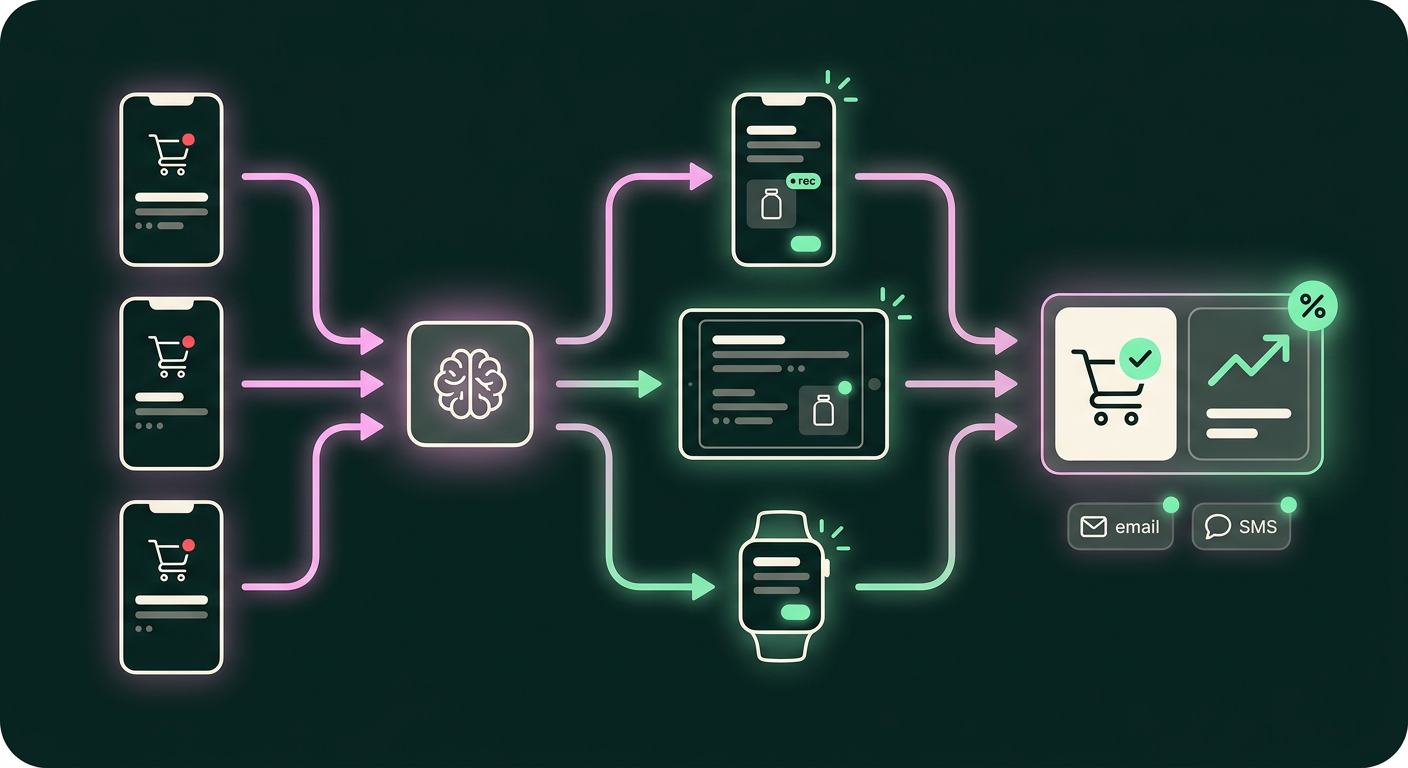
The traditional playbook for recovering abandoned carts is broken. Standard cart recovery emails and generic SMS notifications hit a wall of customer indifference because they land in channels already saturated with marketing noise. The solution isn't to send more messages; it's to shift the conversation to a more personal channel. This guide shows you how to use AI-personalized direct messages on Instagram and WhatsApp to reach high-intent shoppers where they actually pay attention and bring them back to complete their purchase.
Why Your Abandoned Cart Emails Are Being Ignored
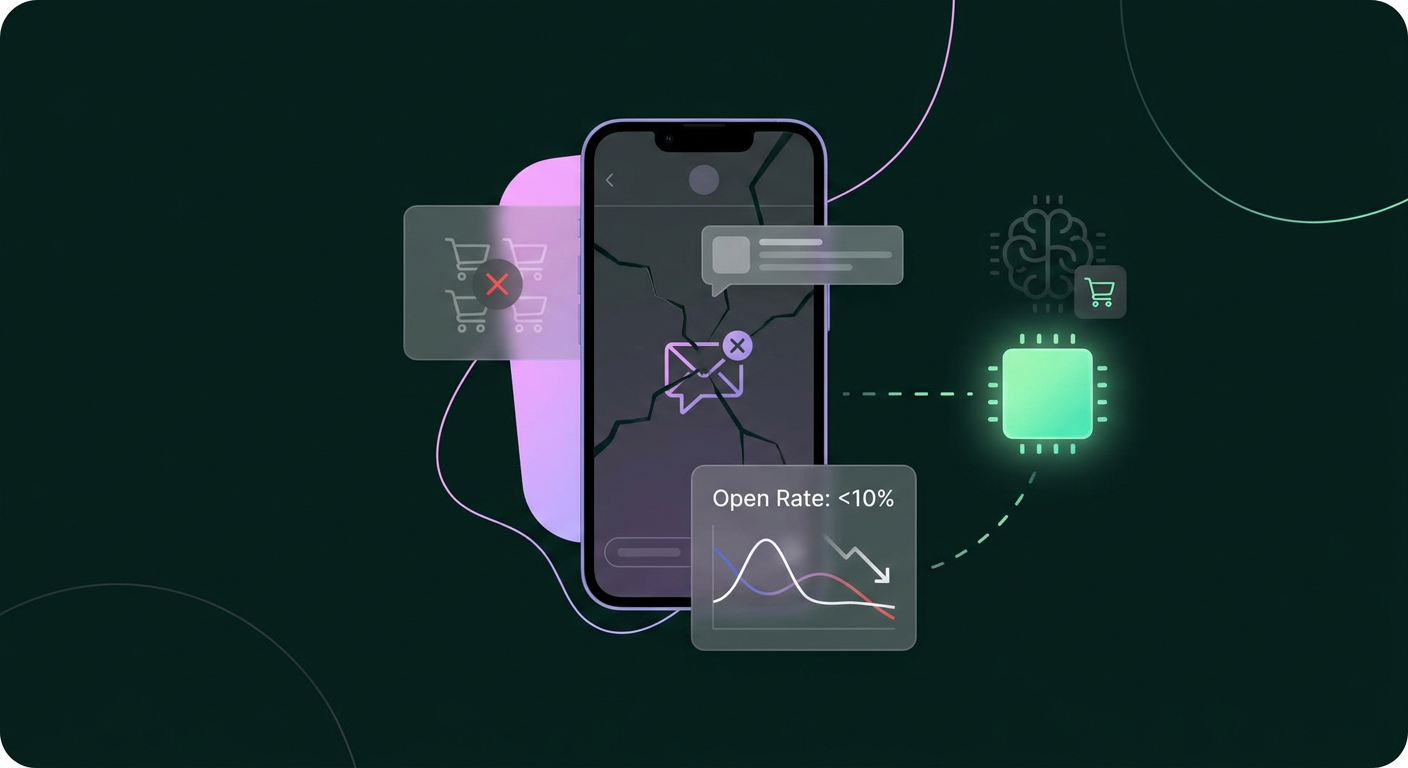
The core problem is a battle for attention and trust. Your abandoned cart messages are competing in noisy channels that customers have learned to ignore, so even though over 70% of carts are abandoned, the standard email response gets lost in an overflowing inbox.
For years, the default response to a lost cart was a templated email sequence, but customers today are simply overwhelmed. Their inboxes are so crowded that they've developed powerful filters to tune out generic marketing. The statistics are stark: an average cart abandonment rate of 70% means most checkout processes that are initiated never actually finish (opens in a new tab).
The problem is even more (opens in a new tab) pronounced on mobile devices, where most customers shop. Though mobile shopping generates the bulk of e-commerce traffic, its abandonment rate is significantly higher than on desktop.
The mobile abandonment gap is 12 percentage points and widening: Mobile cart abandonment stands at 76.98% compared to 64.78% on desktop, a 12.2 percentage point gap. Despite mobile commerce representing 73% of all eCommerce traffic, the checkout experience on smaller screens continues to create disproportionate friction. , Braze (opens in a new tab), 2024
This isn't a sign that your products are wrong or your prices are too high; it signals your recovery method is outdated. You're trying to have a personal conversation in a public square, and your message is getting drowned out.
The Real Cost of a Leaky Funnel
Getting drowned out has immense financial costs. A Baymard Institute analysis found the average cart abandonment rate is 70.19%, which means you're losing seven out of every ten customers who show clear intent to buy. This represents a massive, untapped revenue opportunity that can be captured by switching to higher-engagement channels.
That 70% figure is a direct measure of lost revenue. For every 100 shoppers who add an item to their cart, about 70 will leave without paying. You invested resources to get them to your site and browse your products, so losing them at the final hurdle because your recovery email was ignored is a significant financial drain.
The opportunity cost becomes clearer when you compare traditional channels with modern conversational ones. While SMS has shown promise with open rates approaching 98% (opens in a new tab), the real power for conversion is in direct messaging platforms. At Dynamo, we see DM open rates consistently above 80%, with WhatsApp often hitting 90-98%. Most importantly, the conversion from these DMs is 3-5x higher than from push notifications. Sticking with underperforming channels means you're actively leaving a large, predictable revenue stream on the table.
A Modern Approach to AI-Personalized Cart Recovery
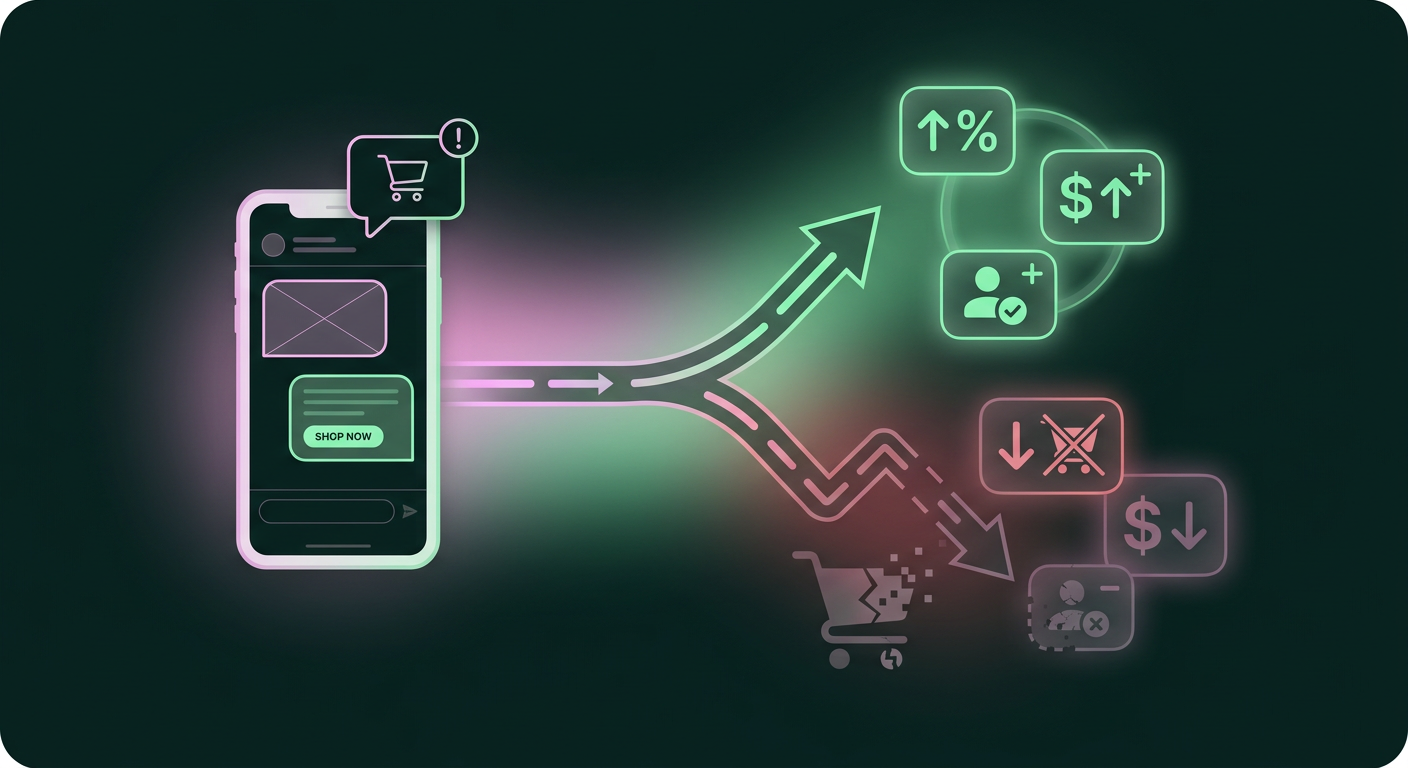
A modern recovery strategy stops relying on ignored emails and instead deploys a three-phase approach. First, reach shoppers on their preferred conversational channels like Instagram and WhatsApp. Second, use AI to generate personalized, helpful messages at scale. And finally, track what matters most: recovered revenue.
Moving from a leaky bucket to a high-converting recovery engine requires a strategic shift in your channel, messaging, and measurement. This isn't just about swapping tools; it's about rethinking the entire interaction from the customer’s perspective.
Phase 1: Reach Shoppers Where They Are (Instagram & WhatsApp)
The first step is to change the conversation's venue. Instead of another email in a crowded inbox, you send a helpful nudge on a channel where the customer actually communicates with friends and family, like Instagram DMs or WhatsApp. A message here feels more personal and urgent, which is why open rates are typically over 80%, so your message will actually be seen. This move is foundational to a better abandoned cart recovery strategy. The goal is to meet customers in a familiar environment with a relevant, timely message that feels more like helpful service than an ad.
Phase 2: Use AI to Personalize Messages at Scale
Once you're in the right channel, the message itself has to be right. A generic "You left this in your cart!" DM is only a marginal improvement over a generic email, which is why AI-driven personalization is what unlocks real conversion power at scale. An AI system can generate unique messages based on cart items, browsing history, or purchase patterns. It can ask a relevant question ("Hey, we saw you were looking at the blue runners. Did you have a question about sizing?") or offer a contextual alternative, making the outreach feel genuinely helpful. The impact is significant. Projections show that by 2026, AI-powered recovery emails could achieve an 8.17% conversion rate (opens in a new tab), nearly double the 4.1% rate for standard templates. When you apply this same intelligence to high-engagement channels like DMs, the effect is even more powerful.
Phase 3: Track Recovery and Revenue, Not Just Open Rates
Finally, you have to measure what actually matters: revenue. High open rates are just a vanity metric if they don't lead to sales. A modern recovery platform must provide clear attribution and track the revenue won back through these conversations. For instance, Dynamo's platform optimizes for bottom-line results, showing an average 8% drip conversion rate. This changes the focus from "Did they see it?" to "Did it work?". Tracking recovered revenue clarifies your ROI and helps you refine your approach. This also works for multi-step sequences. Data from over 11,000 stores shows that using a multi-step email series recovers 153-231% more revenue than a single email. Applying this sequenced logic to DMs, which offer higher engagement and deeper personalization, can turn a simple recovery tactic into a core revenue driver.
Common Mistakes That Kill Conversion
While this approach is powerful, it has pitfalls. The two most damaging mistakes are treating low-intent browsers the same as high-intent shoppers and sending generic, impersonal messages. Both errors fail to respect customer context and intent, eroding trust and making your outreach easy to ignore.
Adopting a new channel also introduces new ways to get things wrong. Success isn't guaranteed by simply automating a DM for every abandoned cart. Your execution is critical, and a few common errors can easily undermine the entire strategy.
Don't Treat Abandoned Browse Like an Abandoned Cart
There's a significant difference between a shopper who browsed product pages and one who added an item to their cart and started checkout. The first shows curiosity, while the second shows clear purchase intent, and your messaging must reflect that difference.
A high-urgency "Complete your purchase!" message to someone who was just browsing feels aggressive and can damage trust. A lighter touch, like a follow-up on new arrivals a few days later, is a much better fit. For the high-intent cart abandoner, however, a direct and helpful nudge is often welcome. They were already close to buying, so a message addressing a potential blocker like shipping or sizing can be the final push they need. Conflating these two distinct journeys will only annoy potential customers and kill conversions.
Don't Send Generic, Impersonal Blasts
The strategic advantage of direct messages is their personal, one-to-one feel. Sending a generic, robotic message completely negates that advantage. True personalization goes beyond just using a first name; it must be contextually aware.
A message like, "We noticed you left the Heritage Backpack in your cart. It's one of our best-sellers, especially in forest green. Let us know if you have any questions about the material!" is far more effective than "You have items in your cart." The first feels like a helpful note from a person, while the second feels like a system alert. AI is the key to achieving this kind of personalization at scale. By avoiding a generic broadcast feel, you maintain the channel's integrity and build a connection that encourages not just a purchase, but future loyalty. Effective Instagram DM automation is about scaling this personal touch, not eliminating it.
What "Done" Looks Like: A New, High-Converting Revenue Stream
Done right, this approach transforms your biggest revenue leak into a reliable and efficient sales channel. You move from ignored, low-engagement emails to automated, personalized DM conversations that delight customers and consistently recover sales. Your abandoned cart problem becomes a powerful, high-converting revenue stream.
The "before" state is one of frustration and missed opportunities, where you're fighting for attention in crowded inboxes, watching analytics show dismal engagement, and knowing that motivated buyers are being lost. It’s a reactive battle that yields mediocre results and can even annoy your customers.
The "after" state is one of quiet, automated efficiency. In its place is an intelligent system that identifies high-intent shoppers and reaches out with a perfectly timed, context-aware DM. Instead of shouting, you're having helpful conversations. The result is open rates over 80% and an 8% drip conversion rate that measurably impacts your top line. This is an offensive strategy that builds stronger customer relationships (opens in a new tab) and creates a predictable revenue stream from your existing traffic, making your entire marketing spend more efficient.
Frequently asked questions
Why do my abandoned cart emails seem so ineffective?
Your abandoned cart emails are likely ineffective because they are competing in a channel that is oversaturated with marketing. While studies show around 70% of all carts are abandoned, the traditional email response gets lost in cluttered inboxes that people are conditioned to ignore. In contrast, channels like SMS and DMs have vastly higher engagement. With SMS open rates nearing 98%, it's clear the problem isn't the customer's interest, but the channel you're using to reach them.
Are abandoned cart emails even worth the effort anymore?
Yes, but their role has changed. Instead of being your only line of defense, they should be part of a broader, multi-channel strategy. Data shows that sending a multi-step email series can win back 153-231% more revenue than a single email, so a well-crafted sequence is still valuable. For maximum impact, however, these emails should be supplemented with messages in higher-engagement channels like DMs, which boast open rates over 80% and are far more likely to be seen and acted upon immediately.
What's the best way to recover abandoned carts if not email?
The most effective way to recover abandoned carts today is by using AI-personalized direct messages on platforms like Instagram and WhatsApp. These channels have dramatically higher engagement, with open rates often exceeding 90% on WhatsApp. By combining this high-visibility channel with AI-driven personalization that makes each message feel context-aware and helpful, you can achieve significantly higher conversion. Research even predicts that AI-powered recovery messages can double the conversion rate of standard templates, making this combination the clear modern solution.
How do I reduce my Shopify store's cart abandonment rate?
While you can never eliminate cart abandonment entirely, you can reduce it by optimizing your checkout process. Analysis from the Baymard Institute shows the average rate is over 70%, often due to friction like unexpected shipping costs, a complicated checkout form, or forcing users to create an account. Simplifying these steps can lower your initial abandonment rate. For the shoppers who still leave, however, the most effective strategy is not just reduction but recovery through a personalized, multi-channel messaging approach.
What's the difference between abandoned browse and abandoned cart messages?
The key difference is user intent, which means your messaging must also be different. An "abandoned browse" happens when a user views a product page and leaves; their intent is low, so a pushy message is inappropriate. An "abandoned cart" occurs when a user adds an item to their cart and starts checkout, signaling high purchase intent. A browse abandonment message should be a gentle, delayed follow-up, while a cart abandonment message can be a more direct, helpful nudge to complete the purchase.
Can I really use Instagram bots to increase conversions?
Yes, but it's crucial to think of them as "DM automation" tools rather than generic messaging bots. Sending impersonal, robotic messages will only hurt your brand. The key to increasing conversions is using a sophisticated platform that enables personalized, one-to-one conversations at scale. When used strategically, these automated systems can be incredibly effective. For example, personalized DM drip campaigns can achieve an 8% drip conversion rate by delivering relevant, context-aware messages that feel human and helpful, turning a simple interaction into a completed sale.