
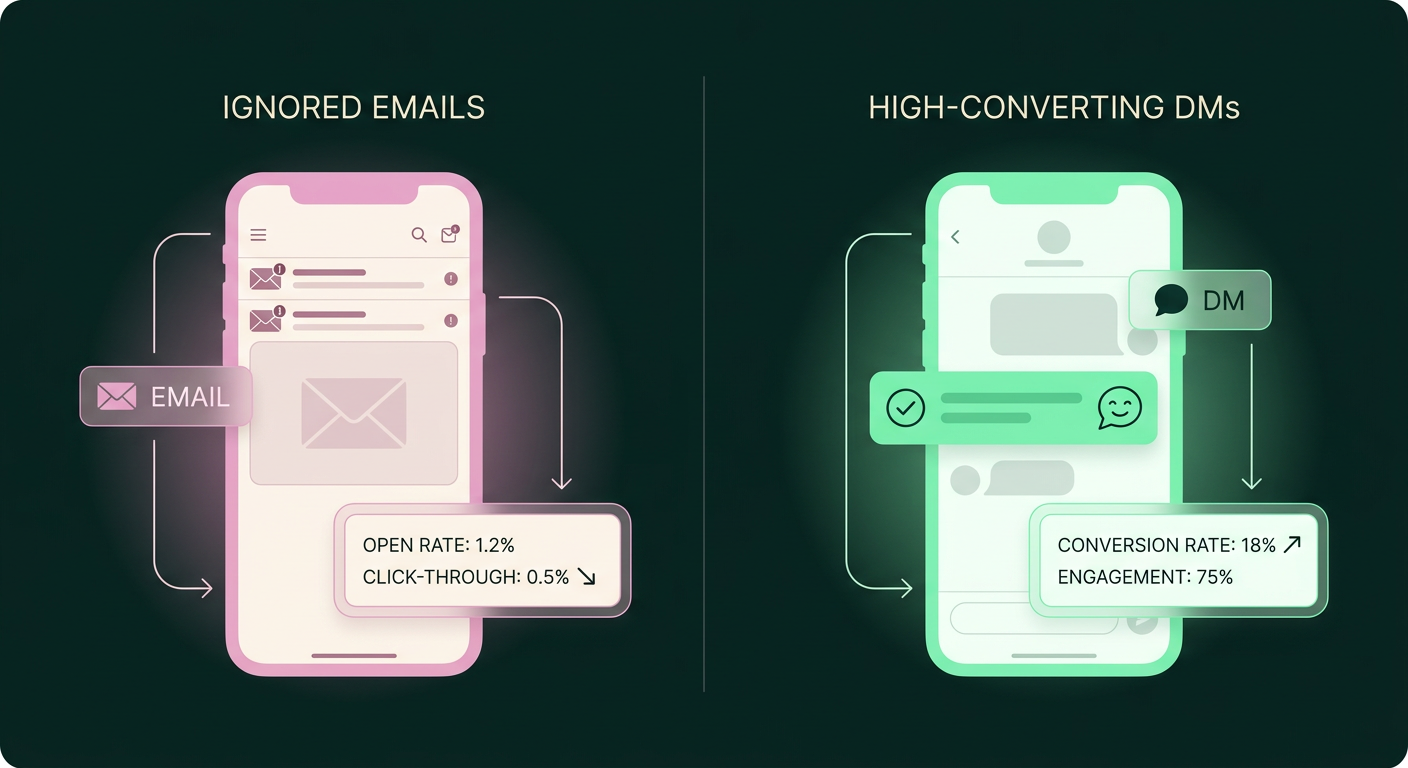
Your marketing emails are being ignored. It’s a frustrating reality for modern brands: you’ve built a substantial customer base, but a huge portion of it is effectively unreachable through traditional channels. This forces you into a costly cycle of paying for retargeting ads just to communicate with people who have already bought from you. While customer engagement platforms like Braze promise a unified view, they often just double down on the very channels, like email, that are suffering from declining visibility. The result is a marketing stack that’s powerful on paper but can't break through the noise of a crowded inbox, leaving revenue on the table and driving up ad spend.
The search for Braze alternatives isn't just about finding a cheaper or slightly different set of features. It’s about fundamentally rethinking how to connect with an audience that has learned to tune out promotional messages. The right alternative won’t just manage customer communication; it will move it to a place where it actually gets seen.
Why Your Customers Aren’t Seeing Your Messages
The core problem isn't your messaging; it's the channel. Customers are so overwhelmed by the sheer volume of marketing emails that they automatically ignore, delete, or filter them into a promotional tab they never check. This behavior, often called "email blindness," is the primary reason your re-engagement campaigns are failing to deliver the revenue they should.
The issue isn't that your customers dislike your brand, but simply one of attention saturation. An eye-opening study from Airship revealed a stark truth: a staggering 79% of consumers frequently disregard or delete marketing emails (opens in a new tab) from brands they have willingly subscribed to. Your carefully crafted win-back sequence or VIP offer is likely being sent directly to a digital graveyard without ever being read. This isn't a failure of your marketing team's creativity; it's a systemic failure of the channel itself.
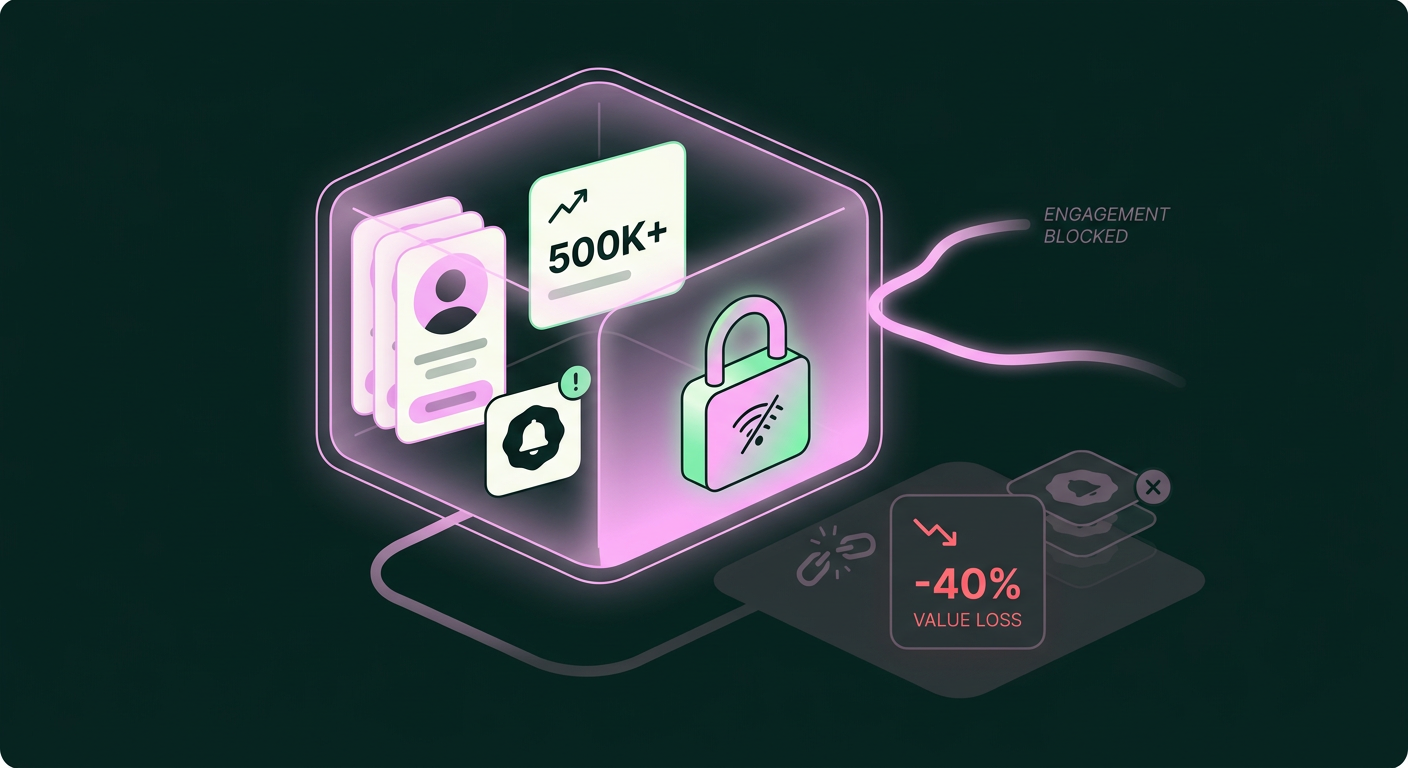
When your primary owned channel for reaching customers becomes ineffective, the business consequences are immediate. You lose the ability to nurture repeat purchases, announce new products, or re-engage lapsed users without paying a premium. This forces a dependency on paid advertising, turning what should be a profitable, owned relationship into a rented one. You end up paying platforms like Facebook or Google just to have a conversation with someone already in your database, a deeply inefficient cycle that erodes margins and makes sustainable growth much harder to achieve.
How to Choose Your Next Engagement Platform
To break this cycle, you need to choose your next platform based on its ability to solve the core problem of channel blindness. The right Braze alternative isn't just another flavor of an all-in-one suite; it's a strategic shift toward where your customers are actually engaged. The key criteria are deep reach in high-engagement channels, automation that enables true 1:1 personalization, simplicity for marketing teams, and a direct, measurable impact on reducing paid ad spend.
Channel Reach & Open Rates
The first criterion is the most important: can the platform reliably get your message in front of your customers? This isn't about the sheer number of channels a platform supports. While many platforms boast a long list, they aren't solving the core issue if they primarily lean on email and standard push notifications. You should be looking for platforms that specialize in channels where consumers spend their time and pay attention, like WhatsApp, Instagram DMs, and Facebook Messenger. These are conversational environments where an 80-90% open rate is the norm, not the exception, creating a direct line to your audience that email can no longer provide. With WhatsApp's user base surpassing 2 billion people in 2020, the scale of this opportunity is hard to ignore.
Personalization and Automation Quality
True personalization goes far beyond inserting a customer's first name into a template. To re-engage an audience that has tuned out, your messages need to feel like they are part of an individual conversation. Your next platform should enable automation triggered by specific user behaviors, like viewing a product, abandoning a cart, or reaching a new VIP tier, and deliver a message that is contextually relevant and personal. This is especially critical for cart abandonment, where a 2023 Baymard Institute study found that the average abandonment rate was 70.19%. That means moving away from generic broadcasts and toward a system that can manage thousands of concurrent 1:1 conversations, making each customer feel seen and understood.
Ease of Use for Marketing Teams
The most powerful platform is useless if your marketing team can't use it without constant support from engineers. A complex setup and campaign management process creates a bottleneck that slows down your ability to react to customer behavior and market trends. Look for a solution built with the lifecycle marketer in mind. A platform with an intuitive interface, such as a visual drag-and-drop flow builder (opens in a new tab), empowers your team to design, launch, and iterate on campaigns independently, making your entire marketing operation more agile.
Impact on Paid Ad Spend
Ultimately, the goal of a new engagement platform is to drive revenue more efficiently. A key measure of success is its ability to reduce your reliance on paid retargeting. By establishing a reliable, owned channel with high open rates, you can shift budget away from ads. When you can confidently reach a lapsed customer with a personalized win-back offer via WhatsApp instead of a Facebook ad, you are directly replacing a costly variable expense with a more scalable, owned-channel strategy. This is one of the most important ways to escape the acquisition treadmill and build a more profitable business.
Comparing All-in-One Suites vs. DM-First Platforms
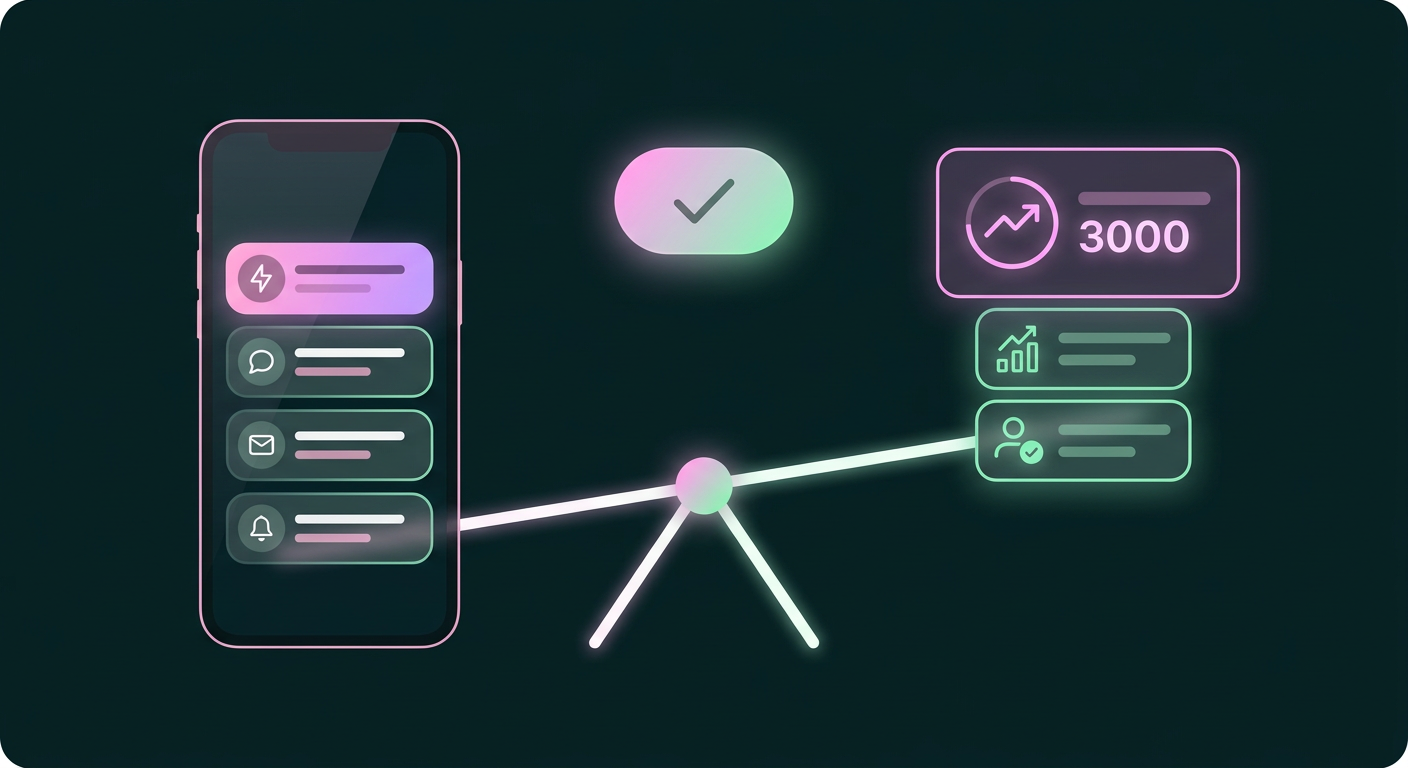
While broad all-in-one suites offer consolidation across many channels, they often fail to solve the fundamental engagement problem because they remain centered on the same crowded ones. In contrast, DM-first platforms are built specifically to break through the noise by focusing on the high-engagement, conversational channels where customers are actually active.
With the criteria from the last section in mind, the choice comes down to two distinct approaches. On one side are the traditional all-in-one engagement suites, which function as a Swiss Army knife for customer communication. On the other is the more specialized, DM-first platform.
Traditional, all-in-one platforms position themselves as a single hub for all customer touchpoints. They offer features across a wide array of channels, from email and SMS to push and in-app messages (opens in a new tab), often layering on personalization features. This sounds appealing from a tool-consolidation perspective, but the catch is that this breadth often comes at the expense of depth. These platforms are typically email-centric in their DNA and treat newer channels like WhatsApp as just another endpoint for the same old template-based messages. They consolidate your tools but don't fundamentally change your ability to overcome channel blindness.
DM-first platforms, like Dynamo, take a completely different approach. They start from the premise that the most valuable customer interactions happen in conversational channels. Instead of trying to be everything to everyone, they focus on deep integration with Instagram DMs, Facebook Messenger, and WhatsApp. Dynamo is built to send personalized, 1:1 messages triggered by real-time customer data from your CRM. This isn't about sending a generic message to your Messenger list; it's about sending a specific, automated message to a customer who just abandoned a cart or reminding a VIP about their expiring points. By focusing on channels with 90%+ open rates, this approach directly solves the problem of being ignored and rebuilds your owned marketing channel.
The following table summarizes the key differences in their approach:
| Criteria | All-in-One Suites | Dynamo (DM-First Platform) |
|---|---|---|
| Channel Reach | Broad but shallow | Deep in high-engagement DMs |
| Personalization | Template-based | True 1:1 conversations |
| Ease of Use | Complex setup | Built for lifecycle marketers |
| Ad Spend Impact | Minimal reduction | Directly replaces retargeting |
Interpreting this comparison leads to a clear strategic choice. If your primary goal is operational efficiency and consolidating a set of channels that are already performing well for your brand, an all-in-one suite could make sense. But if your core challenge is that your customers are no longer responding to your messages and you're burning cash on retargeting ads, you don't need another generic messaging tool. You need a new strategy, and a DM-first platform is designed to execute it. This is where you can rethink your Instagram DM sales strategy and turn it into a powerful engine for your business.
Which Alternative Is Right For You?
If your main goal is to solve email blindness, drive revenue from your existing customer base, and cut down on ad spend, a DM-first platform is the superior choice. However, if your challenge is simply consolidating multiple healthy channels under one roof for operational efficiency, a traditional all-in-one suite may suffice. The right choice depends entirely on the problem you're trying to solve.
Choose an all-in-one suite if you are primarily focused on tool consolidation. If your email, SMS, and push campaigns are already generating strong engagement and your main frustration is bouncing between different dashboards, then a platform that brings everything together makes sense. Some platforms provide an AI-native platform integrating personalization (opens in a new tab) across web, mobile, and messaging channels. This is an operational efficiency play, not a strategic one; you're just looking to execute your current strategy more smoothly.
Choose a DM-first platform like Dynamo if your primary goal is re-engagement and revenue growth. If your reality is declining email open rates and a growing retargeting budget, you have a channel problem, not a tool problem. Your priority should be to meet customers on the platforms where they actually spend their time. Dynamo is built for this exact purpose. By connecting directly to your CRM, it automates personalized lifecycle campaigns, from cart abandonment to win-backs, in the high-visibility DM channels that customers treat like text messages. This turns your silent customer database into an active, responsive audience, allowing you to drive repeat purchases and loyalty without paying for ads.
What To Do Next
Now that you understand the path to re-engaging your customers, the next step is to stop investing in channels that no longer work and start building your presence on the ones that do. It's time to see what a DM-first marketing strategy can accomplish.
The cycle of sending ignored emails and then paying for expensive ads to reach the same people is a broken model, and continuing to invest in it only guarantees more of the same. The solution is to transition your customer marketing efforts to the conversational channels where attention and engagement are abundant.
Some starter platforms, one of which was founded in 2015, offer a starting point by enabling basic automation across Instagram, Messenger, and WhatsApp. This can be a good way to test the waters of DM marketing. However, for brands focused on full-funnel lifecycle marketing, a more specialized platform is necessary to truly replace the revenue lost from ineffective email campaigns and reduce your reliance on paid media.
By shifting your strategy to a DM-first approach, you can finally have meaningful conversations with your customers at scale, turning your existing audience into your most powerful engine for growth. Explore the different use cases for DM automation (opens in a new tab) and see how it can directly address your brand's biggest challenges, from cart recovery to increasing customer lifetime value.
Frequently asked questions
How can I actually reach my customers who never open marketing emails?
The most effective way is to connect with them on the channels where they are already active and engaged, which means shifting from email to conversational platforms like WhatsApp and Instagram DMs. Since a vast majority of consumers ignore or delete marketing emails, moving to a channel with much higher open rates is the only reliable way to ensure your message is actually seen.
How do I make my lifecycle marketing more personal without just spamming inboxes?
The key is to use a platform that enables behavior-triggered automation and delivers messages as 1:1 DMs rather than impersonal broadcasts. When a message for an abandoned cart or a VIP reward is sent directly to a customer's Messenger or WhatsApp in response to a specific action they took, it feels like a personal, helpful conversation instead of generic marketing.
Are Instagram DMs really more effective than email for marketing?
For engagement and conversion, yes. While email serves a purpose for newsletters and official communications, Instagram DMs have significantly higher open rates, often exceeding 80%, because they are conversational, immediate, and less saturated. For any lifecycle marketing that depends on getting a customer's attention, the high visibility of DMs makes them a far more effective channel.
How can I reduce what I spend on retargeting ads to my existing customers?
The best way to reduce retargeting spend is to build a reliable, owned marketing channel that allows you to reach your customer base without paying for ads. By using a DM-first platform to communicate with customers on WhatsApp or Instagram, you create a direct line for win-back campaigns and personalized offers. Every customer you successfully re-engage through this channel is one less person you need to pay to reach with an ad.
What's the best way to start automating personalized DMs for my e-commerce store?
You can get started easily with a platform that has an intuitive interface. Some tools offer a visual drag-and-drop builder that makes it accessible for non-technical marketers to create their own automations. According to one review, the learning curve can be as short as 1-2 hours for building simple flows. Start with a high-impact use case, like abandoned cart recovery, and expand from there as you get more comfortable.
Why should I think about moving some of my marketing budget from email to Messenger?
You should allocate your budget based on where you get the best return, which today means following your customers' attention. If your email engagement is low and open rates are declining, spending more money there is unlikely to produce better results. Shifting that budget to a channel like Facebook Messenger, where open rates are high and real conversations are possible, allows you to invest where your messages will actually be read and acted upon.