
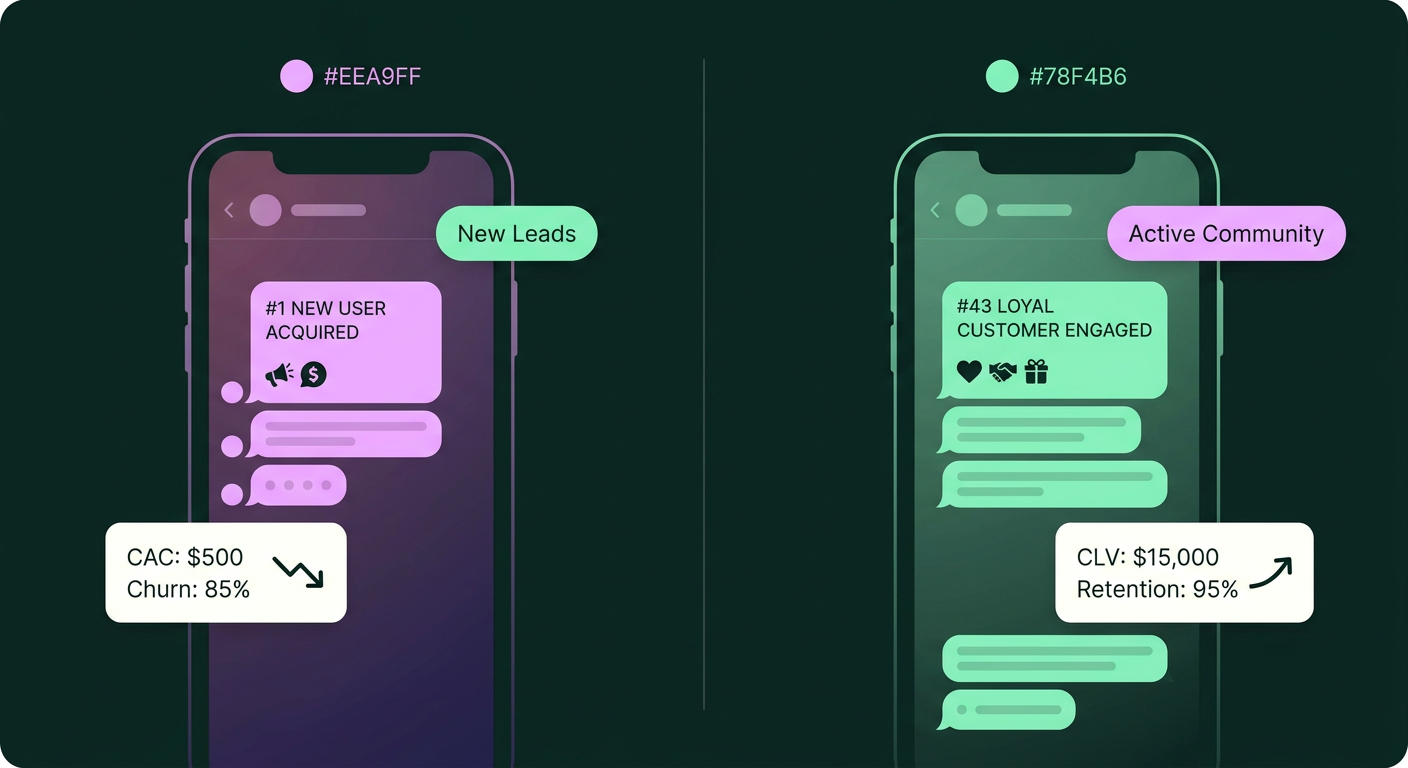
Most marketers operate on a simple assumption: to grow your brand, you just need more customers. It’s the default logic that drives budgets and campaign planning, the belief that the path to a bigger business is paved with new leads and first-time buyers. The problem is, this widely held belief is deeply flawed. Chasing a constant stream of new customers isn't just the most expensive way to grow; for many brands, it’s completely unprofitable. In fact, many direct-to-consumer companies actually lose an average of $29 on every newly acquired customer (opens in a new tab) before a second purchase is ever made. While most businesses pour their resources into acquisition, they overlook the far more valuable asset they already have: their existing customer list.
Why the Acquisition Treadmill Feels Like Progress
If an acquisition-first strategy is a money pit, why do so many smart marketing teams stay on that treadmill? The answer lies in its deceptive sense of momentum. Acquisition metrics are tangible and immediate. You run an ad, you see the clicks, and you get a notification for a new sale. Dashboards light up and charts move up and to the right, creating the satisfying feeling that you're actively building the business. The entire digital advertising ecosystem is engineered to reinforce this cycle, rewarding top-of-funnel activity with simple, visible metrics.
This focus creates a powerful feedback loop where, because you’re pouring all your effort into filling the top of the funnel, you naturally attribute all success to those activities. But this model ignores the true cost of that first conversion. Acquiring a new customer can cost five to seven times more (opens in a new tab) than selling to someone who has already bought from you once. When you aren't actively working to keep those hard-won customers, you're forced to run faster and spend more on acquisition just to replace the ones who churn. It feels like progress, but you’re really just paying to stand still.
The Hidden Costs of a Leaky Bucket
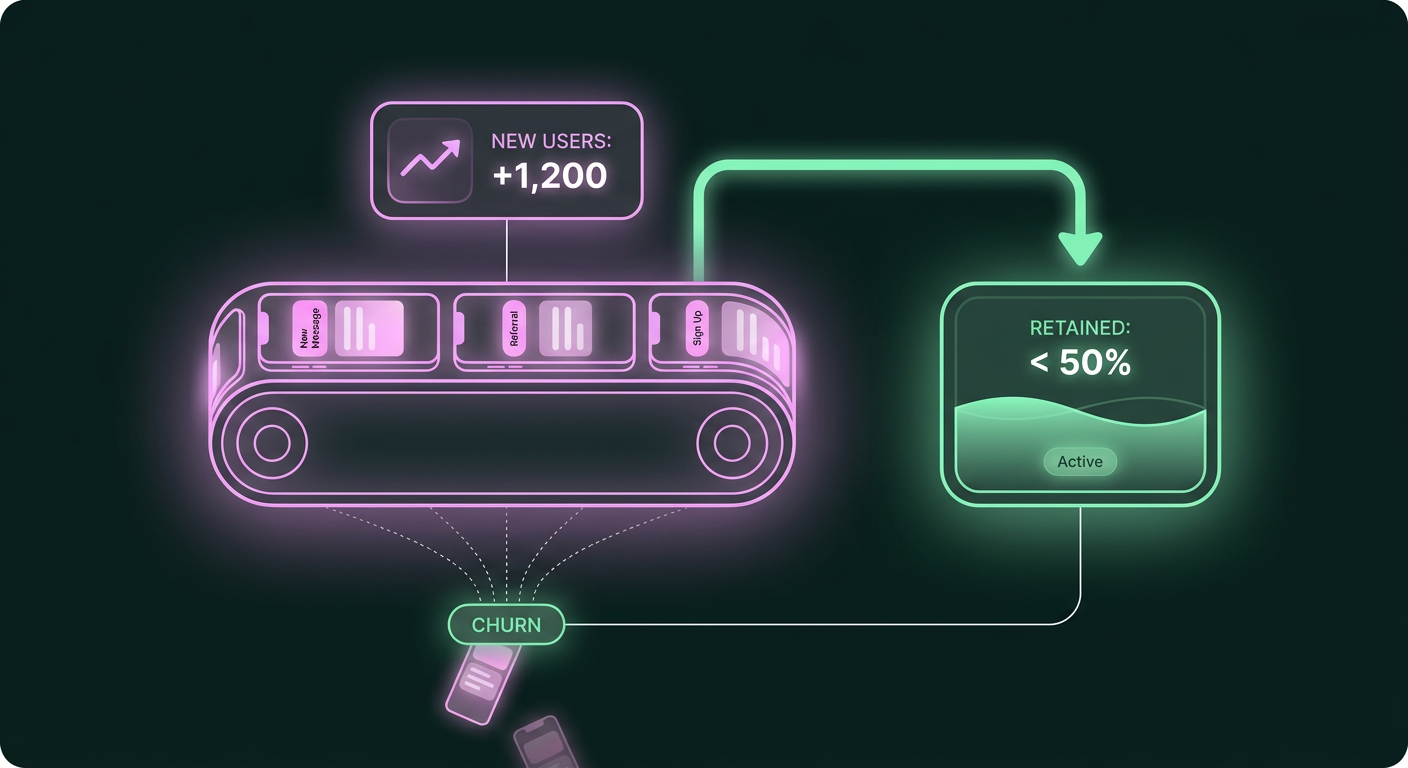
That feeling of progress from acquisition comes with a steep, often hidden price. The constant need to pour more customers into a "leaky bucket" masks the profound financial drain of poor retention. You might celebrate a record number of new buyers one month, but the underlying economics can be devastating. When customers buy once and never return, you're not just losing a future sale; you're often failing to even recoup what it cost to win their business in the first place.
The numbers are stark. For many e-commerce brands, the average customer retention rate is a mere 30%. This means for every ten customers you spend a significant amount of money to acquire, seven will never buy from you again. Top-performing brands, by contrast, achieve retention rates closer to 62%, creating a massive competitive and financial advantage. That gap isn't a minor variation; it's the difference between sustainable growth and a constant, expensive struggle. And the impact of closing that gap is immense, because the economics of retention are the inverse of acquisition. While the first sale might be a loss leader, subsequent sales are highly profitable. Research shows that improving customer retention by just 5% can increase profits by as much as 95%. That single statistic should fundamentally reframe how every marketing leader thinks about their budget. Plugging the leaks is exponentially more valuable than just turning up the tap.
The Shift: From One-Time Sales to Lifetime Value
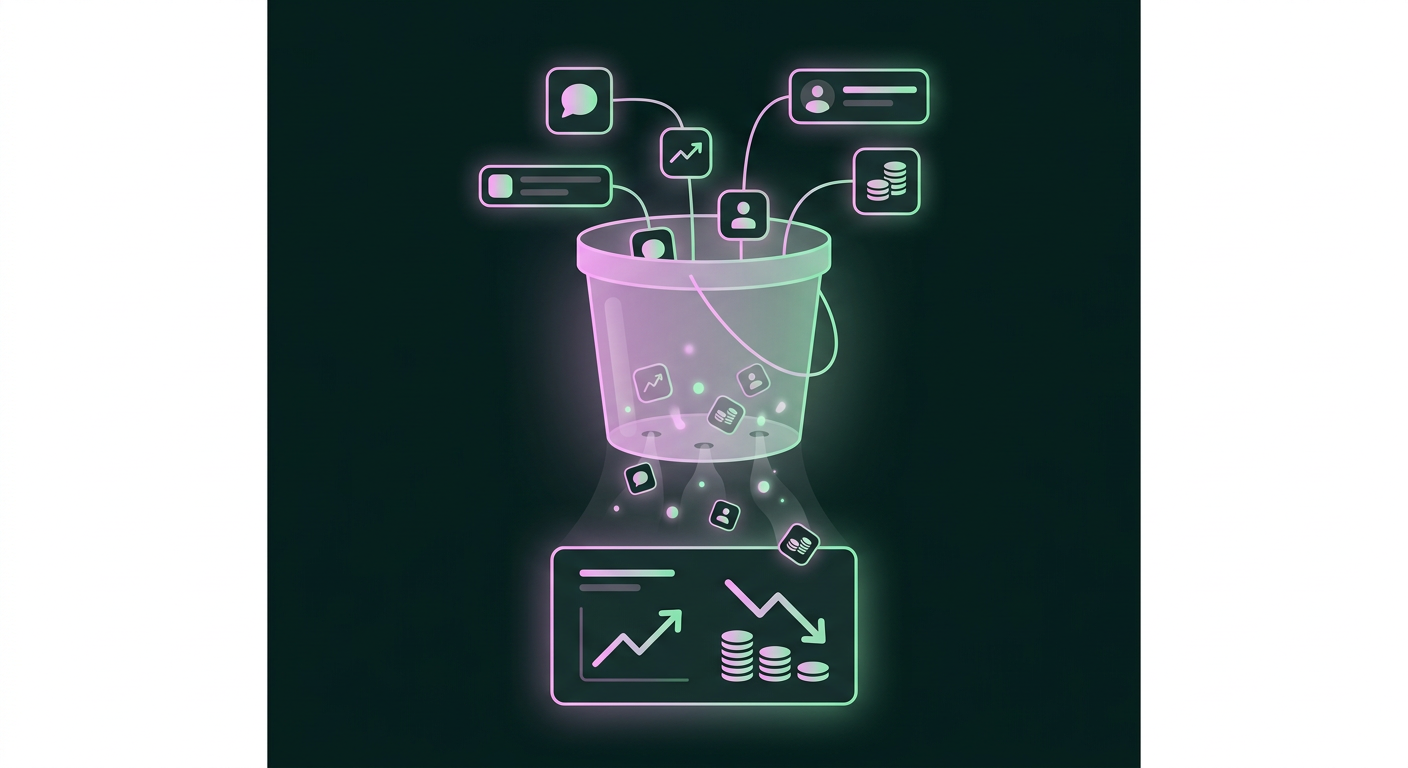
Once you see the math, it becomes clear that focusing on retention is a far more powerful growth lever than simply pouring money into acquisition. This is the core principle of customer retention marketing, where the objective shifts from securing a single transaction to building a lasting relationship. Instead of optimizing for the first sale, you begin optimizing for the second, third, and fourth, with the goal of increasing customer lifetime value (LTV).
This shift represents a fundamental change in perspective. Customer retention marketing is centered on nurturing the long-term relationships you have with existing customers. It’s a strategy built on the understanding that your most profitable customer is one you already have. By keeping those customers engaged and encouraging them to make repeat purchases, you create a flywheel of predictable, high-margin revenue. This focus on retention is what leads to sustainable growth, allowing you to scale your business without scaling your ad spend at the same breakneck pace. When you understand how to increase customer lifetime value, you can build a more resilient business that doesn't depend on the volatile world of paid ads.
What This Means for Your Marketing Strategy
Adopting a retention-first mindset doesn't just change your goals; it changes your day-to-day actions and where you invest your resources. It requires a conscious reallocation of budget, attention, and creative energy away from the top of the funnel and toward the post-purchase experience, which is where you transform a one-time buyer into a loyal advocate.
First, your budget needs to reflect this priority. If 90% of your spending goes toward acquiring customers who don't stick around, it's time to rebalance. A portion of that budget should be dedicated to programs and tools designed to engage the people who have already voted for your brand with their wallets.
Second, your communication strategy has to evolve. The customer journey can't end with a "thank you for your order" email. You need a post-purchase communication flow that is relevant, timely, and personal, because that's what people now expect. Studies show that 71% of people expect personalized experiences from brands (opens in a new tab), and most get frustrated when they don't get them. This means moving beyond generic emails and engaging customers with personalized 1:1 DMs on the platforms where they actually spend their time. These kinds of use cases (opens in a new tab) let you deliver everything from reorder reminders to exclusive content in a way that feels like a real conversation, not an advertisement.
Your First Retention Marketing Action Item
Shifting your entire strategy can feel daunting, but getting started is simpler than you might think. It begins with a single, concrete step that moves you from theory to practice without having to overhaul your entire marketing department overnight. All you need to do is focus on one high-impact segment and run a small, measurable test.
Here’s the plan: Go into your customer data and create a segment of everyone who made their first purchase between 60 and 90 days ago but hasn't bought again. This is a critical group teetering between becoming a loyal customer and being a one-time transaction you lost money on. Instead of lumping them into a generic ad audience, design a specific campaign just for them. Create a two-touch sequence, perhaps a personalized check-in followed by a special offer related to their first purchase, and deliver it through a direct, conversational channel. Then, measure the conversion rate of this group against a control group that receives your standard marketing. This simple test will give you your first real data point on the power of proactive, personalized retention.
Frequently asked questions
How should I decide between prioritizing acquisition or retention?
The choice isn't about picking one exclusively, but about finding the right balance for your business. Most companies are heavily over-indexed on acquisition, often directing 90% of their marketing budget toward finding new customers. Since acquiring a new customer can be five to seven times more expensive than keeping an existing one, that allocation is often unprofitable. An effective strategy involves shifting a meaningful portion of your budget and focus from expensive acquisition toward more profitable retention activities until you find a balance that produces sustainable growth.
What's the best way to start increasing my customer lifetime value (CLV)?
The most direct way to increase CLV is by focusing on driving repeat purchases. This starts with nurturing the relationship you already have with your customers. Instead of seeing the first sale as the finish line, treat it as the beginning of a long-term engagement. Simple tactics like personalized follow-ups, relevant product recommendations, and exclusive offers for existing customers can make a huge difference. The financial impact is significant; even a modest 5% improvement in customer retention can boost profits by up to 95%, fueled directly by a higher CLV.
Why does it cost so much more to get a new customer than to keep one?
Acquiring a new customer is expensive because you're starting from scratch. You have to spend money on advertising to get their attention, offer incentives to earn their trust, and overcome their initial skepticism. This process is so costly that many brands actually lose money on the first transaction. An existing customer, on the other hand, already knows your brand and has trusted you enough to make a purchase. Selling to them again requires far less investment because that trust is already established, making it five to seven times cheaper than starting over with a stranger.
Why should my marketing team focus more on customer retention?
Your marketing team should dedicate more focus to customer retention because it's the engine of sustainable, profitable growth. A retention-focused strategy is all about building long-term relationships that encourage repeat business and true loyalty. This approach creates a higher customer lifetime value, which in turn reduces your dependence on expensive and unpredictable acquisition channels. By shifting focus, you build a more stable business model rooted in the value of the customers you've already won.
My brand's growth has stalled. Could a lack of repeat customers be the reason?
Yes, a lack of repeat customers is a very common reason for stalled growth. If you find yourself in that position, you are likely stuck on the "acquisition treadmill," where you have to work harder and spend more each month just to replace the customers who don't return. The average e-commerce retention rate is only 30%, which means 70% of customers are lost after just one purchase. If your rate is near or below that average, most of your marketing effort is just back-filling churn instead of driving actual growth.
How can I encourage my satisfied customers to actually refer their friends?
The key is to bridge the gap between willingness and action. While an incredible 83% of satisfied customers say they are willing to refer a brand, only 29% ever do. To encourage more referrals, you need to make it easy, visible, and rewarding. Don't just hope they'll spread the word; ask them directly during moments of high satisfaction, like right after they leave a positive review or make a repeat purchase. Providing a simple link or a clear incentive can dramatically increase participation, and it's well worth the effort, referred customers are not only more likely to buy but also have a higher lifetime value.