
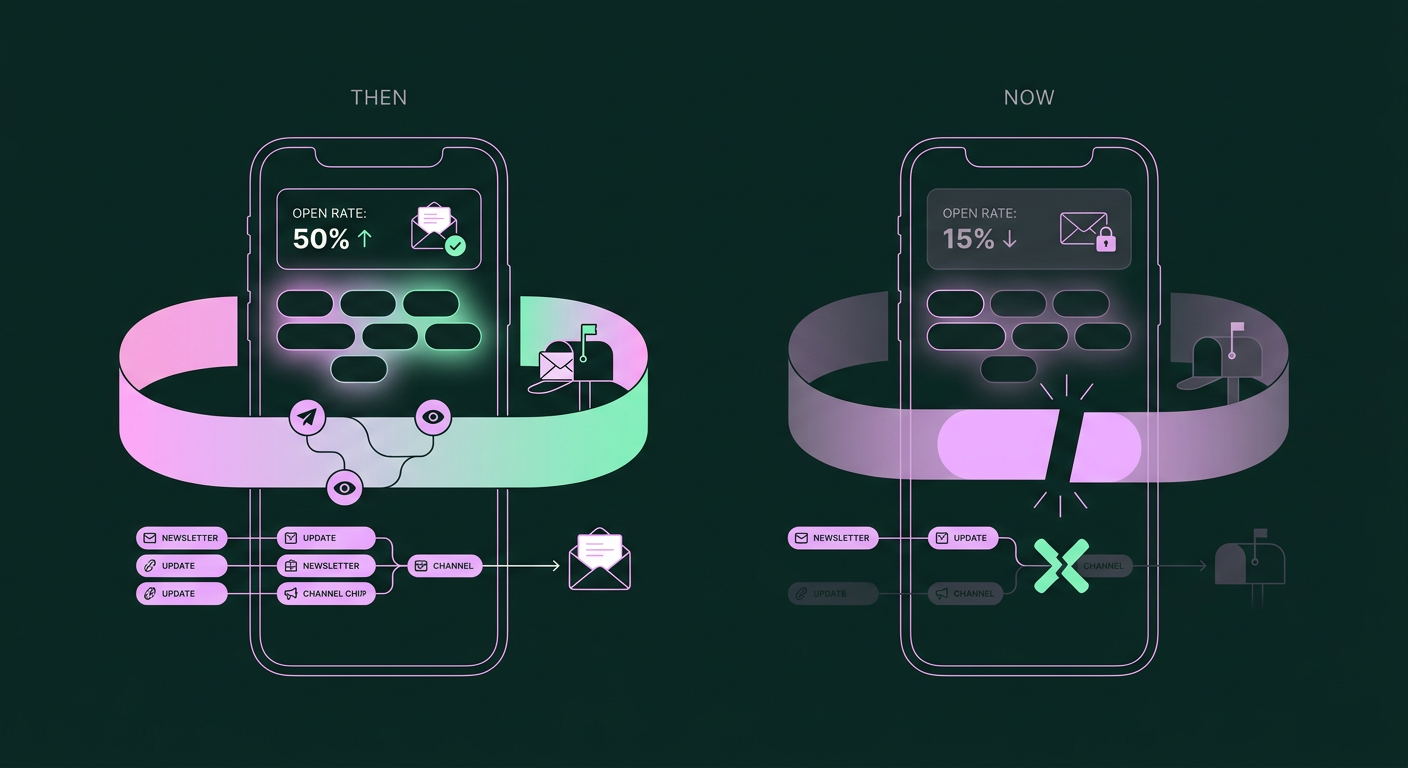
For many marketing and CRM leaders, the dashboard data tells a frustrating story. Despite years spent building a substantial customer list, email open rates are flat or, worse, actively declining. It feels like you're paying to acquire customers only to lose access to them, forced to spend more on paid ads just to reach people who have already bought from your brand. This isn't a vanity metric problem; it's a sign that your most valuable owned channel is becoming less effective and your connection to your customer base is weakening. The problem is complicated by technical shifts, like privacy changes that can obscure how open rates are even measured (opens in a new tab), which make it hard to tell if the issue is your engagement strategy or the metric itself.
Why Declining Email Open Rates Are a Deeper Problem
This steady decline often leads to a frantic search for technical culprits, like deliverability issues or subject lines that aren’t punchy enough. While these factors play a role, they often mask a more fundamental shift in customer behavior. The core issue isn’t just that your emails are being ignored; it’s that the entire context of email as a marketing channel has changed. The days when a marketing email felt like a personal message are long gone. For most consumers, their inboxes are flooded, their attention is fragmented, and a promotional email simply doesn't command the same focus it once did.
The situation is compounded by a measurement crisis, as the very concept of an "open rate" has become less reliable. Since changes like Apple's Mail Privacy Protection began anonymizing tracking activity, the data on your dashboard may not reflect what's actually happening. Some reports even suggest that average email open rates have been slightly increasing, which may only make your brand's specific decline feel more acute. If your numbers are falling while the industry average inches up, it points away from a universal technical problem and toward something specific to your audience and strategy. It signals that your customers are disengaging, and the conversation you thought you were having is becoming a monologue.
Surface Causes vs. the Real Reason for the Decline
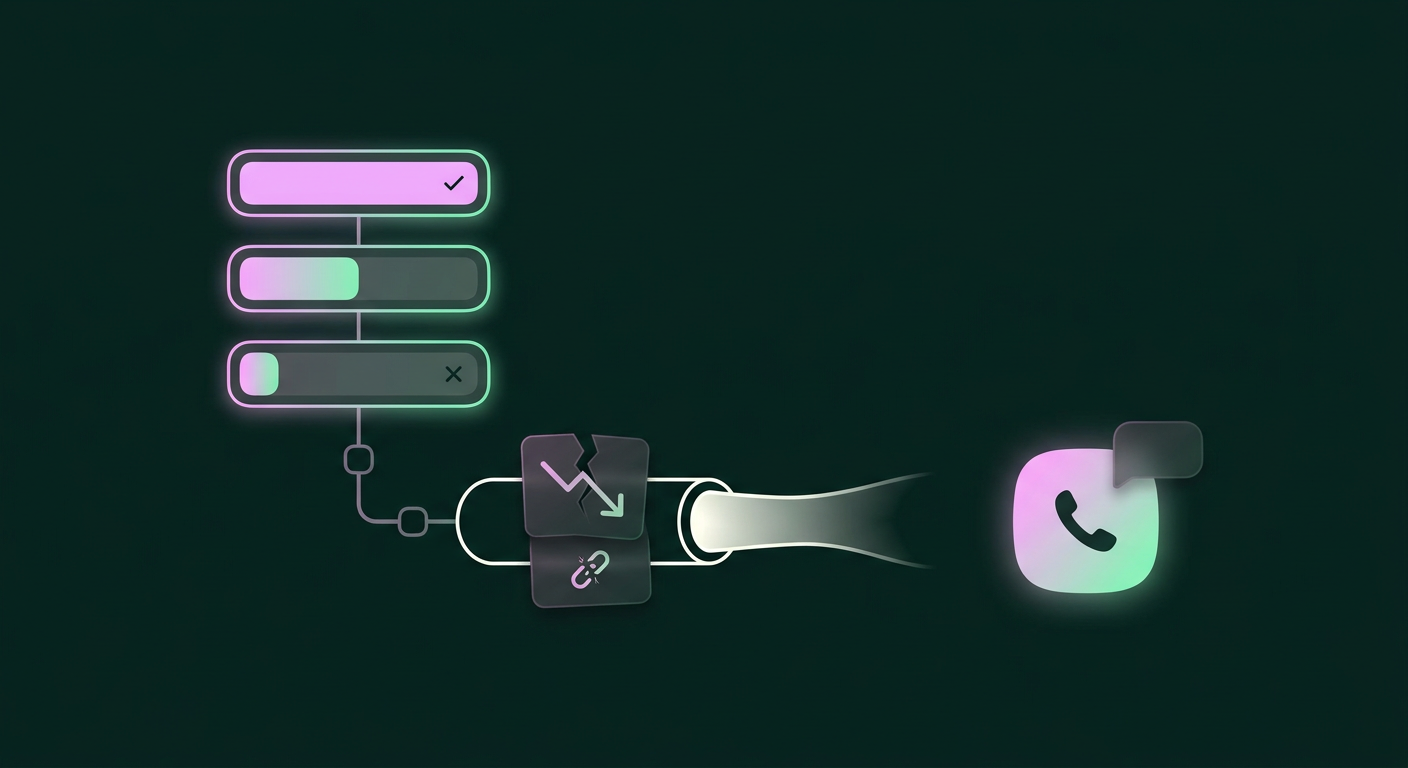
Now that the symptom is clear, it's critical to distinguish between common technical excuses and the real, underlying cause of this disengagement. It's easy to get bogged down in technical fixes, but if the core problem is strategic, no amount of tweaking will solve it.
The usual suspects: Deliverability and technical glitches
When open rates drop, the first place teams often look is their technical setup. This is a sensible first step, as several factors can prevent your emails from ever reaching an inbox. These include deliverability problems that cause your messages to be routed to spam, sudden changes to your sending infrastructure like a new IP address, or domain authentication issues (opens in a new tab) that make mailbox providers suspicious of your legitimacy. These are real issues that can impact performance, and they are worth investigating with your technical team or email service provider.
However, treating these as the only possible cause is a mistake. Fixing a technical glitch might provide a temporary lift, but it won’t solve the more significant, long-term trend of audience apathy. If your customers have simply tuned out the channel, ensuring your emails land perfectly in their promotions tab won't magically make them start opening and clicking again.
The underlying issue: Your customers live on other channels
The more profound reason for declining engagement is that your customers' communication habits have fundamentally shifted. Email is still a workhorse for transactional messages and official correspondence, but for personal, immediate, and engaging conversations, their attention has moved elsewhere. They now live in direct messaging apps like WhatsApp, Instagram DMs, and Facebook Messenger, which are the channels where they talk to friends, share experiences, and increasingly, interact with brands they care about.
The data on email fatigue speaks for itself. In certain industries, for example, generic broadcast emails can drive unsubscribe rates as high as 6.4%, whereas personalized, journey-based emails see that rate plummet to just 0.15%. This shows a clear preference for relevance and a strong aversion to generic promotions. While better personalization in email helps, it doesn't change the fact that you're competing in an overcrowded inbox. Meanwhile, channels like WhatsApp boast open rates of 90-98%, a level of engagement email hasn't seen in decades. The problem isn't that your customers don't want to hear from you; it's that you're trying to talk to them in a crowded room when they're waiting for a personal message somewhere else.
How to Diagnose Your Engagement Problem
Distinguishing a simple technical issue from a fundamental channel problem requires looking beyond the open rate to audit the actual connection you have with your audience.
Audit your personalization strategy
First, take an honest look at your personalization. Many strategies that claim to be personal are just using merge tags, but inserting a customer's first name is a tactic that's a decade old. Today's customers expect far more. True personalization is about relevance and timing, which means sending a message that reflects a customer's specific behavior, preferences, and lifecycle stage. Advanced strategies often involve AI-driven platforms that analyze customer behavior (opens in a new tab) to automatically optimize content and send times for each individual.
If you are already doing this, using deep segmentation and behavioral triggers, and your engagement is still declining, that is your single biggest clue that the problem isn't your message. It's your medium. Excellent, highly personalized content sent on a channel that the user ignores is still invisible. The goal of personalization and segmentation is to build stronger customer relationships, and if that's failing, it may be time to question the channel itself.
Focus on click-through rates, not just opens
Given the unreliability of open rate data, the most important metric on your dashboard is now the click-through rate (CTR). While an "open" can be triggered automatically without the user ever seeing the email, a click is an undeniable act of engagement. The click-through rate is a far more accurate measure of audience interest because it shows that someone not only saw your message but was compelled enough by its content to take action.
When you diagnose your performance, look at the relationship between opens and clicks. If your open rates are declining and your CTR is declining along with them, it's a strong confirmation of dwindling interest. If your open rates are artificially inflated due to privacy settings but your CTR is in free fall, you have a serious engagement problem. A low CTR is the clearest signal that you have a channel mismatch, and it's time to find a new way to reach your audience.
The Fix: Meet Your Customers Where They Already Are
Once you diagnose a fundamental channel problem, the solution isn't to send more emails or run more A/B tests on subject lines. The solution is to change the channel. You need to meet your customers in the environments where they are already spending their time and attention.
Stop trying to win back customers on a channel they’ve left
Many brands put enormous effort into email reactivation campaigns to re-engage dormant subscribers. While the intent is sound, the results are often underwhelming. For instance, one major retailer's successful reactivation campaign was celebrated for achieving a 22% open rate (opens in a new tab). While better than zero, this figure should be a wake-up call: a "successful" campaign still failed to reach 78% of its intended audience.
Pouring resources into winning back users on a channel they have clearly abandoned is a losing battle. It's like trying to convince someone to come back to a party they’ve already left. The smarter move is to find out where they went next and join them there. This strategic pivot preserves your marketing resources for channels that deliver actual conversations. You can cut ad waste and improve lifetime value by focusing on channels your customers actually use.
Integrate high-open-rate channels like WhatsApp
The most effective fix is to move your most important lifecycle campaigns to channels built for direct, personal interaction. This means integrating platforms like WhatsApp and Messenger into your marketing stack. These aren't just messaging apps; they are powerful marketing channels where engagement is an order of magnitude higher than email.
As mentioned, WhatsApp DM open rates consistently hit 90-98%. When a customer receives a personalized 1:1 message on WhatsApp about a restock, a VIP offer, or a win-back campaign, it feels less like marketing and more like a personal service. By syncing your CRM with messaging platforms, you can trigger the same automated lifecycle campaigns you currently run on email but deliver them where they will actually be seen. This strategy transforms your existing customer database from a list of disengaged email addresses into an instantly reachable and highly responsive audience. Different use cases for personalized DMs (opens in a new tab) can replace ineffective email flows for everything from abandoned carts to reorder reminders.
How to Know Your New Strategy Is Working
Once you shift from an email-centric approach to a multi-channel, DM-first strategy, success isn't measured in vanity metrics. The signs are clear and tied directly to business growth.
You see a measurable lift in conversion rates
The first and most obvious sign of success is a jump in conversions. High open rates are only useful if they lead to action. Because DMs have such high visibility and a more personal feel, they drive significantly more engagement and, ultimately, more sales. When you shift your campaigns to these channels, you should expect to see higher click-through rates, more items added to carts, and a greater number of completed purchases. Success can be measured with metrics like an 8% drip conversion rate from automated DM campaigns, which directly translates high engagement into revenue. This proves you have not only recaptured your audience's attention but have also motivated them to act.
You can reduce your paid retargeting spend
A second, powerful indicator of success is a reduction in your reliance on paid advertising to reach your own customers. One of the biggest hidden costs of email's decline is being forced to pay platforms like Facebook and Google to retarget people who are already in your CRM. When you establish a reliable, owned communication channel through DMs, you break this costly cycle. You can talk to your existing customers directly and for a fraction of the cost, reserving your ad budget for acquiring new customers rather than re-engaging old ones. Seeing your paid retargeting spend decrease while your repeat purchase rate climbs is definitive proof that your new strategy is working.
Frequently asked questions
How can I reach customers who never open my marketing emails?
The most effective way to reach customers who ignore your emails is to connect with them on a different channel. Instead of trying to win them back in a crowded inbox, shift your key communications to platforms where they are more active and engaged, such as WhatsApp or Facebook Messenger. These channels have dramatically higher visibility, with WhatsApp DM open rates reaching 90-98%, ensuring your message is actually seen.
How do I make my marketing feel more personal without just using merge tags?
True personalization goes beyond simply using a customer's name. It involves using data to send messages that are relevant to their specific actions and preferences. The best way to do this is to use behavioral triggers, sending communications based on what a user has browsed, purchased, or engaged with. Modern platforms can use AI-driven algorithms to analyze this behavior and automatically optimize the content, timing, and frequency of your messages to make each one feel like a unique, one-to-one conversation.
Are Instagram DMs really more effective than email for marketing?
For direct engagement and ensuring a message is seen, Instagram DMs are often far more effective than email. While email is still essential for transactional confirmations and formal communication, DMs offer a conversational and immediate way to connect with customers. Their high open rates mean they excel at tasks like recovering abandoned carts, announcing limited-time offers, or providing personalized customer service, leading to higher conversion rates for those specific campaigns.
How can I reduce what I spend on retargeting ads for people who already bought from me?
You can significantly cut your retargeting ad spend by building an owned audience on a high-engagement channel outside of email. When a customer subscribes to your brand on WhatsApp or Messenger, you gain a direct line of communication that doesn't require paying an ad platform. You can send personalized lifecycle messages, like restock alerts or special offers, directly to them, reducing the need to run costly retargeting campaigns to bring them back to your store.