
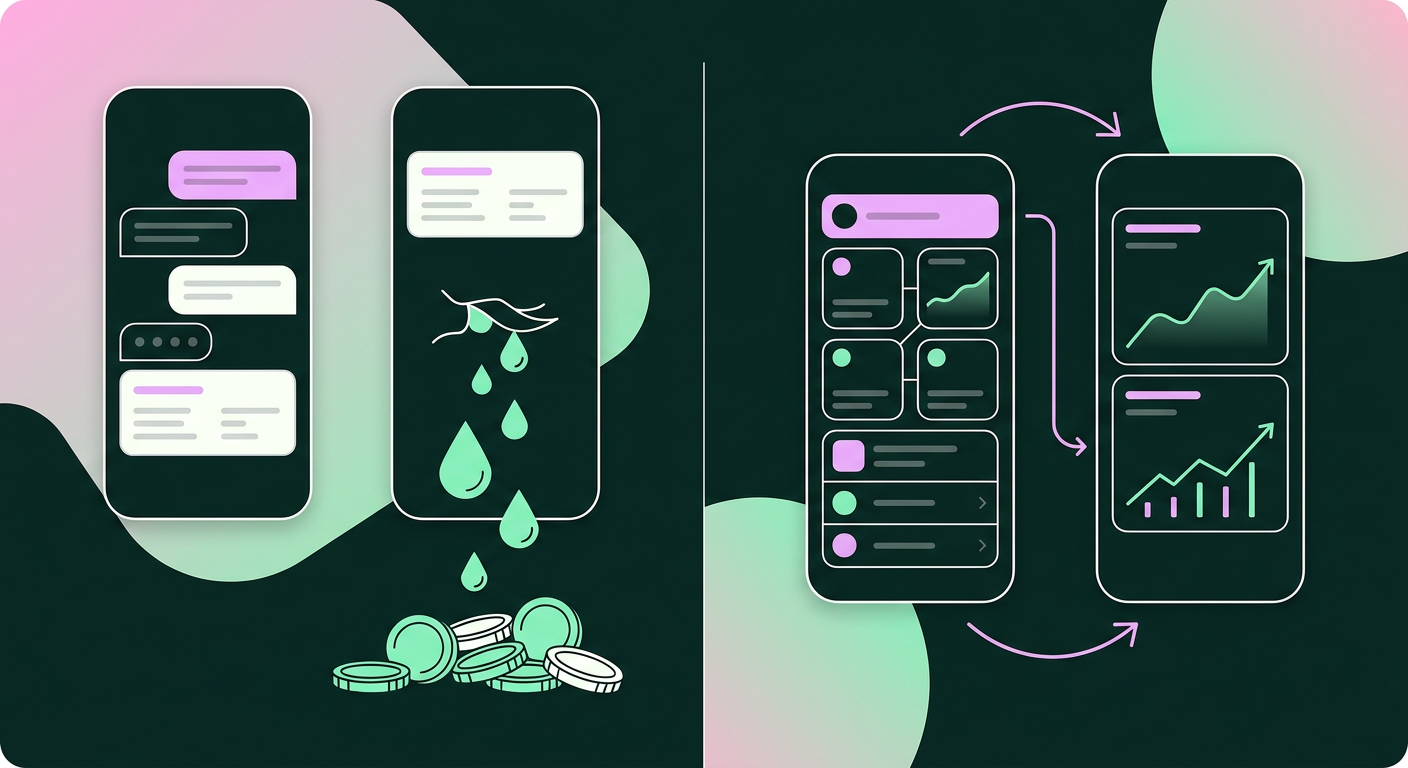
For any e-commerce brand, the abandoned cart is a constant source of frustration. You do the hard work of getting a visitor to your site, they find a product they like, and they even add it to their cart. They are inches from the finish line, and then they vanish. For the last decade, the standard playbook has been to trigger an automated email sequence through a platform like Omnisend. But for a growing number of brands, that playbook is simply failing. High-intent shoppers are ghosting, and the revenue you fought for is bleeding away at the last possible moment.
The problem isn't that your emails lack flair or your discounts aren't big enough. The problem is the channel itself. Shoppers are so inundated with marketing emails that even the most relevant messages get lost in the noise. When you consider that the average cart abandonment rate is a staggering 70.19% (opens in a new tab), it becomes clear that relying on an overcrowded channel to recover that lost revenue is a losing strategy. The search for an Omnisend alternative isn't about finding a marginally better email tool; it’s about finding a fundamentally better way to reach your customers.
Why Your Cart Recovery Emails Aren't Working Anymore
Your abandoned cart emails are underperforming because customers have become effectively blind to marketing in their inboxes. Years of conditioning have taught them to tune out promotional messages, meaning even well-crafted cart reminders from platforms like Omnisend are often ignored or sent directly to spam, a problem that only worsens over time.
The email inbox is no longer a personal space. It's a battleground for attention, and brands are losing. Think about your own inbox: how many promotional emails do you open versus how many do you delete without a second thought? Your customers are no different. This isn't just a feeling; the data shows a clear ceiling on this channel's effectiveness. While a well-optimized abandoned cart email can still capture some sales, the numbers may not be what they seem. For example, Omnisend's 2025 e-commerce marketing report found that abandoned cart emails can achieve a 42.02% click-to-conversion rate (opens in a new tab).
At first glance, that number seems high. But it only accounts for the small fraction of people who actually click the email in the first place, saying nothing about the vast majority who never even open the message. When your open rates are languishing in the teens, you're only ever reaching a tiny segment of your potential customers and leaving the other 80-85% of that abandoned cart revenue on the table. This is the diminishing return of the email-first approach. You can spend weeks optimizing your subject lines and timing, but if the channel itself is the problem, you're just optimizing a flawed strategy. To truly fix the issue, you have to meet your customer where they're actually listening.
How to Choose an Omnisend Alternative
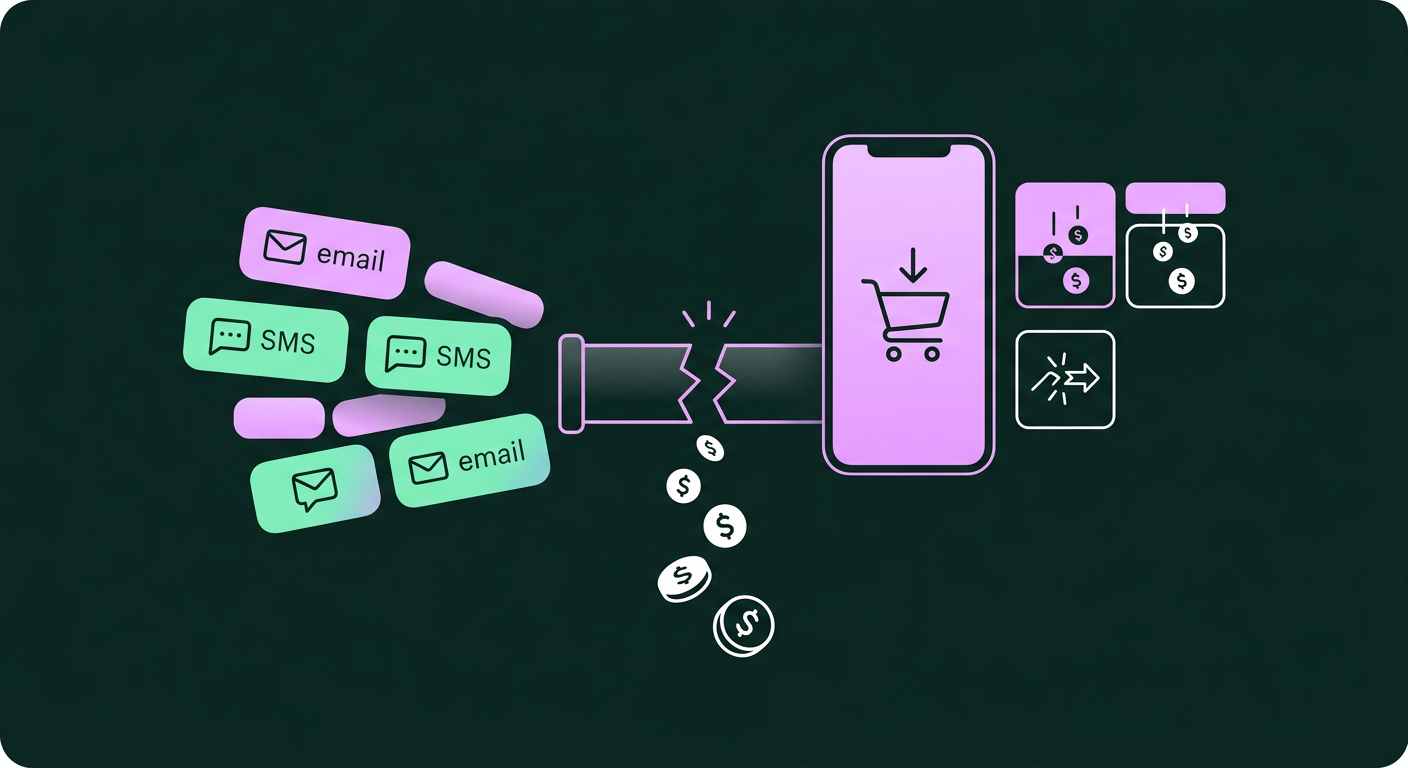
To find a truly effective Omnisend alternative, you have to shift your focus from comparing feature lists to evaluating what actually drives conversions. The right tool should be judged on its ability to reach customers on high-engagement channels, deliver true 1:1 personalization at scale, minimize setup complexity, and, most importantly, have a direct and measurable impact on your recovery rate.
When you're looking for a replacement for your current platform, it's easy to get bogged down in a side-by-side comparison of features. Does it have a visual flow builder? Does it integrate with X and Y? While these are valid questions, they miss the larger point. If your core problem is that customers ignore your emails, a platform that just offers a slightly different way to build those same emails isn't a real solution.
Instead, your evaluation should be based on a new set of criteria that reflect the modern customer journey:
- Channel Reach: Where does the tool communicate with your customers? Is it limited to the oversaturated channels of email and SMS, or does it operate where your customers spend their time and have real conversations, like Instagram and WhatsApp DMs? The effectiveness of the channel is the single biggest variable in your success.
- Personalization: Does the platform enable true personalization, or does it just offer simple token replacement like
{{first_name}}? Real personalization uses a customer's context, what they looked at, what's in their cart, their purchase history, to generate a unique, context-aware message that feels like a helpful 1:1 conversation, not an automated script. This is where AI-driven messaging pulls away from rigid, template-based systems. - Automation Effort: How much work is required to get a campaign live and running effectively? Traditional platforms often demand you manually build complex, branching logic flows for every possible scenario. A modern approach should use intelligence to simplify this process, allowing you to set a goal and have the platform handle the conversational nuances automatically, saving your team countless hours.
- Conversion Impact: Ultimately, this is the only metric that matters. Does the tool demonstrably increase your cart recovery rate and generate more revenue? This requires looking beyond vanity metrics like send volume and focusing on hard numbers like open rates, click-through rates, and attributed sales. Following the new rules of abandoned cart recovery software means prioritizing outcomes over activity.
Traditional Platforms vs. DM-First Automation
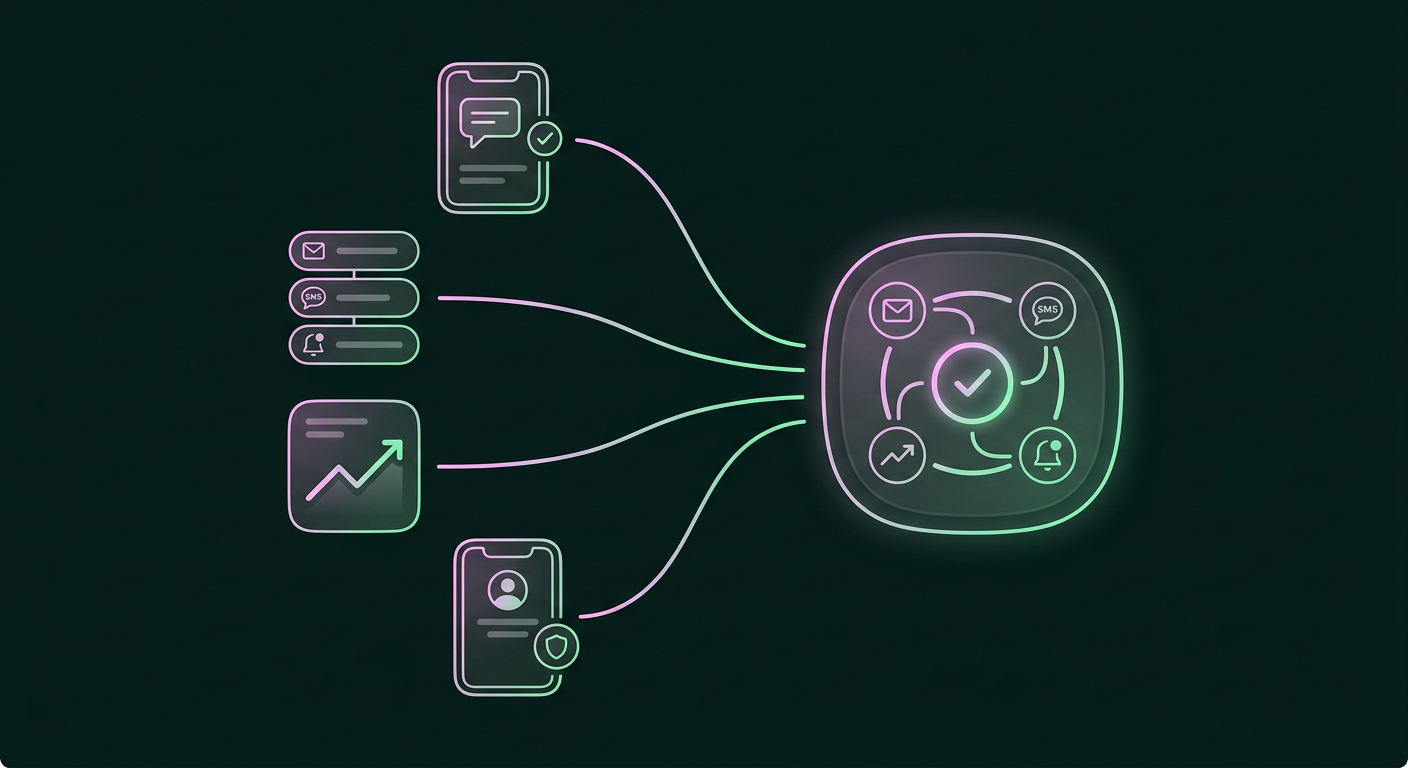
When you compare the two main approaches, DM-first automation comes out ahead for cart recovery because it operates in the high-visibility, conversational channels customers actually prefer. While traditional platforms are stuck fighting for attention in crowded inboxes with diminishing returns, DM-first tools create genuine engagement that directly translates to higher recovery rates.
Using the criteria we've just defined, the choice between sticking with an email-centric platform and moving to a DM-first solution becomes much clearer. Traditional automation suites were built for a different era of digital marketing. They excel at sending mass communications through channels that consumers now largely tune out. Even their most advanced tactics, like creating complex sequences, are just polished optimizations of an increasingly ineffective method. For instance, data shows that using a multi-step email series can improve results over a single message.
"Recapture’s data from 11,000+ stores since 2016 shows that stores using a multi-step email series (instead of just one) see 153-231% more revenue won back." , Recapture.io
This is a powerful argument for optimizing your email strategy, but it also highlights the channel's ceiling. You're simply recovering more of the small percentage of people who open emails in the first place. A DM-first approach changes the game entirely. Instead of fighting for a 20% open rate in an email inbox, you can engage customers on Instagram and WhatsApp, where Dynamo sees open rates of 80%+. These aren't just opens; they are the start of a conversation. Because the message arrives in the same app they use to talk to friends, it's viewed with a different level of attention and intent.
This is where AI-powered personalization becomes so critical. A simple, keyword-triggered message from a basic automation tool can feel just as spammy as a bad email. Some simple automation tools are reliable and affordable (opens in a new tab), but they often lack the sophistication to handle the nuances of a real sales conversation. In contrast, a platform like Dynamo uses AI to generate context-aware messages that reference the specific items in a user's cart, creating a natural, helpful interaction that guides them back to purchase without feeling pushy. This combination of the right channel and the right message is what breaks through customer apathy.
The Verdicts
| Criterion | Traditional Platforms | DM-First Automation |
|---|---|---|
| Channel Reach | Crowded email inboxes | High-visibility DMs |
| Personalization | Generic, template-based | Context-aware, 1:1 feel |
| Automation Effort | Complex flow-builders | AI-driven, fast setup |
| Conversion Impact | Diminishing returns | High open & recovery rates |
The trade-offs are clear. Traditional platforms offer a familiar workflow but are hamstrung by the inherent limitations of the email channel. They require significant manual effort to build and optimize flows that reach a smaller and smaller audience over time. DM-first automation, on the other hand, leverages the channels where your customers are most engaged. This approach delivers materially higher engagement and, as a result, a more significant impact on your bottom line. You can learn more about the different use cases for this technology (opens in a new tab) and see how it applies beyond just cart recovery.
Which Cart Recovery Tool is Right for You?
For brands whose audience still engages with email and who only need basic automation, a traditional platform may be sufficient. However, for most growth-focused e-commerce stores battling email fatigue and declining recovery rates, a DM-first automation tool is the clear choice to reclaim lost revenue.
Deciding on the right platform comes down to a realistic assessment of your current situation and your goals. There isn't a single solution that fits every business, so the choice depends on where you fall on the growth and channel-fatigue spectrum.
Stick with a traditional platform if: Your email open and click-through rates are still strong and you're not seeing a significant drop-off in performance. If your customer base is older or less active on social media, email might remain your most reliable channel. In this scenario, focusing on optimizing your existing flows with a tool like Omnisend is a reasonable path.
Choose a DM-first platform like Dynamo if: You are a Head of E-commerce at a growing brand and you see the writing on the wall. Your email metrics are stagnating or declining, and you know you're leaving a substantial amount of money on the table every month from abandoned carts. You recognize that the problem isn't your email copy but the channel itself. You're ready to stop fighting for inbox attention and start engaging customers where they actually are. This is especially true if your brand has a strong presence on Instagram, as you can turn your followers and commenters directly into recovered sales without ever asking for an email address. For a deeper dive into this comparison for cart abandonment, see our guide on Manychat vs Dynamo.
Recover More Carts, Starting Today
Ultimately, fixing your abandoned cart problem is about one strategic shift: moving from broadcasting messages into a void to starting conversations in a context that matters. The tools and tactics that worked five years ago are no longer enough to overcome modern channel blindness. Success today requires meeting customers with a personal touch on the platforms they use every day.
The path to higher recovery rates isn't paved with more email A/B tests or more complex automation flows. It's about fundamentally rethinking the point of contact. By shifting your cart recovery from the noisy email inbox to the personal, immediate, and conversational environment of Instagram and WhatsApp DMs, you align your strategy with actual human behavior.
You're no longer an unread line item in a cluttered promotion tab; you're a helpful message from a brand they like, arriving in the same place as messages from their friends. This single change is what transforms a low-percentage recovery attempt into a high-engagement conversation that brings customers back to complete their purchase. The brands that win the next decade of e-commerce won't be the ones sending one more email, but the ones starting one more genuine conversation.
Frequently asked questions
Why are my abandoned cart emails not working anymore?
Your abandoned cart emails are likely less effective because of "inbox blindness." Customers have been trained to ignore most promotional emails, so even a good message gets lost in the noise. While some reports show that clicks on these emails can convert well, like the 42.02% click-to-conversion rate noted in a 2025 report, that number only applies to the shrinking group of customers who actually open and engage with marketing emails in the first place.
What's a better way to recover abandoned carts than email?
A much more effective way is to use automated, personalized Direct Messages (DMs) on platforms like Instagram and WhatsApp. These channels bypass the crowded email inbox and reach customers where they are already having conversations. Because DMs feel more personal and immediate, they achieve significantly higher engagement, with open rates of 80%+. This direct, conversational approach feels like a helpful nudge rather than just another marketing message.
Should I use Instagram bots for my e-commerce store?
You should be cautious with basic Instagram automation tools. They often feel spammy and impersonal, which can damage your brand's reputation. Instead of a simple "bot," consider an intelligent DM automation platform. These advanced systems use AI to create personalized, context-aware conversations that feel human. They can respond to questions, reference the specific items in a customer's cart, and guide them to purchase in a natural way, providing a much better customer experience.
Is DM marketing really better than email for cart recovery?
Yes, for most modern e-commerce brands, DM marketing is significantly better than email for cart recovery. The main reason is channel effectiveness. While email open rates often struggle to hit 20%, DM open rates are 80%+. This means you are starting a conversation with at least four times as many potential customers right away. That higher engagement from the conversational, personal nature of DMs almost always leads to higher conversion rates.
How can I automate personalized cart recovery messages on Instagram?
You can automate personalized cart recovery messages using an AI-powered DM platform like Dynamo. These tools integrate with your e-commerce store (like Shopify) to get context about the customer and their cart. When a shopper abandons a cart, the system automatically sends a unique, non-template message on Instagram that references the specific products they were considering. This approach moves beyond simple {{first_name}} personalization to create a true 1:1 interaction that feels helpful and relevant.
What kind of recovery rate can I expect from using Instagram DMs?
While specific recovery rates vary by brand, the early indicators for success with Instagram DM automation are exceptionally strong. With open rates of 80%+, you immediately engage a much larger portion of your abandoned cart audience than you ever could with email. This high level of engagement translates directly into a higher conversion impact. Instead of getting lost in a promotional tab, your message starts a real conversation, dramatically increasing the odds that the customer will return to their cart and complete the purchase.