
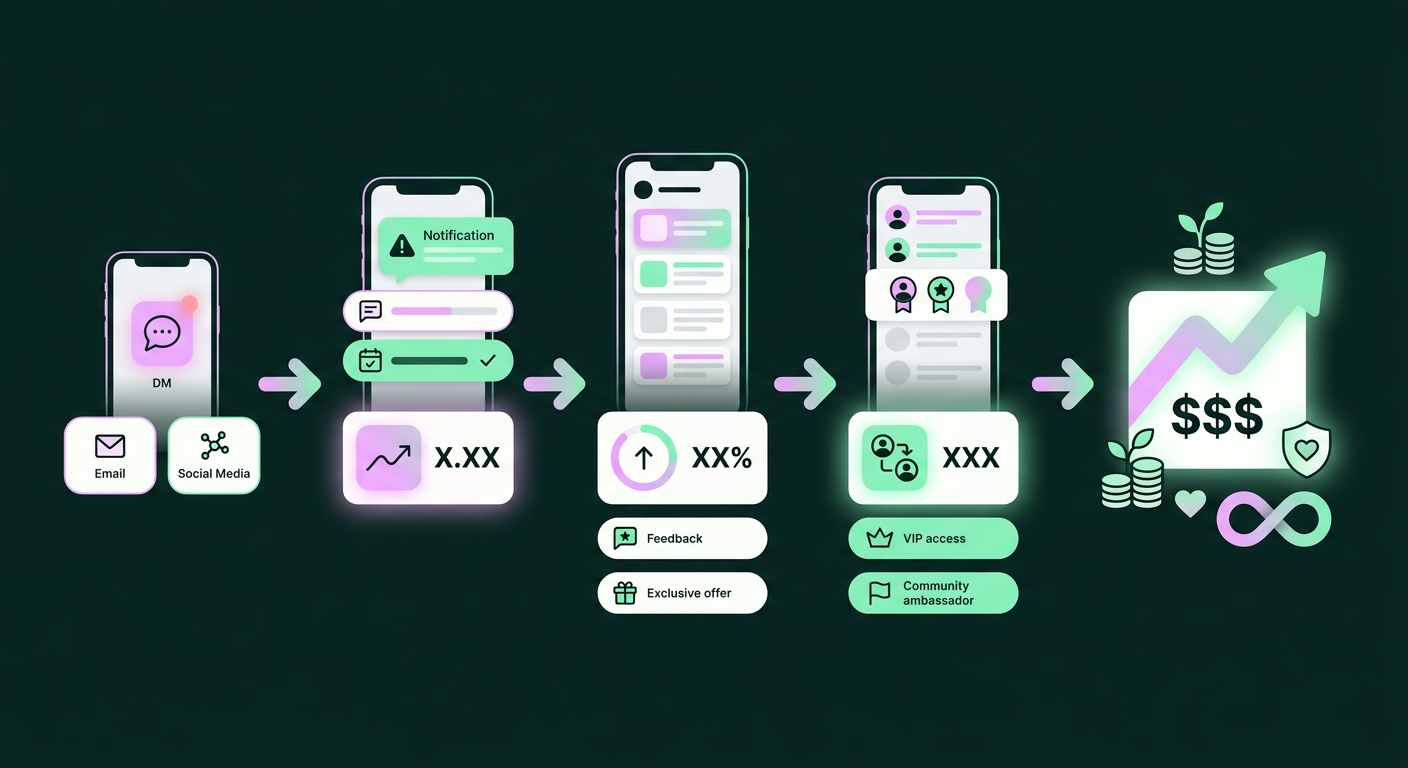
For many direct-to-consumer brands, the growth playbook that got you this far is starting to show its cracks. You’ve poured money into paid acquisition, gotten good at it, and watched new customer numbers climb. But now, the math is breaking down. The cost to acquire those customers keeps rising, and you're realizing that most of them only buy once. The result is a treadmill of expensive, often unprofitable, growth. The way out isn't finding a magic new ad channel, it's shifting your focus from simply acquiring customers to keeping them. That means making customer lifetime value (CLV) the central metric driving your strategy.
You're Acquiring Customers, But Are You Keeping Them?
A marketing strategy built entirely on acquisition is like trying to fill a leaky bucket. You can pour more and more water in, but if you don't plug the holes at the bottom, the bucket never actually gets full. Each new customer you bring in through paid ads is a significant investment, but if they make one purchase and never return, you’re forced to pay over and over to replace them. As ad costs inevitably rise, this cycle becomes completely unsustainable. The hard truth is that acquiring a new customer can be five to 25 times more expensive (opens in a new tab) than retaining an existing one.
This is where focusing on retention fundamentally changes your business's economics. Instead of constantly replenishing your customer base from scratch, you can build a foundation of loyal, repeat buyers. This strategic shift requires a new North Star: Customer Lifetime Value. CLV represents the total profit a customer is expected to generate (opens in a new tab) over their entire relationship with your brand. When you optimize for CLV, you stop chasing costly one-off transactions and start building a predictable, profitable engine for long-term growth.
The High Cost of a One-Time Buyer
The problem of one-time buyers goes deeper than a missed opportunity; it’s a tangible drain on your resources. Think about everything that goes into winning that first conversion: the ad spend, creative production, landing page optimization, and checkout flow. As one analysis points out, keeping an existing customer costs just a fraction of that investment (opens in a new tab), a gap that widens every time paid media costs tick upward.
The numbers bear this out. Your existing customers aren't just cheaper to reach, they're far more likely to buy from you again. Data consistently shows that you have a 60-70% chance of converting an existing customer, while the likelihood of converting a brand-new prospect is only 5-20% (opens in a new tab). When you fail to re-engage a first-time buyer, you're walking away from the highest-probability sale you could possibly make.
Fixing this can transform your profitability. Even a small improvement in retention has an outsized impact on your bottom line. Studies have repeatedly shown that increasing customer retention by a mere 5% can generate a profit increase ranging from 25% to 95%. This isn't an incremental gain; it's a fundamental change to your business's financial health that turns your existing customer base from a cost center into your most valuable growth asset.
How to Build a Retention Engine in DMs
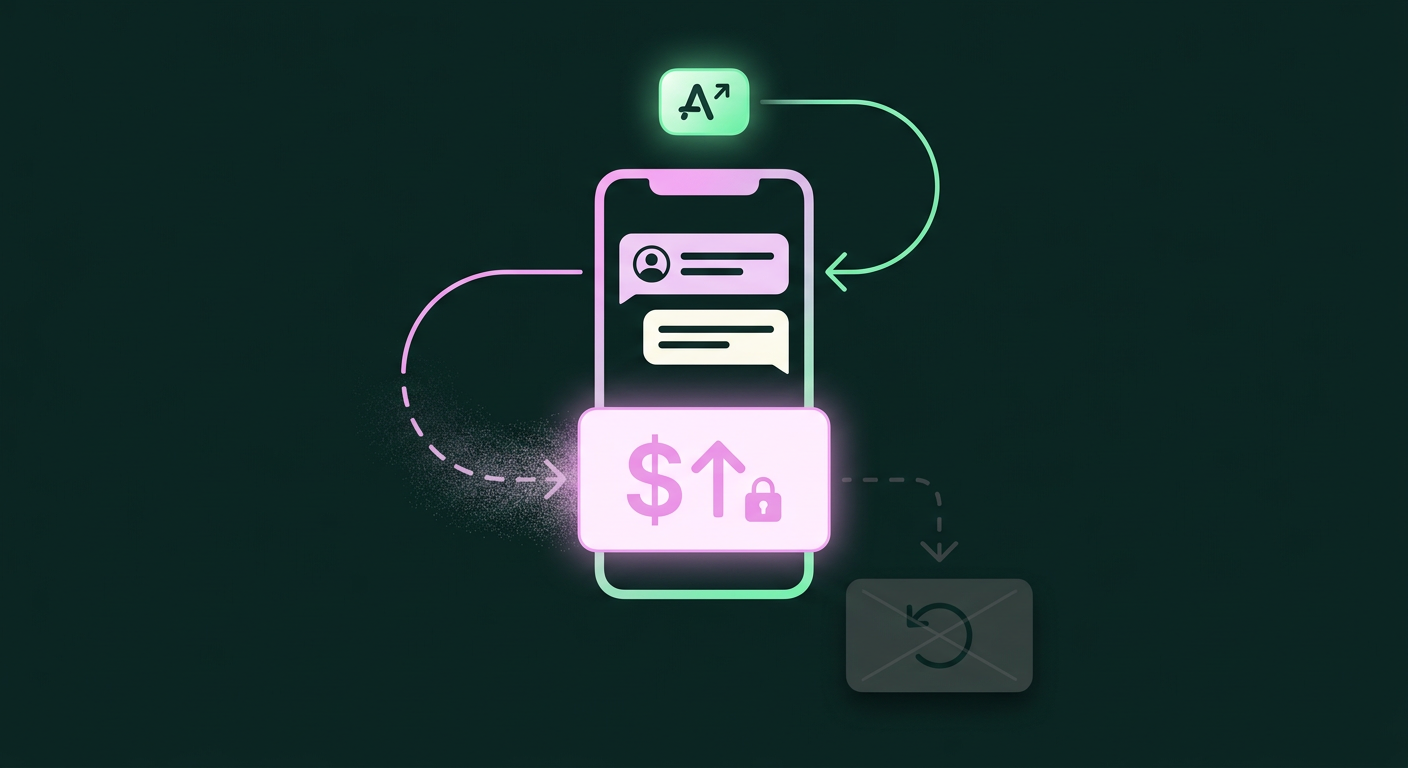
With the stakes this high, the question becomes how to actually build a system that reliably turns first-time buyers into repeat purchasers. The answer is to meet customers where they already are with timely, personalized messages that feel like a conversation. A modern retention engine runs on automated lifecycle messaging in the one place your customers are guaranteed to look: their DMs.
Map Your Post-Purchase Lifecycle Stages
Before you send a single message, you need a plan. An effective retention strategy isn't about randomly sending discounts, but about anticipating customer needs at key moments. Start by mapping the critical post-purchase stages where a well-timed message can make a difference. This journey typically includes an immediate post-purchase thank you, shipping notifications, a check-in after the product arrives to ensure satisfaction, and a thoughtful cross-sell or upsell based on their initial purchase. Further down the line, you'll want to plan for reorder reminders for consumable products and win-back campaigns for customers who have gone quiet. Each of these moments is an opportunity to provide value, build trust, and guide them toward their next purchase.
Choose a Channel That Drives Engagement
Once you have your lifecycle map, you need a channel that will actually get your message seen. While email has been the traditional go-to, its effectiveness has plummeted as inboxes become overcrowded and promotional emails get ignored or sent straight to spam. DMs on platforms like Instagram and WhatsApp are a different story. They’re conversational spaces where people actively engage with brands they follow.
The engagement metrics speak for themselves. We see DM open rates consistently exceed 80%, with WhatsApp DMs achieving an incredible 90-98%. This visibility translates directly to action, with the conversion rate for a well-crafted DM being 3-5x higher than for a standard push notification. By moving your retention efforts into DMs, you aren’t just changing the channel; you’re fundamentally increasing the odds that your message will be read, considered, and converted into another sale.
Automate Personalized Conversations, Not Generic Blasts
The final piece is execution. To make this strategy work at scale, you need to automate personalized 1:1 conversations, not just send out generic messages. This distinction is crucial. A generic message is a one-to-many communication that feels impersonal and is often irrelevant. A personalized, automated DM, on the other hand, is a one-to-one message triggered by a specific customer action or lifecycle stage. For instance, you can use automation tools (opens in a new tab) to send a message like, "Hey [Name], just saw your order for the [Product Name] shipped! It should be there in 3-5 days. Let us know what you think when it arrives." This feels helpful and human, not like an unsolicited ad. By integrating with your CRM or eCommerce platform, you can use customer data to trigger a full-funnel messaging sequence that feels genuinely personal and drives the entire retention lifecycle, all without a marketer having to be in the loop for every send.
Why Your Current Efforts Are Falling Short
This approach sounds straightforward, but many brands struggle to get it right because they fall into common traps. Simply acknowledging that retention is important isn't enough; you have to pursue it with the right strategy and avoid tactics that promise more than they can deliver.
Ad Retargeting Isn't a Retention Strategy
One of the most common mistakes is confusing ad retargeting with a real retention strategy. Showing more ads on Facebook or Instagram to someone who has already bought from you isn't building a relationship; it's just another form of acquisition where you pay the ad platform again to reach a customer you already own. While retargeting has its place for things like cart abandonment, using it as your primary way to re-engage past buyers keeps you on the same expensive treadmill. The goal of retention marketing is to build a direct, owned line of communication with your customers so you don't have to pay a toll to a third party every time you want to speak to them. True retention is about nurturing a relationship through valuable, conversational touchpoints, not just serving another impression.
Loyalty 'Points' Aren't a Silver Bullet
Another common but often flawed approach is an over-reliance on traditional points-based loyalty programs. A well-designed program can certainly help, some studies suggest they can boost purchase frequency by 20-25%, but they are not a complete solution for retention. Many points programs feel transactional and fail to create a genuine emotional connection to the brand. Customers often become conditioned to wait for a discount or a reward, which can erode margins and devalue your product. A more powerful strategy focuses on conversational engagement and proactive value, like helpful tips, order updates, and great customer service. Loyalty should be the outcome of a great experience, not just a mechanism for earning discounts.
What 'Done' Looks Like: From Ad Burn to Profit Engine
By sidestepping these traps and building a true retention engine, you can fundamentally reshape your company’s growth. The "after" state is a business that's no longer frantically burning its budget on expensive ads to attract one-time buyers. Instead, you have a predictable, automated system that nurtures customers and methodically increases their lifetime value. Your marketing team can shift its focus from managing the daily volatility of ad auctions to optimizing a profitable, owned channel that you control.
When this system is in place, CLV stops being a vanity metric on a dashboard and becomes a predictable lever for growth. You know that for every new customer you acquire, your automated DM sequences will reliably turn a percentage of them into two-time, three-time, and long-term loyal customers. This creates a virtuous cycle where the profits from retained customers can be reinvested into smarter, more targeted acquisition, creating sustainable growth that doesn't depend on the whims of an algorithm.
Ultimately, this is what a mature, profitable DTC brand looks like: a business where the initial purchase is just the beginning of a long-term relationship, nurtured through highly engaging, personalized DMs that deliver both value and revenue. The result is a dramatic reduction in your dependency on paid advertising and a significant boost to your bottom line. Seeing the results of a fully-realized DM strategy (opens in a new tab) makes it clear this is the path to truly scalable success.
Frequently asked questions
Should I focus more on customer retention or acquiring new customers right now?
For most established brands, your focus should tilt heavily toward retention. Research consistently shows that acquiring a brand-new customer can cost five to 25 times more than keeping an existing one. While you always need a stream of new customers, doubling down on retaining the ones you've already paid to acquire is almost always the more profitable and sustainable path to growth.
Why has my DTC brand's growth stalled even with high ad spend?
Growth often stalls because the cost of acquiring a new customer has outpaced the value that customer brings in their first purchase. If you're only focused on acquisition, you're constantly fighting rising ad costs and platform competition. Each new customer requires a whole new investment in ad spend, creative production, landing pages, and conversion optimization.io/blog/ecommerce-calculation-benchmark-statistics). Without a strong retention strategy to generate repeat purchases, this model becomes a leaky bucket where you're spending more just to stand still.
Why is customer lifetime value (CLV) such an important metric to track?
Customer lifetime value is critical because it shifts your focus from short-term transactions to long-term profitability. CLV represents the total profit you can expect from a customer over their entire relationship with your brand. By optimizing for CLV, you make smarter decisions about marketing spend and customer experience. Improving retention to boost CLV also has a massive impact: just a 5% increase in retention can boost profits by 25% to 95%.
How is customer lifetime value different for a subscription business?
For a subscription business, CLV is often easier to calculate and even more central to the business model. It's typically the average monthly subscription fee multiplied by the average customer lifespan in months. The primary goal is to extend that lifespan as long as possible by preventing churn. Every month a customer stays subscribed directly increases their lifetime value, which makes retention efforts like community engagement, offering exclusive content, and providing excellent service absolutely critical.
What's the best way to turn my one-time buyers into repeat customers?
The single best way is to engage them with timely, relevant, and valuable communication after their first purchase. Don't just wait and hope they come back. A customer who has already bought from you is 60-70% more likely to buy again compared to a new prospect. A proactive post-purchase follow-up, a check-in to see how they like the product, and a thoughtful recommendation for their next purchase can build a relationship and guide them smoothly to that second sale.
How can I use Instagram DMs to get my first-time buyers to come back?
Instagram DMs are a powerful channel because of their high visibility and personal feel. You can automate messages triggered by their purchase, like a thank you note, shipping updates, and a "how are you enjoying it?" message a week after delivery. Because these messages get such high open rates (often over 80%), you have a direct line to your customer. Offering a small incentive for their next purchase or showing them a complementary product within that DM conversation can be a highly effective way to secure a repeat sale.