
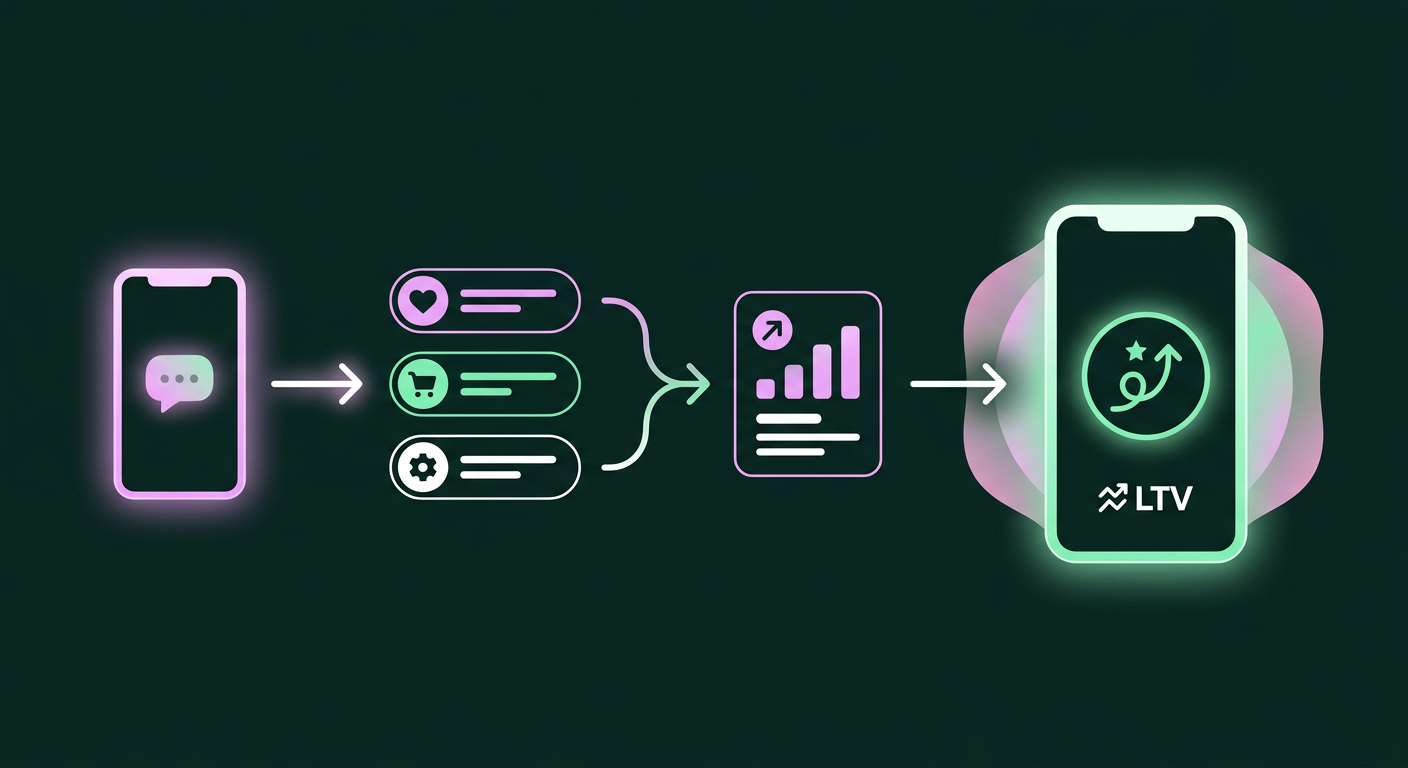
For many direct-to-consumer brands, the math on paid acquisition simply isn't working anymore. You're pouring money into Meta to acquire new customers, but the initial purchase barely covers the cost, and then they disappear. The root of the problem, and the key to profitability, is to increase customer lifetime value by shifting focus from expensive, one-off acquisitions to automated, personalized retention inside channels like Instagram DMs. This isn't a small leak; you're stuck on an acquisition treadmill because a staggering 97% of first-time buyers never make a second purchase (opens in a new tab), forcing you to pay for the same customer over and over again.
You Can’t Afford One-Time Buyers Anymore
The relentless rise in customer acquisition costs, particularly on paid social platforms, means that a customer who only buys once is often unprofitable. With the vast majority of first-time buyers never returning, brands are stuck on a treadmill of paying to acquire customers who don't stick around, making sustainable growth nearly impossible.
The old playbook of simply acquiring more customers at any cost is breaking down. For years, brands could rely on relatively stable ad costs to fuel growth, but that era is over. Now, every dollar spent on acquisition must be scrutinized for its long-term return, and for a business model built on single purchases, the data paints a bleak picture. When you factor in the cost of goods sold, marketing expenses, and operational overhead, that first transaction from a new customer acquired through paid channels frequently results in a net loss.
This model is only viable if a substantial percentage of those new buyers come back for a second, third, and fourth purchase, because the profit is in the repeat business. The harsh reality, however, is that for most brands, this simply doesn't happen. The customer journey often ends abruptly after the first package arrives, leaving a massive hole in the marketing budget and a customer database full of people who are unlikely to ever engage again without a significant push. This forces you right back to the ad platforms to fill the top of the funnel, repeating a cycle that becomes less profitable with each passing quarter.
Why Retention Is More Profitable Than Acquisition
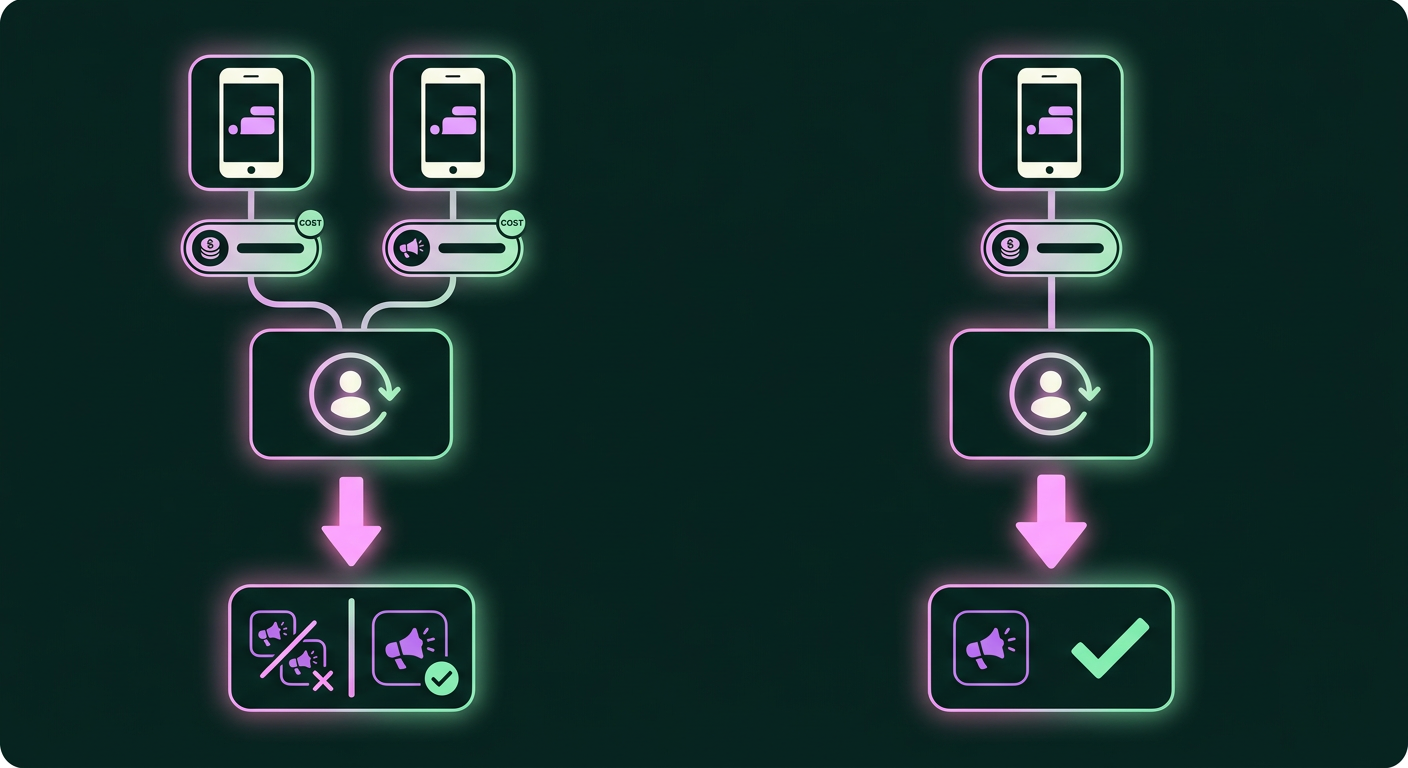
Focusing on retention is far more profitable because existing customers spend more, convert at a much higher rate, and even small improvements in retention create an outsized impact on your bottom line. It is fundamentally cheaper and more effective to sell to someone who already trusts your brand than to spend money convincing a complete stranger.
Now that we've seen the depth of the acquisition problem, let's look at the financial upside of solving it. The economics of retention aren't just slightly better; they're exponentially more powerful. Research from Bain & Company famously found that even a 5% increase in customer retention can boost profits by 25% to 95% (opens in a new tab). This isn't a minor optimization; it's a fundamental shift in profitability.
The reason for this dramatic impact comes down to two simple facts: you eliminate the ever-increasing cost of acquiring that customer a second time, and retained customers are simply better customers. They already know your brand, trust your products, and are more receptive to your marketing. This trust translates directly into revenue, as existing customers on average spend 67% more than new customers (opens in a new tab). They're more willing to try new product lines, buy at higher price points, and are less likely to wait for a deep discount before making a purchase.
The difference in conversion probability is perhaps the most compelling statistic of all.
"When marketing to a prospective customer, you have only a 13% chance of persuading them to make a purchase; with repeat customers, however, there's a 60%-to-70% chance that they will buy." , Investopedia
That chasm between 13% and 70% is the entire ballgame. It's the difference between shouting at strangers and having a conversation with a friend. By focusing your efforts on that 60-70% group, you are working with momentum instead of against it, making every marketing dollar and every minute of your team's time significantly more effective.
How to Turn First-Time Buyers into Repeat Customers
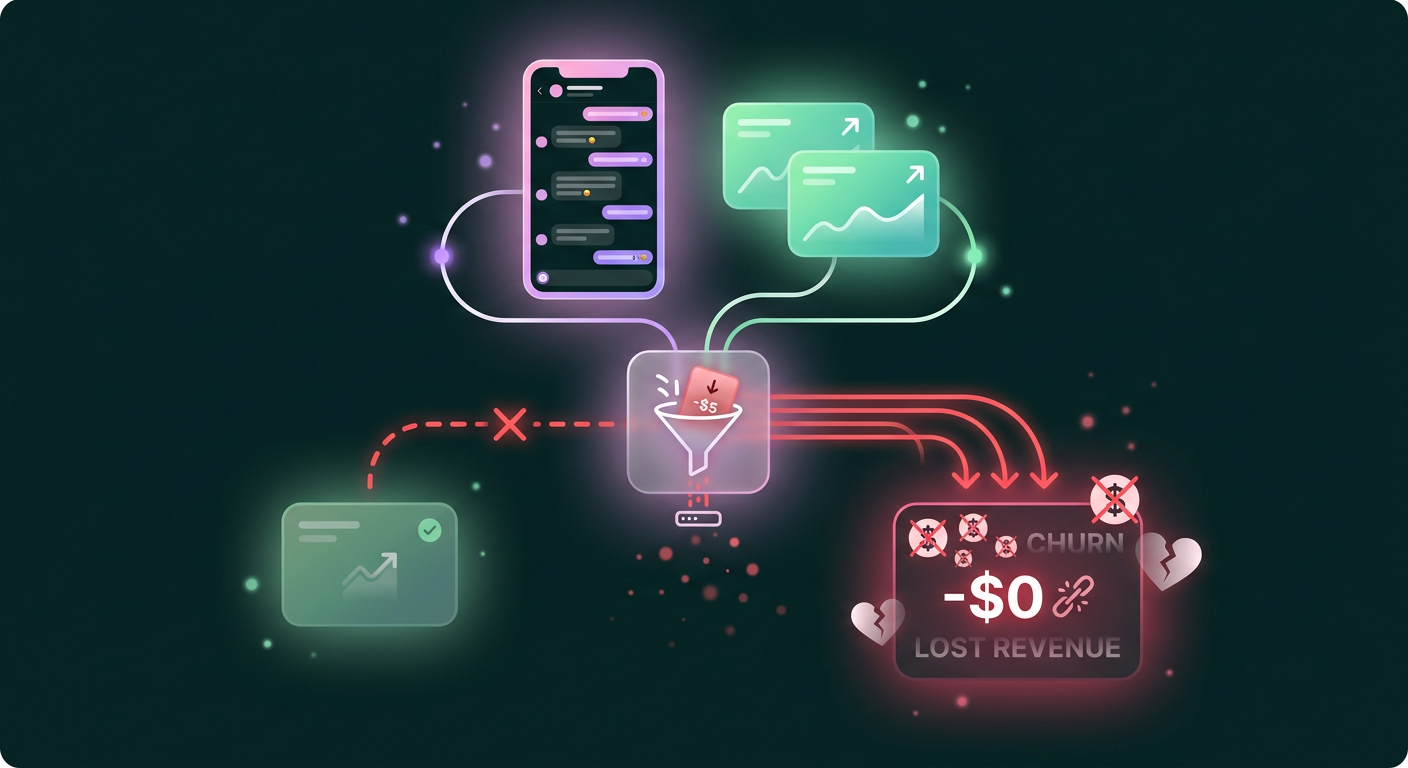
The key is to move beyond generic ad retargeting and build an automated lifecycle messaging system directly within high-engagement channels like Instagram DMs. By segmenting your one-time buyers and delivering personalized, automated messages at key moments, you can nurture them toward their second purchase and beyond.
With the "why" of retention so clear, the next question is "how." The answer lies in building a systematic approach to customer relationships that feels personal at scale. This involves moving the conversation away from crowded email inboxes and into the channels where your customers actually spend their time and pay attention. For most modern DTC brands, that channel is Instagram DMs.
Step 1: Segment your one-time buyers
Before you can send a relevant message, you need to understand who you're talking to. Not all first-time buyers are the same, and treating them that way is a recipe for low engagement. The first step is to segment this audience into more specific groups based on their behavior, such as the product they bought, the value of their first order, whether they used a discount code, or how long it's been since their purchase. The goal is to group customers with shared characteristics so you can tailor your messaging. For brands already using a CRM or marketing automation platform, these segments likely already exist; the key is to activate them in a more effective channel. This is the foundation for any successful attempt to increase your second purchase rate with DM automation.
Step 2: Map your lifecycle messaging flows
Once you have your segments, you can begin mapping out conversational journeys for each one. This isn't about creating a single win-back message; it's about designing a full-funnel experience that nurtures the relationship over time. For example, a flow for a first-time buyer might look like this:
- Day 3: A simple, automated DM checking in to see if their order arrived and if they have any questions.
- Day 10: A message offering tips on how to get the most out of their new product.
- Day 21: A request for a product review, making them feel like a valued part of the community.
- Day 45: A personalized recommendation for a complementary product, based on their original purchase.
Each step is designed to add value and build trust before asking for another sale. This focus on creating a positive journey is critical, as a Contentsquare 2025 Digital Experience Benchmarks report confirmed (opens in a new tab) that when customers enjoy their digital interactions, their lifetime value increases significantly.
Step 3: Automate your campaigns in the DMs
This is where strategy turns into an automated revenue driver. With your segments defined and your conversational flows mapped out, you can use a platform to execute these campaigns automatically within Instagram DMs. This approach allows you to engage customers with personalized 1:1 messages that feel like they're coming from a real person, not a faceless corporation. Unlike email, which often goes unopened, DMs have incredibly high engagement rates. Automating these conversations ensures that every single first-time buyer receives the right message at the right time to gently guide them toward their next purchase, all without any manual work from your marketing team. You can explore how it works (opens in a new tab) to see how this engine can transform your retention efforts.
Common Pitfalls in Scaling Repeat Purchases
Many brands make the mistake of relying solely on expensive and inefficient Meta ad retargeting, which just pays to re-acquire customers you already own. Another common failure is sending generic, impersonal messages that don't resonate, failing to build a real relationship that encourages loyalty.
As you implement a retention strategy, it's important to be aware of the common traps that can derail your progress. The most prevalent pitfall is falling back on what feels familiar: running retargeting campaigns on Facebook and Instagram. While this can have its place, it should not be your primary retention tool. When you rely on Meta to reach your own customers, you are paying a toll to speak to an audience you've already acquired. It's an expensive and inefficient way to drive a second purchase and does little to build a lasting relationship.
Furthermore, the advertising landscape itself is shifting. As one analysis of the market puts it, "Here's the truth about Facebook ads for DTC brands in 2025: manual optimization can't compete with AI-powered systems." This suggests that the classic approach of manually tweaking campaigns is becoming less effective. Instead of rethinking your entire ecommerce customer acquisition cost structure, many brands simply double down on this leaky bucket.
The second major pitfall is a failure of imagination. Many brands that do attempt to engage customers post-purchase do so with generic, impersonal communication. A simple "We miss you!" email with a 10% off coupon is unlikely to move the needle because it doesn't acknowledge their past purchase, offer any real value, or feel personal in any way. This type of low-effort communication can do more harm than good, training customers to ignore your messages or just wait for discounts. True retention is built on relevance and a sense of individual recognition.
What "Done" Looks Like: An Automated Retention Engine
A successful retention strategy results in an automated engine that consistently converts first-time buyers into loyal, high-value customers without manual effort. This system operates in the background, deepening customer relationships and driving repeat sales, which ultimately reduces your dependence on volatile paid acquisition channels.
Once you avoid the common pitfalls and implement an automated DM-based strategy, the result is a fundamental change in how your business grows. You will have created a self-sustaining retention engine that works for you 24/7. This system doesn't just ask for the next sale; it actively deepens the customer journey, turning transactional buyers into genuine brand fans. And the data shows this deeper engagement has a direct, measurable impact on your key metrics.
For example, studies show that returning customers invest almost a full minute more on a site than first-timers. That extra time isn't spent aimlessly; they are actively re-engaging with your brand, and sites with the best retention metrics see these users exploring 18% more pages per visit. This increased exploration and time on site isn't just a vanity metric. Analysis has shown that websites that deepened customer journeys by just 10% saw conversion rates jump 5.4%.4%](https://contentsquare.com/guides/customer-lifetime-value/increase (opens in a new tab)).
Ultimately, a completed retention engine means your brand's growth is no longer solely tethered to the rising costs and unpredictability of paid ads. Profitability becomes a function of the relationships you build, not just the traffic you buy. You'll see your repeat purchase rate climb, your customer lifetime value increase, and your marketing budget stretch further than ever before. This is what it looks like to own your audience, not just rent it.
Frequently asked questions
How can I increase customer lifetime value in my ecommerce store?
The most effective way is to shift your focus from acquisition to retention. Instead of pouring your entire budget into finding new customers, invest in systems that turn your existing one-time buyers into repeat purchasers. Strategies like personalized post-purchase follow-ups, relevant product recommendations, and loyalty programs, especially when delivered through high-engagement channels like Instagram DMs, can significantly boost CLV.
Should I focus on customer acquisition or retention right now?
While both are important, the leverage is almost always in retention. If your acquisition costs are high and your repeat purchase rate is low, you should prioritize retention immediately. According to research by Bain & Company, a mere 5% improvement in customer retention can increase profits by 25% to 95%. This shows that small efforts in keeping customers can have a much larger financial impact than acquiring new ones.
Why do many DTC brands struggle with their Facebook Ads?
Many DTC brands struggle because the platform is increasingly expensive and traditional methods are becoming less effective. Relying on manual campaign optimization is difficult in an era dominated by sophisticated algorithms. As noted in a 2025 market projection, "manual optimization can't compete with AI-powered systems." Additionally, many brands use ads to retarget customers they already have, essentially paying Facebook to talk to their own audience, which is a highly inefficient way to drive repeat business.
What are some effective strategies to increase my repeat purchase rate?
Effective strategies go beyond sending generic discount codes. Start with a post-purchase thank you and check-in via DM to ensure a good experience. Follow up with content that helps them use the product better. Later, you can introduce personalized cross-sells based on their initial purchase or send timely reminders for products that need replenishment. The key is to make the communication feel personal, valuable, and conversational.
How do I calculate customer lifetime value for my subscription business?
A straightforward way to calculate CLV for a subscription business is to first find the average revenue per account (ARPA) by dividing your total monthly recurring revenue by your total number of customers. Then, divide your ARPA by your monthly customer churn rate. The formula is: CLV = (Average Monthly Revenue per Customer) / (Monthly Customer Churn Rate).
Why does it cost so much more to acquire a new customer than to keep one?
It costs more because you are starting from zero. With a new customer, you have to spend money on advertising to get their attention, build enough trust to persuade them to visit your site, and then convince them your product is worth buying. An existing customer, on the other hand, already knows and trusts your brand. The likelihood of persuading them to buy again is between 60%-to-70%, compared to just a 13% chance with a new prospect, which makes every marketing effort dramatically more efficient.