
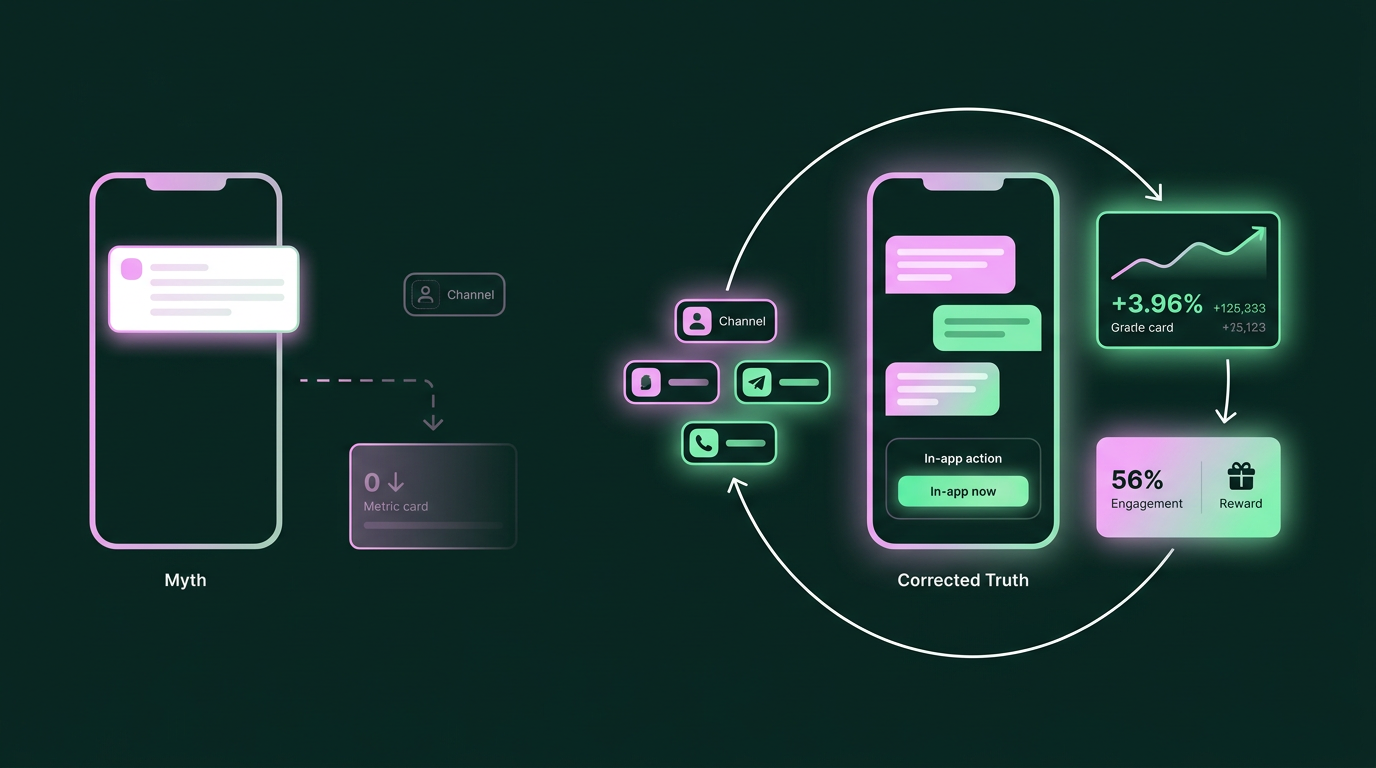
The standard playbook for a silent new user is to send more messages. When someone installs your app and then goes quiet, it seems logical to queue up a welcome series, a few push notifications, and maybe an email campaign to nudge them back. But this approach often makes the churn problem worse, not better. Bombarding a new user with generic messages is a fast track to being ignored, muted, or uninstalled, because the problem isn't a lack of communication, it's a lack of context.
The reality is that most apps lose their audience almost immediately. A staggering 77% of users abandon an app within just three days of installing it (opens in a new tab), and only a tiny fraction sticks around for the long haul. Sending more messages into that void isn't an engagement strategy; it's a symptom of a broken onboarding experience.
If They Drop Off, Just Nudge Them. Right?
This belief, that more messages can solve post-install silence, stems from a misdiagnosis of the core problem. We see users dropping off and assume they need a reminder that our app exists, when in reality they need a reason to care that is specific to them, delivered in their first session. This tactic of re-engaging with generic push notifications or emails is the default for most mobile brands simply because it's what traditional marketing automation platforms are built to do. It might feel productive to queue up a seven-day welcome journey, but it fundamentally misunderstands the user's mindset.
A user who just downloaded your app doesn't have a relationship with you yet. They have a fleeting moment of interest based on an ad they saw or a link they clicked. If they open the app and are met with a generic, confusing, or empty experience, they don't need a push notification three days later telling them to "come back and explore." They've already moved on. The generic message that arrives days later isn't a helpful reminder; it's just an interruption from an app they've already forgotten. It creates noise, prompts users to disable notifications, and solidifies their decision to leave for good.
Why We Think More Is Better
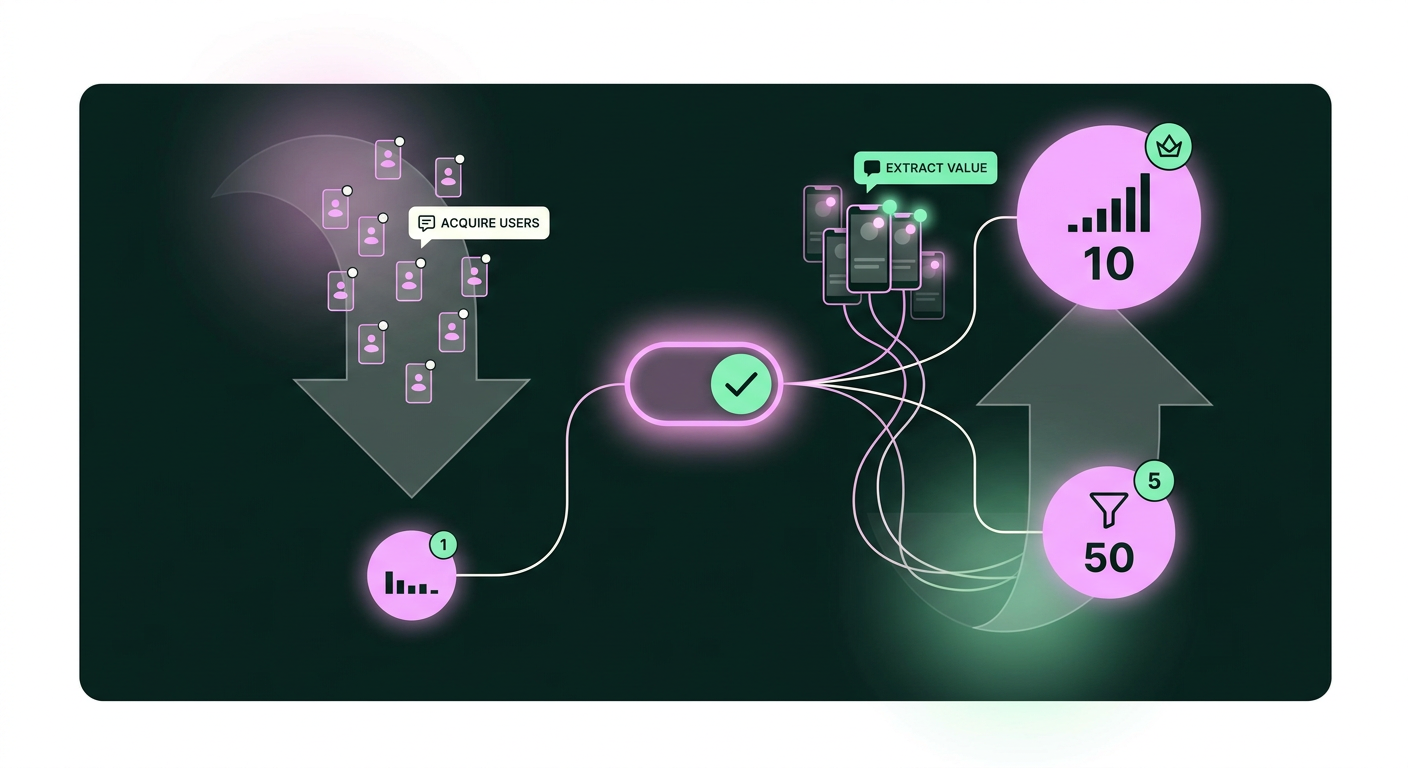
We reach for messaging volume because it feels like a tangible action against an alarming problem, and the tools for doing so are readily available. Faced with plunging retention curves, firing off another campaign feels like we're at least doing something to stop the bleeding, even if it's ineffective. This logic is seductive because it frames engagement as a simple numbers game: if we just send enough messages, some will surely land, and some of those users will come back.
This mindset is reinforced by the very structure of most marketing stacks. You have one team or tool for user acquisition that buys the install, and a completely separate lifecycle or CRM platform that handles what happens next. There's often a massive canyon between these two functions.
The engagement team sees a new user_installed event and dutifully triggers the pre-built "Welcome" sequence. It’s a logical, process-oriented response based on the data they have. The problem is that the most important piece of data, the why behind the install, is missing. They don't know if the user came from an Instagram ad promoting a specific product, a TikTok video showcasing a niche feature, or a friend's referral link. So they fall back on the only tool they have: a one-size-fits-all message that speaks to no one in particular. It’s a cycle of busywork that looks productive on a dashboard but does little to build real, lasting engagement.
The First-Session Context You're Ignoring
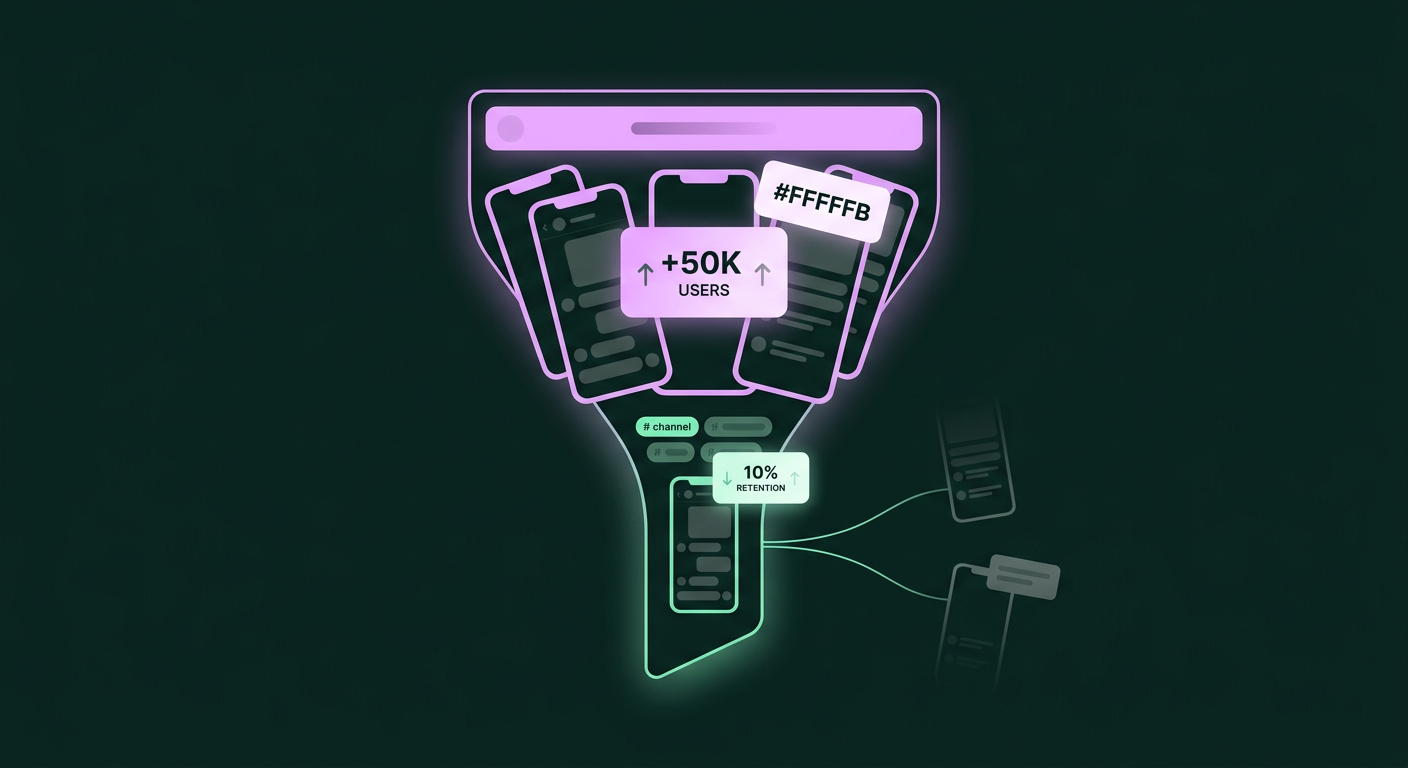
But if more messages aren't the answer, the solution is to make the first message count by using the context you already have. The most effective post-install engagement is a proactive conversation that begins the moment a user opens the app, shaped by where they came from and what they do in those critical first few minutes. That initial session is your only chance to make a good first impression, and the data shows just how quickly users make up their minds.
The drop-off is immediate and severe. Global retention benchmarks updated in 2024 reveal that, on average, app retention falls to just 26% on day one. By day seven, only 13% of users are still around, and that falls to 10% by day 14. This means the battle for long-term retention is largely won or lost within the first 24 hours. Waiting three days to send a generic push notification is like showing up to a party after everyone has gone home. The opportunity has passed. The key is to use the context from before and during that first session to make the experience immediately personal and valuable.
"Research indicates that many apps lose users shortly after download due to ineffective post-install engagement strategies that keep users interested and offer seamless onboarding processes that encourage exploration." , AVOW, "What is post-install engagement?"
This is why a guided onboarding experience is so critical. As one analysis of post-install strategies points out (opens in a new tab), a process that encourages exploration from the very start is what keeps users from churning.
Connect acquisition source to the onboarding journey
Imagine a new user just installed your gaming app. If they came from an ad showcasing a powerful dragon character, the very first thing they should see in the app is a path to getting that dragon. If they came from a campaign about competitive guild battles, their initial journey should guide them toward joining one.
When your messaging system is blind to this acquisition context, you're forced to present every new user with the same generic "Welcome! Complete your profile" screen, which is a huge missed opportunity. By connecting the acquisition source to the onboarding journey, you can craft a personalized 1:1 message that acknowledges their starting point. A simple DM like, "Hey, welcome! Ready to build your dragon army?" is infinitely more powerful than a generic push notification because it confirms the user is in the right place and validates their initial interest. This continuity is essential for turning fleeting curiosity into genuine engagement, and doing it well requires thinking beyond just ads to build a new direct-to-consumer marketing strategy that ties the entire journey together.
Use in-app events to guide, not just track
Most apps track user behavior, but this data is often used retroactively to build audience segments for future campaigns. A far more powerful approach is to use these events to trigger helpful messages in real time.
Instead of just noting that a user has viewed_tutorial_step_1 but not viewed_tutorial_step_2, you can use that specific inaction as a trigger. When the system detects a user is stuck, it can automatically send a supportive DM: "Looks like you're getting started! The next step is to join a team, which unlocks daily rewards. Want a hand?" This transforms your messaging from a broadcast channel into a personal concierge. It shows the user you're paying attention and are there to help them succeed, building a positive feedback loop from their very first session.
Engagement Starts Before the Install
True post-install engagement is not a separate function that kicks in after a download. It is the second half of a single, continuous customer journey that begins with the very first ad, social post, or link they clicked. A user doesn't see their journey in two parts, acquisition and retention, and neither should you. For them, it's one story that starts with a flicker of interest and, ideally, ends with them becoming a loyal, active user.
When you fail to carry the context of that origin story forward, you create a jarring disconnect. The user who was excited by the promise of your ad is dropped into a generic welcome screen and left to fend for themselves. This is where churn happens. The goal is to build a bridge from their initial intent to their first "wow" moment in the app. This requires a philosophical shift from thinking about discrete campaigns to orchestrating a full-funnel experience, a strategy that can dramatically increase customer lifetime value by rethinking how you connect with users from the very beginning.
Carry the Context Forward
Since engagement is a continuous journey, the practical first step is to connect your acquisition sources to your messaging platform. From there, you can define the key user actions that signify progress and use that behavioral data to personalize the very first messages a new user receives. This isn't about building dozens of complex workflows; it's about focusing on the critical path to activation and making it as smooth and relevant as possible.
This requires tools that can ingest both acquisition data and real-time in-app events and use them to trigger personalized 1:1 messages. The various use cases for this kind of automation (opens in a new tab) all share a common thread: they carry context forward to make the next message feel like the next logical step in a conversation.
Map your activation milestones
First, you need to define what "activation" actually means for your app. It's rarely a single event like user_signed_up. It's a sequence of small wins that leads a user to experience the core value you provide. For a social app, it might be: created_profile -> joined_a_community -> made_first_post. For a game, it could be: completed_tutorial -> won_first_match -> unlocked_a_reward.
Map these crucial steps and treat them as your onboarding funnel. The goal of your initial messaging isn't just to say "hello," but to guide the user from one milestone to the next.
Personalize the first message, not the tenth
The first message a user receives should be the most personalized one of all. By the time you're sending your tenth message to a dormant user, you're in win-back mode, which is far more difficult and expensive. The first message, however, is your chance to be a helpful guide.
Using the acquisition source and their first few in-app actions, you can craft a message that is immediately relevant. For instance, if they came from an ad for a 50% discount and have viewed a product but not added it to their cart, a DM saying, "Hey, just a reminder that your 50% off code is ready when you are!" is timely and valuable. It's not a generic interruption; it's a contextual nudge that helps them achieve their goal.
Your First-Week Retention Litmus Test
You can put this into practice without overhauling your entire system. Start small and prove the concept with a focused experiment: choose one of your most important acquisition channels and build a tailored onboarding journey just for those users. Then, measure their week-one retention against your generic baseline.
Here’s a simple plan to get started. First, pick a single, high-intent acquisition channel, like a specific Instagram ad campaign that targets users interested in one particular feature of your app. Second, design a unique first-session experience for anyone who installs from that campaign. Instead of the generic welcome, trigger a personalized DM that acknowledges where they came from and guides them toward the feature promised in the ad. Use their in-app behavior to send one or two follow-up messages that help them complete the key activation milestones you've mapped out.
Finally, measure the results. Compare the Day 7 retention rate for this specific cohort against the average for all other new users. Given that global benchmarks show only 13% of users typically remain active after seven days, even a small lift in this number is a massive win. The improvement you see will be the direct result of replacing generic volume with specific context, proving that the most effective engagement starts long before the user goes silent.
Frequently asked questions
How can I connect my app's events to an automated customer journey?
You can connect app events to a customer journey by using a platform that offers a software development kit (SDK) or API connections. This allows your app to send real-time behavioral data, like viewed_item or level_complete, to your engagement system. That system can then use a specific action or inaction to trigger a personalized message in a pre-defined journey.
Should I be worried if users drop off between installing and signing up?
Yes, you should be very concerned about this drop-off. It's one of the most critical leaks in any app's funnel and often signals a major disconnect between the user's expectation from your marketing and their actual first experience. As a February 2024 report highlighted, with around 77% of users abandoning an app within the first three days, this initial window from install to activation is your most important opportunity to make a good impression.
What are the most important metrics to track for app activation and retention?
Beyond the initial install count, you should focus on metrics that measure sustained usage. Day 1, Day 7, and Day 30 retention rates are standard benchmarks for app stickiness. It's also vital to track the completion rates of your specific activation milestones, such as finishing a profile, making a first purchase, or using a key feature. Because 2024 global data shows average Day 7 retention is only 13%, outperforming this baseline is a strong indicator of a healthy user experience.
How can my app guide new users from sign up to their first 'wow' moment?
The best way is to map out the "critical path", the sequence of three to five actions a user must take to experience your app's core value. Once you know these steps, you can use in-app behavioral triggers to send helpful, contextual messages that guide them from one step to the next. For instance, if a user creates a profile but doesn't join a group, a timely DM can explain the benefit of joining a group and prompt them to take that next step.
What should I look for in a customer engagement platform for my consumer app?
Look for a platform that can unify data across the full funnel, from acquisition source to long-term engagement. Critically, it must be able to ingest real-time behavioral events from within your app and use that data to trigger personalized 1:1 messages. Prioritize systems that can communicate on channels where users actually pay attention, like social DMs, rather than relying solely on the crowded spaces of email and push notifications.