
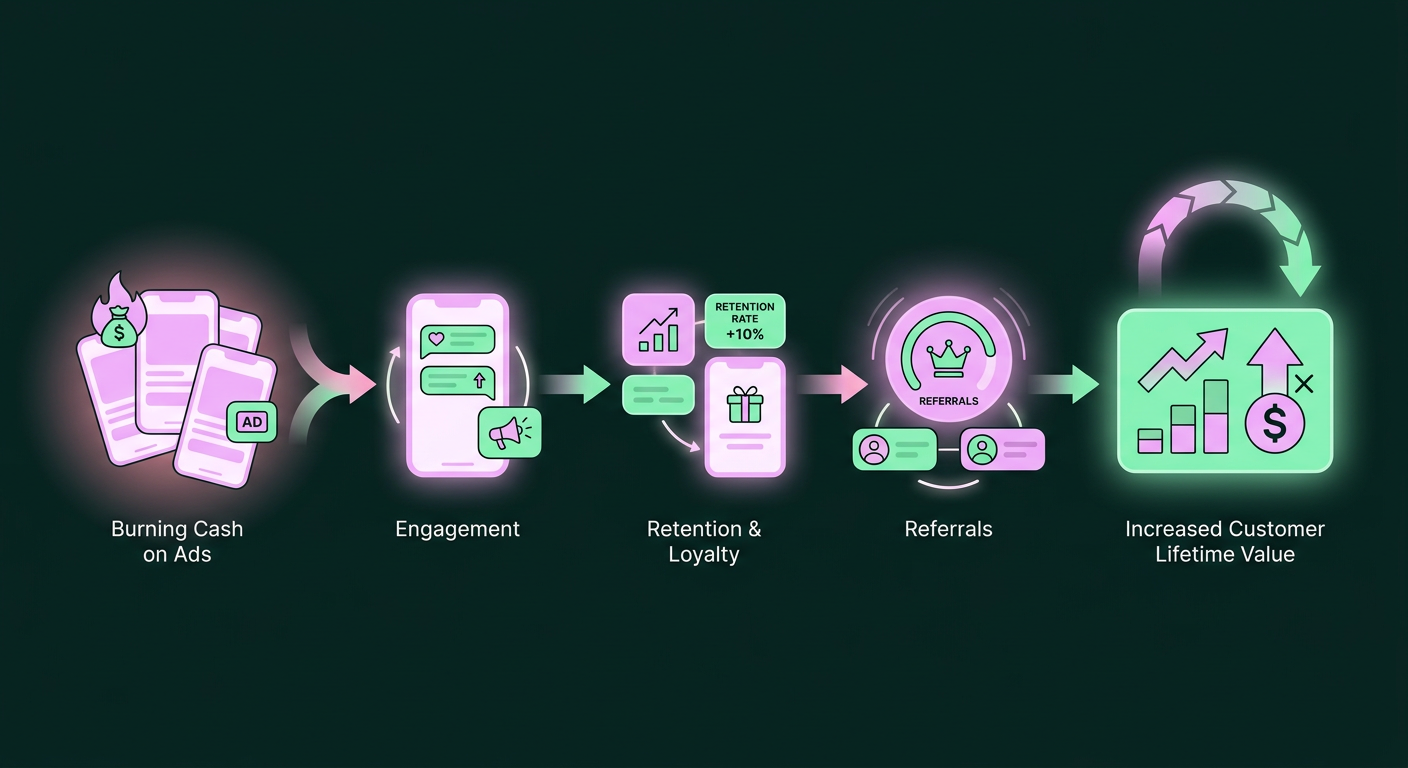
Pouring money into customer acquisition only to watch those customers buy once and disappear is a recipe for an unprofitable business. For any growing brand, breaking this cycle means shifting focus from chasing one-time transactions to building long-term relationships. This isn't just about better retention; it's a fundamental change to your business model, one where marketing scales profitably by increasing customer lifetime value (CLV) instead of just burning cash to re-acquire the same people.
Stop Acquiring the Same Customer Twice
The problem is painfully simple: customer acquisition has become a hamster wheel, with brands spending more and more to attract shoppers who never return. This leaves marketing leaders in a difficult position, constantly needing to justify rising ad costs for growth that evaporates after the first purchase. While many businesses fixate on top-of-funnel metrics, they’re ignoring the leaky bucket that’s draining their profitability. In fact, many are stuck in this mindset, with 45% of businesses prioritizing customer acquisition over retention (opens in a new tab), even though keeping a customer is far more cost-effective.
This isn't a sustainable way to build a brand. Because the cost to acquire a new customer has been climbing for years, it’s nearly impossible to turn a profit on the first sale alone. The data is clear: it can cost five to 25 times more to acquire a new customer than to retain an existing one. When you have to pay that premium every single time someone buys from you, you aren’t building a customer base; you’re just renting traffic. The only way off this treadmill is to stop paying to acquire the same person twice and instead build a system that reliably encourages a second, third, and fourth purchase.
Why CLV Is Your Most Important Growth Metric
Instead of measuring success by the volume of new customers, the most profitable brands measure it by the value of their existing ones. Customer lifetime value is the key performance indicator that shifts your team’s focus from short-term transactions to long-term profitability by measuring the total revenue a business can expect from a single customer. Focusing on CLV forces you to think about the entire customer journey, not just the initial conversion, which is where real, sustainable growth happens.
The financial incentive for this shift is massive. While you might have a 5-20% chance of selling to a new prospect, your odds skyrocket with someone who has already bought from you. Research from the Wharton School has found the probability of selling to an existing customer is up to 14 times higher than selling to a new one (opens in a new tab). This isn't just about one more sale, either, as small improvements in retention have an exponential impact on your bottom line.
According to research by the Wharton School’s Professor of Marketing David Reibstein, the probability of selling to an existing customer is up to 14 times higher than the likelihood of selling to a new customer.
, Wharton Online Insights
This dramatic difference in conversion probability translates directly to profit. Instead of spending endlessly on top-of-funnel ads, you can invest a fraction of that budget into delighting the customers you already have. This is why even a small increase in your retention rate has such a profound effect on your business, with research showing that a mere 5% boost in customer retention can increase profits by anywhere from 25% to 95% (opens in a new tab). That’s the kind of leverage that transforms a business from a cash-burning machine into a profitable engine. So, if your ecommerce repeat purchase rate is stuck, focusing on CLV provides the strategic framework to fix it.
A 3-Phase Approach to Automated Retention via DM
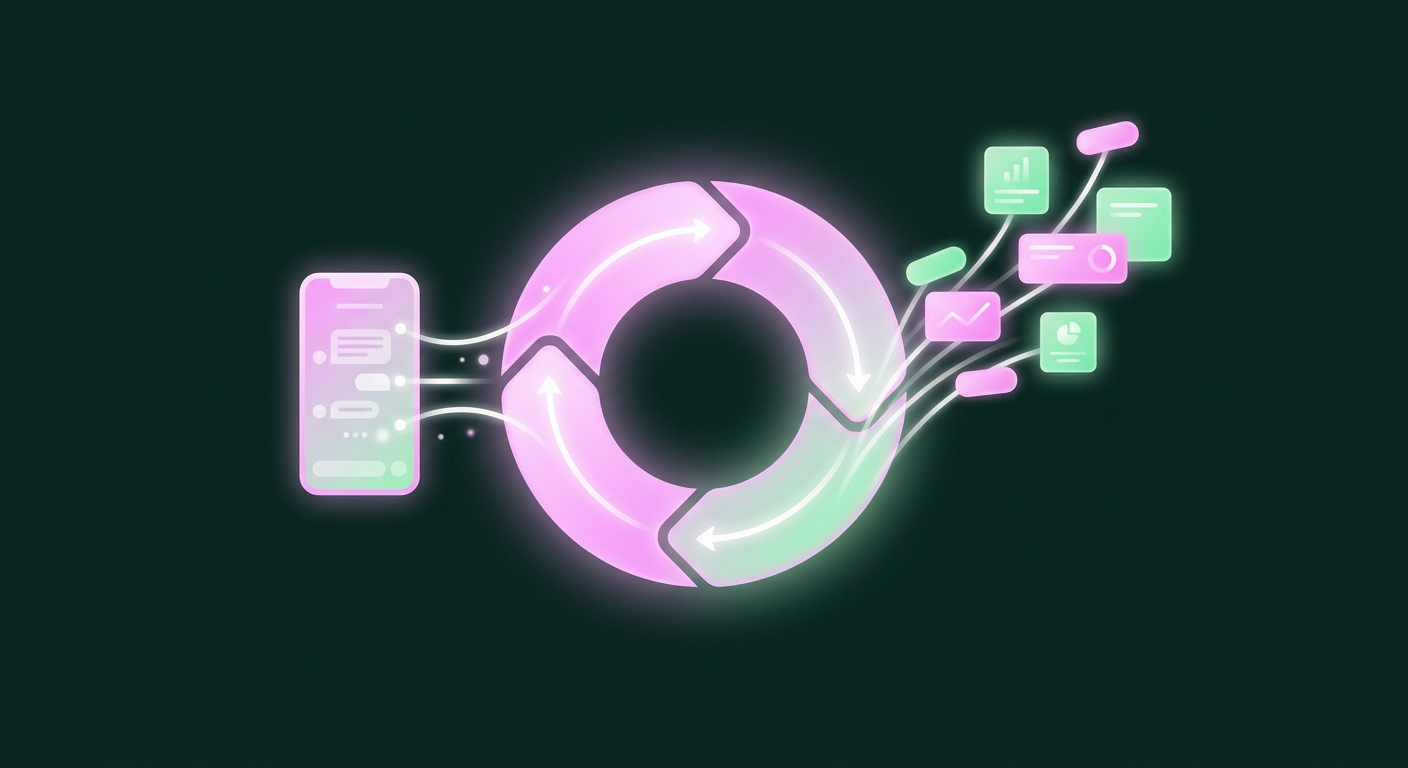
Fixing your repeat purchase rate means building an automated system to re-engage first-time buyers where they're most receptive: in their DMs. Instead of relying on crowded email inboxes or easily ignored push notifications, a modern retention strategy meets customers in the conversational channels they actually use. By integrating with your existing CRM, you can use lifecycle data to send personalized, 1:1 messages on platforms like Instagram and WhatsApp, turning a one-off transaction into an ongoing relationship. Here’s how you can structure this in three phases.
Phase 1: Segment Your One-Time Buyers
Before sending a single message, you need to know exactly who you're talking to. The first step is creating a dynamic segment in your CRM (like Klaviyo or Braze) that specifically identifies customers who have made one purchase but haven't returned. This isn't a static list; it's a living cohort of customers who represent your biggest opportunity for growth.
The goal here is to isolate the group most at risk of churning forever, people who were interested enough to buy from you once but never came back. By creating a dedicated segment for them, you can build a full-funnel messaging flow designed specifically to guide them toward a second purchase. This ensures your retention efforts are targeted and relevant, not just generic messages sent to your entire customer file.
Phase 2: Engage Them in the DMs
Once you’ve identified your one-time buyers, the next step is to reach out on a channel they actually pay attention to. While email open rates are declining and retargeting ads are often ignored, direct messages command attention. With open rates for WhatsApp DMs sitting between 90-98% and initial engagement with an automated DM reaching 75%, this channel offers an unparalleled opportunity to start a real conversation.
This is where various use cases for automated messaging (opens in a new tab) can drive results. The key is to make the outreach feel personal and service-oriented, not promotional. The first message shouldn't be a coupon; it could be a simple check-in asking about their first order, offering tips for their new purchase, or inviting them to a loyalty program. This approach reframes the interaction as a supportive customer experience, which is crucial for building the trust needed for a repeat purchase. The performance difference is stark: DM conversion rates are often 3-5x higher than push notifications because the channel itself is built for two-way interaction.
Phase 3: Nurture and Convert with Lifecycle Messaging
The initial DM opens the door, but the follow-up is what secures the second sale and grows your CLV. This phase is about developing an automated, full-funnel nurture sequence in the DMs, with messages timed according to the customer’s lifecycle and product usage. For a consumable product, you might send a reorder reminder right when they're likely running low. For a durable good, you could share content about new accessories or complementary products.
The content of these messages should be a mix of helpful information, customer service, and strategic offers. A well-structured loyalty program is a powerful tool here. You can use DMs to onboard new members, notify them of point balances, and offer exclusive rewards. Done right, these programs are incredibly effective; data shows that a loyalty program can increase annual revenue by 15% to 25% (opens in a new tab) on its own. By automating this entire flow, you create a scalable system for nurturing one-time buyers into loyal, high-value customers, directly impacting your ability to increase your second purchase rate.
Common Mistakes: Why Your Retargeting Isn't Working
Even with a clear plan, it's easy to fall back on old habits. If your existing retention efforts are falling flat, it's likely because they are generic, impersonal, and disruptive. The old model of chasing customers with banner ads for a product they already viewed doesn’t build the loyalty that leads to high CLV. These tactics often feel intrusive and miss the real reason a customer hasn't returned, which is typically a gap in service or connection, not a lack of ad exposure.
This isn't a new problem. A 2014 Retention Science study in Forbes revealed that 70% of marketers felt their retention marketing was average at best. The problem is that most retention "strategies" are just repurposed acquisition tactics. A banner ad might remind someone of your brand, but it doesn't solve their problems or make them feel valued because it’s a one-way communication channel in an era where customers expect a dialogue.
A failure to focus on the post-purchase experience is another direct cause of customer churn. Loyalty isn't just about offering discounts; it's about providing consistent quality and excellent service. According to The SAP Engagement Cloud Customer Loyalty Index 2025, 47% of consumers reported that poor customer service weakens their loyalty to a brand. If a customer has a question after their first purchase and can't get help, no amount of retargeting will bring them back. A successful retention strategy must be built on genuine service, turning marketing from an annoyance into a welcome and helpful interaction.
What "Done" Looks Like: From Ad Spend to Profit Engine
When you avoid those mistakes and get this right, the entire financial model of your business changes. Instead of a marketing budget that disappears into the black hole of one-time customer acquisition, you have a predictable, automated system that turns your existing customer base into a reliable profit engine. Your focus shifts from the cost per acquisition to the lifetime value of each customer, a far more powerful and sustainable metric for growth.
This transformation means you're no longer dependent on the volatile and ever-rising costs of paid advertising. Your growth becomes more predictable because it's fueled by a compounding asset: your loyal customers. Each new customer you acquire has a higher potential value because you have a system in place to nurture them into repeat buyers.
This is a flywheel in action. New customers are acquired, they have a fantastic post-purchase experience through personalized DMs, they buy again, and they become more valuable over time. Marketing ceases to be a cost center that's constantly fighting for budget and instead becomes a demonstrable engine for profitable, long-term growth. You finally get off the acquisition treadmill and start building a brand that can stand the test of time.
Frequently asked questions
How do I know if I should prioritize acquisition or retention right now?
The answer is in your unit economics. If your cost to acquire a customer is higher than the profit from their first purchase, you have a "leaky bucket" and should immediately prioritize retention. Given that it can cost five to 25 times more to acquire a new customer than to retain an existing one, even a small shift in focus can dramatically improve profitability. A simple 5% improvement in retention can boost profits by 25% to 95%, making it the higher-leverage activity for most established businesses.
Why should I use customer lifetime value (CLV) as a metric for my business?
CLV aligns your marketing efforts with long-term profitability instead of short-term, often unprofitable, transactions. It measures the total net profit you can expect from a single customer over their entire relationship with your brand. Focusing on this metric encourages you to invest in activities that build loyalty and repeat purchases, which are far more profitable. For example, the probability of selling to an existing customer is up to 14 times higher than selling to a new one, making every dollar invested in retention more effective than a dollar spent on acquisition.
What are the best strategies to turn my one-time buyers into repeat customers?
The best strategies create a personalized and valuable post-purchase experience. This means segmenting your one-time buyers to target them specifically, then engaging them on high-attention channels like Instagram or WhatsApp DMs with service-oriented messages, not just ads. From there, you nurture the relationship with automated lifecycle messaging that could include product tips, replenishment reminders, and invitations to a loyalty program, turning the relationship from transactional to conversational.
Why do I see so many DTC brands struggling with their Facebook Ads?
Many DTC brands struggle with ads on platforms like Facebook because the cost of acquisition is rising, and they are often stuck on an acquisition treadmill. They focus their budget on attracting new customers but lack a system to retain them. With 45% of businesses prioritizing acquisition over retention, they find themselves in a cycle of paying high ad costs to acquire customers who only make one purchase. This model becomes unprofitable as ad costs increase, making it impossible to scale without a strong retention back-end.
How is CLV different for a subscription model versus a business with one-off purchases?
For a subscription model, CLV is often simpler to calculate: it's typically the average monthly subscription fee multiplied by the average customer lifetime (in months), minus the initial acquisition cost. It's a predictable revenue stream. For a business with one-off purchases, CLV is a predictive metric based on historical data. It's calculated by multiplying the average purchase value by the average purchase frequency and the average customer lifespan. It requires more sophisticated analysis to forecast future behavior but is just as critical for understanding long-term profitability.
Is it really that much more expensive to get a new customer than to keep an old one?
Yes, it is significantly more expensive. Widely cited industry data shows that acquiring a new customer can cost anywhere from 5 to 25 times more than retaining an existing one. This is because acquisition requires spending on advertising, marketing campaigns, and sales outreach to a cold audience with a low conversion probability (typically 5-20%). In contrast, selling to an existing customer leverages the trust and familiarity you've already built, leading to a much higher conversion probability (60-70%) with minimal additional cost.