
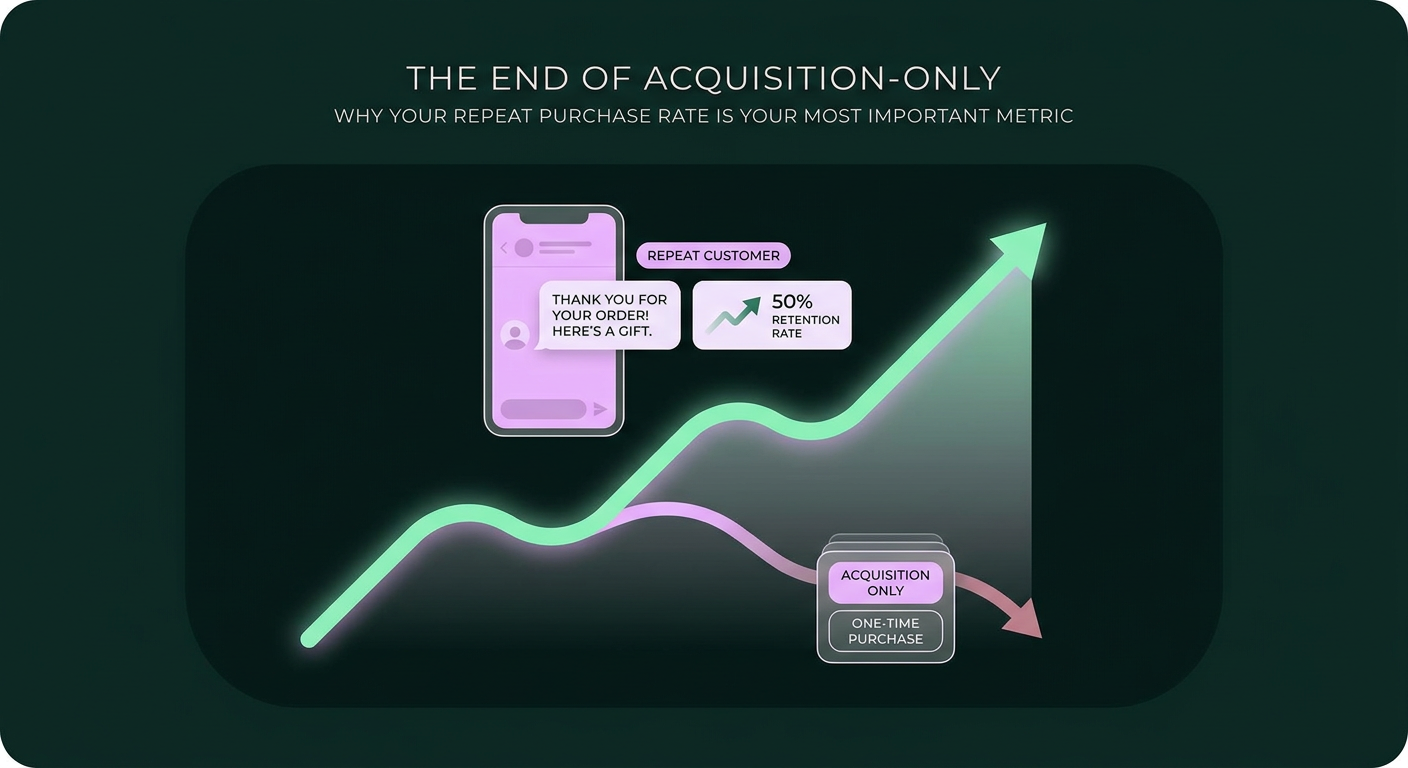
For years, the direct-to-consumer growth model was straightforward: pour money into ads, acquire new customers, and watch revenue climb. But that engine is sputtering. With customer acquisition costs rising and brand loyalty showing signs of strain, the math that powered a generation of DTC brands no longer adds up. The simple truth is that chasing one-time buyers is becoming a fast track to unprofitability. A staggering 7 out of 10 customers never return for a second purchase (opens in a new tab), leaving brands stuck on an expensive treadmill of constantly refilling a leaky bucket. The era of growth-at-all-costs is over, replaced by a new reality where sustainable growth comes from the customers you already have.
The DTC Growth Model Is Breaking
**The core assumption of endless, (opens in a new tab) affordable customer acquisition has collapsed. With the average ecommerce repeat purchase rate (opens in a new tab) hovering around 28.2%, brands that live and die by acquisition are facing a severe profitability crisis.** This means for every ten customers a brand spends a small fortune to acquire, seven make a single purchase and then disappear. It’s a model that was only viable when digital advertising was cheap and competition was scarce, but today's landscape is entirely different.
The reliance on paid social and search has created a vicious cycle. As more brands compete for the same eyeballs, ad auctions become more crowded and drive up costs. This forces brands to spend even more to acquire each new customer, shrinking margins to razor-thin levels or erasing them entirely. Many brands find themselves in the unenviable position of paying platforms like Meta or Google to acquire the same customer multiple times, simply because they have no reliable way to bring them back directly. When the cost of acquiring a new customer is 5 to 25 times more expensive (opens in a new tab) than retaining an existing one, an acquisition-only strategy becomes fundamentally unsustainable. The old model isn't just inefficient; it's broken.
From "More Eyeballs" to "More Value"
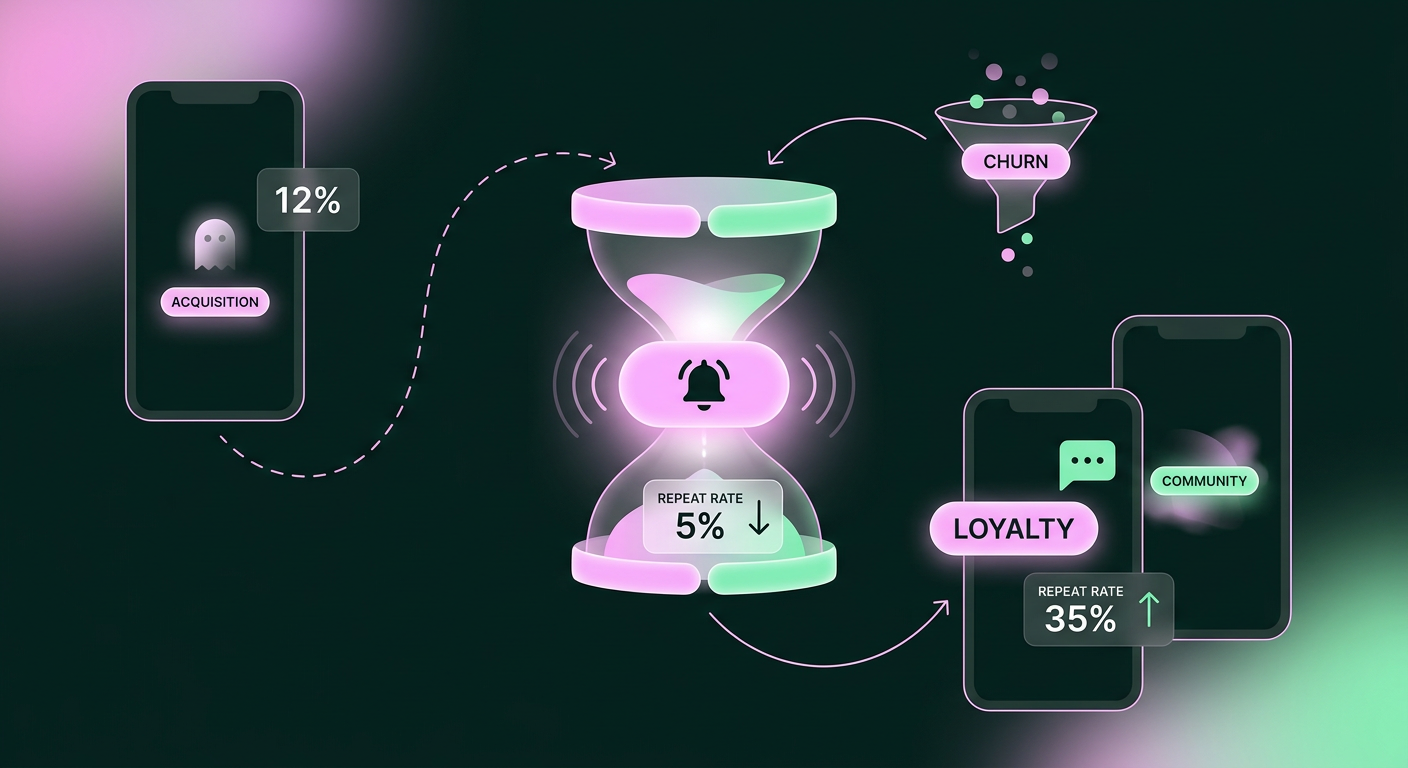
The most strategic brands are shifting their focus from the vanity metric of customer count to the business-critical metric of customer lifetime value. Instead of just buying more traffic, they are building deeper relationships that generate more profit from each customer over time. This isn't a semantic change; it's a fundamental pivot in business strategy. Where the old goal was to maximize eyeballs and first conversions, the new goal is to maximize the value of each relationship by understanding that the first purchase is the beginning of the journey, not the end.
The financial case for this shift is overwhelming. Research shows that increasing customer retention by just 5% can increase profits by a staggering 25-95%.net/marketing-glossary/repeat-purchase-rate/statistics). This is because repeat customers are simply better for business; they have higher average order values, greater trust in the brand, and are less expensive to market to. In fact, repeat customers spend three times more per visit (opens in a new tab) than first-time buyers, turning a transactional relationship into a profitable, long-term partnership. A 2026 analysis of over 156,110 DTC customers found an average repeat purchase rate of only 18.8%, underscoring how much opportunity is being left on the table.
The average ecommerce store converts about 28.2% of its customers into repeat buyers. Which means roughly 7 out of 10 people who buy from you once never come back. , Rivo, The Complete Guide to Repeat Purchase Rate
This data paints a clear picture: while acquisition fills the top of the funnel, retention is what actually builds the business. Focusing on your ecommerce repeat purchase rate isn't just about loyalty; it's about building a more resilient, efficient, and profitable company.
What This Means for Your Marketing Budget
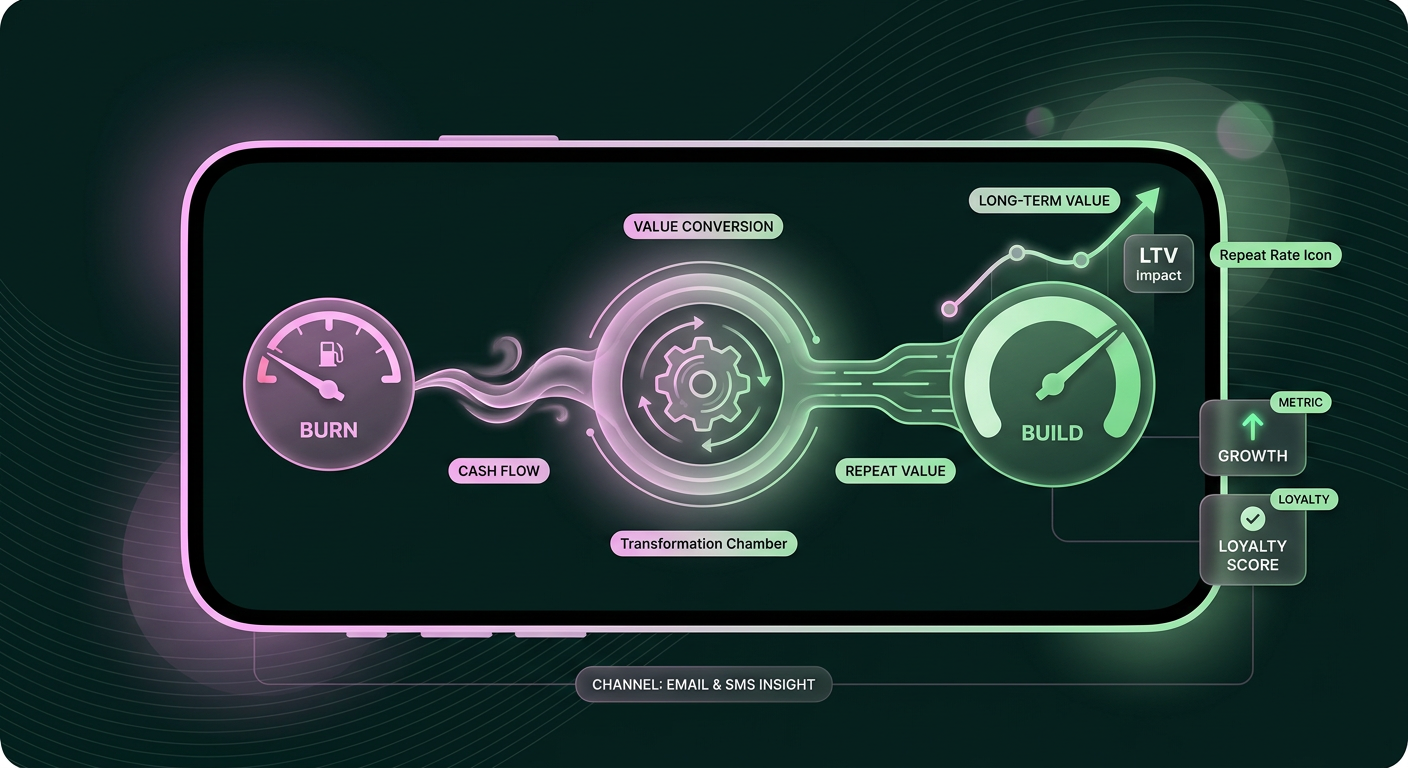
This strategic pivot from acquisition to retention demands a corresponding shift in how you allocate your marketing budget. For many CMOs, this means critically re-evaluating the outsized spend on performance marketing and redirecting those funds toward channels that nurture long-term loyalty. It's a move away from "renting" customers from ad platforms and toward "owning" the relationship directly.
Rethinking Your Ad Spend
This doesn't mean turning off your acquisition channels entirely, as new customer growth is still vital. It does mean, however, that the role of that ad spend needs to evolve. Instead of being the primary engine of all growth, it should become a tool used with surgical precision to acquire the right kind of customers, those with a higher potential for repeat purchases and long-term value. This requires a deeper understanding of your customer data to identify the characteristics of your best buyers and target more people like them. It also means it's time to explore a new direct to consumer marketing strategy that looks beyond paid ads.
Investing in Owned Channels
The budget you reallocate from broad-based acquisition should be invested in strengthening your owned marketing channels like email, SMS, and the private, conversational spaces of social media DMs. These channels allow you to communicate with your customers directly, without paying an intermediary for access. Building robust programs on these platforms, from sophisticated email flows to automated, personalized DM conversations, is the key to turning a first-time buyer into a lifelong fan. This is where you build the relationships that drive the repeat purchases, higher order values, and organic advocacy that create sustainable growth.
How Top Brands Drive Repeat Purchases in DMs
To make this concrete, leading brands are already proving the power of retention-focused marketing by engaging customers where they spend most of their time: their messaging apps. They use automated, personalized direct messages to create a continuous conversation that guides customers from their first purchase to their second, third, and beyond. This isn't about sending generic promotions; it's about delivering the right message at the right moment in the customer lifecycle.
Imagine a customer makes their first purchase. Instead of silence followed by a generic email newsletter a week later, they receive a thank-you DM on Instagram. A few days later, an automated message might check in to see how they're enjoying the product and offer a useful tip. When the time is right, another message could offer a personalized replenishment reminder or a curated recommendation for their next purchase.
These are not one-off campaigns but integrated lifecycle marketing flows that run automatically. They include welcome series for new followers, post-purchase check-ins, abandoned cart reminders sent directly to a user's DMs, and win-back campaigns for customers who haven't purchased in a while. By meeting customers in these conversational channels with timely, relevant, and personalized 1:1 messages, brands are building powerful retention loops that operate with minimal manual effort. This approach transforms the DM inbox from a simple customer service channel into a powerful engine for driving your ecommerce repeat purchase rate.
Your Plan: Shift from Acquisition to Retention
The first step is to treat retention with the same rigor and focus that has traditionally been applied to acquisition. This means establishing clear goals, measuring the right metrics, and building the systems required to automatically re-engage and nurture your existing customers. For most brands, the journey begins with a commitment to increasing the second purchase rate.
The industry benchmark for a good ecommerce repeat purchase rate is somewhere between 25-30%.ai/blog/repeat-purchase-rate-ecommerce). If your brand is below this threshold, you have a clear and immediate opportunity for growth. The goal is to build a system that reliably converts one-time buyers into two-time buyers, because this is the most critical juncture in the customer lifecycle. A customer who has purchased twice is exponentially more likely to purchase a third and fourth time.
To achieve this, you need to automate the process, because relying on manual outreach isn't scalable. Instead, you can implement automated messaging flows in channels like email and DMs that trigger based on customer behavior. A post-purchase follow-up, a request for a review, and an exclusive offer for a second purchase are all foundational tactics that can be automated to nurture that crucial next sale. By building this retention machine, you can begin to systematically increase your second purchase rate with DM automation, creating a more profitable and predictable revenue stream for your business.
What to Watch: The Rise of Conversational Commerce
With your retention strategy in place, the next frontier is deepening the customer relationship through truly personalized, 1:1 conversations at scale. The future of ecommerce loyalty will be built not through one-to-many broadcasts, but through automated yet authentic dialogues in the customer's preferred messaging apps. This is the essence of conversational commerce.
As technology evolves, the ability to deliver these full-funnel, personalized experiences directly in Instagram DMs, WhatsApp, and other messaging platforms will become a key differentiator. These systems will go beyond simple triggers, using AI and deep CRM integration to understand customer intent, predict needs, and initiate conversations that feel personal and genuinely helpful. Imagine a system that knows when a customer is likely to run out of a product and proactively starts a reorder conversation in their DMs, or one that can offer styling advice based on past purchases.
This isn't science fiction; the tools and strategies are emerging now. For brands that have successfully pivoted from an acquisition-first to a retention-centric model, mastering conversational commerce is the next logical step. It represents the ultimate expression of owning the customer relationship, creating a powerful, defensible moat that no amount of ad spend from a competitor can easily overcome. The brands that win the next decade of ecommerce will be those who learn to talk with their customers, not just at them.
Frequently asked questions
Why should I prioritize retention over acquisition right now?
Prioritizing retention over acquisition is critical right now because the old acquisition-led growth model is becoming financially unsustainable. The cost to acquire a new customer is 5 to 25 times more expensive than keeping an existing one, and rising ad costs are squeezing margins thin. Furthermore, focusing on retention has a disproportionately positive impact on your bottom line; a small 5% increase in customer retention can boost profits by 25-95%, making it the most efficient lever for profitable growth in the current market.
What is customer lifetime value and why is it so important for my business?
Customer lifetime value (LTV or CLV) is a metric that represents the total net profit a company can expect to generate from a single customer over the entire duration of their relationship. It's so important because it shifts your focus from short-term gains, like a single sale, to long-term, sustainable profitability. A business optimized for LTV invests in building relationships, which leads to repeat purchases, higher average order values, and greater brand loyalty, ultimately creating a more resilient and valuable business.
How can I increase my customer lifetime value if I have a subscription model?
For a subscription model, you can increase LTV by focusing on two key areas: reducing churn and increasing the expansion revenue from each subscriber. To reduce churn, use personalized communication to ensure customers are getting value from their subscription, offer flexibility in their plans, and proactively address any service issues. To increase expansion revenue, you can create up-sell and cross-sell opportunities, such as offering premium tiers, add-on products, or exclusive access to new features for a small additional cost.
Why do so many DTC brands seem to struggle with Facebook Ads profitability?
Many DTC brands struggle with Facebook Ads profitability because they are caught in a cycle of rising costs and diminishing returns, largely due to an over-reliance on acquisition. As more advertisers compete for the same audience, auction prices go up. If a brand's business model depends on converting customers who only buy once, the rising cost per acquisition can quickly erase any profit margin from that initial sale, making the ad spend unprofitable in the long run.
My brand has hit a plateau; can focusing on repeat sales help me break through?
Absolutely. Hitting a plateau is often a sign that your acquisition channels have reached their limit of efficient scale. Focusing on repeat sales is one of the most effective ways to break through. Given that the average ecommerce repeat purchase rate is only 28.2%, there is likely a massive, untapped opportunity within your existing customer base. Because repeat customers spend more and are cheaper to market to, successfully increasing your repeat sales rate can unlock a new, highly profitable growth engine for your brand.
How can I use Instagram DMs to encourage my first-time buyers to come back for another purchase?
You can use Instagram DMs to drive repeat purchases by implementing automated, personalized messaging flows. Immediately after a first purchase, send an automated thank-you DM. A few days later, trigger another message to share tips on using the product or to ask for feedback. Once enough time has passed, you can send a targeted offer for their second purchase, or a recommendation for a complementary product based on their first order. The key is to be timely, personal, and helpful, using the DM channel to build a relationship rather than just to broadcast promotions.