
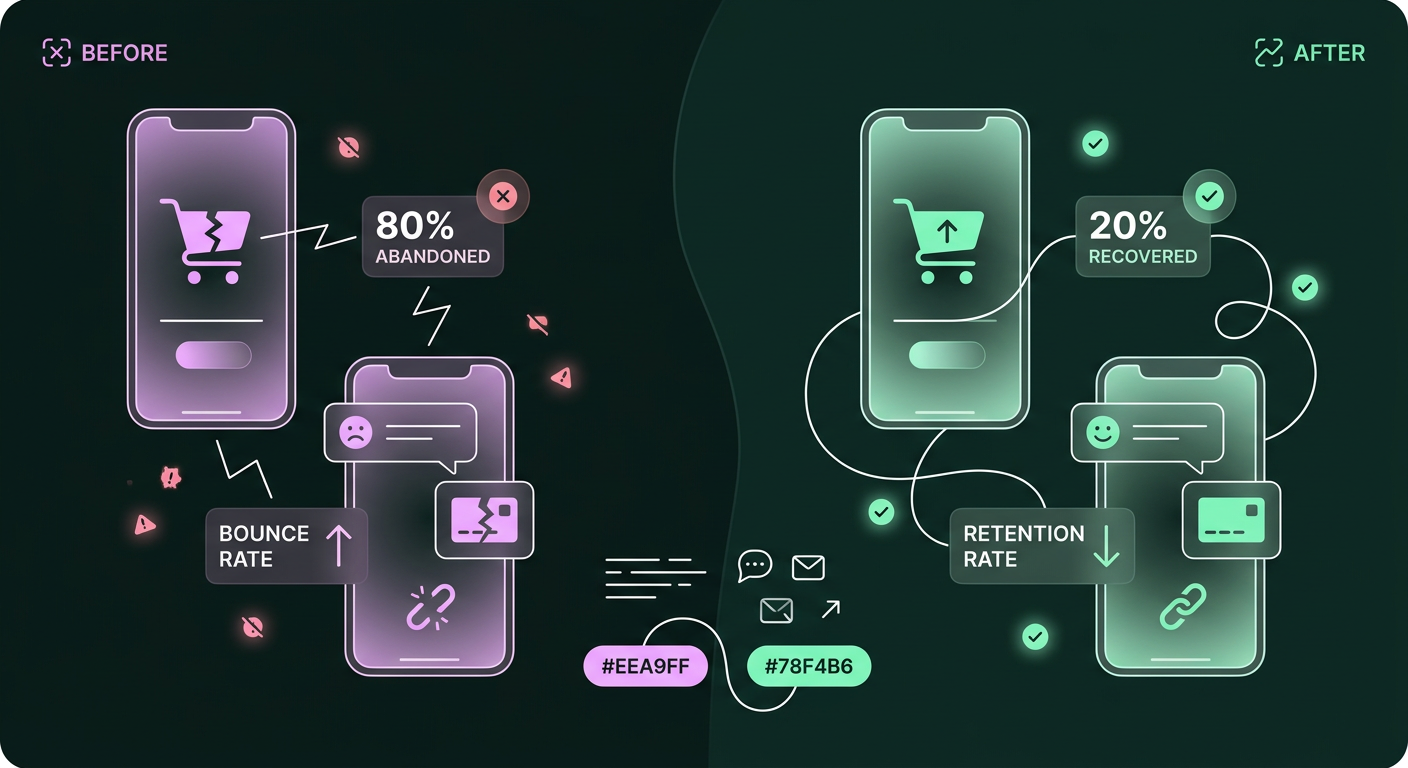
Most e-commerce brands follow the same playbook for abandoned carts: a dutifully set up email sequence, maybe with an SMS reminder thrown in. But the results are almost always mediocre. The problem isn't your execution; it's that you're sending messages into a digital space so crowded that your carefully crafted messages get lost among hundreds of other promotions. This is a massive source of lost revenue, with data from 2023 showing the average cart abandonment rate sits at a staggering 70.19% (opens in a new tab). When your last line of defense fails to bring these high-intent shoppers back, you’re bleeding revenue right at the finish line.
Why Your Abandoned Cart Emails Are Being Ignored
Your abandoned cart emails are being ignored because they land in crowded inboxes where they have to compete with countless other promotions. The generic, automated nature of these messages fails to create a genuine sense of urgency or personal connection, leading shoppers to tune them out as just another piece of marketing noise.
While open rates for these campaigns might look decent on paper, the metric can be misleading. After all, an open rate of over 50% sounds pretty good, but "opened" doesn't mean "read," and it certainly doesn't mean "acted upon." Often, it’s just a fleeting glance during a routine inbox purge, a casualty of muscle memory. So even though the message was delivered and technically seen, it failed to resonate or persuade. You're left using a tool that's becoming less effective for the delicate task of re-engaging a hesitant buyer, all while wondering why your conversion numbers aren't budging.
The Real Reason High-Intent Shoppers Ghost You
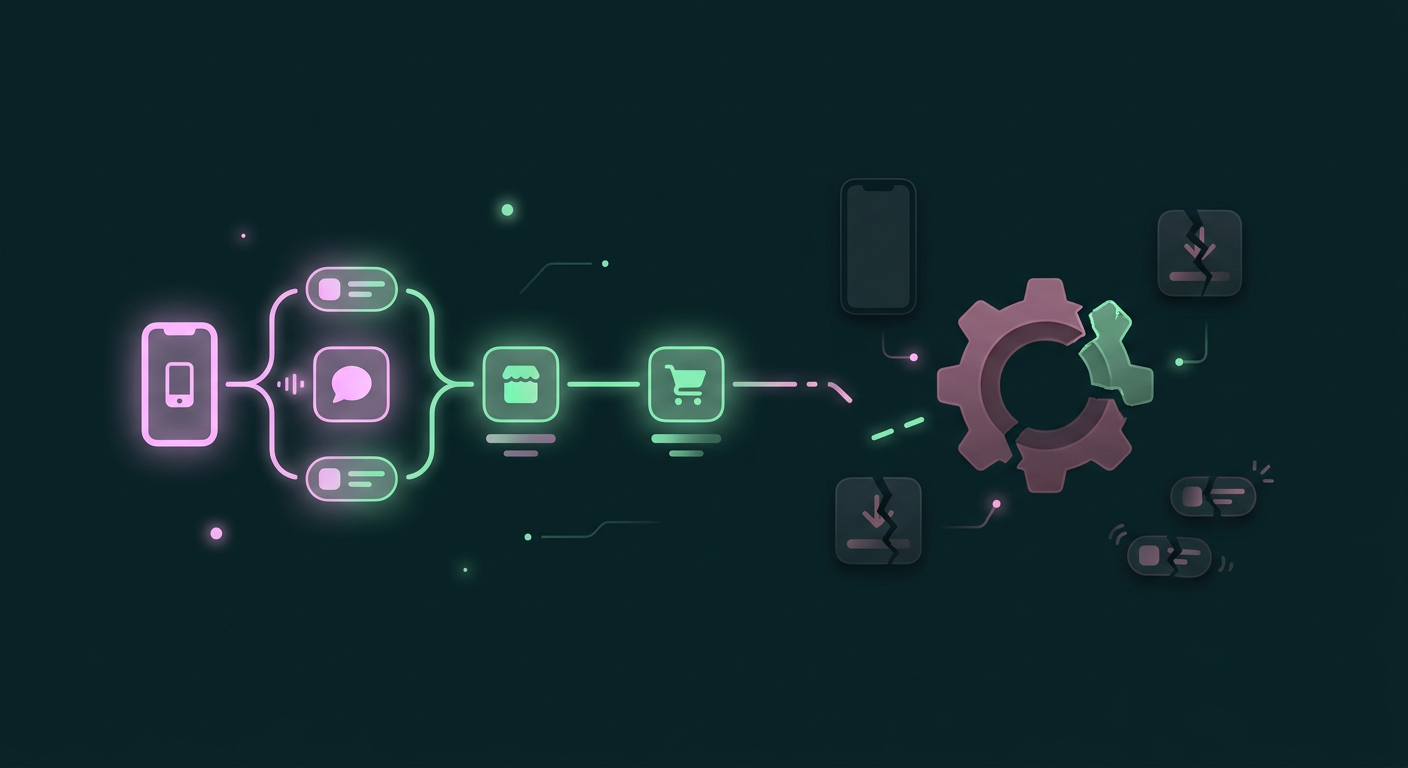
The real reason high-intent shoppers ghost you isn’t because the channel is broken, but because your approach is channel-deaf. The issue is a fundamental mismatch between where you're sending messages (crowded email inboxes, muted SMS threads) and where your customers are actually engaged and receptive to conversation. These shoppers haven't lost interest in your product; you've simply lost their attention by trying to reach them in the wrong place.
Surface Cause: Email Fatigue and SMS Blindness
The most obvious culprit for poor recovery performance is simple channel saturation. Your customers' email inboxes are a battlefield for attention, and your "You left something behind!" message is just one of many. And while cart abandonment emails do boast a 51.21% open rate, this figure doesn't capture the quality of the interaction, which is often passive and brief.
Many brands turn to SMS, hoping to cut through the noise. While some campaigns report open rates as high as 98%, the channel has its own problems. An SMS can feel abrupt and transactional, even intrusive, since it's a space people associate with personal conversations and urgent alerts. This leads to "SMS blindness," where users see the notification, register it's a promotion, and immediately dismiss it without engaging. While factors like unexpected costs at checkout are often the initial reason for abandonment (opens in a new tab), your recovery message is the final opportunity to overcome that hesitation. A generic alert on a saturated channel rarely has the persuasive power to do so.
Root Cause: You're Not Where Your Customers Are
The deeper issue isn't email or SMS themselves, but the context in which they're received. You're trying to have a persuasive conversation in a library, while your customer is at a party. Today, that party is on social media and private messaging apps. This is where your customers spend their downtime, chat with friends, and discover new products. Their guard is down, and they're more open to interaction.
When you send a recovery message via Instagram DM or WhatsApp, you're not interrupting them with a generic marketing message. You're showing up where they already are, in a format that feels native and personal. A DM feels like a message from a person, not an algorithm. This fundamental shift in context is the key to breaking through the noise. Instead of broadcasting a reminder, you can start a genuine conversation, answer a last-minute question, or offer a helpful suggestion. You're meeting them on their turf, which dramatically increases the odds they'll actually listen.
Diagnosing Your Recovery Gap: Are You "Channel-Deaf"?
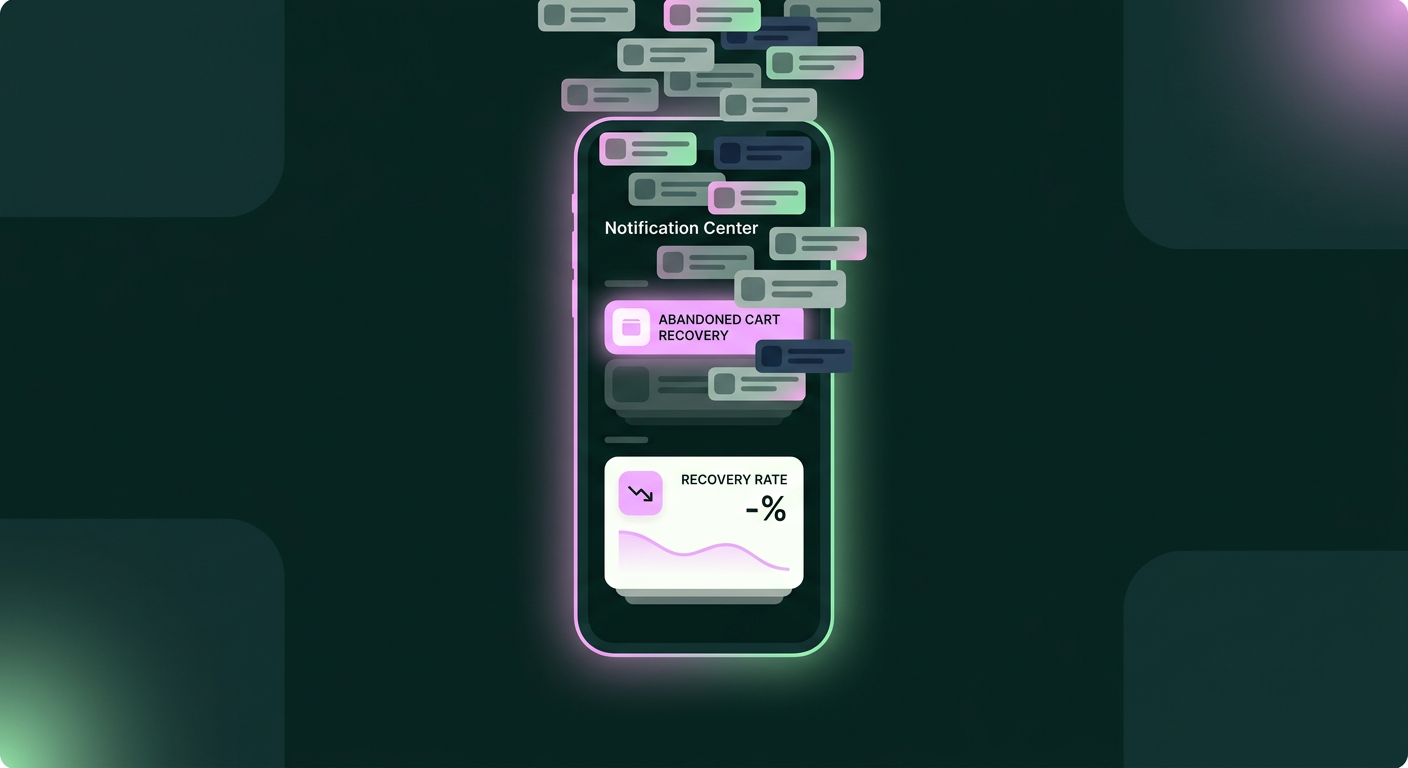
You can diagnose your recovery gap by looking beyond open rates to examine engagement quality and the actual revenue recovered per message. If you're sending thousands of emails to recover a handful of carts, or if your unsubscribe rates climb with every SMS reminder, you're likely "channel-deaf," broadcasting where your customers aren't listening.
Take a hard look at your analytics. The standard advice is that a well-timed email sequence can recover between 10% to 15% of otherwise lost sales (opens in a new tab). While that's better than nothing, what about the other 85-90% of shoppers who still don't convert? That massive gap represents the customers your current strategy simply isn't reaching. You might see some success by optimizing your email approach, but you're ultimately just patching a leak in a flawed pipe. For instance, Recapture.io's data from over 11,000 stores shows that even the best tactics are about incremental gains on a limited channel:
"Recapture’s data from 11,000+ stores since 2016 shows that stores using a multi-step email series (instead of just one) see 153-231% more revenue won back." , Recapture.io
The real opportunity lies in rethinking the channel itself. If your recovery efforts feel "backwards," as many e-commerce managers describe it, it’s because you're using 2010's tools to engage 2024's customers. They've moved on, and your strategy needs to as well. Other factors, like concerns over payment security that cause around 17% of customers to abandon carts (opens in a new tab), are issues that a simple conversational touchpoint can help resolve by providing direct reassurance.
Shift Your Strategy from Recovery to Conversation
The most effective way to reduce cart abandonment is to shift your strategy from one-way reminders to two-way conversations on channels like Instagram DMs and WhatsApp. Instead of just reminding shoppers about a cart, you can engage them directly, answer their last-minute questions, and build a relationship that email and SMS can't replicate.
This approach transforms cart recovery from a passive, automated task into an active, engaging part of the customer lifecycle. By using a platform that facilitates personalized 1:1 DMs, you can send messages that are contextually aware and genuinely helpful. Imagine a shopper abandons a cart with a specific pair of shoes. Instead of a generic "You forgot this!" email, they could receive an Instagram DM that says, "Hey, saw you were checking out the running shoes. Did you have any questions about sizing before you commit?"
This conversational approach is powerful because it feels human. It opens the door for a real interaction where you can overcome final objections or simply provide the nudge a customer needs. The difference in engagement is stark. While email open rates hover around 50%, DM open rates on platforms like WhatsApp and Instagram are regularly over 80%. This is the difference between hoping your message gets seen and knowing it will. By automating these personalized, conversational touchpoints, you can achieve the scale of an email campaign with the personal touch of a concierge. This is central to modern DM vs. email cart abandonment recovery effectiveness, and you can explore a variety of these conversational use cases for e-commerce brands (opens in a new tab) to see how this applies beyond just cart recovery.
How to Know Your New Approach Is Working
You'll know your new conversational approach is working when you see a significant increase in your cart recovery rate and recovered revenue, backed by high engagement on the messages themselves. Success isn't just higher open rates; it's a measurable lift in completed purchases and positive customer interactions that reduce your overall abandonment rate over time.
The first signal will be your channel metrics. You should see DM open and engagement rates that far surpass what you were getting with email. But the true test is the bottom-line impact. Track your cart recovery rate and, more importantly, the total revenue recovered through this new channel. When you connect with customers on their preferred platforms, you're not just saving a single sale; you're building a stronger relationship that encourages future business. This is how you can begin to reclaim a portion of the over $18 billion in annual global losses attributed to abandoned carts.
Ultimately, a successful conversational strategy turns a transactional moment into a relational one. A positive cart recovery experience can be a powerful driver of loyalty, making it easier to increase your second purchase rate with DM automation. When you stop broadcasting and start conversing, you stop losing customers at the last hurdle and start building a more resilient business.
Frequently asked questions
How do I actually recover abandoned carts if email is not working?
If email isn't effective, the best next step is to meet customers on the conversational channels they use every day, like Instagram DMs and WhatsApp. Instead of sending another email that gets lost in a crowded inbox, a personalized DM can re-engage a shopper, answer their questions, and guide them back to checkout. While traditional email sequences can recover 10-15% of sales, a conversational approach on a more direct channel can capture many of the customers that email misses.
Why does my abandoned cart recovery feel so backwards and ineffective?
Your recovery efforts likely feel backwards because they rely on outdated channels that no longer command customer attention. Email and SMS were once effective, but today they are saturated with marketing messages, causing shoppers to tune them out. The strategy is ineffective because there's a mismatch between where you're trying to talk (email/SMS) and where your customers are actually listening and engaging (social media DMs, messaging apps).
How can I reduce my cart abandonment rate on Shopify specifically?
For Shopify stores, a powerful way to reduce cart abandonment is to integrate a conversational marketing platform that connects directly with your store's data. You can set up triggers so that when a customer abandons a cart, it automatically sends a personalized DM on Instagram or WhatsApp instead of just a standard email. This allows you to start a real-time conversation to address any final hesitations and provide a direct link back to their specific cart.
Are abandoned cart emails even worth the effort anymore?
Yes, but they should be considered a baseline, not your entire strategy. Data shows that sending a multi-step email series can recover significantly more revenue than a single email, and average open rates are still decent. However, their effectiveness has a clear ceiling. They are worth having as a safety net, but relying on them alone means you're leaving a substantial amount of revenue on the table by not engaging customers on more modern, conversational channels where they are more active.