
Your choice in marketing automation is no longer just about email features; it’s a strategic bet on fixing retention over burning cash on acquisition. The old DTC playbook of acquiring customers with ads and following up with Klaviyo is breaking down. Acquisition costs are spiraling, inboxes have become impossibly crowded, and an email-centric strategy means paying dearly for one-time buyers whose re-engagement messages simply get lost in the noise.
The result is a staggering cost cycle. Acquiring a new customer can cost five to seven times more (opens in a new tab) than retaining an existing one, yet most marketing budgets remain skewed toward acquisition. You end up running on a treadmill, spending more just to stand still. This isn't a failure of effort, but a failure of the toolset. When your primary channel is one that customers ignore, you can't build the relationships that create long-term loyalty. It’s time for an alternative that changes how you connect with customers after the first sale, instead of just sending more email.
Why Your Klaviyo-Centric Strategy is Hitting a Wall
The fundamental issue is that traditional email marketing platforms were built for an acquisition-first world, while modern DTC growth depends entirely on retention. Your Klaviyo flows might master the welcome series and cart abandonment, but when it comes to turning a one-time buyer into a repeat customer, email is increasingly ineffective. The channel is saturated, open rates are a constant battle, and customers are simply drowning in promotions. You're communicating without actually connecting.
This leaves you in a bind where you need repeat purchases to be profitable, but your primary tool for achieving them is failing. You’re stuck with bad options: either double down on expensive ads to re-acquire the customers you already have, or send yet another email campaign that’s likely to be ignored. Neither approach is sustainable. If your growth has plateaued, it’s probably not because you lack customers; it’s because you’ve hit the limits of an outdated strategy. The solution isn't a slightly better email tool, but a shift to a channel where you can genuinely build relationships and drive behavior.
How to Choose an Alternative: 4 Critical Criteria
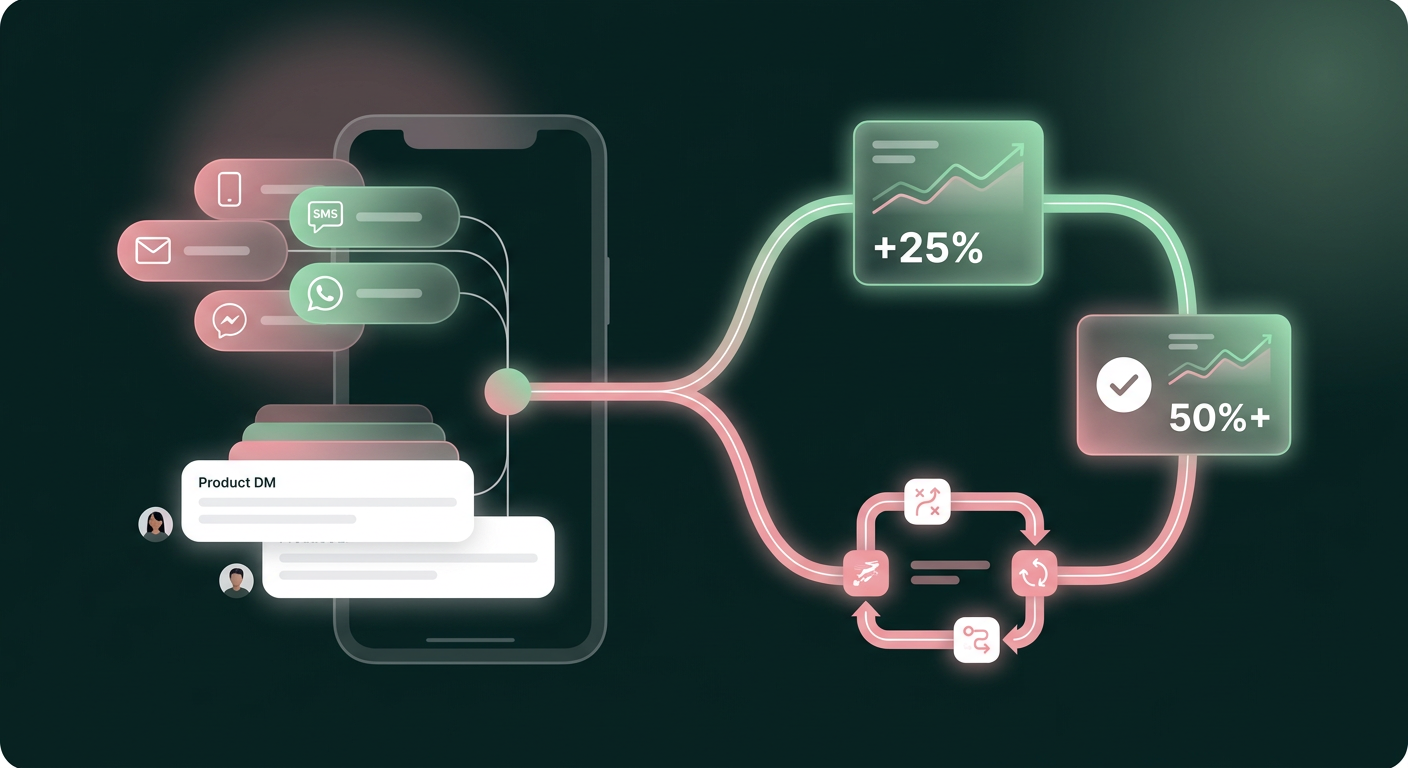
When you start looking at Klaviyo alternatives, the goal shouldn't be just to send messages. It should be to build a profitable retention engine. Instead of getting lost in feature lists and flashy templates, focus on the outcomes that matter: generating measurable, repeatable sales from your existing customers.
The right platform must first and foremost directly drive repeat purchases. Many tools focus on top-of-funnel awareness, but you need one that re-engages buyers with relevant offers at exactly the right moment. Since the probability of selling to an existing customer is 60-70% (opens in a new tab), compared to just 5-20% for a new prospect, your next tool needs to be optimized to convert that opportunity. This requires clear, attributable ROI on retention, so you can draw a straight line from a specific message to a sale and prove that shifting budget from acquisition to retention is the right business move.
Of course, driving sales requires a truly personalized 1:1 experience at scale. Simple segmentation isn't enough anymore. Customers expect communication that feels meant for them, based on their specific purchase history, browsing behavior, and lifecycle stage. Finally, to make any of this work, you need a tool built for the channels where your customers actually spend their time. Email is easily ignored, but a DM on Instagram or WhatsApp feels like a real conversation. This is where the future of customer communication lies, and where brands that prioritize retention see profits up to 60% higher (opens in a new tab) than those focused only on acquisition.
Comparison: Traditional vs. DM-Based Automation
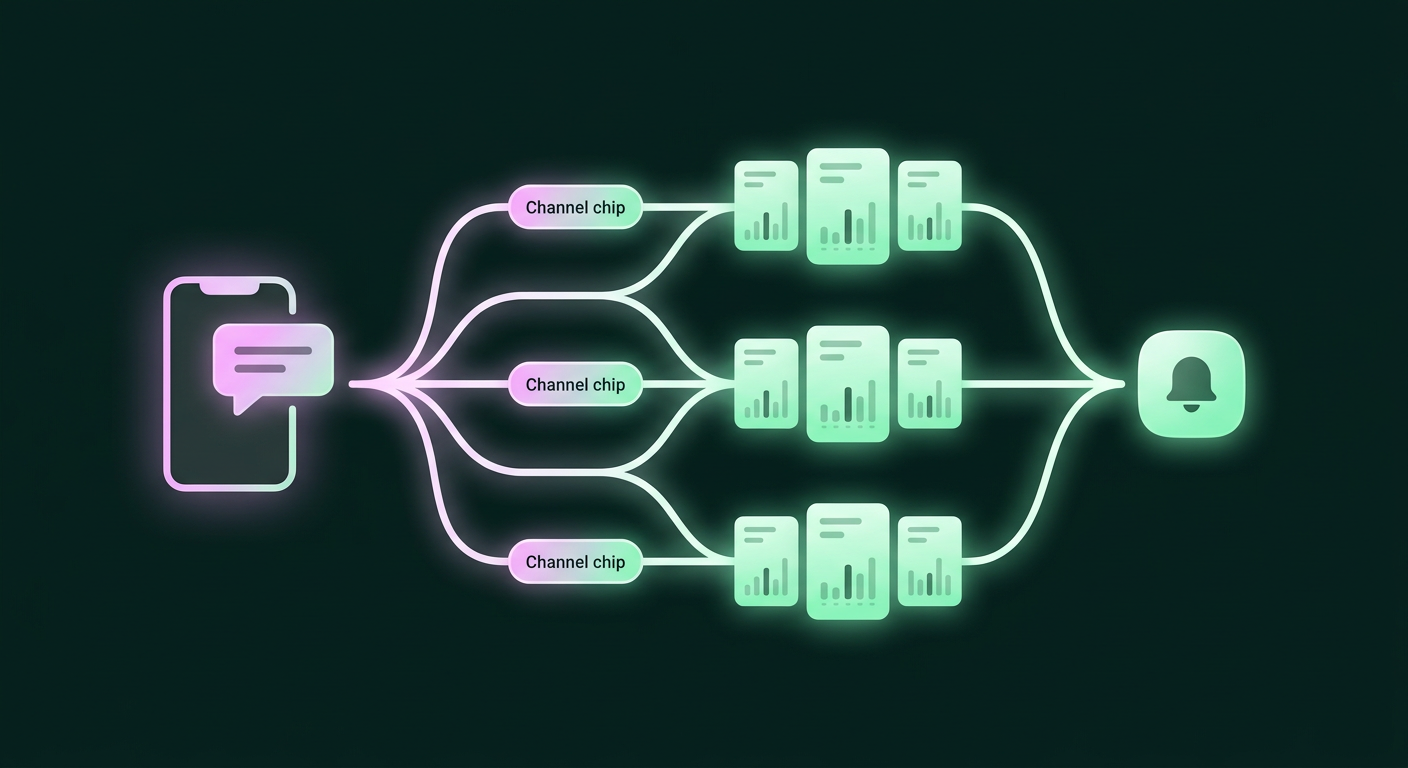
With those criteria in mind, the choice isn't between dozens of similar tools. It's between two fundamentally different approaches: sticking with an email-centric platform or pivoting to a modern, DM-automation platform.
Traditional Email Platforms
These are the tools you know, all built around email as the primary channel for communication. Their strength lies in their maturity and broad feature sets for managing large email lists and complex flows.
But that strength is also their greatest weakness. They are tethered to the crowded, ineffective inbox, where engagement is a constant struggle and personalization is often limited to segment-level targeting. While they report clicks and opens, attributing an email directly to a repeat purchase can be murky, making it hard to prove ROI. These platforms are powerful, but they weren't designed to solve the modern DTC repeat purchase problem. For a detailed breakdown, you can explore the differences between Klaviyo and a DM-first tool like Dynamo.
DM Automation Platforms
This new category of tools starts from the premise that marketing should happen where customers are most engaged: in their DMs. They use Instagram DMs and WhatsApp as the primary channel for building customer relationships. Platforms like Dynamo often plug into your existing CRM or ESP, using its customer data to power automated, personalized 1:1 conversations.
The key advantage is the channel itself. A DM is a direct, personal way to reach a customer that feels more like a conversation than a promotion, which is why over 64% of purchase decisions on Instagram start with a DM (opens in a new tab). These platforms can automatically re-engage buyers, recover carts, or run win-back campaigns through interactive DM flows. The impact is significant and measurable. For example, one DTC skincare brand ran a simple comment-to-DM flow that generated $14,200 in direct sales in just 48 hours. That level of direct attribution and rapid ROI just isn't possible with email. This kind of engagement also boosts your brand’s visibility, as Instagram's algorithm in 2025 is known to favor accounts with high interaction rates in comments and DMs.
Verdict Summary
Evaluating both categories against the criteria for profitable growth makes the trade-offs clear. While traditional platforms have broad functionality, they fall short on the metrics that actually drive retention.
| Criterion | Traditional Email Platforms | DM Automation Platforms |
|---|---|---|
| Drives Repeat Purchases | Low impact; easily ignored | High impact; direct engagement |
| Channel Ownership | Rented audience; low engagement | Owned audience; high conversation |
| Scalability of Personalization | Segmented, not truly 1:1 | Personalized 1:1 conversations |
| ROI on Retention Efforts | Difficult to prove directly | Clear, attributable sales |
This shows that for simply "doing CRM," a traditional email platform is sufficient. But to solve the repeat purchase problem and build a profitable business, the superior engagement and attribution of DM automation platforms is the clear strategic choice. The ability to increase your second purchase rate with this approach is a powerful lever for growth.
The Right Tool for Your Growth Stage
So which approach is right for you? The answer depends entirely on the problem you're trying to solve. There is no single "best" platform, only the right tool for your current business challenge.
If you are a pre-launch or very early-stage brand, your main challenge is building an email list and establishing an online presence. Your goal is capturing leads and sending foundational messages like a welcome series. At this stage, your volume is low, the need for a sophisticated retention engine hasn't fully emerged, and a traditional email platform is often sufficient.
But if you are an established brand with significant one-time buyer volume ($10M, $50M in revenue), your problem isn't attracting customers, it's that those customers don't return. You've outgrown the email-only model, and a Klaviyo-centric strategy is now actively harming your growth. Your challenge is retention and profitability. For this, you need a dedicated retention tool to re-engage buyers in a channel they actually use. A DM automation platform like Dynamo is built specifically for this problem, helping you turn your customer base into a profitable revenue stream with personalized 1:1 messages.
"The bottom line is that the more a brand can turn one-time buyers into repeat customers, the less it needs to spend on acquiring new customers. The less it needs to spend on acquiring new customers, the more profitable it will be long term." , Rivo.io
For a growth-stage CMO, the math is undeniable. Choosing a DM-based alternative is a strategic decision to focus on the part of your business that generates the most profit.
Your Next Step: Own Your Retention Channel
For brands stuck on the acquisition treadmill, the only way forward is to build and own a direct line of communication with customers. Relying on crowded inboxes and paying social platforms to reach people who already bought from you is not a long-term strategy; it's a cycle of diminishing returns.
Switching to a DM-first retention strategy is the most powerful step you can take to fix your repeat purchase rate and build a more resilient business. This isn't about abandoning email but augmenting it with a channel built for conversation and conversion. By implementing automated, personalized DM flows for key lifecycle moments, you can move from just sending messages to building revenue-generating relationships.
If you're ready to stop burning cash on acquisition and start driving profitable growth from the customers you already have, explore the different use cases for DM automation (opens in a new tab) to see how it can transform your retention efforts.
Frequently asked questions
Should I focus on customer acquisition or retention right now?
While both are important, retention is significantly more profitable, especially for established brands. The data consistently shows that it's far more expensive to attract a new customer than to encourage an existing one to buy again. In fact, acquiring a new buyer can cost 5-7 times more than selling to a past customer. The likelihood of making a sale is also much higher with someone who already trusts your brand, with the probability of selling to an existing customer sitting at 60-70%, versus only 5-20% for a new one. If you have a steady stream of first-time buyers but they aren't returning, your immediate focus should be on fixing your retention strategy.
How can I increase my customer lifetime value (CLV)?
The most effective way to increase CLV is by systematically encouraging repeat purchases and building loyalty. A proven method is to implement a loyalty program that rewards customers for their engagement. For instance, customers who redeem loyalty points show a 50% repeat purchase rate, a massive jump from the 10.7% rate for non-redeemers. It's not just about purchase frequency, either. Loyalty members who actively use their rewards spend 3.1 times more annually than those who don't. Automating reminders and offers through high-engagement channels like DMs can significantly boost participation in these programs and, as a result, your CLV.
Why aren't my Facebook ads bringing back past customers?
Relying on paid ads to re-engage past customers is an expensive and inefficient strategy. You are essentially paying Meta a tax to speak to your own audience. Not only is the cost high, but ad fatigue is real, and your message is competing with countless other brands in a crowded feed. A more effective and profitable approach is to move that conversation to an "owned" channel like Instagram DMs or WhatsApp. Once you've connected with a customer there, you can re-engage them with automated, personalized flows for free, turning a costly ad interaction into a direct, long-term relationship.
Can I really replace some of my paid ad spend with automated DMs?
Yes, absolutely. This is one of the primary financial benefits of a DM-first retention strategy. Many brands find that a significant portion of their ad budget is spent on retargeting campaigns aimed at existing customers. By shifting that re-engagement to automated DMs, you can often achieve a higher conversion rate at a fraction of the cost. For instance, a simple comment-to-DM entry point on an organic Instagram post can trigger flows that drive sales directly. A 2026 case study saw a DTC brand generate $14,200 in sales from a single DM automation, all without dedicated ad spend for that specific push. That revenue allows you to reinvest those ad dollars into true top-of-funnel acquisition.
What's the best way to turn my one-time buyers into repeat customers?
Engage them proactively and personally in a channel where they're already active, shortly after their first purchase. Waiting for them to hopefully open a "thank you" email is a passive approach that rarely works. Instead, use a DM automation tool to trigger a conversation. This could be a message checking in on their order, offering tips on how to use the product, or providing a small incentive for their next purchase. The key is making the interaction feel personal and conversational, not promotional. Since over 64% of Instagram purchase decisions begin with a DM, meeting customers there for post-purchase follow-up aligns perfectly with their natural behavior.
How do I get my marketing team to scale repeat purchases, not just ad spend?
Shift their primary goal and give them the right tools. If your team's success is measured by ad spend and top-of-funnel metrics, that's what they will optimize for. To change this, make repeat purchase rate and customer lifetime value their core KPIs. Then, equip them with a platform designed specifically for retention, like a DM automation tool. This provides a new, more effective lever to pull. When they see that an automated win-back flow in DMs can generate more profit than a costly retargeting campaign, their focus will shift naturally. After all, prioritizing retention can boost profits by up to 60%, a metric that will motivate any data-driven marketing team.