
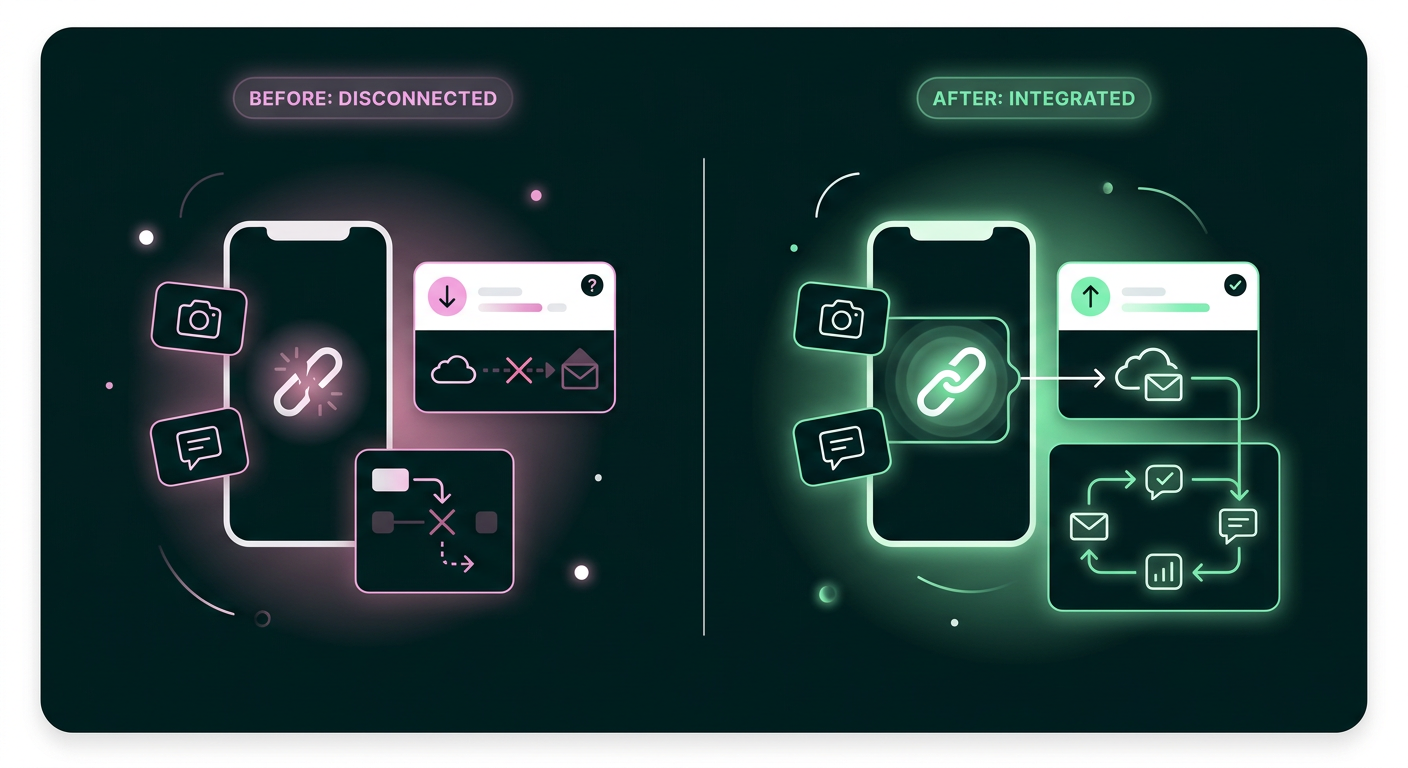
For many direct-to-consumer brands, growth gets stuck in a frustrating pattern. You pour an ever-increasing budget into Meta ads to acquire customers on Instagram, and while the initial sales look promising, those hard-won customers buy once and then vanish. You’re left with a list of one-time buyers and a customer acquisition cost that feels completely unsustainable, stalling your growth long before you reach your goals. This isn't just a feeling; it's a common structural problem that happens when your strategy for finding customers and your strategy for keeping them are one and the same.
The Paid Growth Treadmill: Why One-Time Buyers Stall You
The core problem is a business model built on a leaky bucket. Relying on paid channels to constantly re-acquire customers is financially unsustainable because the cost of acquiring a new customer far outweighs the cost of retaining an existing one, trapping you in a cycle of unprofitable growth.
Many ecommerce brands see rapid initial success, only to find their growth stalls out somewhere between $8 million and $12 million in annual revenue. The reason is rarely a lack of demand or a faulty product. Instead, it's an over-reliance on a single acquisition channel, which for most DTC brands is paid social media. Brands become exceptionally good at one thing: paying platforms like Instagram to bring in new buyers. The issue is that acquiring a completely new customer is anywhere from five to twenty-five times more expensive than convincing an existing one to buy again.
"According to Amy Gallo from Harvard Business Review, a new customer is between five and 25 times more expensive than an existing one. The variation of the cost depends on the industry." , Glue Loyalty
When your entire growth engine depends on this expensive, top-of-funnel acquisition, you are essentially on a paid growth treadmill. Each month, you have to spend more just to replace the customers who churned after their first purchase, let alone achieve actual growth. This creates a scenario where revenue might be going up, but profitability is flat or even declining. You're working harder and spending more, but the business isn't getting healthier because you're renting your customer relationships instead of owning them.
Surface vs. Real Cause: It’s Not Your Ads, It’s Your Channel
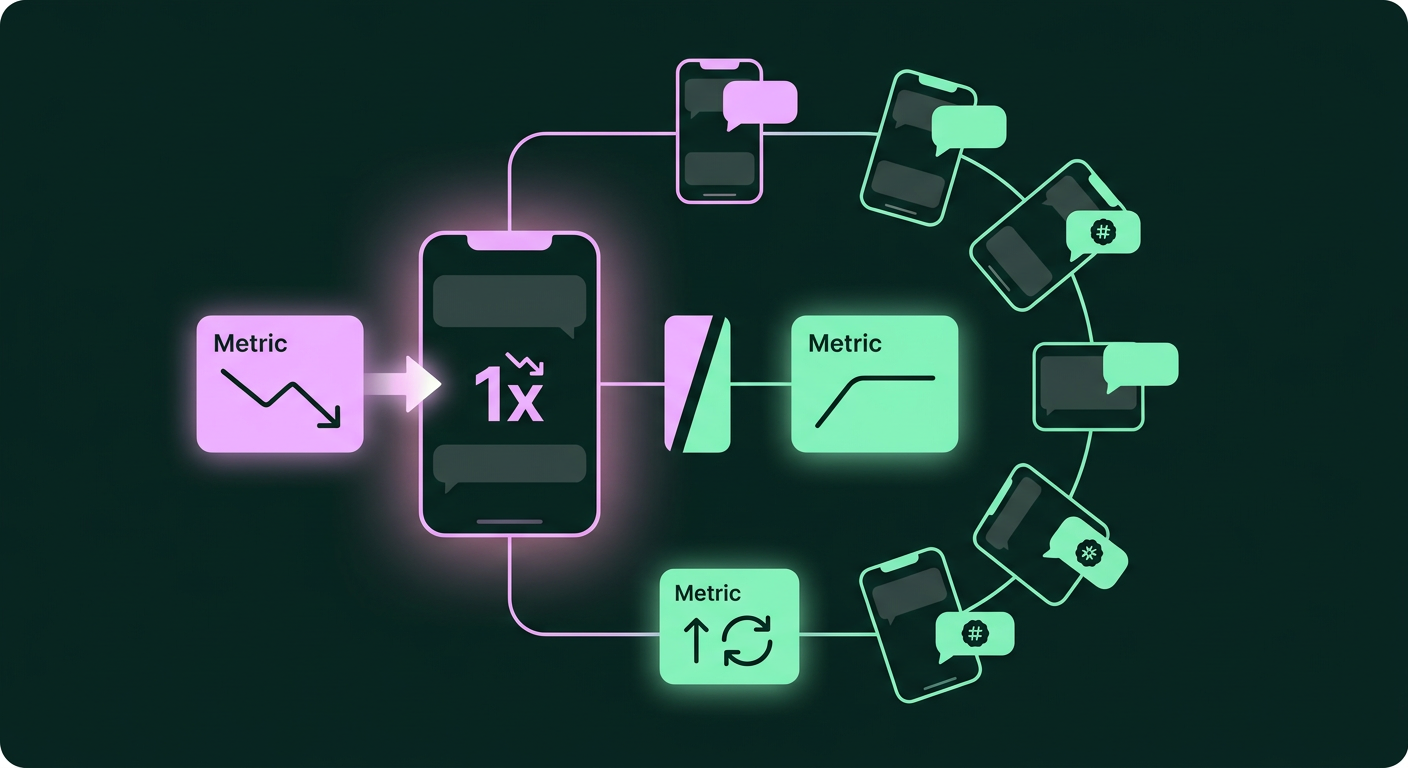
The common assumption is that poor retention is a result of weak ad creative, imprecise targeting, or an unappealing offer. The actual cause is more fundamental: you're using an expensive acquisition channel (paid ads) to perform a task better suited for a cheaper, owned channel (direct messaging).
When faced with a cohort of one-time buyers, the first instinct for many marketers is to blame the campaign itself. They start to wonder if the ad copy wasn't compelling enough, the audience targeting was slightly off, or the discount code in the retargeting ad wasn't deep enough. While these elements are important, they are often surface-level symptoms of a deeper strategic mistake: you are trying to solve a retention problem with an acquisition tool.
The goal of retention isn't just to get another sale; it's to build a lasting customer relationship that generates value over time. A common business principle suggests that 80% of your sales will likely come from just 20% of your customers (opens in a new tab), and this loyal segment is incredibly valuable. You are between 60% and 70% more likely to sell to an existing customer (opens in a new tab) than to a brand new prospect. The real problem with your Klaviyo Instagram strategy is that you're paying Meta to speak to that valuable existing customer when you should be engaging them on a channel you own.
Diagnosis: Are You Re-Acquiring or Retaining?
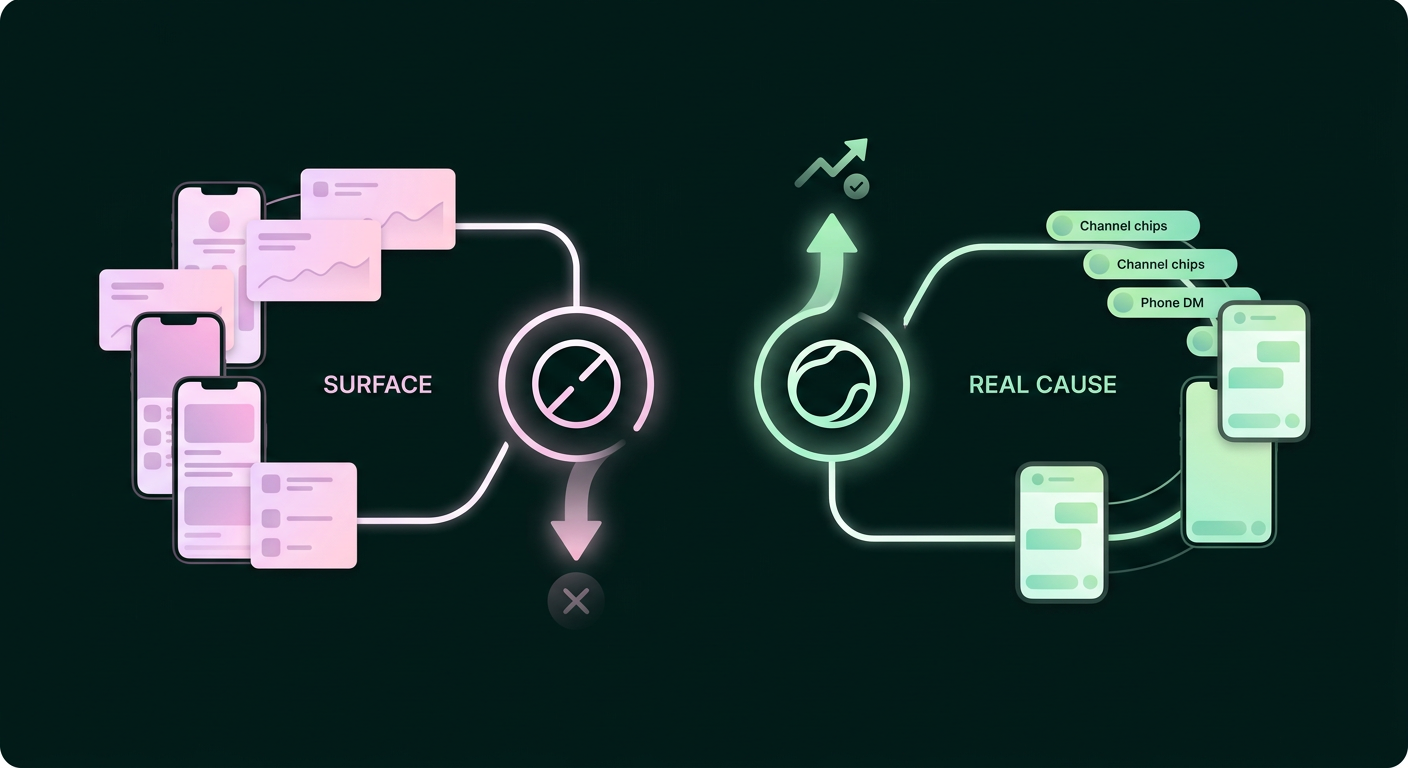
The way to diagnose this issue is to analyze your "retention" marketing. If your main strategy for bringing back a first-time buyer involves serving them another paid ad on Instagram or Facebook, you are not retaining them; you are re-acquiring them at a significant cost.
Take a look at how you use your customer data. You likely have powerful segments built in Klaviyo identifying first-time buyers, high-value purchasers, or customers who haven't bought in 90 days. The question is, what do you do with those segments? Many brands use Klaviyo's audience sync to push these lists directly to Meta's ad platform. This is a fantastic feature for building lookalike audiences to find new customers (opens in a new tab) who resemble your best ones, making it a highly effective acquisition tactic.
But when you use that same feature to run retargeting campaigns aimed at your own "First-Time Buyers" segment, you've crossed a critical line from retention into re-acquisition. You are paying a premium to get a message in front of someone whose contact information and purchase history you already possess. True retention involves building a direct line of communication with that customer on an owned or earned channel, nurturing the relationship through relevant, personalized communication that doesn't require an ad budget for every interaction. If your follow-up with a new customer happens in their ad feed instead of their inbox or DMs, you're stuck on the treadmill.
The Fix: Move Retention From Ads to DMs
The strategic fix is to shift your retention efforts from paid social ads to an owned, conversational channel like Instagram DMs. By integrating your Klaviyo data with a direct messaging platform, you can automate full-funnel lifecycle marketing that feels personal and drives repeat purchases without continuous ad spend.
Instead of paying to retarget your existing customers, the solution is to engage them where they already spend their time and are receptive to brand communication: their Instagram DMs. This is where your Klaviyo integration becomes truly powerful, but not just as a tool for syncing ad audiences. The goal is to use Klaviyo as the "brain" that holds all your customer data and segments, then connect it to a conversational "arm" that can act on that data with personalized, 1:1 messages.
Modern integrations allow you to do exactly this, a capability that is more important than ever since Instagram deprecated its old Legacy API back on June 29, 2020, requiring brands to adopt more official and robust methods. By [connecting your Instagram Business account directly to a platform like Klaviyo](https://help.klaviyo.By (opens in a new tab) connecting your Instagram Business account directly to a platform like Klaviyo, you can manage conversations while seeing a customer's full profile-orders, email clicks, lifetime value-right next to the chat. A Klaviyo help article, updated as recently as Jan 27, 2026, notes that this setup can be done in about 10 minutes.
This connection allows you to move beyond simple, reactive customer service into proactive, automated DM flows triggered by Klaviyo segments for welcoming new customers, recovering abandoned carts, and reminding customers to re-order. These are the kinds of full-funnel use cases (opens in a new tab) that build relationships and drive second purchases automatically. This approach transforms Instagram from a costly acquisition channel into a profitable retention engine, letting you increase your second purchase rate with DM automation.
How You’ll Know It’s Working: Higher LTV, Lower CAC
You will know the shift is successful when two key metrics move in the right direction: your customer lifetime value (LTV) will increase, and your blended customer acquisition cost (CAC) will decrease. This is the financial result of turning one-time buyers into repeat purchasers through an owned channel.
The beauty of moving your retention strategy from paid ads to owned DMs is that the results are clear and measurable. First, you'll see a direct impact on your marketing spend. By reducing your reliance on retargeting ads for existing customers, you cut a significant and inefficient expense from your budget. This immediately lowers your blended CAC because your overall acquisition spend becomes more efficient and focused on truly new customers.
Second, and more importantly, you will see your customer lifetime value climb. By engaging customers with timely, relevant, and personalized DMs, you build the habits and loyalty that lead to second, third, and fourth purchases. You’re no longer hoping they see an ad; you’re starting a conversation. This is the key to breaking the growth plateau. As one analysis notes, most successful DTC businesses take 18-36 months to achieve consistent profitability (opens in a new tab), and this is almost always driven by optimizing repeat purchase rates. When you can reliably turn a first-time buyer into a repeat customer, you're not just making another sale; you're building a sustainable business. You can learn more about how to increase customer lifetime value without more ads by focusing on these owned-channel strategies.
Frequently asked questions
Why aren't my Meta retargeting ads increasing my customer lifetime value?
Your retargeting ads likely aren't increasing LTV because they force you to pay to re-acquire customers you already have. This is an expensive and inefficient way to encourage a second purchase. According to research, acquiring a new customer can be up to 25 times more expensive than retaining an existing one. When you rely on paid ads for retention, you erode your profit margin on every subsequent sale, which can keep LTV flat even if you do secure a repeat purchase.
How can I lower customer acquisition costs while increasing my repeat purchase rate?
The most effective way is to separate your acquisition and retention channels. Use paid ads on platforms like Instagram to find new customers, but once they make a purchase, move the relationship to an owned channel like DMs or email. It is [60% to 70% easier to sell to an existing customer](https://swarm.You (opens in a new tab) are 60% to 70% more likely to sell to an existing customer, so using a low-cost, high-engagement channel like DMs for follow-up dramatically increases your repeat purchase rate without adding to your acquisition spend.
What's the best way to convert one-time buyers into repeat customers?
The best approach is to build a real relationship with your most valuable customers. The Pareto principle suggests that 80% of your sales will come from 20% of your customers, so identifying and nurturing that core group is key. Use personalized, automated outreach on channels they already prefer, like Instagram DMs, to welcome them after their first purchase, offer relevant recommendations, and make them feel valued beyond their initial transaction.
Should I focus on customer acquisition or retention right now?
If your brand's growth has stalled, it is very likely time to shift your focus to retention. Many DTC brands hit a revenue plateau precisely because they are over-reliant on a single paid acquisition channel. While acquisition is always important, profitable growth comes from increasing the lifetime value of the customers you already have. If you have a steady stream of one-time buyers but low repeat purchase rates, your immediate priority should be building a retention engine.
How can I use Instagram DMs to bring back first-time buyers without paying for more ads?
By integrating your ecommerce platform with Instagram, you can use customer data to trigger automated DM sequences. For example, after someone makes their first purchase, you can automatically send a personalized thank you DM, share tips on using the product, or check in a few weeks later. According to Klaviyo's help center, connecting your account allows you to see a customer's full profile next to the chat, which helps you send highly relevant messages that encourage a second purchase without any additional ad spend.
Can automating Instagram campaigns really help me reduce my ad budget?
Yes, absolutely. When you automate retention campaigns in Instagram DMs, you are replacing what would have been expensive retargeting ad spend with low-cost communication on an owned channel. Instead of paying Meta to show an ad to your existing customer list, you engage them directly through automated DM flows for things like abandoned cart reminders or win-back campaigns. This allows you to reallocate that portion of your ad budget toward acquiring genuinely new customers, making your overall spend more efficient.