
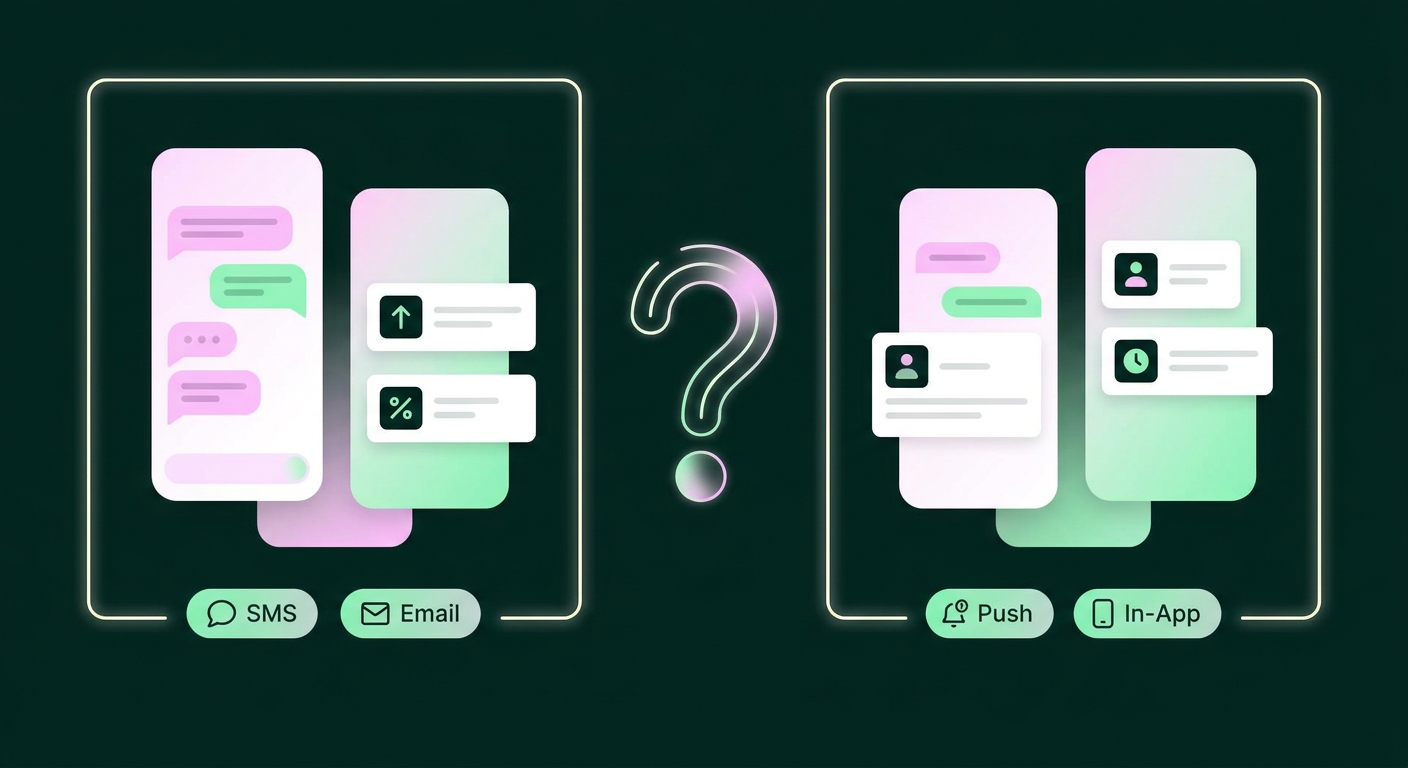
The biggest drag on growth for most consumer apps isn't acquisition; it's the leaky funnel. Growth leaders work tirelessly to acquire new users through paid ads and organic channels, only to watch a huge number of them go silent right after installing. This drop-off between install and activation wastes a massive amount of acquisition spend and puts a major brake on growth. The decision you face is whether to stick with a traditional, push-first marketing suite for all user communication or to adopt a specialized platform built to fix that leak with direct, personalized messaging. Making the wrong choice means you’ll just keep pouring your budget into a bucket with a hole in it.
The High Cost of a Leaky Funnel
That leaky onboarding funnel doesn't just lose individual users; it wastes your acquisition budget and erases the entire potential lifetime value of each person who churns. The stakes are getting higher because the global app economy is enormous and still growing fast. In the second quarter of 2025 alone, total consumer spending on apps is projected to hit around $41 billion, an 11,5% increase from the same period in 2024 (opens in a new tab). This incredible growth is a double-edged sword: while the opportunity is massive, the competition for user attention has never been more intense.
The cost of acquiring a user is just the first step. If that user never experiences the "aha!" moment where they understand your app's core value, your acquisition cost is a sunk loss. As the mobile app industry continues to expand, driven by widespread access to fast mobile internet, increasing consumer reliance on mobile transactions, and the growing accessibility of app development technologies through 2026 (opens in a new tab), simply acquiring users is not enough. The real challenge is turning those installs into active, engaged customers. A generic mobile engagement platform that treats all users the same with impersonal push notifications and emails is poorly equipped to solve this specific, high-stakes problem. It’s like trying to have a personal conversation in a crowded stadium with a megaphone: the message gets sent, but it rarely connects.
Key Criteria for Choosing Your Engagement Platform
So how do you choose the right tool for the job? The best mobile engagement platform isn't the one with the longest feature list, but the one that excels at four key things: connecting to the full customer journey, personalizing messages at scale, using high-open-rate channels, and proving its impact with attributable lift. These criteria separate effective activation tools from generic communication suites. Instead of getting lost in vendor-supplied checklists, focus on the core capabilities that directly solve the activation and retention challenge.
Connects to the Entire Customer Journey
A truly effective platform can't just see what a user does after they install. It needs a complete picture, from the initial acquisition source, like the specific ad creative or influencer that brought them in, to their very first in-app actions. This continuous view allows you to carry context from acquisition into your onboarding messages, creating a more relevant and coherent experience. Without it, you're messaging in a vacuum, ignoring the crucial "why" behind a user's arrival.
Individualizes Messaging at Scale
The days of one-size-fits-all message campaigns are over. Your platform must be able to trigger personalized, 1:1 messages based on what individual users do (or don't do). This means going beyond simple segments to create automated flows that respond to specific events. For example, if a user signs up but doesn’t complete a key onboarding step within 24 hours, the system should automatically send a helpful, contextual nudge. This level of individualization makes your communication feel less like marketing and more like a personal concierge service.
Leverages High-Open-Rate Channels
Users are drowning in emails and push notifications, and they ignore most of them. To cut through the noise, you need to reach people on the channels they actually use for conversations. Direct messaging platforms like Instagram DM, WhatsApp, and Facebook Messenger have become the new frontier for user engagement. A platform that specializes in these channels gives you a direct line to your user in a way that tired, overused channels simply can't match anymore. If you want to learn more about this strategic shift, our guide to a new direct to consumer marketing strategy beyond ads (opens in a new tab) provides valuable context.
Measures Attributable Lift
A platform is only as good as the results it can prove. Vague metrics like "messages sent" or "open rate" aren't enough. You need to know if your messaging is directly causing an increase in activation, retention, and revenue. This requires sophisticated measurement, such as using control groups to isolate the impact of your campaigns. The right platform will provide clear, undeniable data showing the attributable lift it generates, allowing you to justify the cost and prove its ROI to your team and leadership.
Comparing Platform Types: All-in-One vs. Specialists
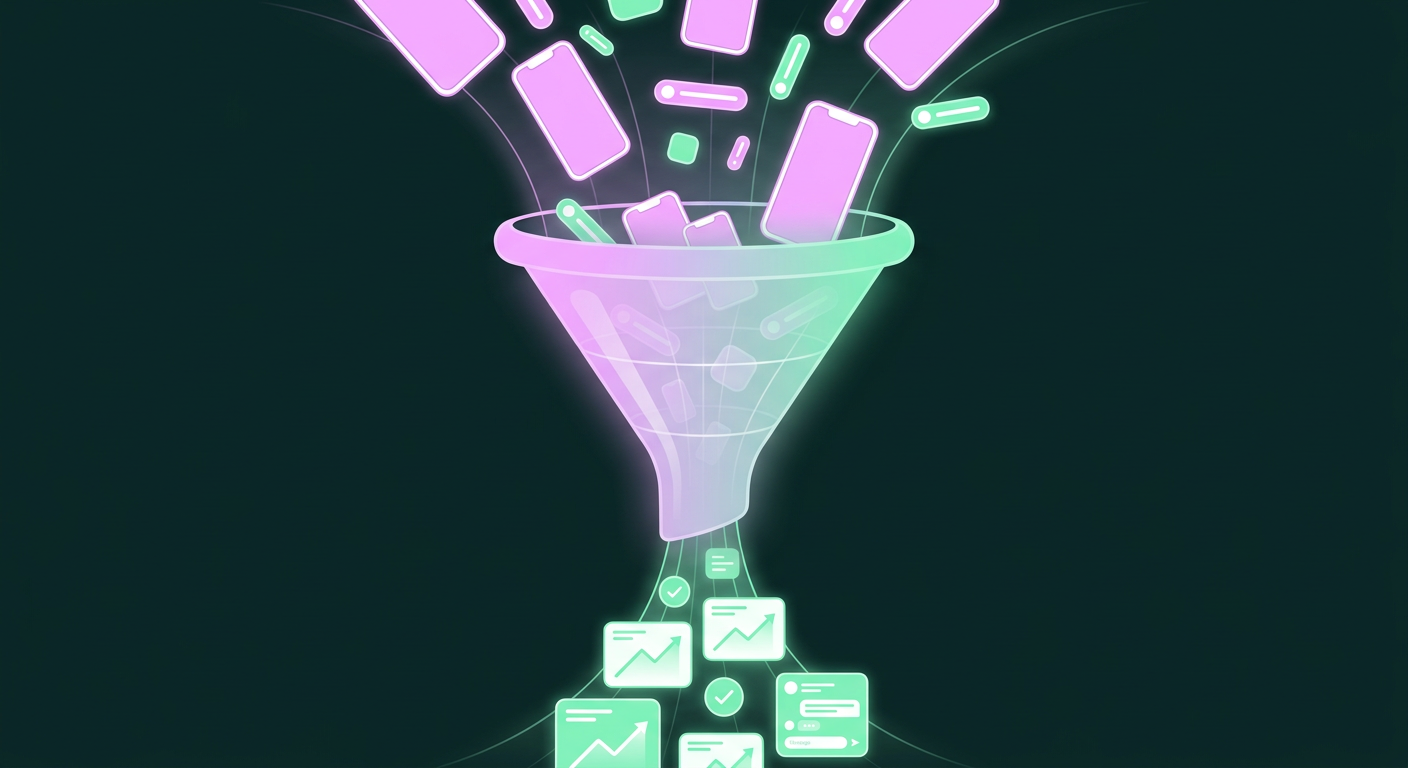
When you evaluate platforms using these criteria, two main categories come into sharp focus. Specialist platforms built for direct messaging significantly outperform traditional all-in-one suites on individualized engagement and attributable conversion lift, though all-in-ones offer broader channel coverage. The choice depends on whether you need a jack-of-all-trades or a master of activation.
On one side are the large, all-in-one suites that try to do everything: email, push, SMS, and sometimes basic in-app messaging. On the other are specialist platforms focused on mastering one thing: driving activation and conversion through personalized, automated DMs. The trade-off is immediately apparent. All-in-one platforms provide breadth, which can be appealing for large teams looking to consolidate vendors. The catch is that their functionality for any single channel, especially modern ones like DMs, is often basic. They are designed for mass communication, not the nuanced, 1:1 conversations that actually drive activation.
Specialist platforms, by contrast, are built from the ground up for these high-impact conversations. They integrate deeply with user behavior events and excel at sending the right message to the right user at the right time on high-engagement channels. The performance difference is stark. While traditional push notifications struggle for attention, DM open rates are consistently over 80%, with channels like WhatsApp reaching a staggering 90-98%. This superior engagement translates directly to results, as DM conversion rates are typically 3-5 times higher than those of push notifications.
Here’s a summary of how the two platform types stack up:
| Decision Criterion | All-in-One Suites | Specialist DM Platforms |
|---|---|---|
| Connects to Full Journey | Often siloed by channel | Built for full-funnel context |
| Individualizes at Scale | Designed for broad segments | Core focus on 1:1 automation |
| High-Open-Rate Channels | Focus on push and email | Mastery of DMs (IG, WA) |
| Measures Attributable Lift | Basic delivery metrics | Advanced lift & conversion tracking |
Ultimately, an all-in-one suite might be a jack-of-all-trades, but it's a master of none. When your most critical problem is user activation, you need a master.
Which Platform Is Right for Your App's Growth Stage?
So, which is right for you? The answer depends entirely on the problem you're trying to solve. If your main goal is to consolidate vendors and manage basic email and push campaigns across a large user base, an all-in-one suite may be enough. However, if your critical challenge is plugging the post-install activation leak and driving measurable growth through high-conversion channels, a specialist direct messaging platform is the far better choice.
For a large enterprise focused on operational efficiency, an all-in-one platform can make sense. If your marketing strategy centers on broad, top-of-funnel brand awareness and you just need a tool to send scheduled campaigns to millions of users, the convenience of a single suite might be attractive. You simply accept the trade-off of lower engagement per message in exchange for managing everything in one place.
For the modern app growth leader, however, that trade-off is no longer acceptable. If you own the metrics from install to activation, early retention, and LTV payback, your primary challenge isn't operational convenience; it's performance. You need to fix the leaky funnel, and that requires a tool designed for the job. A specialist DM platform provides the focused power to engage new users meaningfully, guide them to value, and prove your impact with hard numbers. These platforms are built for growth teams obsessed with ROI and are capable of handling immense scale, with some powering billions of DMs for nearly 100 brands (opens in a new tab). For these teams, re-engaging inactive users in your community app is a critical task that generic tools handle poorly.
Your Next Move: Fix Your Activation Leak
Once you've decided to prioritize activation, the next step is to adopt a platform that moves beyond generic broadcasts and into automated, individualized conversations on channels users actually check. This means shifting your focus from just sending messages to starting dialogues that measurably drive users to their first value moment. The data is clear: the market is growing, but so is the noise, and relying on outdated communication channels is a recipe for being ignored. The modern consumer expects more. A recent study found that 82% of shoppers are more inclined to buy from brands that offer omnichannel conversational experiences (opens in a new tab), a trend that applies directly to app engagement.
Switching to a conversational, DM-first approach isn't just a theoretical improvement; it delivers real business results. The power of combining automation with a high-engagement channel can transform how you connect with users. Just look at this powerful example from e-commerce:
A DTC skincare brand running a product launch on Instagram set up a comment-to-DM flow using InstantDM. They promoted a single post with the caption 'Comment GLOW for our new product details.' Within 48 hours of the post going live, the automation had sent 1,847 DMs to commenters, captured 412 email addresses through an in-DM lead form, and generated $14,200 in direct sales attributed to the DM sequence. The entire flow took 25 minutes to set up. > >, InstantDM.com, 2026 This shows the immense potential of meeting customers where they are with timely, automated interactions. The same principle applies to mobile apps. By connecting your in-app user events to a specialist DM platform, you can automate personalized onboarding flows, re-engage dormant users, and drive them toward the actions that create long-term value. You can finally fix your leaky funnel for good.
Frequently asked questions
How can I connect my app's events to an automated customer journey?
The standard way is to integrate the engagement platform's SDK (Software Development Kit) into your mobile app. This lets you send data about user actions, like user_signed_up, completed_tutorial, or made_first_purchase, to the platform. Once the platform receives these signals, you can set up automated workflows to trigger specific, contextual messages based on those actions or a lack of action.
What metrics should I track to see if my messaging actually causes activation?
To measure true impact, you have to go beyond opens and clicks and track attributable lift using control groups. A good platform will let you hold back a portion of an audience from receiving a message sequence. You can then compare the activation rate (for example, the percentage of users who reach a key "aha!" moment) of the group that received messages to the rate of the control group. The difference is the measurable lift your messaging created.
How do I guide a new user from the moment they sign up to their first 'aha!' moment?
A simple but effective onboarding flow uses a sequence of automated messages. You can start with a warm welcome DM immediately after signup that reinforces your app's value. Then, use the platform to monitor if the user completes the first key action within a set timeframe, like 24 hours. If they don't, you can automatically send a gentle reminder or a helpful tip. When they do complete the action, you can trigger a congratulatory message that encourages them to take the next step.
What kind of message should I automatically send when a user installs but doesn't sign up?
This is tricky, because without a signup you typically don't have permission to contact them. However, if the user was acquired through a click-to-DM ad campaign, you already have an open conversation thread. In that case, you can send an automated follow-up DM a few hours after the install, asking if they need any help getting started or reminding them of the benefit of creating an account.
How can our app re-engage users without just sending more push notifications?
The best way to re-engage users beyond push notifications is with direct messaging channels like WhatsApp or Instagram DM. These channels have dramatically higher engagement because they're more personal and less saturated than push or email. By sending a personalized, conversational message based on a user's past in-app behavior, you can cut through the noise. With DM open rates reaching over 80%, your message is far more likely to be seen and acted on than another ignored push notification.
Should I be personalizing onboarding messages based on where the user came from?
Absolutely. Using the acquisition source to personalize the very first message is a powerful way to create a seamless journey. For example, if a user installs your app after clicking an ad that highlighted a specific feature, your welcome message can reference that feature. If they came from a particular influencer's campaign, mentioning that influencer builds instant rapport. This context makes the onboarding feel less generic and more like a continuation of the conversation that brought them to your app in the first place.