
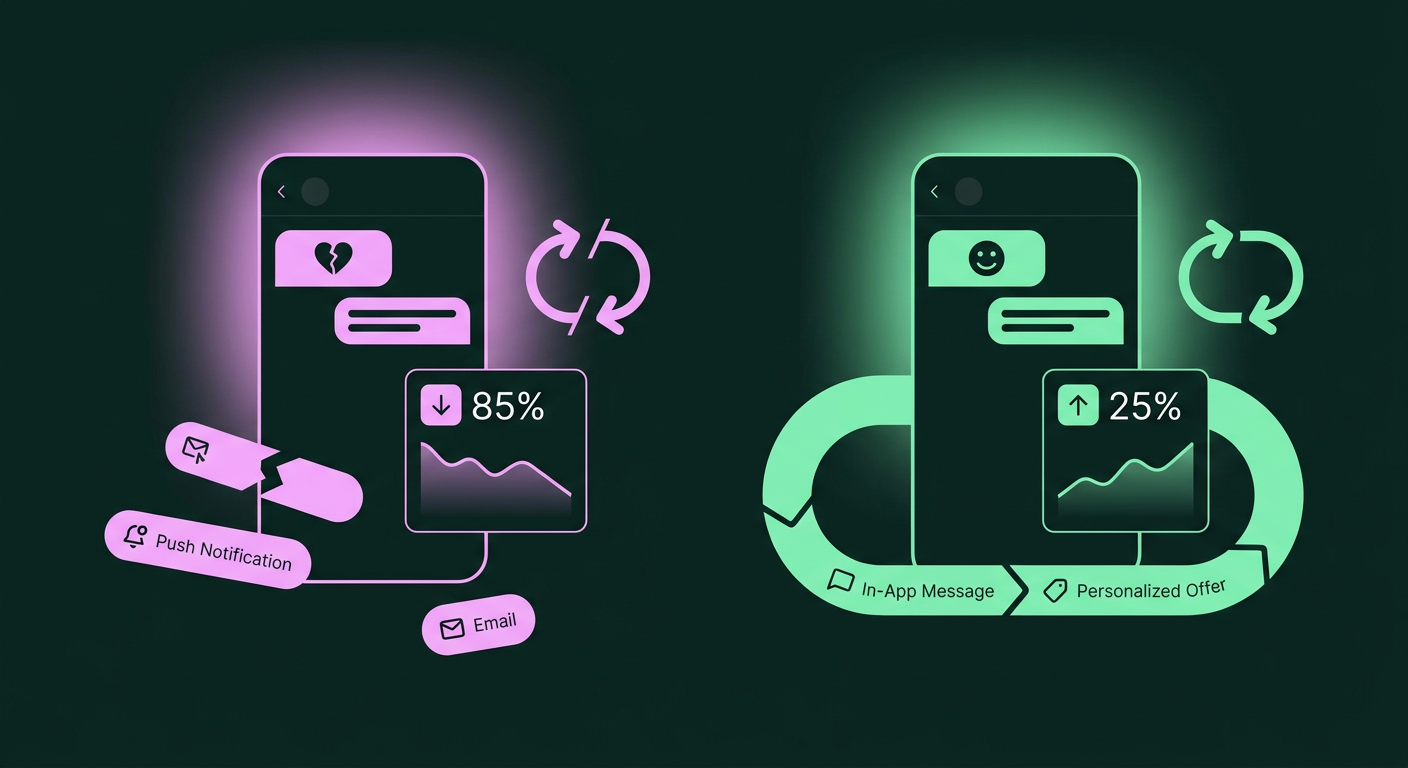
It’s one of the most frustrating patterns in mobile growth: you pour resources into user acquisition and watch your install numbers climb, but a week later, a huge portion of those new users are gone. They downloaded your app, maybe opened it once, and then vanished. This "leaky bucket" forces you into a constant, expensive cycle of refilling your user base without ever making real progress. The problem is that a staggering number of users abandon apps shortly after installing them. Studies show that 68% of users leave within the first 90 days (opens in a new tab), and a full quarter of all apps are never even opened more than once.
That "Leaky Bucket" Is a Symptom, Not the Cause
That leaky bucket, where new users vanish almost immediately, is a classic sign of an onboarding failure, not necessarily a flawed product. Most apps lose the majority of their users within the first few months, which points to a widespread breakdown in the crucial journey from a user's first open to their first moment of real value.
This rapid drop-off means you’re losing people before they’ve had any chance to experience what your app truly offers. The money spent acquiring them is effectively burned, and their potential lifetime value is never realized. This is especially critical for mobile apps, which tend to generate half their lifetime value within the first six months of being launched. When users disappear in the first few days, you aren't just losing an install; you're losing your prime opportunity for engagement and monetization.
Many teams treat this churn as an inevitable cost of doing business, assuming it reflects a fundamental mismatch between the user and the product. They might blame poor targeting or the brutal competitiveness of the app stores. But more often than not, the problem isn't the user or the app. It's the gaping silence that occurs between the moment they install and the moment they experience their first "aha!# Why Your Mobile App Churn Is So High (and How to Fix It)
It’s one of the most frustrating patterns in mobile growth: you pour resources into user acquisition and watch your install numbers climb, but a week later, a huge portion of those new users are gone. They downloaded your app, maybe opened it once, and then vanished. This "leaky bucket" forces you into a constant, expensive cycle of refilling your user base without ever making real progress. The problem is that a staggering number of users abandon apps shortly after installing them. Studies show that 68% of users leave within the first 90 days (opens in a new tab), and a full quarter of all apps are never even opened more than once.
That "Leaky Bucket" Is a Symptom, Not the Cause
That leaky bucket, where new users vanish almost immediately, is a classic sign of an onboarding failure, not necessarily a flawed product. Most apps lose the majority of their users within the first few months, which points to a widespread breakdown in the crucial journey from a user's first open to their first moment of real value.
This rapid drop-off means you’re losing people before they’ve had any chance to experience what your app truly offers. The money spent acquiring them is effectively burned, and their potential lifetime value is never realized. This is especially critical for mobile apps, which tend to generate half their lifetime value within the first six months of being launched. When users disappear in the first few days, you aren't just losing an install; you're losing your prime opportunity for engagement and monetization.
Many teams treat this churn as an inevitable cost of doing business, assuming it reflects a fundamental mismatch between the user and the product. They might blame poor targeting or the brutal competitiveness of the app stores. But more often than not, the problem isn't the user or the app. It's the gaping silence that occurs between the moment they install and the moment they experience their first "aha!# Why Your Mobile App Churn Is So High (and How to Fix It)
It’s one of the most frustrating patterns in mobile growth: you pour resources into user acquisition and watch your install numbers climb, but a week later, a huge portion of those new users are gone. They downloaded your app, maybe opened it once, and then vanished. This "leaky bucket" forces you into a constant, expensive cycle of refilling your user base without ever making real progress. The problem is that a staggering number of users abandon apps shortly after installing them. Studies show that 68% of users leave within the first 90 days (opens in a new tab), and a full quarter of all apps are never even opened more than once.
That "Leaky Bucket" Is a Symptom, Not the Cause
That leaky bucket, where new users vanish almost immediately, is a classic sign of an onboarding failure, not necessarily a flawed product. Most apps lose the majority of their users within the first few months, which points to a widespread breakdown in the crucial journey from a user's first open to their first moment of real value.
This rapid drop-off means you’re losing people before they’ve had any chance to experience what your app truly offers. The money spent acquiring them is effectively burned, and their potential lifetime value is never realized. This is especially critical for mobile apps, which tend to generate half their lifetime value within the first six months of being launched. When users disappear in the first few days, you aren't justlosing an install; you're losing your prime opportunity for engagement and monetization.
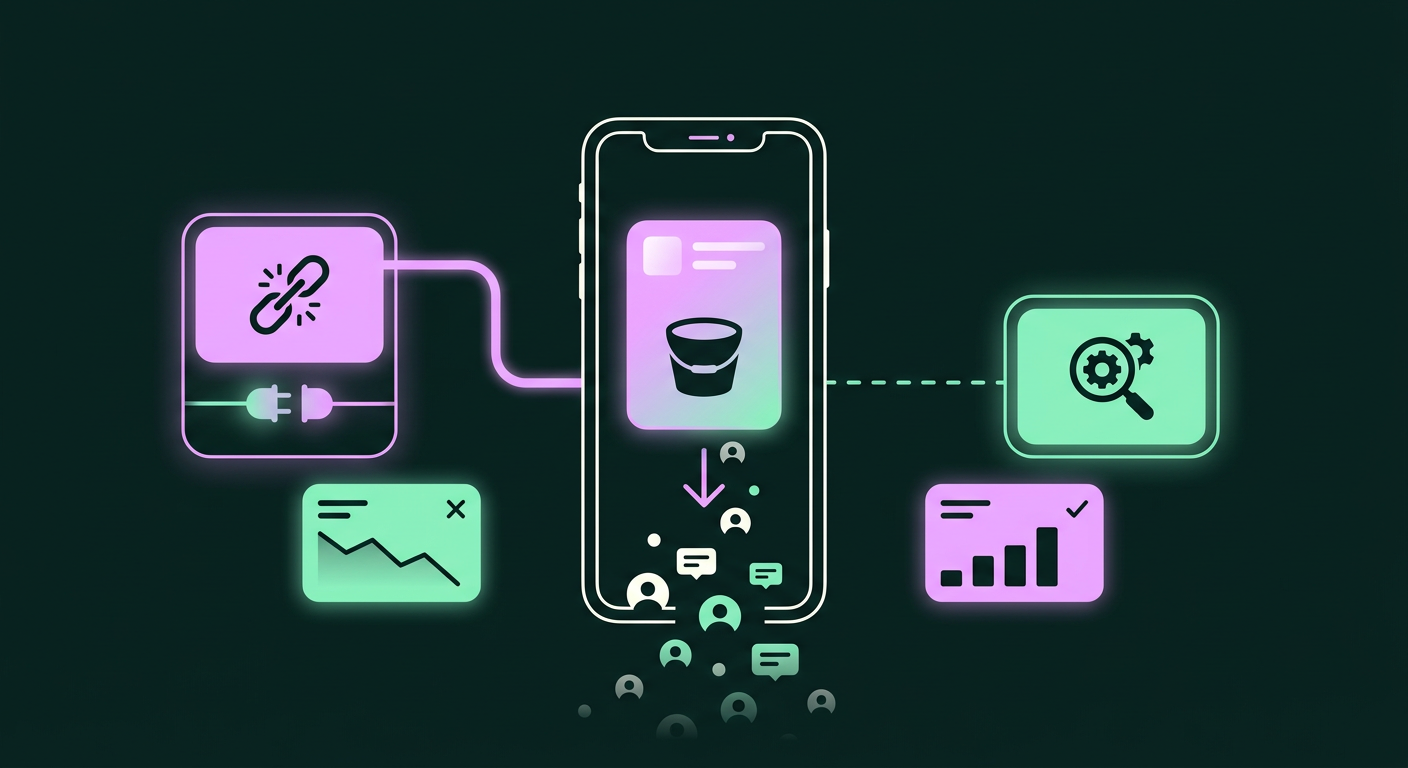
Many teams treat this churn as an inevitable cost of doing business, assuming it reflects a fundamental mismatch between the user and the product. They might blame poor targeting or the brutal competitiveness of the app stores. But more often than not, the problem isn't the user or the app. It's the gaping silence that occurs between the moment they install and the moment they experience their first "aha!" moment. That leak isn't a feature of the market; it's a symptom of a broken welcome experience.
Why Users Really Leave: Onboarding Gaps vs. App Quality
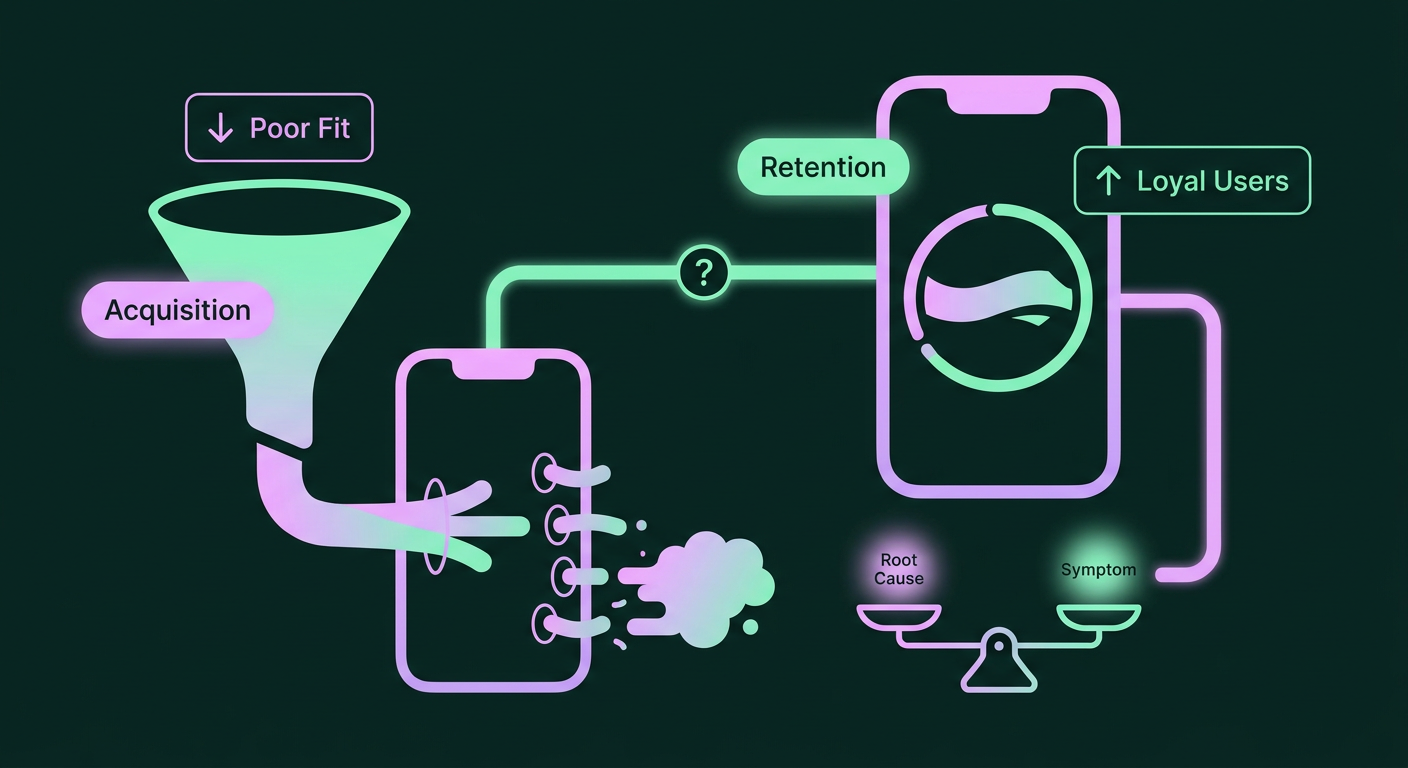
The fact that the leak is a symptom of a broken welcome experience brings us to the root cause. Users typically abandon apps not because the core product is bad, but because the onboarding fails to connect them to its value. A confusing signup process or a lack of immediate, personalized guidance is a far more common reason for high churn than any fundamental flaw in the app itself.
It’s tempting to blame the product when churn is high, wondering if the features are wrong or if the UI needs another redesign. While app quality certainly matters, it’s rarely the culprit for that immediate, post-install churn. Users who leave within the first few sessions aren't making a sophisticated judgment about your app's long-term value; they are reacting to their very first impression. The real breakdown happens when the onboarding journey fails to build a bridge from the user's initial intent, the reason they tapped "install", to an early, tangible reward.
The data backs this up. A staggering 80% of users report uninstalling apps (opens in a new tab) simply because of a confusing sign-up process. They get lost, frustrated, or bored and just give up. This is compounded by rising expectations for relevance. In a world where every digital interaction is tailored, a generic welcome sequence feels dated and impersonal. With 71% of users now expecting personalized experiences, failing to deliver one is a direct path to churn. They didn't leave because your app was "bad"; they left because it didn't bother to get to know them.
Diagnosing Your Drop-off: Where Are Users Getting Lost?
To fix the leak, you first have to find it. This means analyzing the key transition points in your early user journey to see where they get lost, specifically in the drop-off between app install and signup, and again between signup and their first meaningful action. Segmenting users by their acquisition source can also reveal patterns in why certain groups fail to activate.
The path from a curious prospect to an engaged user is a funnel, and every step presents an opportunity for drop-off. In a market with 2.1 million apps in the Apple App Store and 3.3 million in the Google Play Store as of 2022, users have no patience for friction. Your job is to make the path to value as smooth as possible by looking closely at these two critical gaps.
The Install-to-Signup Gap
This is the very first hurdle. A user is convinced by your store listing to download the app but never completes the registration process. This is often a direct result of friction. Are you asking for too many permissions upfront, or is the signup form too long and complicated? Does the app feel slow or unresponsive on first load? Even a few seconds of delay can be fatal. Research shows 53% of users will abandon an app site if it takes more than 3 seconds to load, a principle that applies just as strongly to an app's initial experience. If your analytics show a massive cliff between installs and signups, your welcome mat itself is the problem.
The Signup-to-First-Action Gap
This second gap is more subtle but just as deadly. The user successfully creates an account, opens the app, and is greeted by an empty dashboard with no direction, context, or clear next step. They don't know how to find the feature that brought them here or what they're supposed to do to get value. This is where the promise of your acquisition campaign dies. The user is left to wander aimlessly until they grow bored and leave, becoming another churn statistic. Identifying the first key action a user should take, like completing a profile, playing a level, or liking an item, and then measuring the drop-off before that point will reveal the size of this second leak.
Closing the Gaps With Behavior-Triggered Messaging
Once you know where the drop-offs happen, you can start building bridges. The most effective way to reduce mobile app churn is by closing these onboarding gaps with personalized, behavior-triggered messaging. Instead of generic welcome emails or push notifications, you can send automated, 1:1 DMs that guide users from one milestone to the next based on their specific actions and acquisition source.
Fixing the leaky bucket isn't about more push notifications or another generic welcome email; those are blunt instruments that often contribute to the noise. The solution is to create a guided journey that feels personal and responsive. By connecting your app's event data to a messaging system, you can trigger specific, helpful messages at the exact moment a user gets stuck. This allows you to build automated journeys and guide users from one milestone to the next (opens in a new tab).
For instance, if a user signs up but doesn't take that first key action within a few hours, you don't have to just lose them. You can automatically send a personalized DM on Instagram or WhatsApp that acknowledges where they came from (e.g., "Saw you came from our ad about X feature!") and nudges them toward that action with a helpful tip. This isn't a mass message; it's a 1:1 intervention triggered by an individual's specific behavior, and it directly addresses a key reason for churn.
"Ineffective Engagement - 60% of users churn if they don't receive timely push notifications or in-app interactions." >, Technology Rivers
This kind of timely, context-aware interaction is what modern users expect. Research shows that personalized engagement is a powerful tool to reverse the trend where 70% of lifestyle app users abandon within 100 days. By meeting users where they are, on the messaging platforms they use every day, and giving them the exact piece of information they need to get unstuck, you transform onboarding from a passive experience into an active, guided conversation. This is a key strategy for re-engaging inactive users and preventing them from churning.
How You’ll Know It’s Working: From Raw Churn to Retained Activation
Knowing how to fix the problem is one thing; knowing if your fix is actually working is another. You'll know your retention strategy is effective when you shift your focus from simply lowering the overall churn rate to increasing the percentage of new users who complete key activation events and remain engaged. Success isn't measured by vanity metrics, but by a clear, causal link between your messaging interventions and sustained user activity.
The ultimate goal isn't just to have a lower churn rate on a spreadsheet. While a manageable annual churn rate is often cited as being between 4% and 7%, that top-line number doesn't tell the whole story. The real measure of success is "retained activation." This means looking at cohort data to see if users who receive your guided, behavior-triggered messages are more likely to reach key milestones (like completing level 5 or making a second purchase) and stick around longer than users who don't.
You should track the activation rate for each step of your onboarding funnel and see how your messaging interventions lift that rate. Are more people who get a "first action" nudge actually completing that action? Are they then retained at a higher percentage on day 7, day 14, and day 30? This is how you prove a causal link, not just a correlation. The goal is to turn transient installers into deeply engaged users who become part of your core community. After all, cultivating user habits is a key trait of many successful apps. Data shows that 21% of millennials open their favorite apps more than 50 times per day, and that level of loyalty is built on a foundation of early value and sustained, personal engagement.
By focusing on guiding users to value, you can transform your approach from simply buying installs to investing in long-term relationships. This is how you address the "leaky bucket" and build a user base that doesn't just arrive, but actually stays, helping you to increase customer lifetime value without more ads (opens in a new tab).
Frequently asked questions
What is a good churn rate for a mobile app?
While there is no single magic number, a manageable annual mobile app churn rate is generally considered to be between 4% and 7%. However, this benchmark can vary significantly depending on your industry, app category (e.g., gaming vs. productivity), and business model. The most important thing is to track your own churn rate over time and understand the factors that influence it.
How can I guide a new user from the moment they sign up to their first "wow" moment?
The key is to create a structured, automated onboarding journey. First, identify the single most important action a new user needs to take to experience the core value of your app; this is your "wow" moment. Then, use behavior-triggered messages to guide them there. Send a welcome DM immediately after signup, offer a tip if they seem stuck, and celebrate with them when they complete that first key action.
What kind of message should I send when a user leaves before their first meaningful action?
If a user signs up but doesn't perform a key action within a certain timeframe (e.g., a few hours), send a gentle, helpful nudge via a DM. The message should be contextual. Reference their likely interest based on their acquisition source, remind them of the value they're missing, and provide a clear, simple call-to-action to get them back on track. For example: "Hey! Noticed you signed up but haven't started your first project. Here's a quick tip to get started..."
How can I re-engage users without just sending more push notifications?
Go where your users actually spend their time: direct messaging apps like Instagram, WhatsApp, and Messenger. Unlike push notifications, which are often muted or ignored, DMs feel more like a personal conversation. You can use them to send personalized, value-driven content based on a user's past behavior, such as a reminder about an item they liked or a special offer related to their interests. The timeliness and personalization of DMs make them far more effective for re-engagement, especially since 60% of users churn if they don't receive timely push notifications or in-app interactions.
What are the most important metrics for tracking mobile app activation and retention?
Beyond the top-line churn rate, focus on cohort-based metrics. Track your Day 1, Day 7, and Day 30 retention rates to see how many users are sticking around. Most importantly, measure your "activation rate," which is the percentage of new users who complete a specific, value-driving action within their first few sessions. Also, monitor metrics like session frequency and duration to understand the depth of engagement.
How can I use acquisition source to personalize the onboarding journey?
Acquisition source provides crucial context about a user's intent. Tag users based on the ad creative, campaign, or platform they came from. You can then tailor the initial in-app experience and follow-up messaging to match the promise of that ad. For example, if a user came from an ad promoting a specific feature, your welcome message should immediately guide them toward using that exact feature, creating a seamless and relevant journey from click to conversion.