
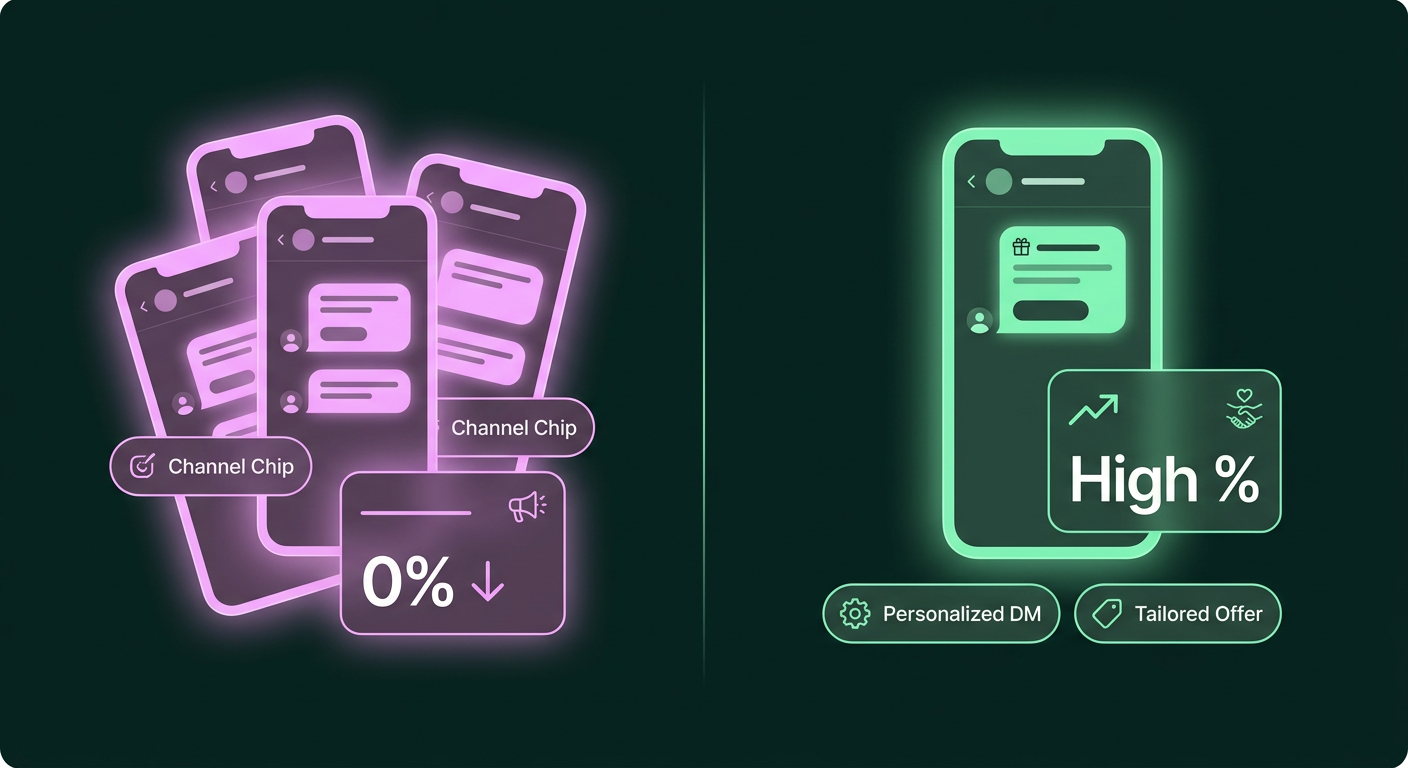
If you think a win-back campaign is just about sending a generic "we miss you" message to every player who churns, you're making a common mistake. It might feel productive to contact a long list of lapsed users, but this one-size-fits-all approach is a massive missed opportunity that ignores why players left in the first place. Not only is this strategy inefficient, but it can actively damage any remaining goodwill a player has for your game, making a future return even less likely. The real goal isn't just to get players to open the app one more time; it's to earn their thoughtful re-engagement.
Win-Back Campaigns Aren’t About Loudest-Voice Mass Blasts
The core problem with broadcast-style win-back campaigns is that they treat all churned players as a monolithic group. When you send the same message to everyone, you ignore the specific reasons individuals stopped playing, which makes your outreach feel impersonal and irrelevant. A more effective strategy starts with understanding player behavior so you can deliver a targeted, valuable reason to return.
Think about the different ways a player can churn from a mobile game. One player might get frustrated and quit after being stuck on a difficult level for a week. Another might be a highly engaged veteran who has simply run out of new content to explore. A third could be a casual player who just forgot about your game amidst the noise of dozens of other apps. Sending all three an identical push notification with a generic "Come back and play!" is almost guaranteed to fail because the message is irrelevant to two of them and unhelpful to the third. While it's true that even basic automated win-back emails can see open rates around 42% (opens in a new tab), this number represents a floor, not a ceiling. It’s the bare minimum, and true success lies in moving beyond generic outreach and into personalized conversation.
Why the 'More Messages, More Returns' Idea Is So Sticky
This simplistic, high-volume approach to win-back campaigns persists because it feels easy and measurable, especially when lifecycle marketers are under immense pressure to show immediate results. With primary goals tied to metrics like D7 retention and LTV, the path of least resistance often looks like sending more messages, even if they aren't the right ones.
The reality for many mobile game studios is that player data, churn signals, and live-ops context are stored in separate, disconnected systems. Your game analytics might show where a player dropped off, but your CRM or messaging platform has no access to that information, which makes true personalization seem like an insurmountable challenge. As a result, marketing and retention teams fall back on what they can control: sending a message to an export of every player who hasn't logged in for 30 days.
This approach, however, often does more harm than good by ignoring a fundamental truth about player relationships: a bad experience is a powerful deterrent. According to a 2024 report, a staggering 82% of consumers in the US have stopped doing business with a company (opens in a new tab) because of a poor customer experience. A generic, irrelevant message isn't just neutral; it's a negative experience. It tells the player you don't know them, you don't understand their history with your game, and you're just looking to boost your numbers. This reinforces their decision to leave rather than tempting them back.
What a Data-Driven Win-Back Actually Looks Like
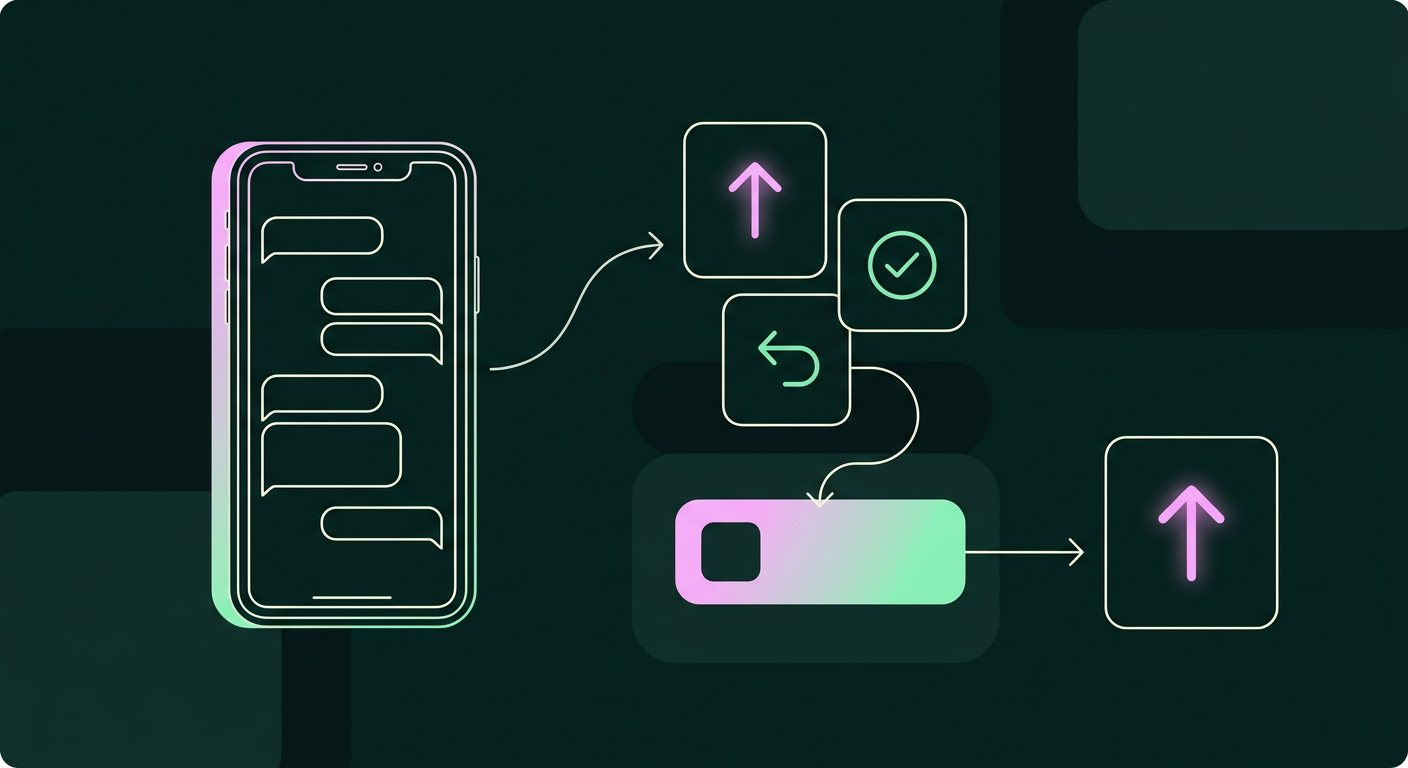
Moving past those ineffective habits means using player data to create highly specific segments, personalizing outreach with compelling content, and constantly testing the approach to improve performance. This transforms the campaign from a generic broadcast into a series of targeted, valuable conversations.
The evidence for this more sophisticated strategy is compelling. While results vary, successful campaigns can achieve reactivation rates between 20-40% (opens in a new tab), a significant improvement over the scattershot method. Moreover, a 2023 analysis by Paddle/Profitwell found that as many as 30% of churned customers can be recovered through effective win-back strategies (opens in a new tab). Hitting these numbers requires a fundamental shift in how you execute your campaigns.
Segmenting Players by Behavior, Not Just Absence
The first step is to group lapsed players based on their in-game behavior and likely reason for churning. You aren't just targeting "inactive players"; you are targeting "players who churned after failing Level 45 ten times" or "VIP players who haven't logged in since the last major content update." Other useful segments could include players who made an in-app purchase but churned shortly after, or players who engaged heavily with a specific game mode and then stopped. The timing of your outreach is also crucial. It's best to send a win-back message around three months after a customer stops engaging, as effectiveness drops significantly after the six-month mark.
Personalizing the Message Beyond the Player's First Name
Once you have your segments, you can craft messages that resonate with their specific experience. For the player stuck on Level 45, you could send a DM: "Hey [PlayerName], we noticed Level 45 was giving you trouble. We've tweaked the difficulty, and here are 100 bonus coins to give it another shot!" For the veteran player, the message could be, "You thought you'd seen it all? A whole new world just dropped. Your old crew is asking for you." This level of personalization shows you're paying attention and provides a concrete, valuable reason for them to return. This is the difference between an annoyance and an invitation.
Testing and Iterating on Your Approach
A data-driven strategy is never static, so you should be constantly testing different elements of your campaigns. Experiment with different messaging channels, like DMs versus email, to see which performs better for specific segments. You can also A/B test the copy, the value of the offer (e.While it's true that even basic automated win-back emails can see open rates around 42.51%, this number represents a floor, not a ceiling., 100 coins vs. 500 coins), and the timing of the message. By connecting player data directly to your messaging systems, you create a closed loop where you can measure not just open rates, but actual re-engagement and subsequent player behavior, allowing you to continually refine your strategy.
The New Goal: From Reactivation to Re-Engagement
With a data-driven approach, the objective shifts from a shallow "reactivation" to a much deeper "re-engagement." The goal is not merely to get a player to open the app, but to successfully reintegrate them into the game's lifecycle by reminding them of the value and fun they experienced before, thereby improving long-term retention and player lifetime value.
This is more than a semantic change; it’s a strategic pivot. Reactivation is a short-term metric, whereas re-engagement is about building a long-term relationship. A well-executed win-back campaign doesn't just bring back a lost player; it has a positive halo effect on their future behavior.
"Get this - a whopping 45% of customers who get a win-back email will open your future emails." , ActiveCampaign
This shows that a successful re-engagement attempt rebuilds trust and reopens a line of communication. You aren't just recovering a user; you are graduating them back into an active and attentive audience. By focusing on providing real value, whether it's a helpful tip, an exclusive piece of content, or a bonus that helps them overcome a hurdle, you are investing in their continued journey. This is a critical component of re-engaging inactive users and a key lever for improving the overall financial health of your title by focusing on how to increase customer lifetime value without more ads.
How to Build Your First Personalized Win-Back Campaign
To get started, you need to identify a few key churn segments, create a short, multi-message sequence tailored to their experience, and choose the most effective channel to deliver a compelling reason to return. This process should be structured and iterative, starting small and building on what you learn.
Instead of a single generic message, consider a thoughtful sequence. Effective campaigns often include a series of 3-5 messages spaced roughly 7 days apart, giving the player multiple opportunities to engage without feeling overwhelmed.
Here’s a simple framework to build your first campaign:
- Identify 1-3 High-Value Segments: Start with the most clearly defined groups. This could be "High-Spenders Who Churned," "Players Stuck on the First Boss," or "Daily Players Who Disappeared."
- Define the Trigger and Timing: For each segment, determine the trigger (e.g., 30 days of inactivity) and the ideal timing for the first message.
- Craft the Personalized Offer: What is the single best thing you can offer this specific segment? For the stuck player, it might be a power-up. For the high-spender, it could be a bonus on their next purchase. The offer must be relevant to their reason for leaving.
- Write the Message Sequence: Draft a short series of messages. The first could be a gentle nudge with the main offer. The second might add a sense of urgency or highlight new content. The third could be a final, more generous offer.
- Choose the Right Channel: While email has its place, consider more direct and personal channels like DMs on Instagram or WhatsApp for certain segments. These channels have significantly higher engagement and feel more like a one-to-one conversation. Understanding the different use cases for personalized messaging (opens in a new tab) is key to selecting the right tool for the job.
Your First Test: Identify One Churn Point and Intervene
The best way to begin is to resist the urge to build a complex system for every possible churn scenario. Instead of trying to solve everything at once, pick one specific, high-impact churn point. From there, you can design a simple, targeted intervention for that single group of players and measure the results. This focused approach is designed to give you a quick win and the data you need to justify expanding the strategy.
For example, identify players who haven't logged in for 14 days after reaching a specific milestone, like unlocking a new game mode. This is a critical juncture; they were engaged enough to get there, but something caused them to drop off.
Create a single, automated message that triggers on Day 14. Make it personal and valuable. Send a DM that says, "Hey [PlayerName], saw you unlocked the Arena but haven't had a chance to try it. Your first three matches are on us with these free entry tickets. See you in there?"
Then, measure the outcome. How many of those players logged back in within 48 hours? How many played a match in the Arena? Compare this to a control group that received no message. The results of this small, focused experiment will provide powerful evidence for the value of personalized re-engagement and give you the momentum to build out a more comprehensive win-back program.
Frequently asked questions
How do I start a personalized reactivation campaign for my mobile game?
You should start small and focused by identifying one or two key churn points where a significant number of players drop off. From there, create specific segments based on the in-game behavior that led up to that point. Finally, craft a simple, automated message with a tailored offer or piece of information that directly addresses their likely reason for leaving, and deliver it on a high-engagement channel like a DM or email.
What metrics do I need to build useful player segments?
To build effective segments, you need to look beyond just the "last login date." Key metrics include player level or progression, in-app purchase history and value (IAP), engagement with specific game modes or features, social connections within the game, and inventory data like currency balance. Combining these data points allows you to create nuanced segments like "high-value players with low currency" or "social players whose friends have churned."
How can I use player retention data to create targeted messaging experiments?
Player retention data is the foundation for your experiments. You can use it to form a hypothesis, such as "We believe players who churn at Level 30 do so because of a difficulty spike." Then, create an A/B test where Group A is the control group (no message), while Group B receives a DM with a small power-up and a tip for beating the level. By measuring the reactivation rate of both groups, you can validate your hypothesis and prove the ROI of the intervention.
Which player actions should trigger a message after they drop off early?
Early drop-off is often tied to onboarding friction, so you should monitor for related actions. These can include failing the tutorial multiple times, not logging in for 24 hours after the first session, or repeatedly failing the first challenging level or boss. A well-timed message triggered by one of these events can provide a helpful tip, a small resource boost, or a link to a tutorial video to guide them past the hurdle before they decide to quit for good.