
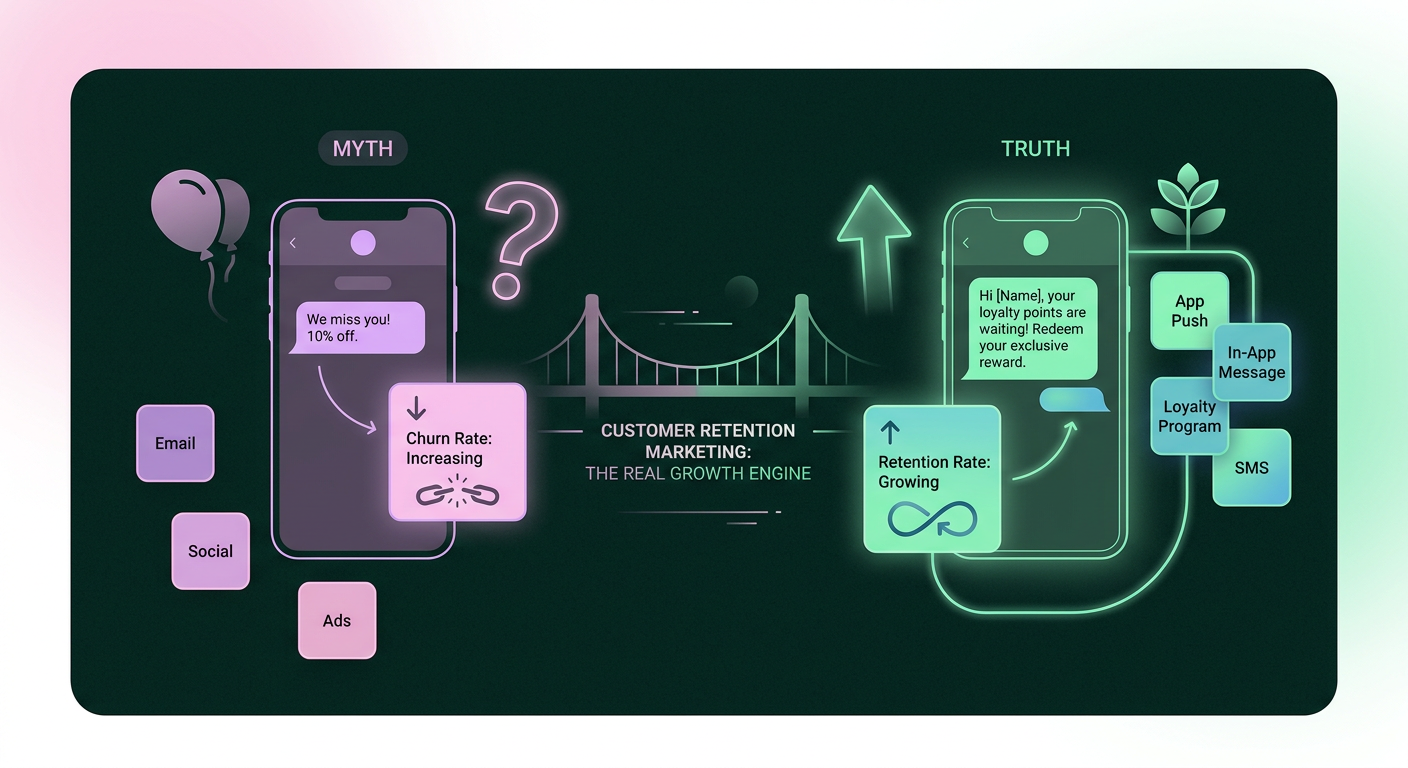
You probably think of customer retention marketing as a separate job. It’s the email flows, the loyalty programs, and the win-back campaigns you turn to after the real work of acquisition is done. This belief, however, is precisely why your marketing feels like an uphill battle. Treating retention as an afterthought is the root cause of spiraling ad costs and vanishing profits, because it fundamentally misunderstands how sustainable growth actually happens.
This isn't just semantics; it's a flawed operational model that separates the act of getting a customer from the act of keeping one. The truth is, retention isn't a secondary motion. It’s the primary objective of your entire marketing engine, starting from the very first ad a person sees.
You think retention is a separate marketing motion. It isn't.
The core problem is viewing customer acquisition and customer retention as two different functions with two different goals. This siloed approach creates a leaky bucket where you're forced to spend more and more just to acquire new customers, only to watch them leave after a single purchase. The separation is an illusion, and it's an expensive one. In reality, every marketing dollar should be aimed at creating a long-term relationship, not just a one-time transaction.
When you treat acquisition as "growth" and retention as "maintenance," you fall into a dangerous trap. You pour the majority of your budget into the top of the funnel, celebrating new logos and first-time purchases. But this strategy ignores a painful reality: customer acquisition costs have been climbing relentlessly, increasing by over 220% in the last eight years (opens in a new tab). Despite this, most e-commerce brands continue to allocate a staggering 80% of their marketing budgets to acquisition, effectively neglecting the customers they've already paid dearly to win over. This approach turns your business into a treadmill where you have to run faster and faster just to stay in the same place.
Why marketers isolate retention (and kill their profitability)
This flawed belief is common for a reason. Marketers isolate retention because acquisition provides immediate, visible feedback: new customers, fresh revenue, and clear campaign metrics that feel like tangible growth. In contrast, retention efforts often play out over a longer timeline, making them seem less urgent and harder to measure directly against a specific campaign. This bias towards the new and novel is deeply ingrained in how marketing teams are structured and incentivized.
The focus on acquisition over retention is nothing new. A survey from over a decade ago revealed a telling trend: marketers ranked “driving sales” as their highest concern, while "engaging customers" and "building customer loyalty" were tied for last place.
"This is despite clear evidence that existing customers are more valuable than new customers." , Jerry Jao, Forbes
This historical bias persists today, reinforced by the very tools we use. Ad platforms are built for acquisition, and email service providers are often used for broad-stroke retention campaigns. Because the systems, teams, and key performance indicators are all separate, it's easy to forget that you're marketing to the same human being at different stages of their journey. The catch is that acquiring a new customer can cost anywhere from 5 to 25 times more (opens in a new tab) than keeping an existing one. By treating retention as a separate, less important job, you are actively choosing the most expensive path to growth.
The hard math: Your one-time buyers are your biggest cost
The numbers confirm that this approach is unsustainable. A customer who only buys once is often a net loss for your business, while repeat customers are the true engine of profitability. The cost of acquiring that one-time buyer through increasingly expensive ads is rarely covered by their initial purchase. Sustainable growth comes from the second, third, and fourth purchase, where the margin isn't erased by acquisition spend.
The economics are clear. Shopify reports that repeat customers account for a massive 44% of total revenue despite making up just 21% of a store's customer base. The value of these customers goes far beyond their initial transaction, as studies show that repeat customers spend 67% more on average than first-timers do (opens in a new tab). Not only do they spend more, but the probability of selling to them is dramatically higher. According to the book Marketing Metrics, businesses have a 60-70% chance of successfully selling to an existing customer, compared to a meager 5-20% chance with a new prospect.
The financial leverage is immense, meaning a focus on your customer retention marketing has a disproportionate impact on your bottom line. Research has shown that increasing customer retention by just 5% (opens in a new tab) can boost profits by 25% to 95%. When you look at these figures, the obsession with costly, low-probability acquisition starts to look less like a growth strategy and more like a financial liability.
What's true: Retention isn't a strategy, it's the whole game
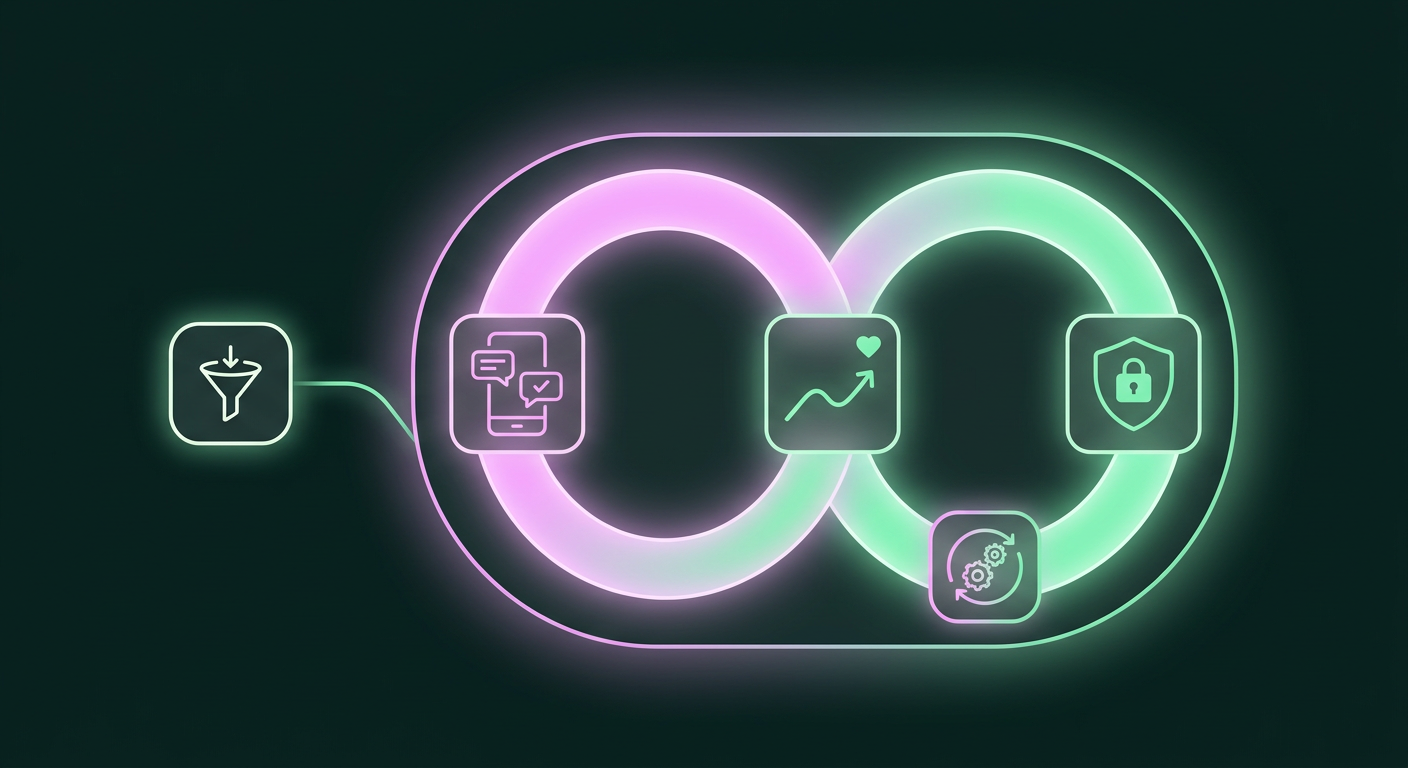
If the old model is a liability, what’s the right way to think about it? True customer retention marketing isn't a tactic or a campaign; it's the fundamental goal of the entire customer journey. It’s a shift in perspective where every single touchpoint, from the first ad impression to the unboxing experience to the post-purchase follow-up, is intentionally designed to earn the next purchase. This reframe moves retention from a siloed function to the core principle of your growth model.
This means you stop thinking in terms of "acquisition campaigns" and "retention campaigns." Instead, you build a single, cohesive system that smoothly converts new buyers into lifelong fans. The goal of your Instagram ad isn't just to get the first sale; it's to start a conversation that leads to the second. The purpose of your packaging isn't just to protect the product; it's to create a memorable moment that makes a customer excited to buy from you again.
Adopting this mindset requires you to reimagine your marketing stack and your customer communication. You have to stop paying platforms like Meta to re-acquire the same customer over and over, and instead build a direct, personal line of communication that you own. This is the foundation of the new direct to consumer marketing strategy: moving the relationship from a rented audience on social media to a direct conversation in their private messages.
How to make retention your default: Use DMs
To put this new model into practice, you have to engage customers in the channels they actually use for personal communication: their direct message inboxes on platforms like Instagram and WhatsApp. If retention is the primary goal, then your communication needs to happen where it will be seen, opened, and acted upon. Traditional retention channels like email are increasingly noisy and ineffective at cutting through the clutter.
The engagement numbers for DMs speak for themselves. While a well-optimized email or SMS drip campaign might see an 8% conversion rate from subscriber to install, it's fighting for attention in an already-crowded space. By contrast, DMs are where real conversations happen, with open rates that regularly exceed 80% and push into the 90-98% range on WhatsApp. This isn't just about getting seen; it's about driving action. Conversion rates from DMs are typically 3 to 5 times higher than what you see with push notifications.
This works because a DM feels fundamentally different to a customer. It's personal, it's conversational, and it's happening in a space they reserve for friends and family. By meeting them there with timely, relevant, and personalized 1:1 DMs, you transform your marketing from an intrusive broadcast into a welcome conversation. This allows you to build a genuine relationship that fosters loyalty and encourages repeat purchases, turning the leaky bucket of one-time buyers into a strong base of profitable, long-term customers. You can use this channel for a variety of valuable lifecycle marketing use cases (opens in a new tab).
Your first step: Automate your post-purchase DM flow
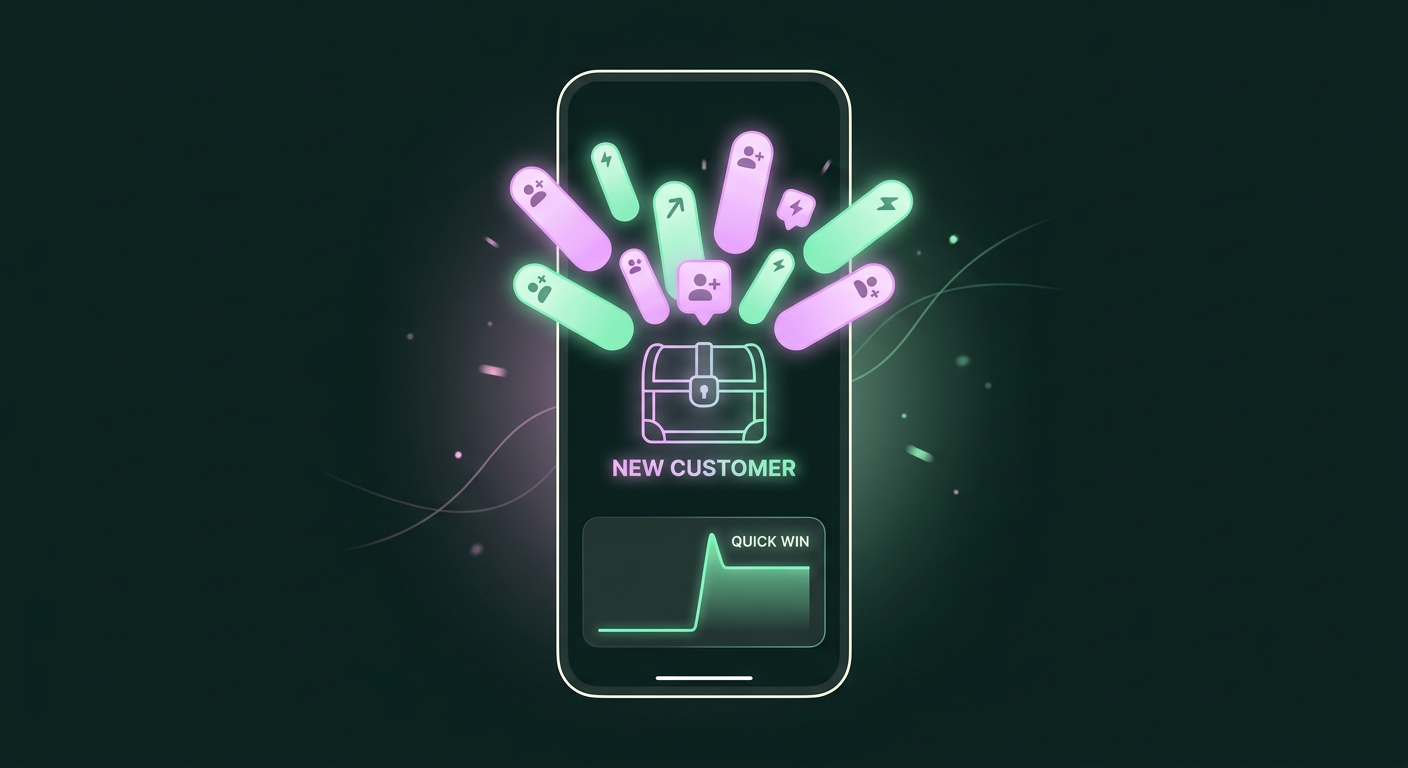
The best way to start is by automating a simple, personalized DM to every first-time buyer immediately after their purchase. This single action is the most powerful first step you can take to shift your company's focus from acquisition to retention. It doesn't require a massive strategic overhaul or a new team; it's a concrete, manageable change that reorients your marketing around the second purchase from day one.
Instead of letting a new customer's journey end with a generic order confirmation email, you can send a warm thank you message via Instagram DM. Ask them how their experience was, offer help, and make them feel seen and valued as an individual. This simple gesture breaks the transactional pattern and begins building a real relationship. It immediately moves the conversation to a high-engagement channel you control, setting the stage for future interactions that don't rely on expensive retargeting ads.
By implementing this one change, you begin building the system for profitable growth. You can easily increase second purchase rate with DM automation, creating a flywheel where each new customer is more likely to become a repeat buyer. This is how you stop the cycle of renting your customers and start building a loyal community that supports your business for the long term. With platforms that have delivered billions of DMs for nearly 100 brands, the technology is proven and ready to deploy.
Frequently asked questions
Should I be prioritizing customer acquisition or retention right now?
You should prioritize both by viewing them as two sides of the same coin. The traditional mindset that forces you to choose is flawed. While you always need to attract new customers, the most profitable strategy focuses on retaining the ones you already have. Since acquiring a new customer costs 5 to 25 times more than keeping an existing one, any budget spent on retention yields a much higher return. The most effective approach is to design your acquisition efforts with the second purchase in mind, creating a seamless journey from new buyer to loyal fan.
Why does it feel like I'm spending more and more on Facebook ads but not getting results?
This is a common frustration because customer acquisition costs are rising sharply across the board. For example, customer acquisition costs have surged by over 220% in the past eight years alone. Specifically on Meta's platforms, the average price per ad in 2024 rose 14% year-over-year. If you're only focused on acquiring one-time buyers, you're constantly fighting this inflationary pressure. The only way to win is to generate more lifetime value from each customer you acquire, which makes retention the most critical factor for making your ad spend profitable.
How do I calculate the customer lifetime value for my business?
Customer Lifetime Value (LTV) is an estimate of the total revenue a typical customer will generate throughout their entire relationship with your business. A simple way to start is to multiply the average purchase value by the average purchase frequency and then by the average customer lifespan. Understanding this number is crucial because it shows you the true value of retention. For instance, knowing that a 5% increase in retention can boost profits by 25% to 95% helps you justify investing in activities that foster loyalty and repeat business.
How can I turn my one-time buyers into loyal, repeat customers?
The key is to engage them immediately after their first purchase in a personal and meaningful way. Don't wait for them to forget about you. Send a personalized thank-you message, offer support, and make them feel valued. Since repeat customers spend 67% more on average than new ones and are far more likely to buy again, your primary goal should be securing that second purchase. By shifting the conversation to a direct channel like Instagram DMs, you can build a relationship that encourages them to come back.
What's the best way to use Instagram DMs to increase repeat purchases?
The best way is to automate personalized, conversational touchpoints across the customer lifecycle. Start with a post-purchase thank you for first-time buyers. Later, you can send automated check-ins, ask for reviews, announce new products relevant to their past purchases, or even run abandoned cart recovery flows. Because DM open rates are incredibly high (often over 80%) and conversion rates are 3-5 times higher than other channels, it's the most effective platform for driving action and making your customer retention marketing efforts pay off.
Why is customer retention so important for my ecommerce brand's growth?
Customer retention is the foundation of profitable and sustainable growth. Relying solely on acquiring new customers is a losing battle due to skyrocketing ad costs. Retained customers are your most valuable asset: they spend more, buy more often, and are cheaper to sell to. In fact, your business is 60-70% more likely to sell to an existing customer than a new one. By focusing on retention, you build a stable, predictable revenue base that isn't dependent on the volatile costs of paid acquisition.