
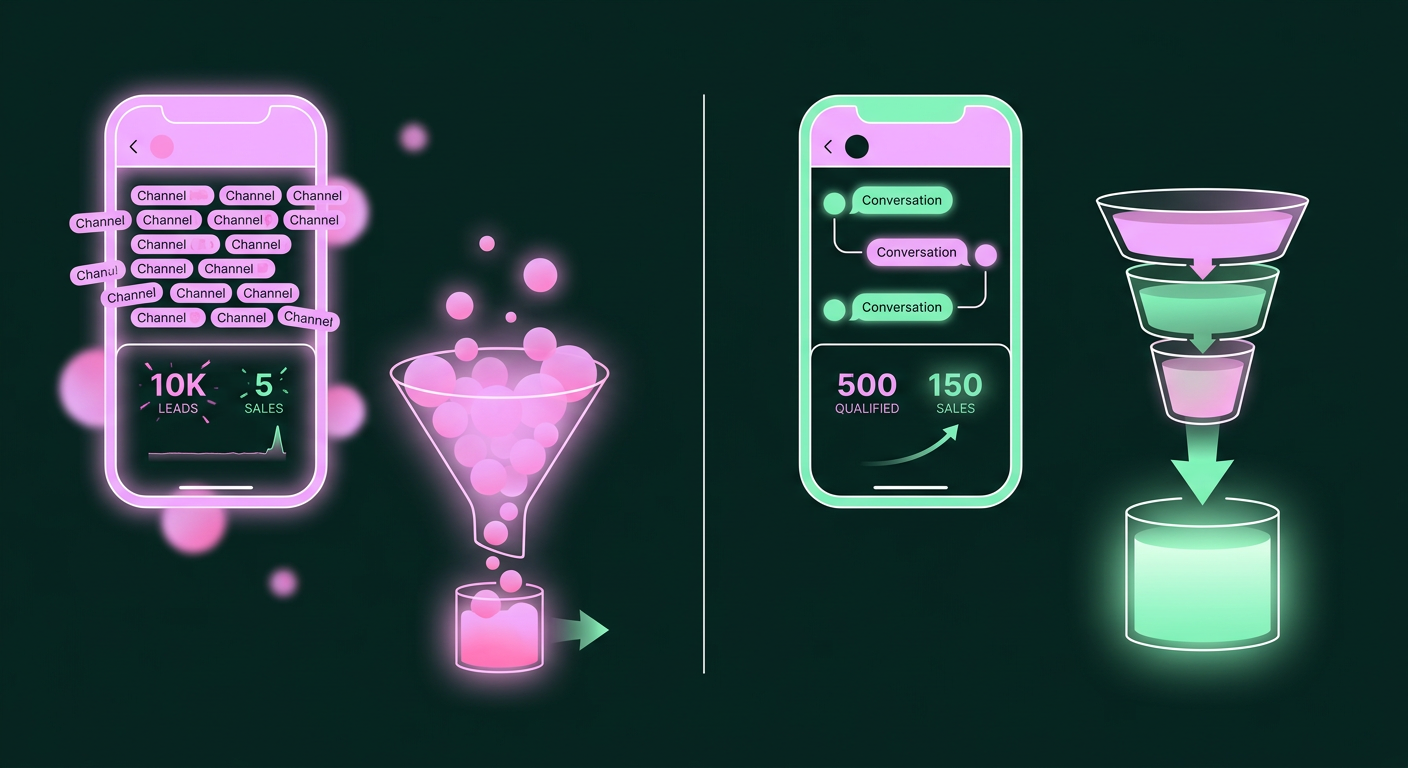
There's a common belief that to scale your Instagram DM sales, you have to sacrifice the personal touch. Many brands assume that as they grow, they face a stark choice: either answer every message manually and cap their growth, or use the kind of robotic auto-replies that feel impersonal. This feels like an unavoidable trade-off, but it’s a false choice rooted in an outdated view of what automation can actually do. The personal, one-on-one connection is exactly what makes DMs such a powerful sales channel. The challenge isn't scaling, but scaling smartly without losing that connection. While sales isn't purely a numbers game (opens in a new tab), new technology now makes it possible to maintain human-feeling connections at a volume you never could before. It’s through these personalized conversations that you build stronger relationships with buyers (opens in a new tab), and that principle doesn't have to break as you grow.
Why the Manual Approach Feels Both Smart and Unsustainable
If that belief is wrong, it’s worth asking why it feels so right. For a while, the manual, hands-on approach is the smartest thing you can do because you see the results firsthand. Replying to every message yourself works. You see the sales come in and feel the connection with your customers, confirming what the data shows: DMs are an incredibly high-engagement channel. With open rates that can soar as high as 90% and reply rates reaching 60%, they are a direct line to your most interested followers. You're not just posting content and hoping for the best; you're having a real conversation.
The problem, as you’ve likely discovered, is that this hands-on approach has a hard ceiling. The very immediacy and personal nature that make DMs effective also make them impossible to manage at scale. With an estimated 150 million people messaging businesses on Instagram every month (opens in a new tab), your inbox traffic will only increase as you grow. The pressure to respond quickly becomes immense, especially since brands that reply to an inquiry within one minute see a 391% higher conversion rate (opens in a new tab) than those who wait even thirty minutes. Every hour you spend typing out similar answers is an hour you're not spending on growth, and every message that goes unanswered is a potential sale lost. You're trapped in a cycle where your success creates a bottleneck that limits further success.
The Myth of Robotic DMs: How AI Is Different
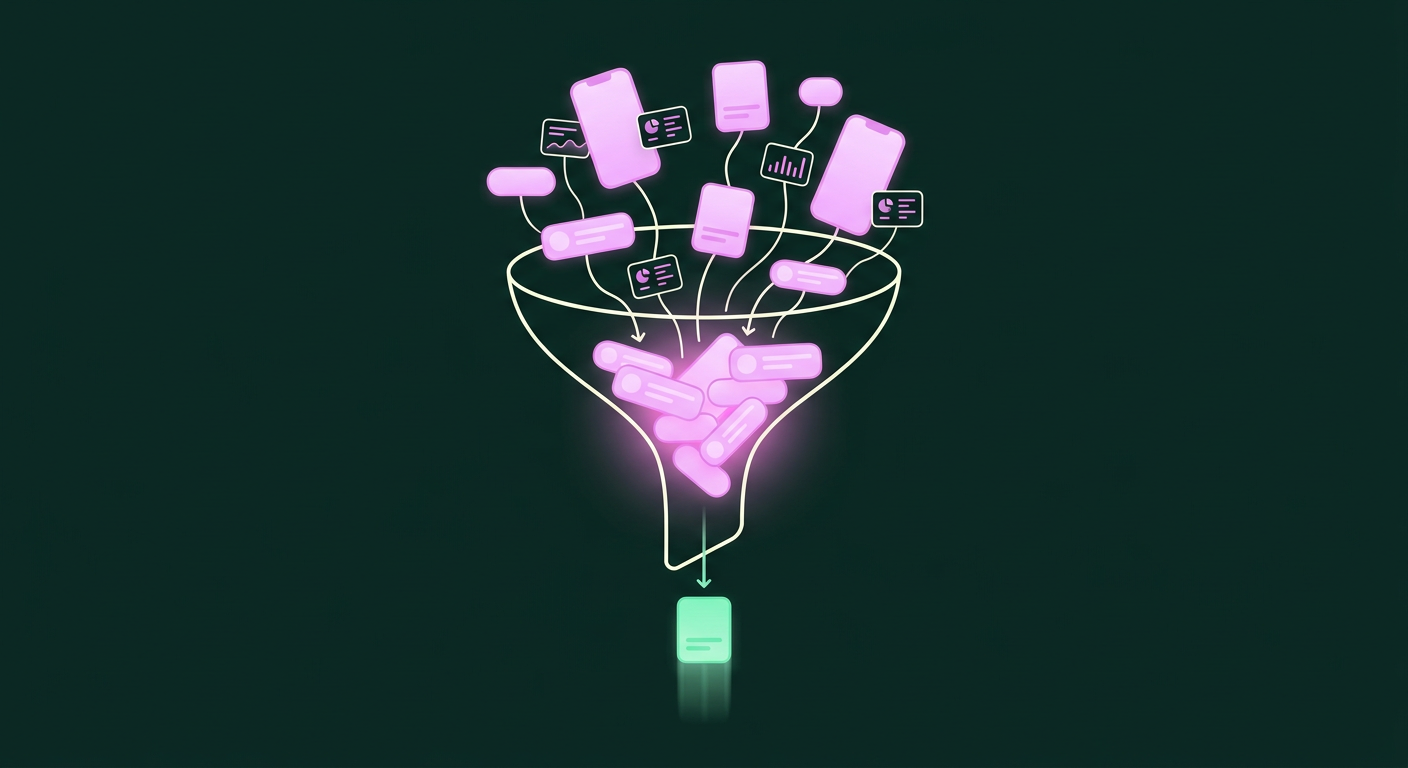
While that manual trap is real, the technology has evolved far beyond the clunky systems you might be picturing. The fear of "automation" often conjures images of simplistic, keyword-based replies that feel jarring and obviously non-human. Those early tools operated on a simple "if this, then that" logic, which is why they failed to handle the nuance of real customer conversations. When you think of a "bot," you're likely thinking of that old, frustrating technology. Modern AI-powered systems are fundamentally different.
Instead of just spitting out canned responses, today’s intelligent automation is designed to have actual conversations by understanding context, asking clarifying questions, and guiding a user through a process. This is the critical distinction: it's no longer about sending a single, triggered response. The technology is now sophisticated enough to start real, productive chats that actively nurture leads toward a sale. The difference in results is stark. Generic, one-to-many messages might see a conversion rate of around 5%, but well-designed, hyper-targeted DM campaigns can achieve an 18% conversion rate. The goal of this new wave of automation isn’t to replace human connection but to scale it, ensuring every customer gets an immediate, relevant, and personalized interaction.
From Inbox Management to an Automated DM Sales Funnel
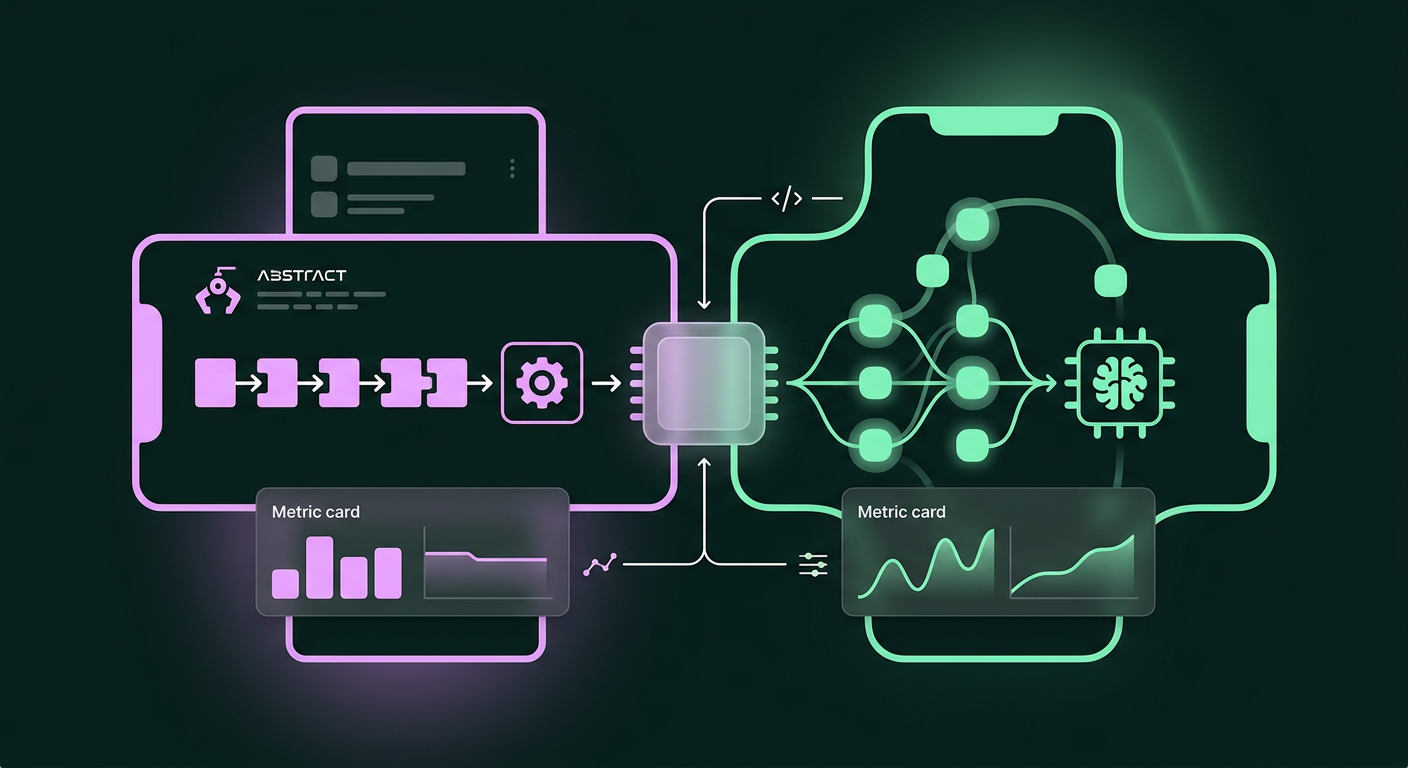
This ability for AI to hold nuanced, personalized conversations means you can change your entire strategy. You can finally stop thinking of your Instagram DMs as a reactive customer service inbox and start treating them like a proactive, automated sales funnel. This shift in mindset is everything. Instead of just "managing messages," you're building a system that actively identifies, qualifies, and nurtures potential customers from their very first interaction.
This new kind of funnel begins the moment a user shows intent. For example, when someone comments on one of your Reels, an automated system can instantly send them a personalized DM. This isn't just a convenience; it's incredibly effective, with some systems seeing first-message click rates average between 40-70%, a massive improvement over traditional "link in bio" strategies. From there, the automated conversation can take over, asking a few simple qualifying questions to understand what the user needs. Based on their answers, the system can either provide instant information, guide them to the right product, or, if they are a highly qualified lead, flag them for a human member of your team to follow up (opens in a new tab). This creates a smooth experience where less-qualified leads are gently nurtured and high-intent buyers get the white-glove service they need to convert, all without you manually managing every single message. You can explore a variety of use cases for this kind of automation (opens in a new tab) that extend across the entire customer lifecycle.
How to Systemize Your DMs for Scalable Personalization
Building this funnel begins with a thoughtful analysis of the conversations you're already having. To get started, map out your current customer journey within the inbox by looking for patterns. Identify the top five questions you get every day, the phrases high-intent buyers use right before they purchase, and the points where conversations typically drop off. By spotting these repeatable moments, you can see where automation can be most effective.
The goal isn't to automate 100% of your inbox overnight. Instead, you can systemize it piece by piece. While you can start with simple features like saved replies for common questions, the most significant impact comes from layering in more intelligent automation. For example, you can design a flow that automatically answers sizing questions, provides shipping updates, or points users to relevant FAQ pages. This not only frees up your time but also delivers the instant answers customers expect. By handling these routine interactions, automation ensures that when a human does step in, it's for a high-value conversation that truly requires a personal touch. Learning how to automate Instagram messages effectively is about creating a reliable, scalable system that enhances, rather than replaces, your brand's personality.
Your First Step: Automate One High-Intent Interaction
You can test this approach without overhauling your entire workflow. You don't have to build a complex, full-funnel system from day one. The best way to start is by picking a single, high-leverage interaction and automating just that one piece. This lets you see the results and build confidence in the technology without a massive commitment.
A great place to begin is with your Instagram Reels comments. The next time you post a Reel that showcases a specific product or offer, set up an automation that sends a DM to everyone who comments with a specific keyword. For instance, if your Reel is about a new dress, you could ask viewers to comment "DRESS" to get a direct link to buy. An automated system can then instantly send a personalized DM with the link and perhaps an exclusive discount code. This strategy takes advantage of the high engagement of Reels and channels that intent directly into a conversational sales flow. Given that the click-through rates on these initial DMs are exceptionally high, it’s a low-risk, high-reward experiment. You can even find tools that offer a free plan to get started, letting you prove the concept for yourself. By automating just this one interaction, you'll begin to see how an automated system can drive real sales and free up your time, all while delivering a fast, helpful experience for your customers.
Frequently asked questions
How do I keep my Instagram DM replies personal but not spend hours answering manually?
The key is to use automation for speed and scale, while saving your team's time for nuance and relationship-building. You can use modern AI to handle initial responses and answer common questions, which feels personal because the replies are instant and relevant. This technology is capable of engaging in one-on-one conversations that build stronger relationships by offering personalized help. The system can then flag complex inquiries for you to handle manually, ensuring you only spend time on the conversations that truly require a human touch, while the AI nurtures other leads through productive, automated chats.
Why do my Instagram DMs convert so well for sales but are so hard to handle as my brand grows?
Instagram DMs convert well because they capture high-intent customers at the peak of their interest. Unlike cold outreach, these are people who are already engaged and have taken a step to connect with your brand. The difficulty arises from volume and the need for speed. With potentially 150 million users messaging businesses monthly, a growing brand can quickly become overwhelmed. This is compounded by the fact that responding within one minute results in a 391% higher conversion rate, a pace that is nearly impossible for a small team to maintain manually.
How can I increase sales from my Instagram DMs without losing the personal touch?
You can increase sales by shifting from a reactive to a proactive strategy. Instead of just waiting for inquiries, use thoughtful automation to initiate conversations based on user actions, since proactive, personalized outreach is proven to increase sales. The key is to avoid generic, untargeted messages. A well-designed system will feel personal because it's contextual; one study showed that hyper-targeted campaigns achieve an 18% conversion rate, far surpassing the 5% from generic campaigns. Modern AI can nurture these leads with conversations that feel real and guide them toward a sale.
What’s the best way to manage a super busy Instagram DM inbox for a small e-commerce brand?
The most effective approach is a hybrid one that blends Instagram's native tools with smart automation. Start by using features like saved replies for frequently asked questions and labels to organize conversations. As volume grows, integrate an intelligent automation system to handle initial qualification. An AI agent can ask two or three qualifying questions to understand a customer's needs and then route only the most promising, high-intent leads to your human team for follow-up, while others are placed in an automated nurture sequence.
How can I automate my Instagram DMs without sounding like a generic robot?
The trick is to use technology built for conversation, not just for sending canned responses. Unlike old, keyword-based automated responders, modern AI-powered systems can understand context, remember previous parts of the conversation, and interact in a way that feels natural. The technology is smart enough to handle real, productive chats that actually nurture leads toward a sale, demonstrating that automation doesn't have to be impersonal. It's about designing your automated flows to be helpful, timely, and responsive to the user's specific intent.
Why do the generic Instagram DM automation tools I've seen fail for personalized brand communication?
Most generic automation tools fail because they are designed for broad, one-size-fits-all messaging. They often rely on simple keyword triggers and send the same generic message to a wide audience, which comes across as impersonal and can alienate customers. Effective DM communication thrives on personalization. The data shows a significant difference in results, with hyper-targeted DM campaigns achieving an 18% conversion rate compared to just 5% for generic broadcasts. True personalization requires a system that can understand nuance and deliver a message that is highly relevant to that specific user at that specific moment.