
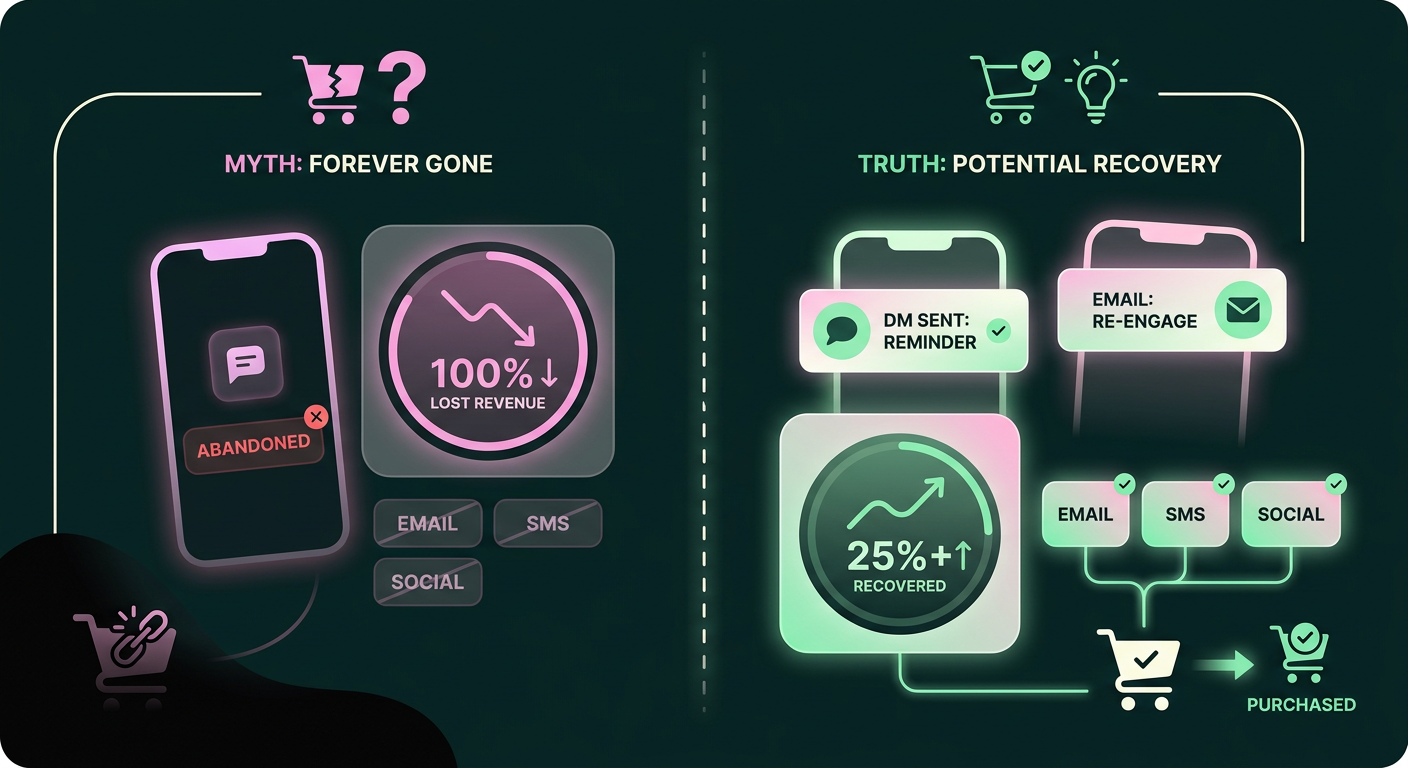
Most brands treat every abandoned cart as a lost sale. You see that high cart abandonment rate on your dashboard and picture thousands of dollars walking out the door every day. The common wisdom is that these shoppers were ready to buy, but something, a high shipping fee, a complex checkout, a moment of distraction, stopped them at the last second. Your job, then, is to chase them down with emails and texts, reminding them, pleading with them, and offering discounts to lure them back.
But this premise is flawed. The belief that every abandoned cart represents a failed transaction is exactly why most recovery efforts feel so aggressive, so intrusive, and ultimately, so ineffective. Many of these shoppers were never "lost" to begin with, and treating them as if they were is the fastest way to alienate someone who was merely showing interest.
Why Cart Abandonment Feels Like a Crisis
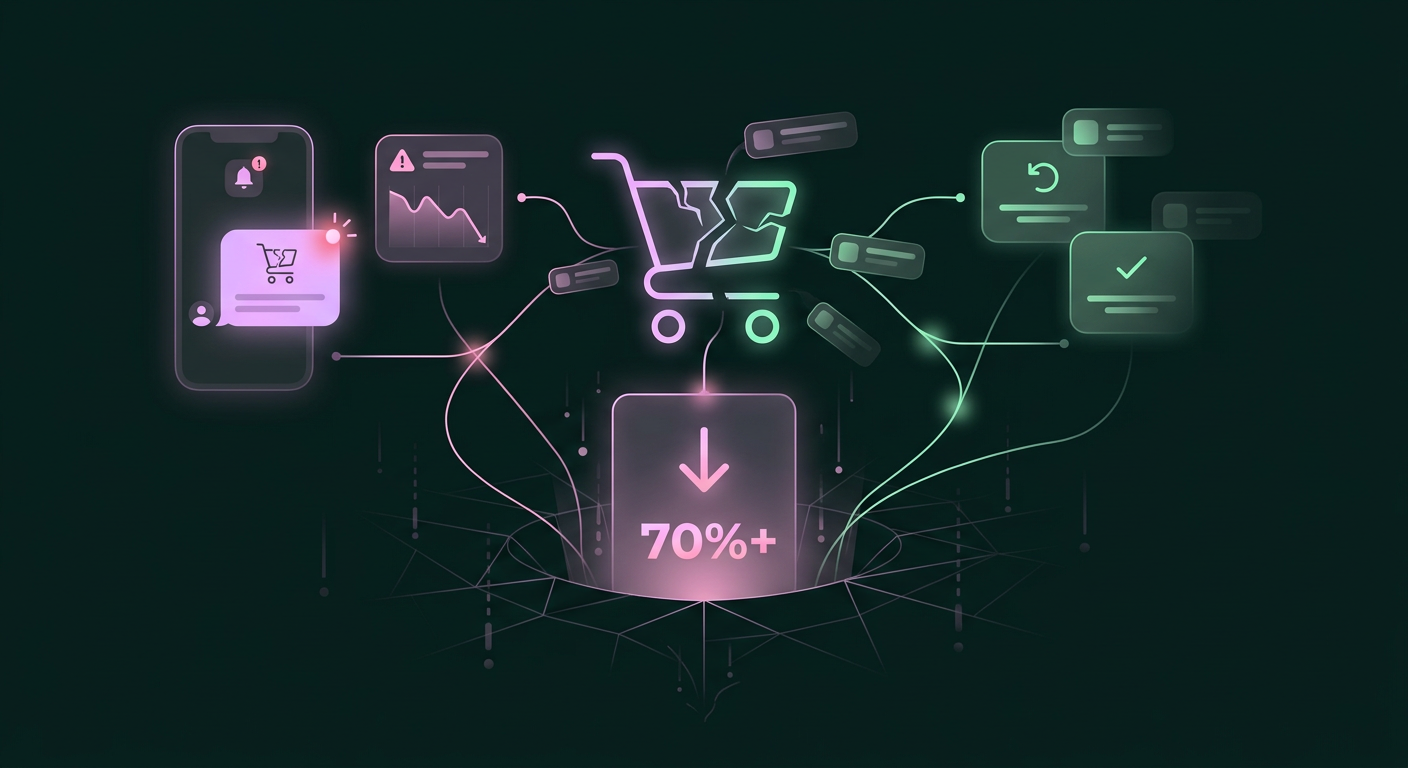
The numbers are undeniably alarming, which creates immense pressure to treat every abandoned cart as a five-alarm fire. When upwards of 70.19% of shopping carts are left behind, it's natural to see this as a massive leak in your revenue pipeline that must be plugged at all costs. The metric itself seems to scream "failure." After all, getting a customer to add an item to their cart is the culmination of significant effort and ad spend, so seeing them disappear at the final step feels like a direct hit to the bottom line.
This anxiety is compounded by where your customers are shopping. While the overwhelming majority of e-commerce traffic comes from mobile devices, these same sessions have a staggering cart abandonment rate of 85.65% (opens in a new tab), far higher than on desktop. This means your largest audience is also your most likely to abandon their purchase, making the problem feel both massive and intractable. You're winning the traffic game but losing at the one-yard line, over and over again.
Even though projections suggest the overall rate might dip slightly to 65-68% by 2028 (opens in a new tab), the sheer volume remains a source of constant stress for e-commerce managers. The pressure from leadership is to "fix the cart abandonment rate," which translates into a mandate to recover every cart possible. That's why teams double down on aggressive email sequences and last-ditch discount codes, because the data makes it look like they are fighting a daily battle for revenue that is rightfully theirs.
The Real Reason Your Recovery Emails Fail
The fundamental reason your abandoned cart emails and SMS messages don't work is that they operate on a false assumption. They treat every shopper who leaves a cart as a forgetful, ready-to-buy customer, when in reality, a huge portion of them are just browsing and have no immediate intention of purchasing. Your generic, automated "You left something behind!" message isn't a helpful reminder; it's an unwelcome sales pitch sent to someone who was only window shopping.
The data backs this up decisively. The problem isn't your email copy or your discount offer, but a fundamental mismatch between your message and the customer's mindset. When you send a hard-sell recovery email to a user who was just exploring, it feels intrusive and out of touch. They weren't committed, and your pushy follow-up only confirms their decision to stay away. This is a core reason why your cart abandonment rate isn’t budging despite your best efforts.
A recent study from the Baymard Institute highlights this disconnect.
"Sometimes, shoppers are simply browsing. In fact, a 2024 study by Baymard Institute showed that 43% of online shoppers (opens in a new tab) said they abandon carts because they’re 'just looking' or not ready to purchase yet." , Ambassador, 2024
Nearly half of your "abandoned carts" aren't lost sales at all. They are an expression of casual interest, much like trying on a jacket at a physical store and putting it back on the rack. The traditional recovery playbook of aggressive emails and SMS completely ignores this reality. It's a strategy that speaks only to the small fraction of users who genuinely got distracted, while alienating the much larger group who were still in the consideration phase. This is why those campaigns have mediocre open rates and feel more like noise than a helpful nudge.
If Not a Lost Sale, Then What Is It?
An abandoned cart shouldn't be seen as a failure, but as a valuable signal of interest and an invitation to a conversation. When a shopper adds an item to their cart, they are raising their hand and telling you what they like. It's an opportunity to engage, not to pounce. Instead of pushing a sale from a crowded email inbox, the goal should be to meet them where they already are and start a helpful, low-pressure dialogue.
This shift in perspective is critical. Once you see an abandoned cart as a conversation starter, your entire approach changes. The objective is no longer to force an immediate transaction but to nurture the interest the shopper has already expressed. The best place for this kind of personalized, 1:1 interaction isn't email, but the direct messaging channels they use every day, like Instagram and WhatsApp. These are conversational environments by nature, so a message there feels personal in a way an automated marketing email never can.
By moving the interaction to DMs, you transform a transactional recovery attempt into a relationship-building moment. You can answer questions, offer styling advice, or simply acknowledge their interest without demanding a sale. This is a strategy that respects the "just looking" mindset while keeping your brand top-of-mind for when they are ready to buy. Leading mobile brands are already proving this model at scale, with platforms like Dynamo facilitating billions of DMs for nearly 100 brands (opens in a new tab) and turning what used to be a point of friction into a genuine connection with customers.
How to Talk to Shoppers Who "Aren't Ready to Buy"
The key is to use automated yet personalized DMs to start helpful conversations that guide shoppers, rather than push them toward a sale. This means abandoning the generic "Complete your purchase!" script in favor of messages that offer value, answer unasked questions, and open the door for a two-way dialogue. The goal is to be a helpful shopping assistant, not a nagging salesperson.
For instance, instead of a discount code, an effective DM conversation might start with something like, "Hey, saw you were checking out the running shoes. A lot of people ask if they're better for trail or road. They're designed for roads, but if you need a great trail option, check out this other model." This approach immediately provides value and context, turning a dead-end cart into an engaging, consultative experience. It respects the shopper's journey and acknowledges they might still be gathering information. You can see how this fundamentally changes the dynamic between a DM vs. email for cart abandonment recovery effectiveness.
This level of personalized 1:1 interaction at scale is made possible through AI. Forward-thinking companies are already moving in this direction; by 2026, it's projected that 67% of the top 100 e-commerce sites will use AI-driven exit intent technology to better understand and react to user behavior.com/blog/cart-abandonment-statistics-2026-data-points) to better understand and react to user behavior. By using AI to generate context-aware DMs, you can nurture that initial spark of interest into a purchase when the time is right. The results of this conversational approach are clear. While email open rates continue to decline, DM open rates are consistently above 80%, with conversion rates often 3-5x higher than what you see from traditional push notifications. You're not just recovering a cart; you're building a more resilient relationship with a potential long-term customer.
Start a Conversation, Not a Recovery Sequence
Instead of sending another generic "You left something behind!" email to your entire list of cart abandoners, try a simple experiment. Find one shopper who left a high-value cart in the last 24 hours. Don't send them the automated email. Instead, send them a single, personalized DM on Instagram or WhatsApp.
Don't push for the sale or even mention the abandoned cart directly. Just start a conversation related to the product they were looking at. Ask a question, offer a helpful tip, and see how they respond. This single action will give you a firsthand look at the difference between sending a message into an email void and having a real conversation. It’s the first step toward rethinking abandonment not as a problem to be fixed, but as an opportunity to connect.
Frequently asked questions
How can I lower the cart abandonment rate for my Shopify store?
While you can't eliminate it, you can address both the causes and the aftermath. First, focus on technical improvements like simplifying your checkout process and ensuring transparent shipping costs, especially for mobile users who abandon carts at a much higher rate. With mobile abandonment reaching over 85%, optimizing that experience is crucial. The bigger opportunity, however, is in rethinking your recovery strategy. Instead of just trying to lower the rate, focus on effectively re-engaging the people who do leave by treating their action as a signal of interest, not a lost sale.
Why do my abandoned cart messages feel so backward and ineffective?
They feel ineffective because they are likely built on the wrong assumption. Most abandoned cart automations assume the shopper was ready to buy and just forgot, but data shows this is often not the case. A [2024 Baymard Institute study](https://getambassador.A (opens in a new tab) 2024 Baymard Institute study revealed that 43% of shoppers abandon carts simply because they are "just looking" or not ready to buy. When your aggressive "Buy now!" message lands in the inbox of someone who was just browsing, it feels pushy and disconnected from their actual intent, which is why it gets ignored.
Are abandoned cart emails actually worth it anymore?
Abandoned cart emails can still play a role, but their effectiveness has significantly diminished as inboxes become more crowded and consumers grow tired of generic marketing messages. They should no longer be your primary or only recovery tool. The future of effective recovery lies in channels where customers are more engaged and conversations feel more natural. With DM open rates reaching 80%+ on platforms like Instagram and WhatsApp, shifting your focus to personalized 1:1 conversations in these channels is a far more effective use of your resources.
How should I actually try to recover abandoned carts?
You should shift your goal from "recovery" to "conversation." Instead of sending a generic reminder, use the abandoned cart as a signal to start a helpful, personalized dialogue in a channel like Instagram DMs or WhatsApp. The message should offer value, whether that's answering a potential question about the product, offering styling advice, or providing a useful tip. This approach respects the shopper's journey and builds a relationship, leading to much higher engagement and conversion rates that can be 3-5x higher than traditional methods like push notifications.
Can I use Instagram automation for cart recovery?
Yes, absolutely. Using AI-driven automation on Instagram is one of the most effective ways to handle cart recovery today. The key is to use sophisticated tools that can generate personalized, context-aware messages, not just simple, repetitive replies. The goal is to initiate a 1:1 conversation that feels human and helpful. As more top e-commerce sites adopt AI-driven technology, with 67% expected to do so by 2026, using intelligent DM automation to engage shoppers on Instagram will become a standard practice for successful brands.