
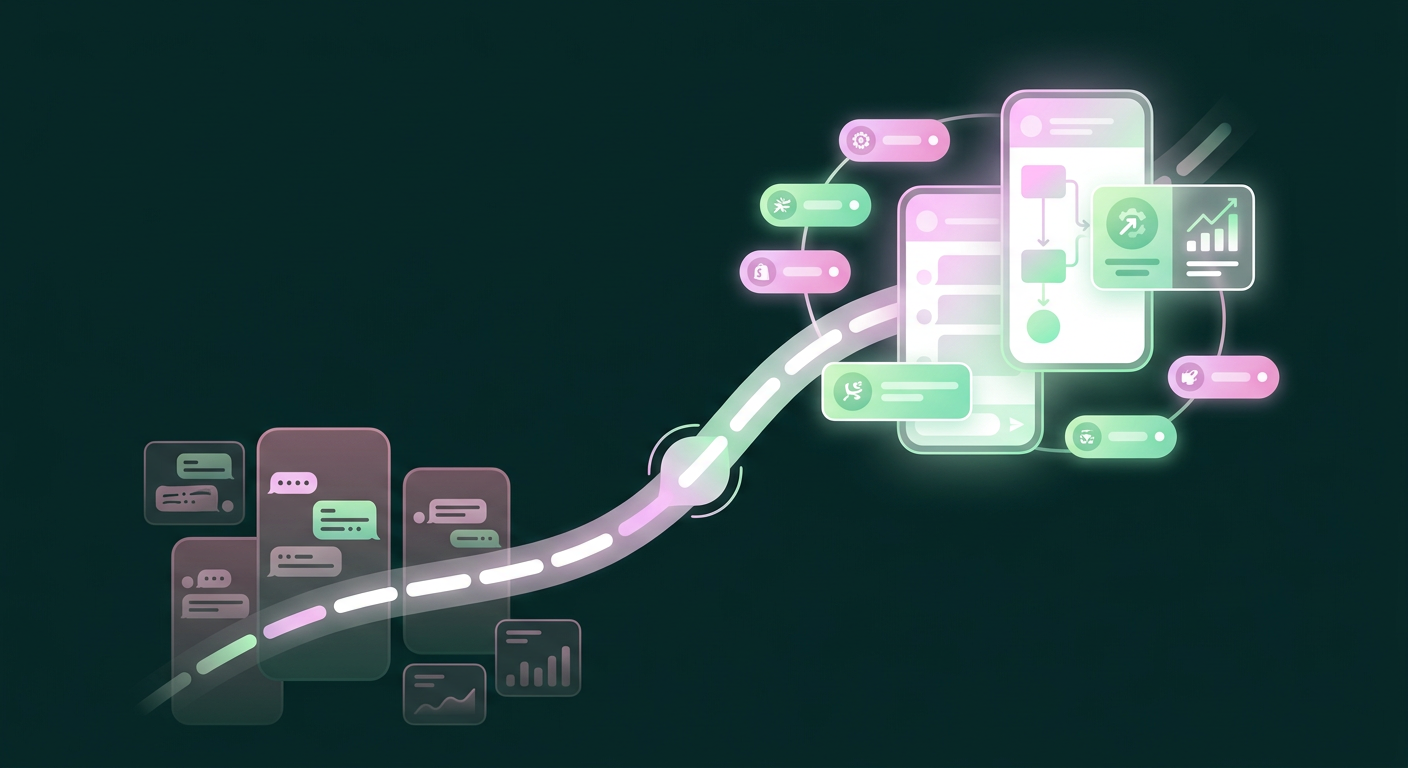
A fundamental shift is reshaping e-commerce, and it’s happening inside your Instagram inbox. What was once a channel for customer service questions has become a high-stakes, high-conversion sales floor. The numbers alone make it impossible to ignore: 150 million Instagram users now talk with business accounts every single month. For growing brands, this isn't just another notification to clear. It's a direct line to revenue, and trying to manage it manually is no longer a viable strategy.
The New Sales Floor: Your Instagram Inbox
The reason your Instagram inbox has transformed into a primary sales environment is simple: it’s where your audience spends their time and attention. With roughly 375 million people using the DM feature monthly, it has become one of the most intimate and effective places to connect with potential buyers. This isn’t about broadcasting a message to a passive audience, but engaging in personal, one-on-one conversations right where purchase decisions are being made.
The core advantage here is the ability to capture attention in a way other channels can't. While marketing emails often get lost in cluttered inboxes, Instagram DMs command an astonishing 90% open rate (opens in a new tab). Traditional email marketing, with its typical 20-25% open rate, simply can’t compete. A message in a customer’s DM inbox is almost guaranteed to be seen. When you combine this visibility with the fact that users are already on the platform to discover products, you have the perfect environment for conversational commerce to thrive. The inbox isn't a sideshow anymore; for millions of customers, it’s the main stage.
From Service Chore to High-Speed Sales Engine
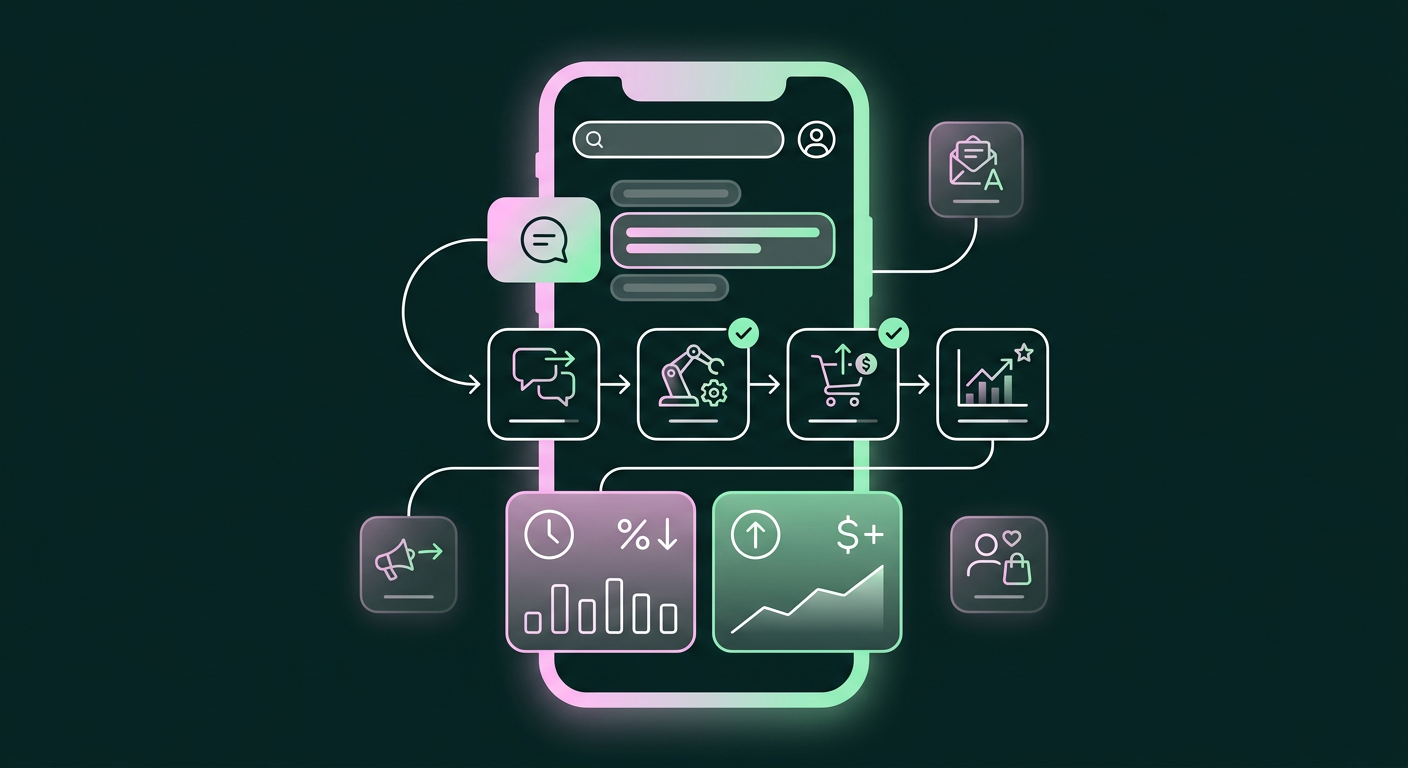
Once you appreciate the scale of the DM channel, you can see how its performance hinges on whether you treat it as a proactive sales engine or a reactive support chore. For years, brands viewed DMs as an obligation, a list of messages to answer whenever someone had a free moment. The new reality is that speed is the single most important factor in converting an interested follower into a paying customer. In this environment, every minute of delay comes with a direct, measurable cost.
The data paints a stark picture. Brands that respond to an Instagram DM within the first minute see a 391% higher conversion rate (opens in a new tab) compared to those that take just 30 minutes to reply. This isn't a minor optimization; it's a massive performance gap that separates scaling brands from stagnating ones. The expectation for immediacy has been set, and customers who reach out are in a high-intent moment that fades quickly. Compared to older digital marketing tactics, the difference is even more pronounced. Whereas generic website popups might convert at a rate of 2-4%, targeted DM campaigns consistently achieve conversion rates between 18-20% (opens in a new tab). These conversations aren't just adding incremental sales. They are becoming a primary driver of growth, with average DM-to-sale conversion rates landing anywhere from 7% to 20%.
The Hidden Costs of "Doing It Manually"
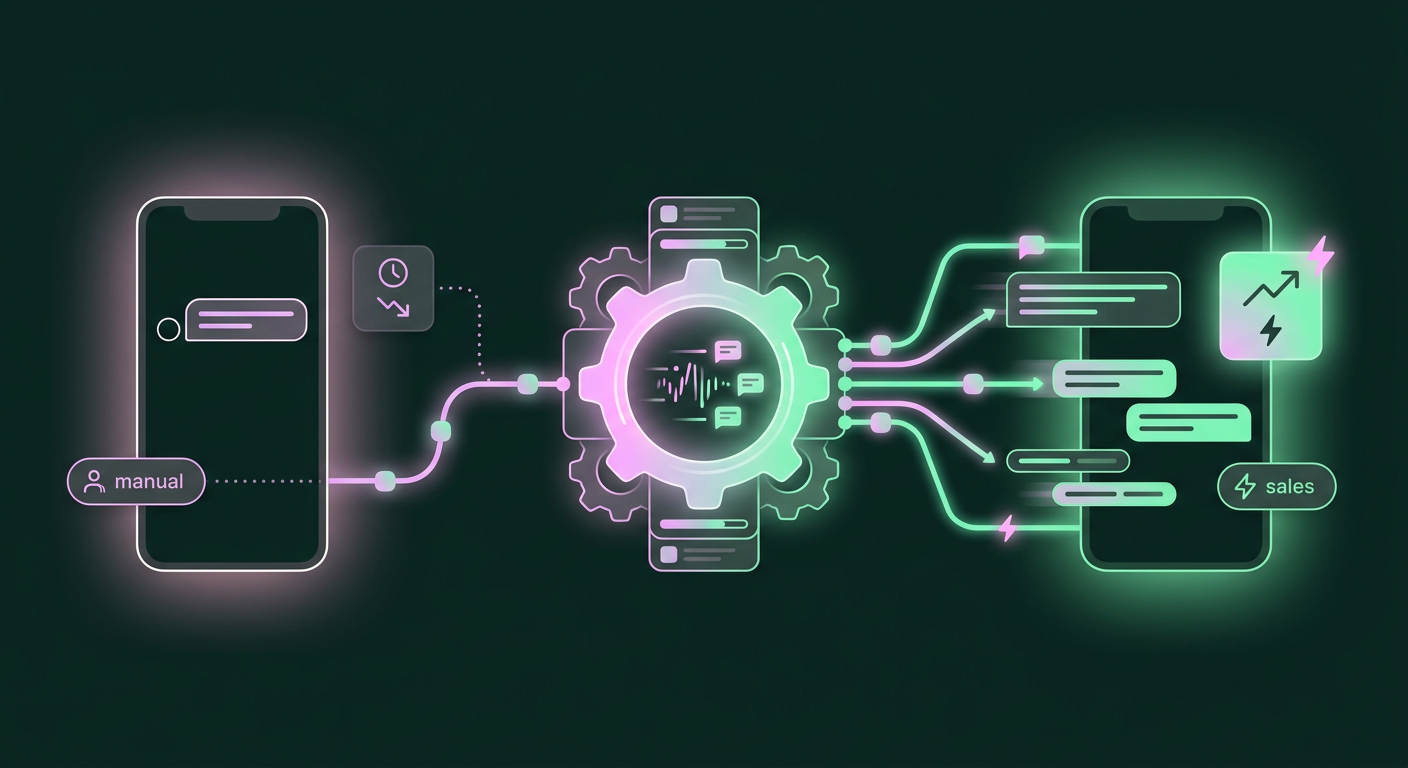
With the performance potential of instant DMs now undeniable, the consequences of failing to adapt have become severe. For many small e-commerce founders and their lean teams, "doing it manually" is no longer a badge of honor for personal service. Instead, it's a critical bottleneck that actively loses sales, exhausts team members, and alienates the very customers you're trying to attract. The cost isn't just in missed opportunities, but in burnout and a degraded customer experience.
The High Price of Slow Replies
Every founder knows the frustration of spending marketing dollars to attract an audience only to see potential sales slip away. When a customer DMs you with a question about sizing, shipping, or availability, they are signaling a clear intent to buy, but that intent is fleeting. As we've seen, waiting even half an hour to respond can cause conversion rates to plummet. Manually managing a busy inbox makes instant replies impossible, because a team member might be in a meeting, focused on another task, or simply overwhelmed by the volume. Each of those delayed responses represents a lost sale that can be directly attributed to a lack of speed, turning your highest-intent channel into a source of constant churn.
The Limits of Basic Keyword Bots
The logical first step for many brands trying to escape the manual grind is to set up simple, keyword-based automation. A customer types "shipping," and a pre-written response is sent back. While this seems like a solution, it often creates more problems than it solves. Today's consumers are sophisticated, and their questions are rarely simple one-word queries. They ask nuanced questions and, as research shows, 75% of them want to message a business in the same way they message their friends (opens in a new tab). A rigid, keyword-driven system immediately breaks that expectation, making the brand feel robotic and unhelpful. When a customer's follow-up question doesn't contain the right keyword, the conversation hits a dead end, leaving them frustrated and forcing your team to intervene anyway, which defeats the purpose of automation.
How Growing Brands Automate and Win
If manual work is too slow and basic bots are too rigid, what does success actually look like? It looks like a more intelligent approach to automation, one that preserves the personal feel of a one-on-one conversation while operating at scale. Growing brands are already proving that by using sophisticated, AI-driven conversational tools, they can manage the volume and drive significant, measurable results in sales, engagement, and even average order value.
The proof is in the performance data. For example, one e-commerce business, ShopEase, saw a 30% increase in conversions during a key holiday sale by using DM automation to handle the surge in customer inquiries. In another case, a retailer that implemented AI-powered DMs experienced a 30% increase in sales within just three months. These aren't just efficiency gains; they are direct contributions to the top line. This is a common pattern: businesses that automate their DMs intelligently see 30-50% more engagement on average because they can respond instantly and contextually to every message. This strategy allows companies to explore a variety of high-impact use cases (opens in a new tab) that go far beyond simple FAQs, turning the inbox into a full-funnel machine for growth.
Recalibrating Your Strategy: A New Approach
Understanding the results achieved by other brands is one thing; fundamentally shifting your own strategy is another. For most founders, the challenge isn't just about adopting a new tool, but embracing a new mindset. The goal is no longer to simply clear an inbox of notifications. It's to architect a complete, automated conversational journey that engages customers from their first point of contact through to purchase and beyond, all while maintaining your brand's authentic voice.
Think "Conversational Funnel," Not "Inbox Zero"
The old goal was "inbox zero," a reactive process focused on checking off tasks. The new goal is to build a proactive "conversational funnel." This means mapping out the key questions, objections, and decision points your customers encounter and designing automated conversations to guide them through that journey. What happens when someone comments on a product post? What's the perfect follow-up for someone who asks about a specific feature? How do you recover a sale when a customer expresses interest but doesn't buy? Designing these flows turns your DMs from a random collection of queries into a structured, repeatable engine for sales. This is a far more effective way to engage customers, which is why so many brands are more closely examining the pros and cons of DM versus email for things like cart abandonment.
Prioritize Intelligent, Context-Aware Responses
A successful conversational funnel cannot be built on rigid, one-size-fits-all scripts. The key to making automation feel personal is its ability to understand context and nuance. An intelligent system doesn't just look for a keyword; it understands the user's intent, remembers past interactions, and provides a relevant, helpful response that moves the conversation forward. This is the difference between a frustrating dead end and a guided, helpful experience. Your strategy should prioritize tools that can handle this complexity, ensuring that every automated message feels like it was written just for that customer, in that specific moment. This is how you scale personal connection, not replace it.
What to Watch: The Future is Conversational
Shifting your strategy isn't just about catching up; it's about getting ahead of the long-term trajectory for digital commerce. The trend toward conversational commerce is accelerating, driven by both consumer preference and massive platform investment from companies like Meta. The lines between social media, communication, and shopping will only continue to blur, making your brand's ability to converse at scale a core competitive advantage.
Instagram's parent company, Meta, has every reason to deepen this integration. The platform recently reached 3 billion monthly active users and is a massive financial engine, contributing more than 40% of Meta's total revenue. Because of its central role, you can expect continued investment in business features that live directly within the messaging experience, including more advanced shopping integrations and powerful automation tools. As these capabilities expand, the brands that have already built their strategies around intelligent, full-funnel DM conversations will be positioned to win, while those still trying to manage their inbox manually will be left further and further behind. The future isn't just mobile; it's conversational.
Frequently asked questions
How can I automate my Instagram DMs without sounding like a robot?
The key is to use automation that prioritizes context and natural language over simple keyword triggers. Customers expect to interact with businesses conversationally, much like they message their friends. An intelligent automation system can understand the intent behind a customer's question, recall parts of the conversation, and provide a relevant, helpful response that doesn't feel scripted. This allows you to maintain your brand's personal voice while still benefiting from the speed and scale of automation.
Why do my Instagram DMs convert so well but are so hard to manage?
Instagram DMs are a powerful sales channel precisely because they offer a direct, personal line of communication that captures customer attention. With a 90% open rate, they are far more visible than email. When you combine that visibility with an immediate response, the results are dramatic, with some brands seeing conversion rates increase by 391%. The difficulty comes from the manual effort required to deliver that immediacy at scale. As your brand grows, the volume of DMs quickly becomes unmanageable for a small team, creating a bottleneck that slows replies and loses sales.
What's the best way to scale Instagram DM sales for a small e-commerce brand?
The most effective way to scale is by implementing an intelligent automation strategy. This moves you beyond manually answering every DM without resorting to simplistic bots that frustrate customers. This is particularly impactful for smaller brands, who can often achieve conversion rates in the 15-20% range from their highly engaged audiences. By automating responses to common questions and guiding users through a conversational funnel, you can ensure every lead gets an instant reply, which has been shown to increase sales by 30% for some retailers. This frees your team to focus on strategy and growth while the automation handles frontline conversations.
Why is everyone talking about turning Instagram DMs into a sales channel?
The conversation has shifted because both consumer behavior and platform data show that Instagram is a critical hub for commerce. Over 70% of buyers use the platform to research their next purchase, and they are increasingly using DMs to ask questions and get advice directly from brands. With targeted DM campaigns achieving conversion rates of 18-20%, businesses are realizing that the inbox is one of the most effective and highest-ROI sales channels available to them today.
How do I keep Instagram DM replies personal but not spend hours answering them?
The solution is to design an automated system that reflects your brand's unique voice and personality. Instead of using generic, pre-canned responses, you can build conversational flows that are helpful, empathetic, and aligned with how you would speak to a customer yourself. A smart automation platform allows you to infuse your brand's tone into every interaction, so even though the reply is automated, it feels authentic. This approach handles the bulk of inquiries instantly while freeing you up to personally handle only the most complex or sensitive conversations.
Can an automation tool really handle complex customer questions?
While basic keyword bots fail at complexity, modern AI-driven automation is designed to handle multi-step, nuanced conversations. These systems use natural language processing to understand a user's intent, even if the phrasing is unusual. They can ask clarifying questions, remember context from earlier in the chat, and guide a user through a decision-making process. While there will always be edge cases that require human intervention, an intelligent automation tool can successfully resolve the vast majority of customer inquiries, from product questions to shipping policies.