
The standard e-commerce playbook has a serious flaw, and the numbers make it plain. While it’s a widely accepted fact that around 75% of all online shopping carts are abandoned (opens in a new tab) before a purchase is made, the industry’s response has been shockingly ineffective. For most brands, the familiar automated email sequence claws back only a tiny fraction of that potential revenue. This isn’t a small leak; it’s a gaping hole in the funnel, and the tools we’ve come to rely on are no longer up to the task of plugging it.
The Great Unopened: Why Cart Recovery Is Underperforming
For years, brands have treated abandoned carts as a simple marketing automation problem: a shopper leaves, an email goes out, and hopefully, some of them come back. The problem is that the percentage of customers who do is often alarmingly low. While top performers might see double-digit recovery, the reality for the average brand is much more grim, with most e-commerce businesses recovering just 3% to 5% of abandoned carts (opens in a new tab). That leaves an enormous amount of money on the table.
This isn't a sign of failing marketers so much as a sign of a failing strategy. The default email-first, and more recently SMS-based, approach to cart recovery is built on outdated assumptions about customer attention. Shoppers are so inundated with promotional emails that their messages get filtered away or ignored, and while texts are more direct, they can often feel intrusive. The result is a system that works just well enough to justify its existence, but fails to capture the vast majority of potential sales slipping away every day.
Now that the performance gap is clear, we can see why the old playbook is delivering diminishing returns. The one-to-many, broadcast style of email and SMS simply doesn't align with how customers want to communicate today.
The Old Playbook: A Look at Email and SMS Performance
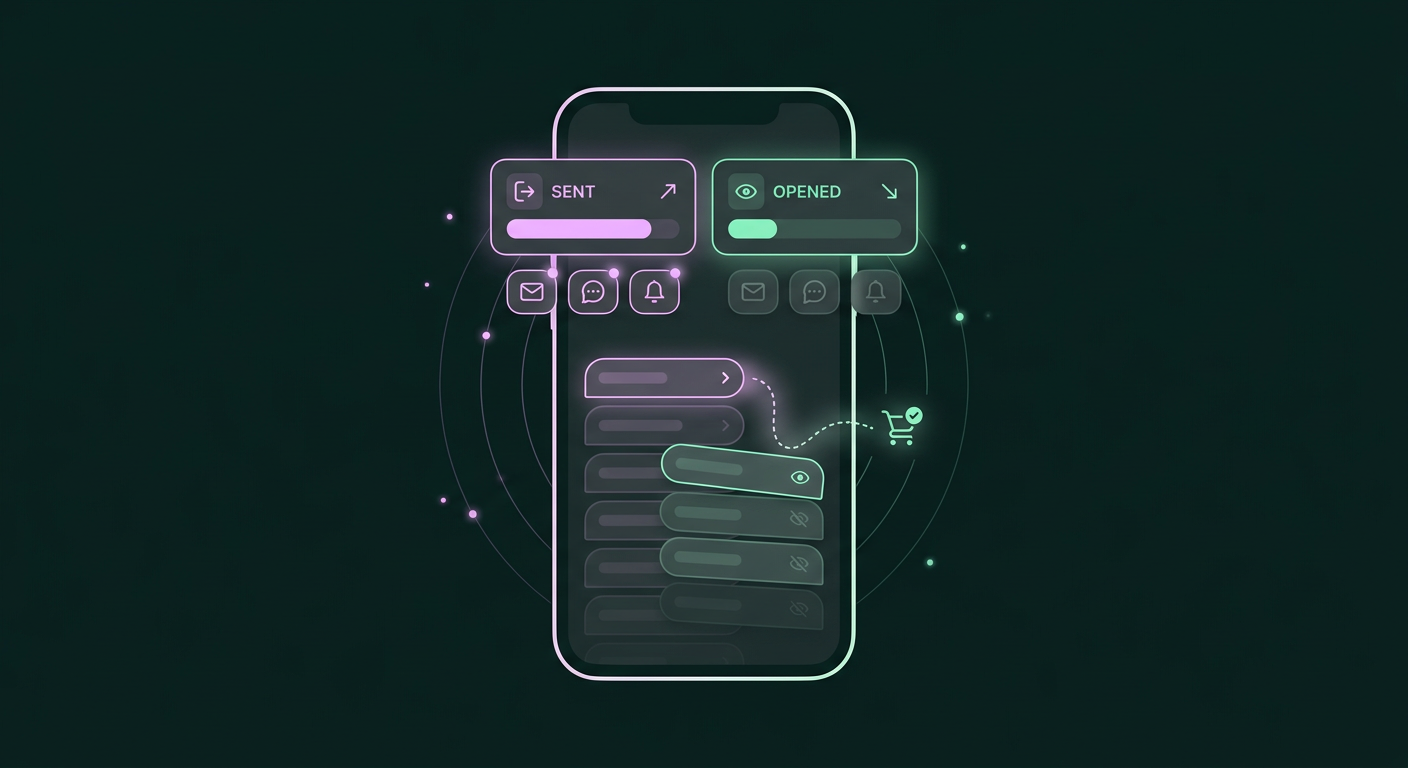
For a long time, the automated email was the undisputed king of abandoned cart recovery. On paper, the numbers can still look somewhat encouraging. Of all the cart abandonment emails sent, 45% are actually opened by shoppers.com/blog/cart-abandonment-emails) by shoppers. Of those opens, about 21% get a click, and 50% of those clicks lead to a purchase. When you do the math, this sequence is what produces the low single-digit recovery rates most brands experience. Even with optimistic figures, like an industry-wide open rate of 44.76%, standard email campaigns ultimately convert at a rate of just 4.10%.
To counter declining email engagement, many brands turned to SMS, hoping to cut through the noise and reach customers directly on their phones. The open rates for text messages are indeed impressive, with some reports citing rates as high as 90% compared to just 20% for email (opens in a new tab). This seems like a massive improvement, but high open rates haven't led to proportionally high conversions. The data shows that SMS campaigns for abandoned carts have a final conversion rate of only 2.65% (opens in a new tab), lagging even behind standard email.
These channels are showing their age because they operate on a broadcast model, sending generic messages into spaces where customers are increasingly tuning out promotional content. They lack the personal, conversational touch that builds trust and nudges a hesitant shopper over the finish line.
With these performance limits in mind, what's the real cost of inaction? A failed recovery attempt doesn't just mean one lost transaction; it often sends a high-intent shopper directly to a competitor.
The True Cost of a Failed Recovery Attempt
When a shopper adds an item to their cart, they are expressing clear, bottom-of-the-funnel intent. They want what you're selling. The reasons they abandon the purchase are often practical and predictable. For instance, [nearly half of shoppers cite unexpectedly high shipping costs](https://ryder.For (opens in a new tab) instance, nearly half of shoppers cite unexpectedly high shipping costs as their reason for leaving, while approximately another 25% are deterred by being forced to create an account. These are fixable problems, but a generic "You left something in your cart!" email rarely addresses them.
The true danger lies in what happens next. When your recovery attempt fails, when the email goes unopened or the text is ignored, that shopper doesn't just disappear. An estimated 40% of shoppers who abandon a cart go on to complete their purchase with a competitor. You did all the hard work of attracting the customer and helping them find a product, only to have another brand reap the reward because your recovery strategy fell short.
This isn't just a lost sale; it's a lost customer relationship. The failure to re-engage them in a meaningful way at this critical moment doesn't just cede that single transaction, it trains the customer to look elsewhere next time. The cost, therefore, isn't just the value of the abandoned cart, but the entire potential lifetime value of that customer.
So if the old playbook is failing, where are innovative brands finding success? The answer lies in shifting the interaction from a sterile notification to a personal conversation in the apps where customers already spend their time.
Where Recovery Is Happening Now: Inside Social DMs
The new frontier for effective cart recovery isn't a fancier email template or a more aggressive SMS cadence. It’s the direct messaging inbox on platforms like Instagram and WhatsApp. These are the channels where communication is immediate, personal, and conversational by default. While the open rates for SMS are high, the engagement rates within social DMs are in a class of their own because they are channels for active conversation, not passive consumption.
Think about the difference in user experience. An abandoned cart email arrives in an inbox cluttered with order confirmations and newsletters. An SMS arrives as a sterile, one-way alert. But a DM on Instagram feels like a message from a person. It lands in the same place where users chat with friends and follow creators they trust, making it a uniquely powerful place for a brand to show up and be helpful.
This shift is amplified by the potential of AI to personalize these interactions at scale. We already have evidence that adding intelligence to messaging works. For example, AI-powered email campaigns have a conversion rate of 8.17%, nearly double that of standard email. Imagine applying that same intelligence not to a crowded inbox, but to a personal DM conversation where a brand can address a customer's specific hesitation in real-time. This is how recovery rates move from the low single digits to a much higher tier of performance.
Knowing this is the new channel, you can adapt your strategy by shifting from automated notifications to orchestrated conversations.
How to Recalibrate Your Abandoned Cart Strategy
Moving your recovery efforts into conversational channels requires more than porting your old email copy into a DM. It’s about rethinking the entire interaction, focusing on a personal, helpful, and immediate dialogue. This is one of the core use cases for a more modern approach (opens in a new tab) to customer lifecycle marketing.
Move from Blasting to Conversing
The first principle is to stop broadcasting and start conversing. An email sequence is a monologue; a DM conversation is a dialogue. Instead of sending a generic "Did you forget something?" message, your goal should be to open a conversation like, "Hey [Name], saw you were looking at the [Product]. Did you have any questions about sizing or shipping I can help with?" This simple change reframes the interaction from a robotic alert to a helpful customer service touchpoint, happening right where the customer is already active. It's a powerful way to put a new spin on your direct to consumer marketing strategy.
Personalize Messages at Scale with AI
Manually messaging every abandoned cart is impossible. The key is to use AI to generate and send personalized, context-aware messages that feel 1:1 but are deployed at scale. The best systems can look at the contents of the cart, the customer's history, and common points of friction to craft a unique message. The potential here is enormous. When AI-powered email can generate $18.90 in revenue per message compared to just $10.34 for standard email, it's clear that intelligence drives results. By applying this same AI-driven personalization to the more effective channel of social DMs, you combine the best of both worlds: the right message in the right place.
Choose the Channels Your Customers Actually Use
Finally, this strategy is about meeting customers on their own turf. While email and SMS still have a role in a full-funnel communication strategy, they are no longer the default best answer for high-intent, time-sensitive interactions like cart recovery. The crucial final step of the purchase journey should be handled in the channels where your customers are most engaged and most likely to respond: their favorite messaging apps. By shifting your focus from the inbox to the DM, you align your brand with modern communication habits and dramatically increase the odds of a successful recovery.
Once you've updated your playbook, you'll see that this shift is part of a much larger trend toward a more integrated, conversational future for e-commerce.
What to Watch: The Future Is Conversational
The move from one-way emails to personalized DMs for cart recovery isn't just an isolated tactic; it's a preview of a much larger shift in how brands and customers will interact. We are moving toward an era of conversational commerce, where the lines between marketing, sales, and support blur into a single, continuous dialogue that takes place within the messaging apps customers use every day.
In this future, a customer might discover a product via an Instagram ad, ask a question about it via DM, get a cart recovery nudge in that same thread, receive shipping updates, and even initiate a return without ever leaving the app. The entire customer lifecycle will be managed through a persistent, personal conversation.
For brands, this presents an incredible opportunity to build deeper, more resilient customer relationships. Instead of a series of disconnected, transactional touchpoints, you can build a genuine rapport. This approach moves beyond simply recovering a single cart to focus on retaining a customer for life by being consistently helpful and present in the spaces they prefer. The brands that master this conversational approach today will be the ones that own the customer relationship of tomorrow.
Frequently asked questions
Are abandoned cart emails still worth the effort?
Yes, but with managed expectations. Automated emails are still part of the puzzle, and studies show that 45% of them get opened. Automated emails are still part of the puzzle, and studies show that nearly 45% of them get opened. However, their overall effectiveness is limited, with standard emails converting at just 4.10%. They should be seen as a baseline tool, not the primary or only method for recovery, especially since most shoppers grow numb to them.
What's the best way to recover abandoned carts now?
The most effective modern approach is to shift from broadcast channels like email to conversational channels like Instagram DMs and WhatsApp. The key is to use AI to send personalized, helpful messages that open a dialogue rather than just sending a robotic alert. While SMS has a low 2.65% conversion rate, approaches that use intelligence show much higher returns. For example, AI-powered email has an 8.17% conversion rate and generates significantly more revenue per message, which shows the power of applying smart personalization in a more direct and conversational channel.
Why are my abandoned cart emails and texts being ignored?
They're often being ignored because everyone else is using the exact same playbook. Customer inboxes are flooded with promotional messages, which get filtered out or simply tuned out. Even with a respectable open rate of 45%, the sheer volume makes it hard to stand out. Texts can feel intrusive and lack the context for a real conversation. Since most brands only recover 3-5% of carts, it's clear the traditional methods are struggling to capture customer attention in increasingly crowded digital spaces.
How can I reduce my overall cart abandonment rate on Shopify?
Beyond recovery tactics, you can address the root causes of abandonment. The top two reasons shoppers leave are surprises at checkout and friction in the buying process. According to studies, around 47% of shoppers abandon carts due to high shipping costs or fees, so being transparent about all costs upfront is crucial. Approximately another 25% leave because they are forced to create an account. Offering a guest checkout option is a simple and highly effective way to reduce this friction and lower your baseline abandonment rate.
What kind of ROI can I expect from using AI in my cart recovery?
AI can significantly improve the return on your recovery efforts. Data shows a clear uplift when intelligence is added to the process. For instance, a standard abandoned cart email generates about $10.34 in revenue per message with a 4.10% conversion rate. In contrast, an AI-powered email generates $18.90 per message and has an 8.17% conversion rate. This shows that using AI to create more personalized, relevant messaging can nearly double both the conversion rate and the revenue generated per interaction. When that AI is applied to more immediate channels like DMs, the potential for ROI is even greater.