
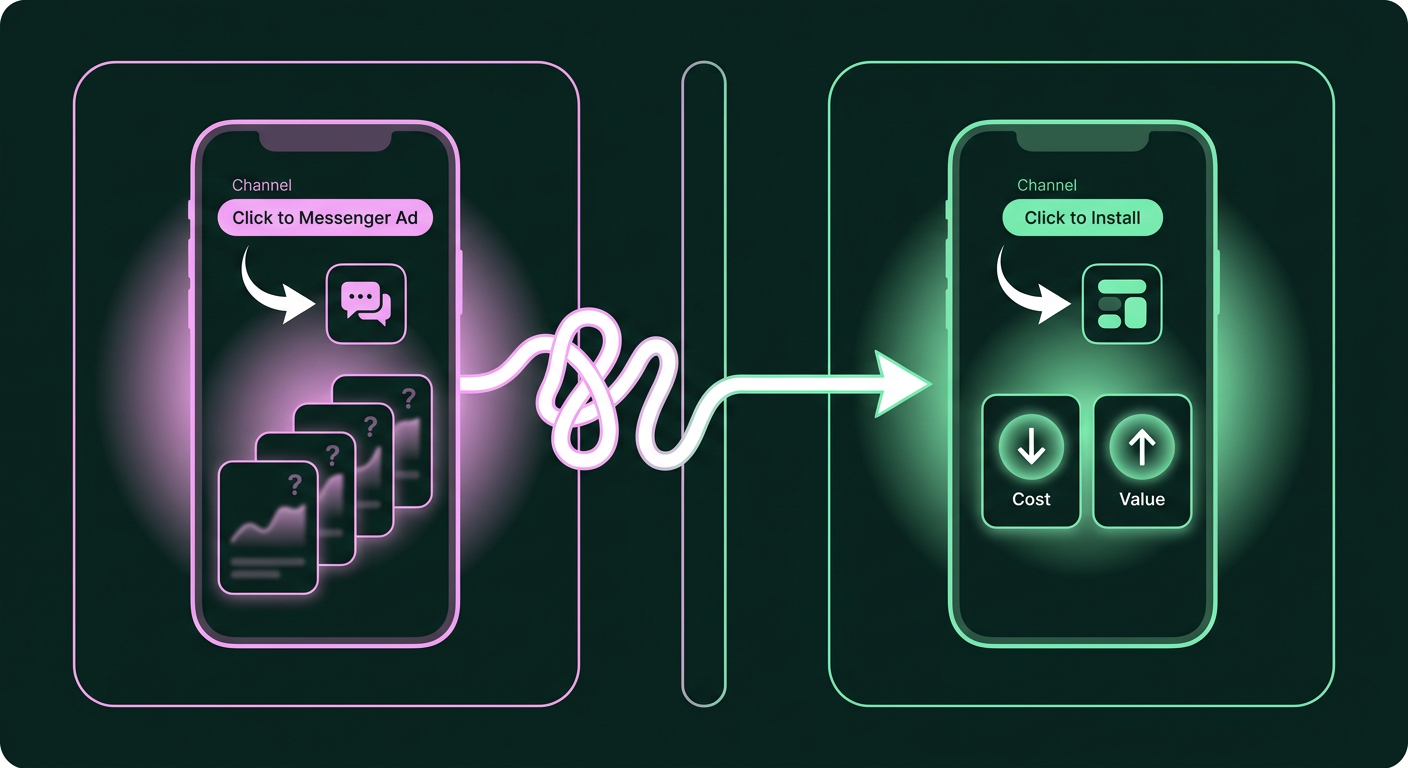
As a user acquisition manager, you believe the most effective ad is the one that points directly to the app store. It's the cleanest, most direct path to the only metric that matters: the install. You run a campaign, a user clicks "Install Now," and they land on the App Store or Google Play page. Any intermediate step, like starting a conversation, just adds friction that kills conversion. This logic seems airtight, but it's based on an outdated reality. The truth is, that straight-to-store pipeline is becoming prohibitively expensive, and the "friction" you're avoiding is actually your biggest missed opportunity for acquiring cheaper, higher-value users.
The cost of direct response install ads is climbing relentlessly. For Facebook ads specifically, the average cost per click for app installs has crept up to $1.30, a noticeable increase from past years. The actual cost per install is even higher, with the average hitting around $1.70 and sometimes soaring much higher depending on the market. Relying solely on this one channel is like trying to fill a bucket with an increasingly expensive, slow-dripping tap. You're paying more and more for the same outcome, and that model simply isn't sustainable.
Why 'Install Now' Feels Like the Smart Play
It’s completely understandable why the "Install Now" button has become the default tool in every UA manager's kit. The entire ad ecosystem, from platforms to analytics tools, is built around this simple, direct action. It provides a beautifully clean metric: Cost Per Install (CPI). You can build dashboards around it, report it to leadership, and even have your bonus tied to it. It’s a number that everyone understands and accepts as the primary indicator of a campaign's success.
This simplicity is seductive because it makes attribution seem straightforward. A user clicked the ad, they installed the app, and you can draw a straight line between your ad spend and the new user in your database. Introducing any other step, like a conversation in a messaging app, muddies these waters. It requires a different way of thinking about the user journey, one that doesn't end with a single tap. The path of least resistance has always been to optimize for that immediate install, because it’s the easiest thing to measure and the industry’s accepted best practice. But as the costs of that "best practice" continue to rise, smart teams are realizing that what feels safe is actually a significant financial liability.
The Data: C2M Delivers Cheaper, Higher-Intent Users
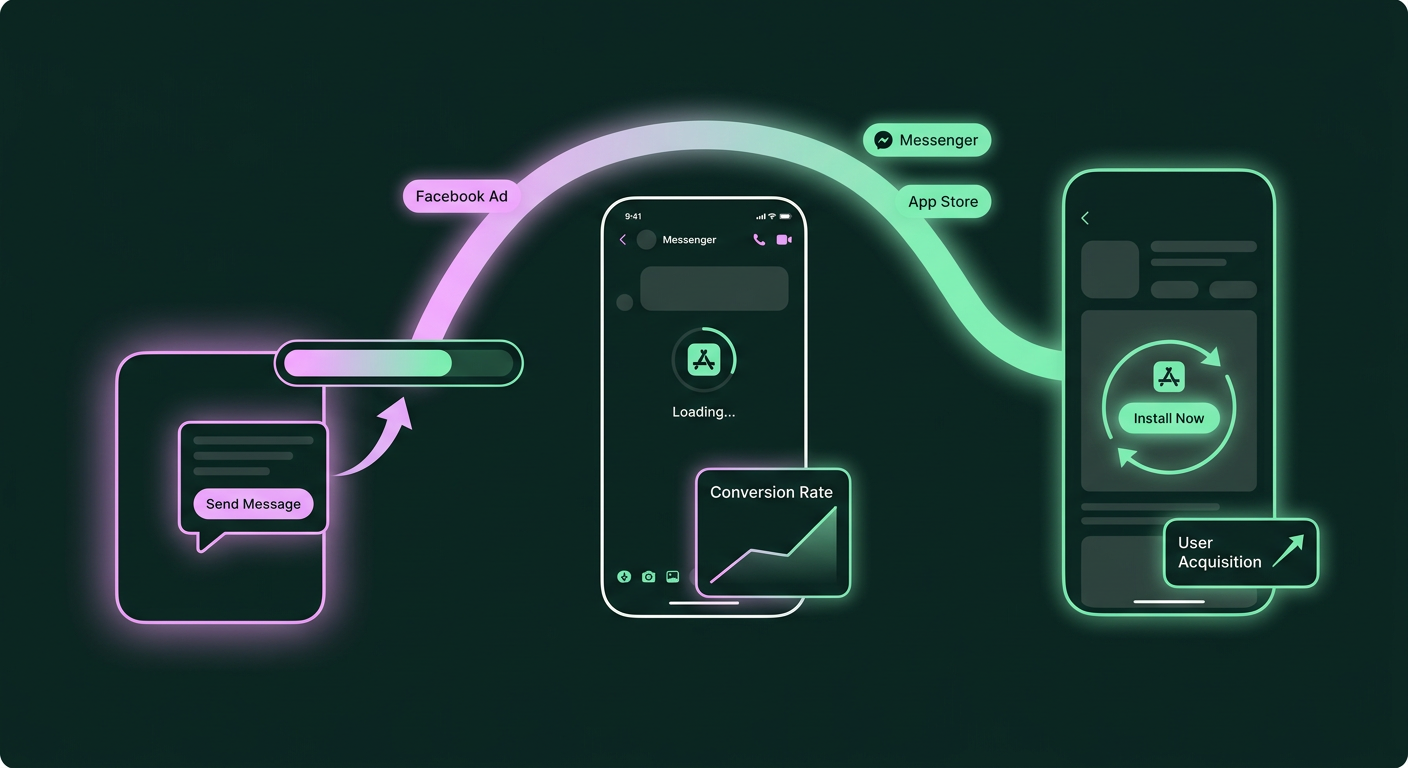
The belief that any step between a click and the app store is a conversion killer dissolves when you examine the actual performance data for Facebook Click-to-Messenger ads. Instead of sending users to an app store page where they might bounce, you send them into a one-on-one conversation. This seemingly small change fundamentally alters the economics of user acquisition, producing not just cheaper conversions, but more engaged users as well.
Lowering Your Acquisition Cost
The most immediate and compelling benefit of a Click-to-Messenger (C2M) strategy is a dramatic reduction in what it costs to acquire a new user. The numbers consistently show a significant efficiency gain over traditional install campaigns. Some studies have found that C2M campaigns can decrease acquisition costs by as much as 50% (opens in a new tab) compared to ads that send users to a website or app store. This isn't just a marginal improvement; it's a fundamental shift in campaign efficiency.
Real-world examples bear this out. One Brazilian fintech company, for instance, used Facebook Click-to-WhatsApp ads and achieved a cost per acquisition that was five times lower than their other digital conversion campaigns. In another test, a company saw a 97% better cost per acquisition from Messenger ads (opens in a new tab) when compared directly against standard Facebook traffic ads that led to a landing page. We see this in our own data as well, where we can drive clicks for just $0.90, which translates to a cost of only $1.20 to acquire a new subscriber in a messaging app. This is a far cry from the ever-increasing cost of a direct install.
Improving Your Conversion Rate
The reason for the lower acquisition cost isn't just cheaper clicks; it's a much higher conversion rate throughout the funnel. Instead of a cold, impersonal app store page, a C2M ad initiates a personal conversation. This simple act of engagement changes the dynamic entirely. While you might lose some users who aren’t willing to chat, the ones who do engage are significantly more qualified and more likely to convert.
DM platforms have astoundingly high engagement. Open rates for DMs are regularly over 80%, with some platforms like WhatsApp boasting open rates above 90%. Compare that to the single-digit open rates of many email marketing campaigns. This direct line of communication is powerful. In fact, real-world data shows that C2M campaigns can lead to 2-3 times higher conversion rates (opens in a new tab) than campaigns that direct users to a website. Furthermore, the conversion rate from DMs is often 3 to 5 times higher than what you see from push notifications. When a user actively engages in a conversation, they are demonstrating a level of intent that a passive click on an "Install Now" ad simply cannot match.
A Look at the Funnel Economics
To truly understand the power of this approach, you have to look at the entire funnel. With a C2M campaign, the initial goal isn't an install; it's a subscriber. Based on our own experience running these campaigns for mobile brands, the economics are compelling. A click might cost $0.90. Of the people who click, about 75% will engage with the first automated message, which brings your cost to acquire a subscriber to just $1.20.
At first glance, a $1.20 cost for a subscriber might seem higher than a $0.90 click. But that subscriber is now an asset. You have an open channel of communication with an interested user in a place they check constantly. From that audience of subscribers, you can continue the conversation, provide value, and then prompt them to install the app. Our data shows that about 8% of these subscribers will go on to install the app through subsequent automated drip messages. The result is a much lower effective CPI, but more importantly, you've built a captive audience you can communicate with directly.
Stop Buying Installs. Start Building an Audience.
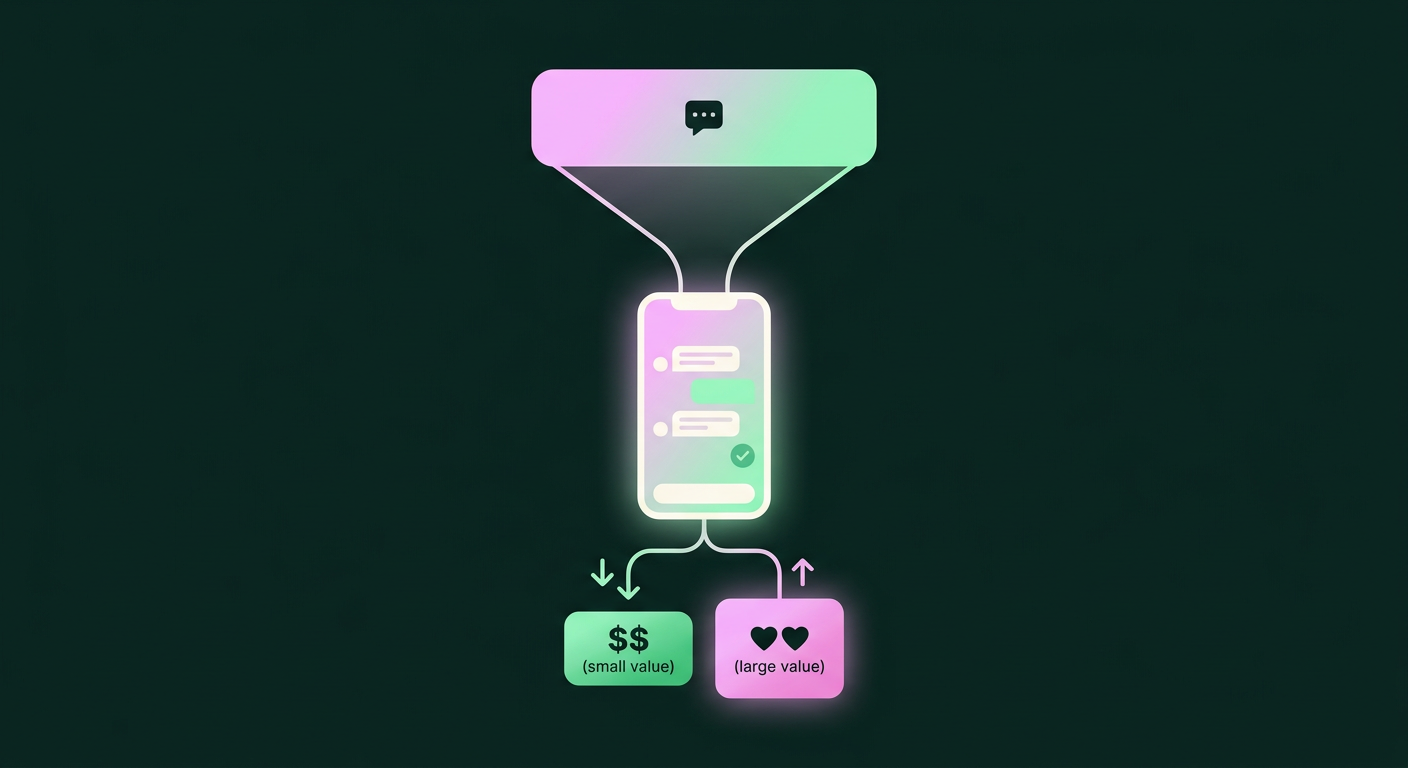
The fundamental shift required is to stop thinking about your ad spend as a tool for buying one-off installs and start seeing it as an investment in building an audience. A user who clicks "Install Now," downloads your app, and then never opens it is a wasted acquisition. A user who engages with you in a Messenger conversation, even if they don't install right away, is a long-term asset. You've earned permission to speak with them in one of the most personal and high-engagement channels available.
This re-engageable audience is incredibly valuable. Because DM open rates are consistently over 80%, any follow-up message you send has a high probability of being seen. You can nurture these potential users over time, send them reminders, share valuable content, or notify them of new features, all within the native messaging app they use every day. This creates a powerful owned channel for re-engaging inactive users and driving a much higher lifetime value than you could ever achieve from a cold install. You are no longer just shouting into the void of the app store; you are having a series of personal conversations that build trust and drive sustained action.
How to Adapt Your UA Measurement Strategy
Adopting a Click-to-Messenger strategy means your measurement framework has to evolve beyond a simple obsession with Cost Per Install. While CPI remains an important metric, it's no longer the first or only thing you should be tracking. Your primary top-of-funnel metric now becomes Cost Per Subscriber (CPS). This is the key performance indicator that tells you how efficiently you are building your new, re-engageable audience.
Based on our campaign data, a healthy CPS to aim for is around $1.20. This is the figure that proves your ad creative and initial message are resonating with your target audience. From there, you track the conversion rate from subscriber to install. That's what allows you to calculate your effective Cost Per Install, which is often significantly lower than what you'd pay for a direct-to-store campaign. By focusing on CPS first, you are optimizing for the creation of a long-term asset, not just a one-time transaction. You can see how we track these kinds of full-funnel metrics (opens in a new tab) to get a clear picture of campaign performance from first click to final conversion. Ultimately, the success of this strategy is measured by its impact on your blended Return on Ad Spend (ROAS), as you're creating a more efficient funnel that feeds your entire ecosystem.
Your First Testable C2M Campaign
The best way to see the power of this approach is to test it yourself. Don't try to overhaul your entire UA strategy overnight. Instead, run a small, dedicated pilot campaign with a modest budget. The single goal of this first test is not to beat your current install campaign's CPI. The goal is simply to establish a baseline Cost Per Subscriber.
Set up a Facebook ad campaign with the "Messenger" objective. Craft your ad creative and headline to entice users to start a conversation to learn more, rather than just prompting an install. When they click, greet them with an automated message that is welcoming and provides immediate value. Let this campaign run until you have enough data to calculate a stable CPS. Once you know what it costs to get a user to talk to you, you have the most important piece of the puzzle. From there, you can begin optimizing the conversational flow to drive installs and prove out the full-funnel economics for your specific app. This small, testable step is the beginning of a more sustainable and profitable approach to user acquisition.
Frequently asked questions
How do I compare the cost of Click-to-Messenger ads to my usual install campaigns?
To make a fair comparison, you need to look at the full funnel. First, track your Cost Per Install (CPI) from traditional install campaigns, noting that average CPI on Facebook is around $1.70 but can be much higher. For a Click-to-Messenger campaign, your initial metric is Cost Per Subscriber (CPS), which might be around $1.20. You then track the percentage of those subscribers who eventually install the app to calculate your effective CPI. For example, if 22% of your $1.20 subscribers install, your effective CPI is $5.50. While this may seem higher initially, these acquired users are often more engaged, and the ability to re-engage the other 80% of subscribers for free lowers your blended acquisition cost over time, with studies showing C2M can cut acquisition costs by up to 50%.
What kind of conversion rate can I expect from a Messenger click to an actual install?
The conversion rate from a Messenger click to an install happens in two stages: the click-to-subscriber rate and the subscriber-to-install rate. Typically, about 75% of users who click a C2M ad will engage with the first message and become a subscriber. From there, the subscriber-to-install rate depends heavily on your conversational flow and follow-up strategy. We see an average of 8% of subscribers installing after automated drip conversations. However, the overall funnel often outperforms traditional ads because the initial engagement is so high; DM open rates are over 80%, and C2M campaigns can lead to 2-3 times higher conversion rates than campaigns that direct users to a website, leading to more engaged and higher-intent users.getpaloma.com/facebook-click-to-messenger-ad-campaign-performance-vs-traditional), leading to more engaged and higher-intent users.
How do I measure the ROI of a Messenger campaign if it's not a direct install?
Measuring ROI for a Click-to-Messenger campaign requires looking beyond the initial install. The key is to track the entire user journey. You measure your total ad spend against the total revenue generated from the users who came through that funnel. This includes not just immediate installs and in-app purchases, but also the long-term value of the subscribers you've acquired. By tracking which subscribers eventually install and make purchases, you can calculate a blended Return on Ad Spend (ROAS). This approach captures the full value of building an audience you can re-engage for free, rather than only measuring the outcome of a single ad click.
What is a good customer acquisition cost to aim for with this method?
A good Customer Acquisition Cost (CAC) will vary by industry, but C2M campaigns consistently lower it compared to direct conversion ads. For example, some campaigns have achieved a 97% better CPA than traditional traffic ads. A more tangible goal is to first focus on your Cost Per Subscriber (CPS). We've found that a CPS of around $1.20 is a strong, achievable benchmark. From there, your final CAC (or effective CPI) will depend on your subscriber-to-install conversion rate. Some companies have seen their CAC drop by a factor of five using this method, showing its potential for significant cost savings.
Can I use Click-to-Messenger ads for both my iOS and Android users?
Yes, absolutely. Facebook's advertising platform allows you to target users on both iOS and Android devices for Click-to-Messenger campaigns. You can run a single campaign that serves ads to all mobile users, or you can create separate ad sets to target iOS and Android users specifically. The user experience is consistent across both platforms: a user taps the ad on their device and is taken directly into the Messenger app to begin the conversation with your business.
Can I retarget people who talked to us on Messenger but didn't end up installing?
Yes, and this is one of the biggest advantages of the Click-to-Messenger strategy. Once someone has engaged with your business in Messenger, they become part of your subscriber audience. You have earned permission to send them follow-up messages. You can create automated drip campaigns to nurture them, remind them about your app, or highlight specific features. This allows you to re-engage them for free, without having to pay for another impression or click, which is far more effective and cost-efficient than traditional retargeting ads.