
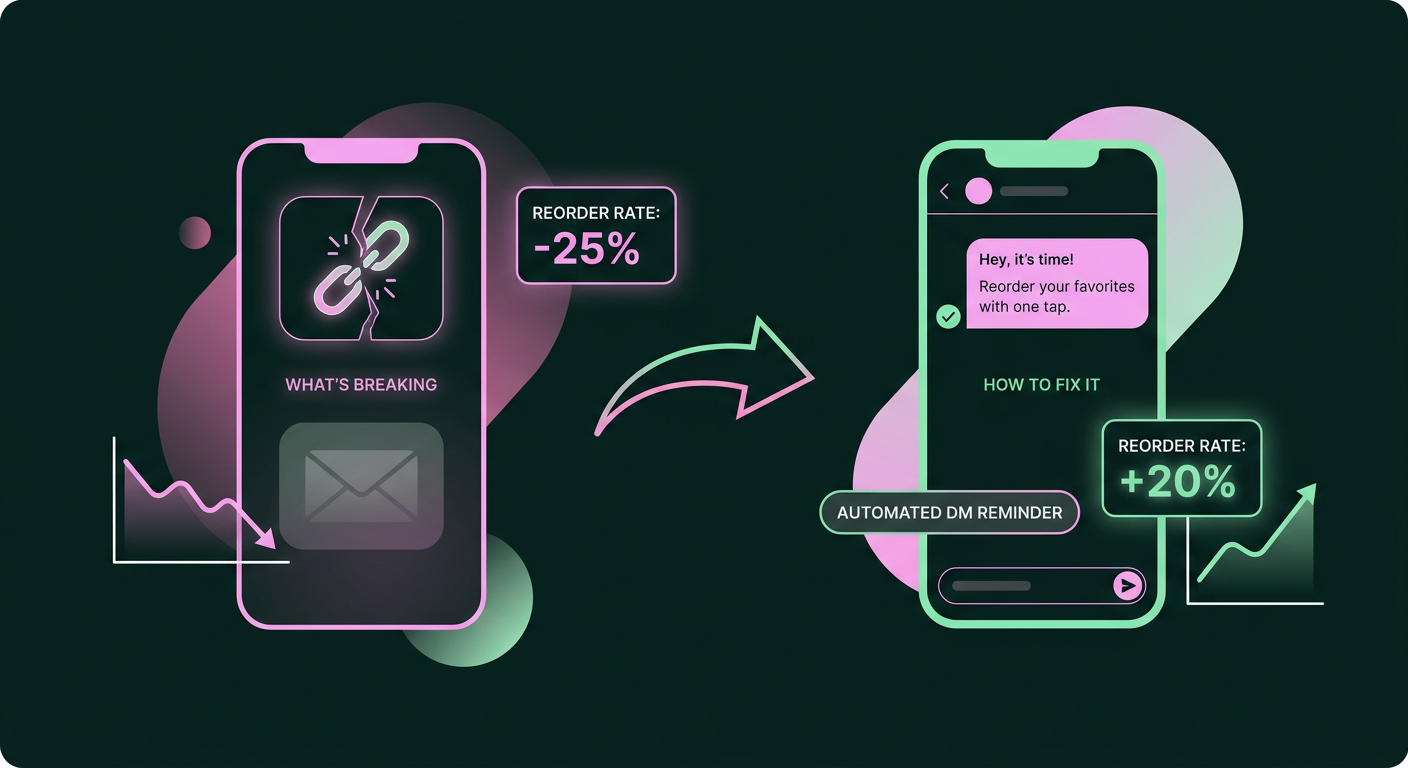
For brands that sell consumable goods, one of the most frustrating kinds of churn isn’t a loud complaint but a quiet fade. It’s the customer who bought your coffee beans, your skincare serum, or your protein powder, seemed perfectly happy, and then simply never returned. They didn’t complain or ask for a refund. They just used up the product, and when the time came to buy more, they went somewhere else. This silent drift of otherwise satisfied customers is a constant, low-grade revenue leak. The hard truth is that in their moment of need, your brand wasn't top of mind, and a competitor’s product was just a quick search away.
The Silent Churn: Where Do Your Best Customers Go?
The most loyal customers for a consumables brand are the ones who reorder like clockwork, integrating your product into their daily or weekly routine. Losing them feels like a failure, but it's rarely a reflection of your product's quality. More often, it’s a failure of timing and presence. Life is busy, and even a fantastic face cream or artisanal hot sauce isn't always top of mind. When the jar runs empty, a customer's immediate impulse is to solve their problem, which usually means a quick search on a major online marketplace or Google. The brand that wins is the one that’s there at that exact moment. For every potential reorder you miss, you’re not just losing a single sale; you’re losing the compounding value of a repeat buyer. This is especially costly because failing to meet predictable demand, like when a trending item sells out before it can be restocked (opens in a new tab), is a direct loss of revenue at a peak moment of customer intent.
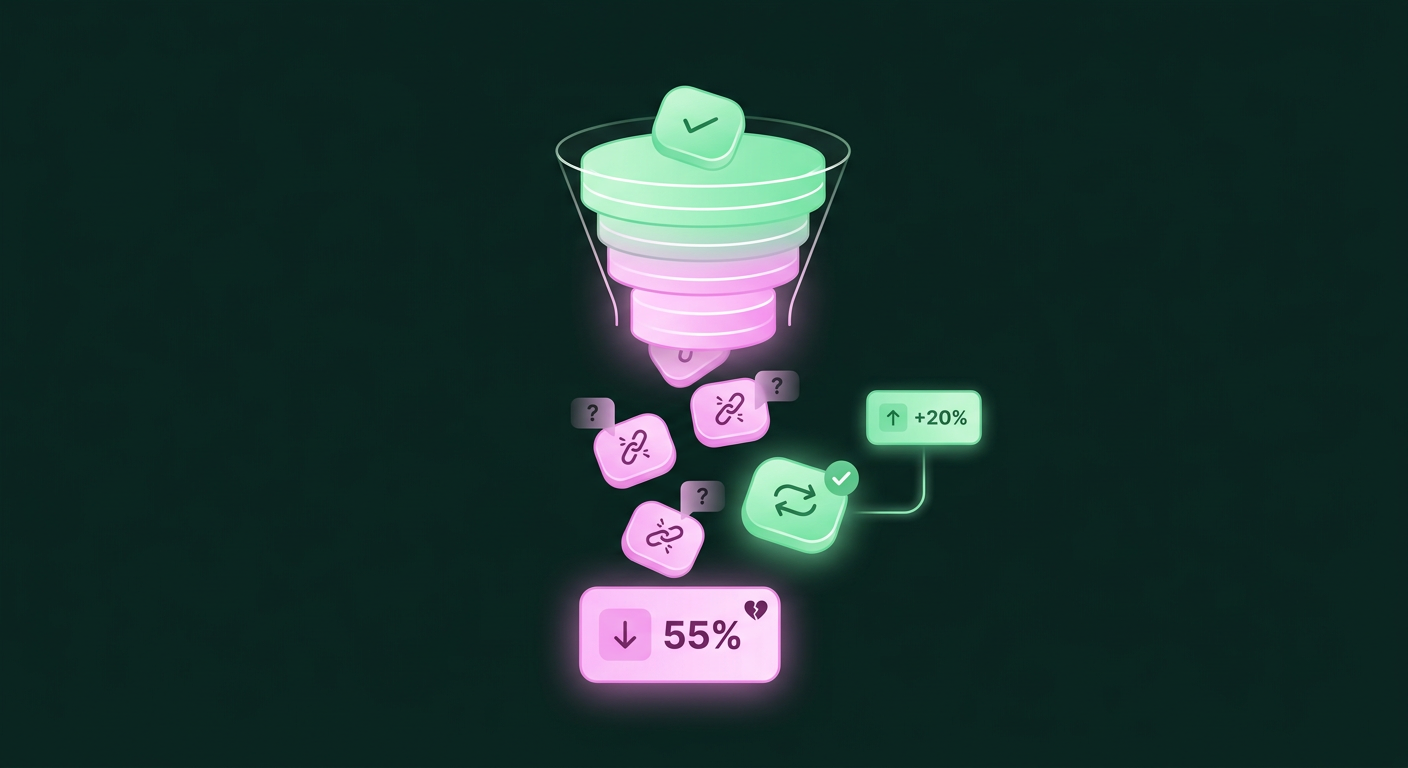
Why Customers Don't Come Back for Consumables
It’s easy to jump to (opens in a new tab) conclusions about why a customer didn't place a second order. Retailers often blame a standard list of culprits like price, shipping costs, or a single bad experience. But when it comes to products people use up and replace, the story is usually more nuanced.
Surface-Level Reasons (and Why They're Misleading)
Many brands immediately assume churn is about price shopping or dissatisfaction. Did a competitor run a sale? Did the customer decide they didn't like the flavor? While possible, these theories are often red herrings. The modern consumer is overwhelmed with choices and has a finite amount of attention. They aren't actively breaking up with your brand; they are simply forgetting about it until the cabinet is bare. Your own internal logistics offer a parallel.
Most retailers know that failing to reorder inventory on time leads to all sorts of internal problems (opens in a new tab), like backorders and fulfillment delays. Your customers face a similar, if smaller-scale, logistical challenge: keeping their own lives stocked. The brand that helps them solve this personal inventory problem is the one that earns their loyalty.
The Real Culprit: A Gap in Your Customer's Journey
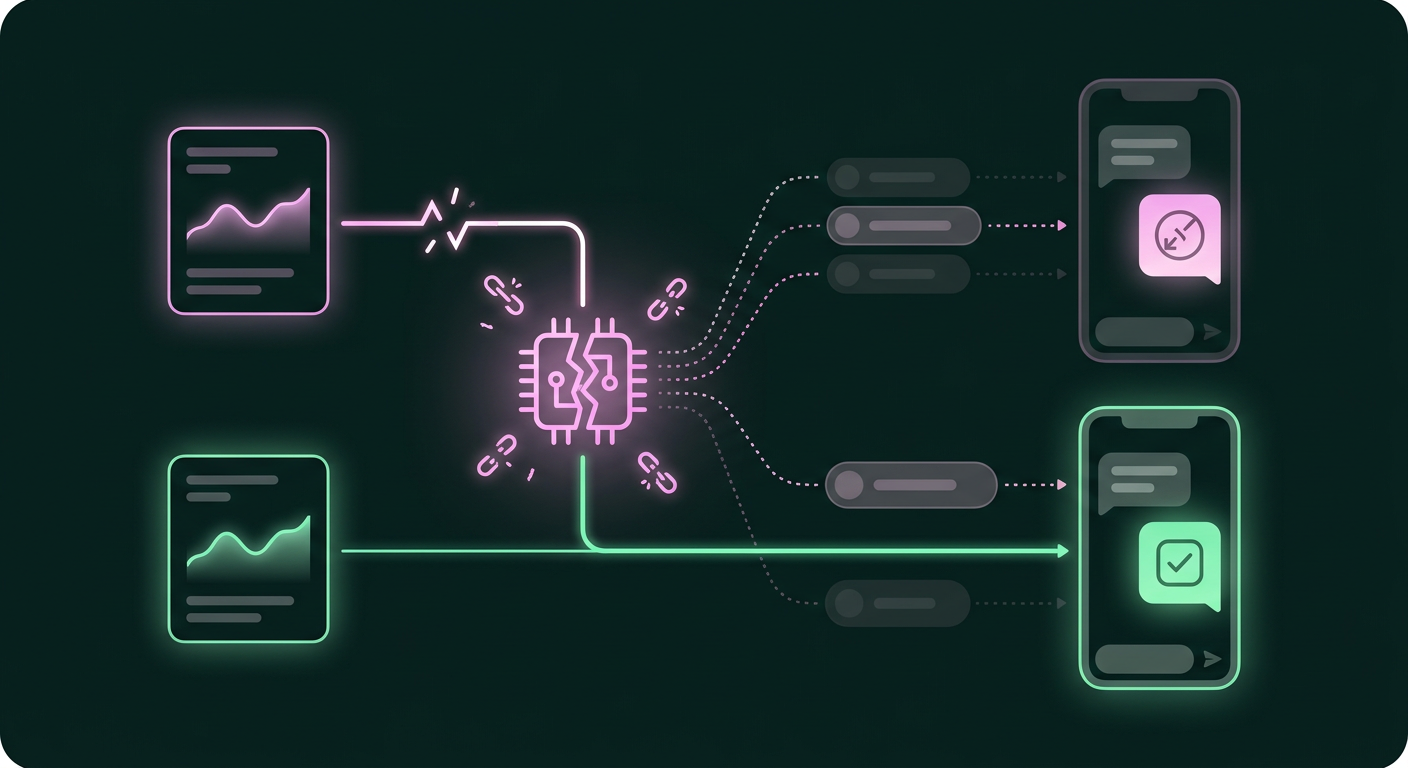
The real reason you lose these customers is that a gap forms in their journey, right between the moment they finish your product and the moment they need a replacement. Your marketing emails are probably still going out, but they’re likely ignored or arriving at the wrong time. A "we miss you" email sent three months after their purchase is completely disconnected from the fact that they ran out of their 30-day supply ten weeks ago. The core problem is a lack of connection between your communications and the customer's actual product consumption cycle. Just as a business using disconnected systems for inventory can end up with inaccurate stock numbers and unexpected stockouts (opens in a new tab), a brand whose marketing isn't synced with the customer's reality will suffer a stockout of attention when it matters most.
Diagnosing Your Reorder Gap: Are You Missing the Window?
So how can you tell if this silent churn is happening to you? The answer is in your sales data, and a simple analysis can be incredibly revealing. Pick one of your most popular consumable products, something with a clear lifecycle, like a 30-day supply of vitamins or a 1lb bag of coffee. Now, pull the data for first-time purchasers of that item.
Look at the time between their first and second purchase. Does a customer who bought a 30-day supply come back around day 30? Or is the average closer to day 45, day 60, or never? That difference between the product's ideal reorder cycle and the actual customer behavior is your "reorder gap." The wider this gap, the more revenue you are leaving on the table. During that time, your customer is vulnerable to competitor ads, a friend's recommendation, or just the convenience of whatever is on sale at their local store.
Every day that passes beyond the ideal reorder window is another chance for a competitor to win them over. If your current strategy relies on generic email blasts, it might be time to rethink things. You need a better approach, one that thinks beyond just recovering a sale after the fact, much like the new thinking around how to solve cart abandonment. You can see how a new approach might work in our article on finding the best abandoned cart recovery tools.
The Fix: Automated, Timely Reorder Nudges via DM
Closing the reorder gap doesn't require a complex, mandatory subscription program that might alienate customers who value flexibility. A much more effective solution is simpler and more personal: sending an automated reorder reminder through a direct message (DM) at the precise moment your customer is likely running low. This strategy meets customers in a channel they actually monitor, not one they’ve learned to ignore.
The power of this approach comes from its timing and channel. While emails get buried in crowded inboxes, DMs get seen. Direct message channels like Instagram DM, Facebook Messenger, and WhatsApp have open rates that consistently top 80%, with WhatsApp hitting an astonishing 90-98% (opens in a new tab). This isn't just about getting seen; it's about driving action. These personalized 1:1 messages deliver conversion rates that are 3-5x higher (opens in a new tab) than traditional push notifications. When you combine this high-engagement channel with predictive timing based on a customer's purchase history, the nudge feels less like marketing and more like a helpful personal assistant.
Imagine a message that says, "Looks like your supply of Cold Brew Coffee Concentrate is about to run out. Tap here to reorder and keep your mornings running smoothly." It’s relevant, helpful, and provides a one-click path to purchase. This is the kind of service that builds real, lasting loyalty, and it highlights why comparing channels like DM vs. email for cart abandonment reveals the superior performance of direct messaging.
By automating a key part of the customer journey, brands can achieve impressive results, much like the children's brand IZIMINI saw 70% year-over-year growth after implementing an automated system (opens in a new tab) for its fulfillment and inventory. Your reorder reminders can do the same for customer retention, turning a leaky bucket into a reliable revenue stream by using one of our key use cases (opens in a new tab).
How to Know Your Automated Reminders Are Working
Once you implement automated reorder reminders, measuring their success is straightforward. You aren't chasing vague brand awareness metrics; you're looking for a direct impact on sales and customer behavior, specifically by watching for tangible change in two key areas.
First, your repeat purchase rate should increase significantly for the customers receiving these timely DMs. You can run a simple A/B test, comparing a group that gets the automated reminders against a control group that doesn't. If the reminders are working, you will see a clear lift in this essential business metric, proving you’ve successfully re-engaged customers who would have otherwise drifted away.
Second, that "reorder gap" you diagnosed earlier should begin to shrink. The average time between a customer's first and second purchase should move closer to the product's ideal lifecycle. If people are buying their 30-day supply of vitamins every 32 days instead of every 58, you know you have successfully closed the gap and replaced sporadic shopping with a reliable, recurring habit. This transforms passive customers into active, loyal members of your brand community, strengthening your business with every personalized nudge. You can track this and other key performance indicators using Dynamo's provided metrics (opens in a new tab).
Frequently asked questions
How can I predict when my customers are about to run out of a product?
You can predict when a customer needs to reorder by analyzing their purchase history against the product's intended use cycle. Start with the "servings per container" or the "days of supply" listed on the product. Then, look at your sales data to find the average time between the first and second purchases for that specific SKU. This gives you a data-backed window for when a customer is most likely running low and will be receptive to a reorder nudge.
Should I build a full subscription program or just send reorder reminders?
While subscriptions are powerful, they represent a high-commitment option that isn't right for every customer or brand. Reorder reminders offer a more flexible middle ground. They help generate recurring revenue and build customer habits without forcing anyone into a rigid program. They act as a helpful service, not an obligation, which can be a much more effective way to foster long-term loyalty for customers who prefer to buy on their own schedule.
How do I track customer usage patterns to time my reminders right?
The best way to track usage is to start with your product's design (e.g., a "30-day supply") and then refine that estimate with actual customer data. Look at cohorts of customers who buy a specific product and calculate the average number of days between their first purchase and their second. Over time, you'll develop a clear picture of typical consumption rates, which allows you to trigger your automated reminders at the most effective moment for each product in your catalog.
Can I let my customers adjust the timing of their own reorder reminders?
Absolutely, and you should. Offering customers control is a key part of making an automated interaction feel personal and helpful. Including options within your DM like "Snooze for a week" or "Remind me in 2 weeks" empowers the customer and makes the service even more valuable. This turns a simple reminder into a collaborative tool, significantly increasing the likelihood that they will follow through and make the purchase when the time is right for them.
What should I do if a customer needs to reorder an item that's out of stock?
An out-of-stock situation is a critical moment that can either cause churn or build loyalty. The worst thing you can do is lead a customer to a dead end. Instead of simply saying the item is unavailable, your automated system should immediately offer a "Notify me when it's back" option via DM. This simple step captures their intent, keeps them from immediately searching for a competitor, and turns a potential point of frustration into an opportunity to show you're committed to serving them. It's a huge improvement over letting them discover a stockout on their own, which is a known cause of fulfillment delays and customer frustration.