
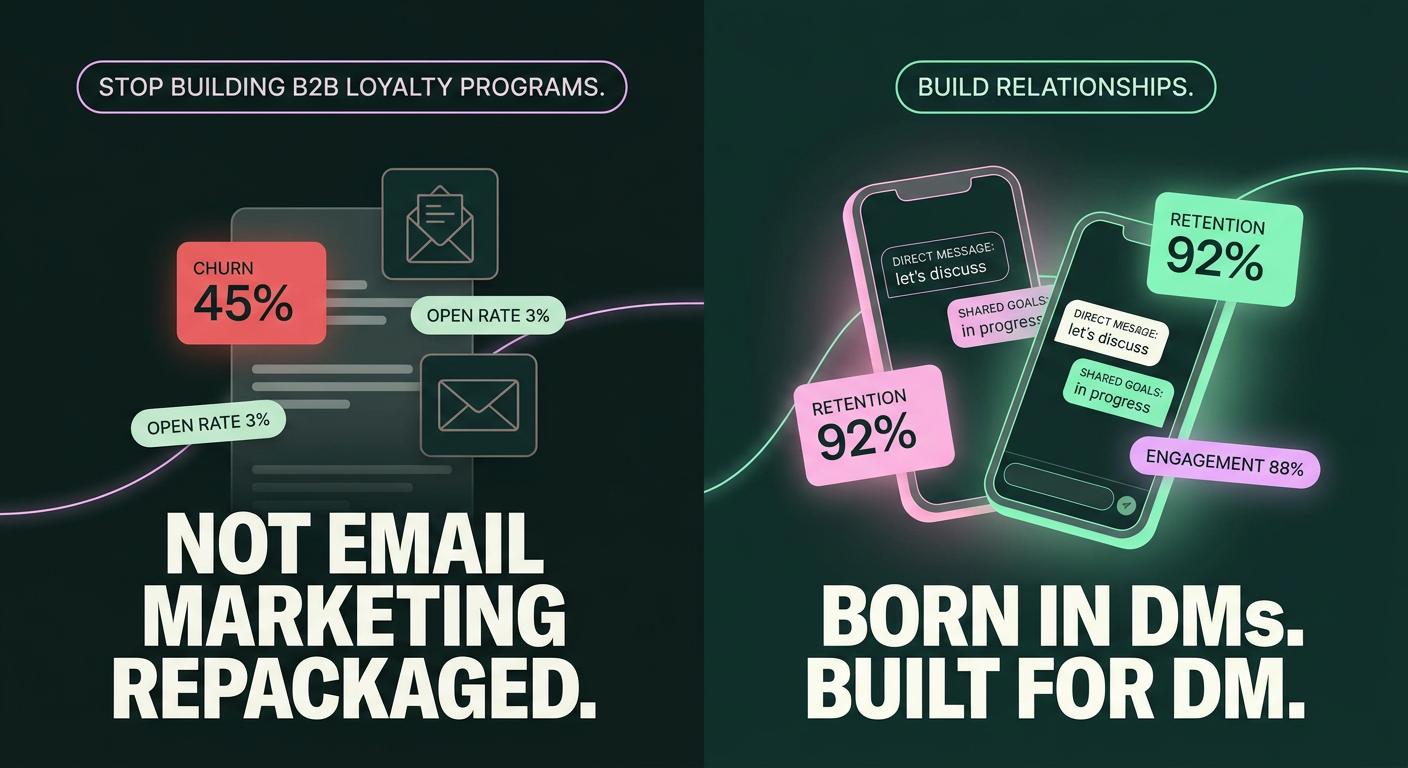
It's a common belief that you can’t give every single VIP customer personal, one-to-one attention. The idea feels like a fantasy because the math just doesn't seem to work. You can't manually message thousands of top players or high-value customers without an army of account managers, so you accept the trade-off: true personalization is for a tiny handful of "whales," while everyone else gets a slightly better automated journey. This assumption, while once perfectly logical, is now holding your customer loyalty programs back. The technology has finally caught up, making it possible to deliver genuinely personal, on-brand service that actually scales.
You Think You Can't Give Every VIP Personal Attention. (You're Wrong.)
The idea that true 1:1 personalization can't scale is deeply ingrained, and for good reason. For years, the only tools available were blunt instruments. You either had to invest staggering hours of manual labor to nurture VIP relationships one by one, or you had to deploy automated systems that felt cold and impersonal, often doing more harm than good.
This created a false choice for anyone managing VIPs: go deep with a few, or go broad with generic, templated messages. Most platforms that promised "personalization" were just swapping out a first name or triggering a message based on a fixed event. That kind of topical, milestone-driven automation fails because customers can feel when an interaction isn't truly for them. It lacks the context, relevance, and human touch that defines a genuine VIP experience.
Why 'Personalization at Scale' Has Always Felt Like a Lie
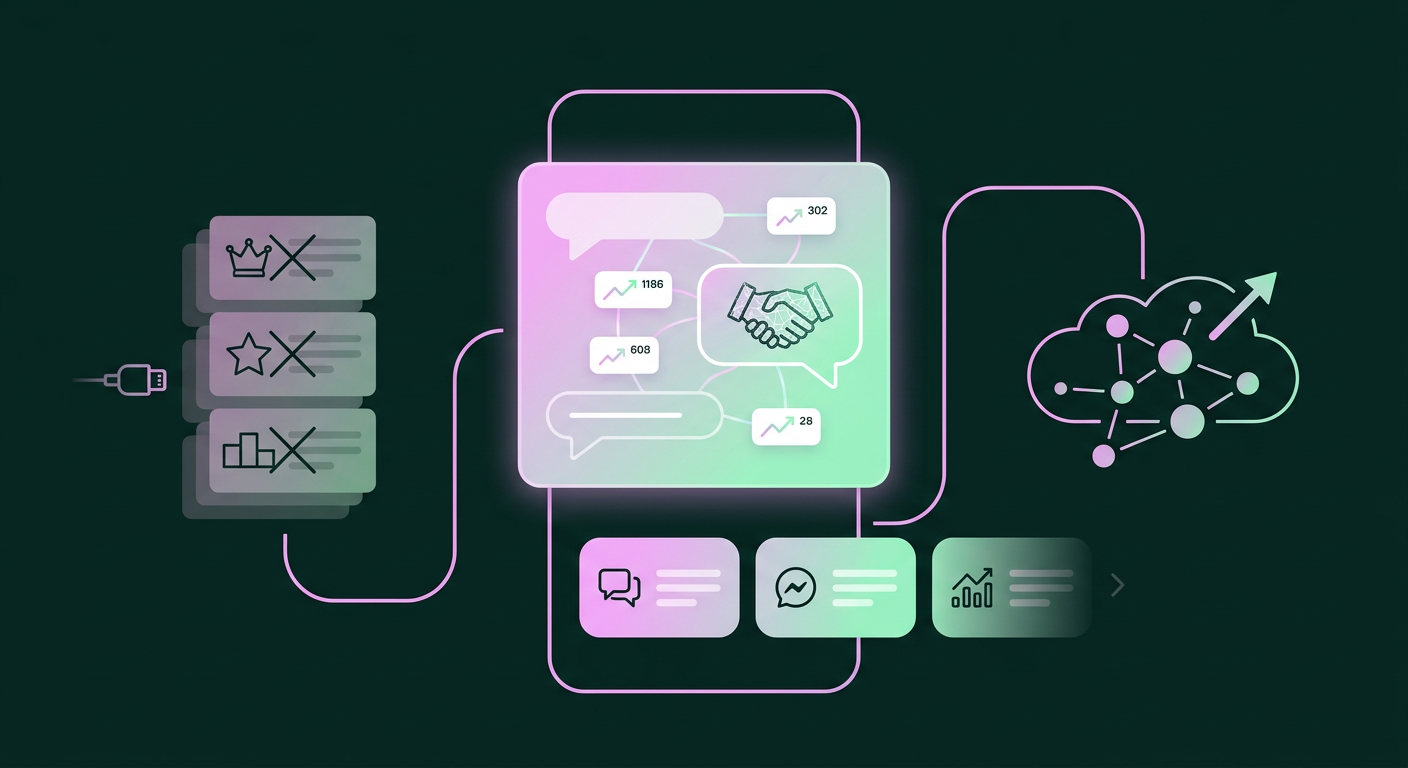
Your skepticism around the phrase (opens in a new tab) "personalization at scale" is completely justified. You've likely been burned by tools that promised the world but delivered little more than slightly customized mass messages. These early automation systems were often just rigid scripts that could never replicate the nuance of a real conversation. They couldn't understand your brand's voice, adapt to a customer's unique history, or respond in a way that felt authentic.
For a VIP manager, especially in an industry like mobile gaming where a single high-value player can represent enormous revenue, the stakes are too high for clumsy automation. Sending a generic, off-key message doesn't just risk being ignored; it risks actively alienating them. The result is that generic content leads to poor engagement (opens in a new tab) and, in the worst cases, can drive your most valuable customers away. This history of technology over-promising and under-delivering is precisely why the belief that you can't scale the personal touch has persisted. It was never a failure of strategy, but a failure of the tools.
The Technology That Finally Makes 1:1 Service Scalable
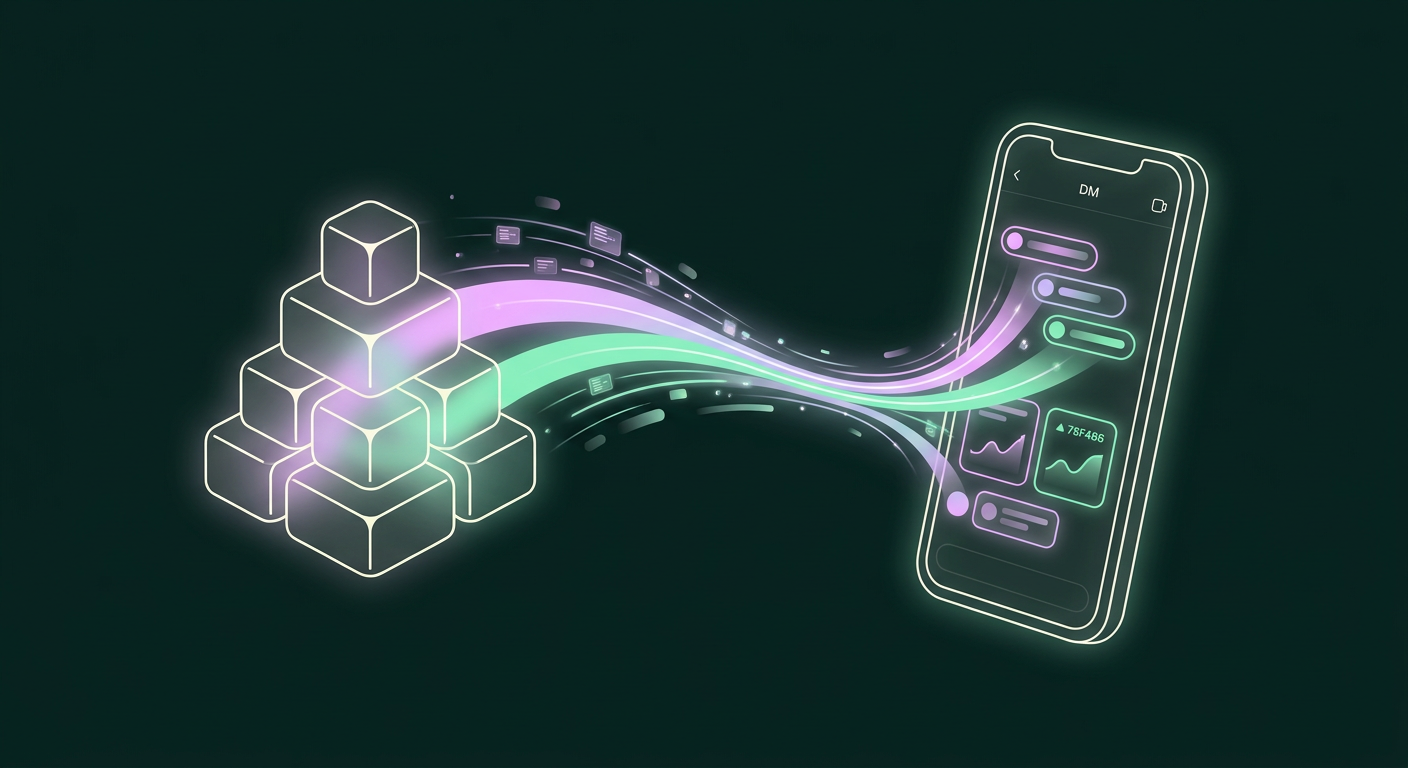
The old limitation was never the desire for personal connection, but the lack of technology to deliver it. That's changing thanks to AI that can do more than just automate. It can understand, adapt, and communicate in a way that feels genuinely human and, crucially, stays perfectly aligned with your brand's voice. This is what finally makes scalable 1:1 service a reality.
This new generation of technology moves beyond the rigid, trigger-based logic of the past. It combines the power of AI with a deep understanding of user behavior and psychology to open doors for scalable, personalized engagement that was previously impossible. It closes the gap between what a dedicated human account manager can do for one person and what your brand can now do for thousands.
It's Not Just Automation, It's Adaptation
The biggest difference between old and new technology is the ability to adapt. Legacy systems follow a fixed script, sending Message B after a user completes Action A. This is impersonal because it treats every user who takes that action identically, ignoring the rich context of their individual journey.
Modern AI, however, is dynamic. One of its most powerful features is its ability to craft flexible communication paths that evolve based on a user's specific needs, history, and even their communication style. The system can analyze past interactions to predict churn risk, spot an opportunity for a special offer, or simply send a congratulatory note that feels timely and earned. This isn't a pre-written message waiting to be triggered; it's a unique communication generated for a specific person at a specific moment, creating an experience that makes them feel noticed and valued.
Delivering Insights Without Logistical Nightmares
The other piece of the puzzle is operational efficiency. Manual 1:1 service never scaled because of the immense logistical burden of high costs, inconsistent quality between account managers, and endless scheduling challenges. It just wasn't efficient.
AI-powered personalization removes these barriers entirely. It makes bespoke engagement accessible by delivering real-time, relevant interactions without the logistical headaches of the old way. You can now provide that high-touch, concierge-level service to every single one of your VIPs, not just the top 1%. This ensures consistency in your brand voice and quality of service, turning your loyalty program from a resource-intensive operation into a scalable engine for retention and growth.
What's Actually True: The New Shape of Customer Loyalty
This technological shift changes the entire landscape for customer loyalty programs. The old paradigm forced a choice between personal touch and scalable reach, but the new reality is that you can have both. This isn’t a gradual improvement; it's a fundamental change in what’s possible, allowing you to build real, individual relationships with your entire VIP segment.
This approach aligns perfectly with what customers have wanted all along. They aren't opposed to brands using their information; they're opposed to it being used poorly. In fact, most customers report that providing their data is worthwhile when it results in personalized offers [as part of a loyalty program]https://capitaloneshopping.com/research/loyalty-program-statistics/ (opens in a new tab)). They are giving you the ingredients for a better experience, and now the technology exists to finally deliver on that promise. The impact of getting this right is significant. In the world of email, for instance, personalized messages see open rates improve by 29% and click rates by 41%, compared to just 15% open rates and 7% click rates for generic sends (opens in a new tab). That principle holds true across all channels: personalization drives action.
This power is especially transformative in more immediate formats like DMs, where the expectation of a personal conversation is much higher than it is for email. Being able to send a truly personalized 1:1 DM, whether to onboard a new player, win-back a lapsed one, or offer a custom reward, changes the entire dynamic of the relationship. It's the difference between a broadcast and a conversation, and it produces dramatically different results. A comparison of DM vs. email for key moments like cart abandonment shows just how much more impactful this direct, personal channel can be. When you combine a powerful channel with AI that can generate unique messages for each user, you get a loyalty engine that builds authentic connections at an unprecedented scale. That’s why brands are seeing such impressive results with this approach (opens in a new tab).
What This Means: Rethinking Your Loyalty Program's Toolkit
Because the old assumption about scalability is broken, it's time to re-evaluate the tools you use to manage your most important customer relationships. The systems and workflows you have in place were likely designed around the old limitations, forcing you into compromises you no longer need to make. Your marketing stack might be excellent at sending emails or push notifications, but is it built to handle thousands of unique, simultaneous conversations in your brand's voice?
This is the time to audit your toolkit with a new question in mind: "Does this help me build a personal relationship with every VIP, or does it force me to treat them like a segment?" The most effective loyalty programs will embrace tools designed for genuine, one-to-one connection. This means shifting focus from channels that broadcast to channels that converse, and from tools that segment to those that individualize. Taking a new approach beyond traditional abandoned cart tools is a great place to start thinking differently about the entire user lifecycle.
The goal is no longer about finding a better way to manage the old trade-off. It’s about leaving that trade-off behind entirely. It's about giving your team technology that can execute the personalized 1:1 experiences you've always wanted to provide for all your most valuable customers. You can explore the kinds of use cases this new toolkit enables (opens in a new tab) to see how it can apply to acquisition, retention, and win-back strategies.
Your Next Move: The 10-Message Litmus Test
This shift in thinking can feel abstract, so here’s a simple test you can run this afternoon to see where you stand, no new budget or team meeting required.
Go into your system and pull up a list of 10 VIPs at random. Now, look at the last automated communication each one of them received from your brand and read the message out loud. Does it sound like it was written by a human who understands that person's specific journey with your product? Does it have the warmth, tone, and context of a personal note? Or does it sound like a template with a name field swapped out?
Be honest with yourself. If most of those messages feel generic, that isn't a criticism of your team's effort; it's a sign that your tools are limiting your strategy. That gap you see between the generic message and a truly personal one is the opportunity. That is the space where modern AI can step in to help you build stronger, more resilient relationships with the customers who matter most, not just for those 10, but for all of them.
Frequently asked questions
How can I scale outreach to my VIPs without losing our quality and personal touch?
The key is using new technology that moves beyond simple automation. Modern AI, paired with an understanding of user psychology, makes it possible to deliver scalable, personalized outreach that eliminates the limitations of traditional 1:1 sessions. Instead of sending the same template to a segment, this technology can generate a unique, context-aware message for each person, maintaining a high level of quality and a personal feel across your entire VIP base.
How do I make sure an AI can actually maintain our company's specific brand voice?
This is a critical concern and a major differentiator for modern platforms. Unlike older systems that relied on rigid scripts, advanced AI can be trained on your specific brand voice. By analyzing your existing communications, style guides, and even the interactions of your best human account managers, the system learns to replicate your unique tone and phrasing. The goal is for the AI to sound exactly like your brand, ensuring every DM it sends is consistent and authentic.
Can AI really deliver a truly personal experience at scale?
Yes, because its approach to personalization is fundamentally different from older automation. The experience feels personal because it's adaptive and immediate. AI-driven systems can craft flexible communication paths that evolve with the user, so the conversation changes based on their actions and history. It then delivers these interactions in real time without the logistical headaches of manual outreach. This combination of adaptation and immediacy creates an experience that feels responsive and individual.
What is the real ROI on investing in this kind of personalized VIP program?
The return on investment comes from a dramatic lift in engagement and retention among your highest-value customers. Personalized outreach consistently outperforms generic campaigns. For example, data shows that personalized emails achieve a 29% open rate and a 41% click rate, versus just a 15% open rate and 7% click rate for non-personalized ones.com/blog/b2b-loyalty-program-and-customer-behavior-statistics). This boost in engagement translates directly to higher lifetime value, lower churn, and stronger brand loyalty, especially with the VIPs who drive a disproportionate amount of revenue.