
How mobile apps grow and retain users is changing in a way that's no longer subtle. The era of one-size-fits-all lifecycle marketing is ending, giving way to something far more dynamic and intelligent. We saw a clear signal of this when major customer engagement platforms began making substantial nine-figure investments in AI-driven journey optimization, like Braze's acquisition of OfferFit in March 2025 for USD 325 million (opens in a new tab). This wasn't just a new feature; it was a declaration that the future of customer journey automation lies not in pre-scripted paths but in adaptive, behavior-driven conversations powered by machine learning. For app-growth leaders, this isn't just another trend, it's a new reality.
The Journey is Now AI-Powered
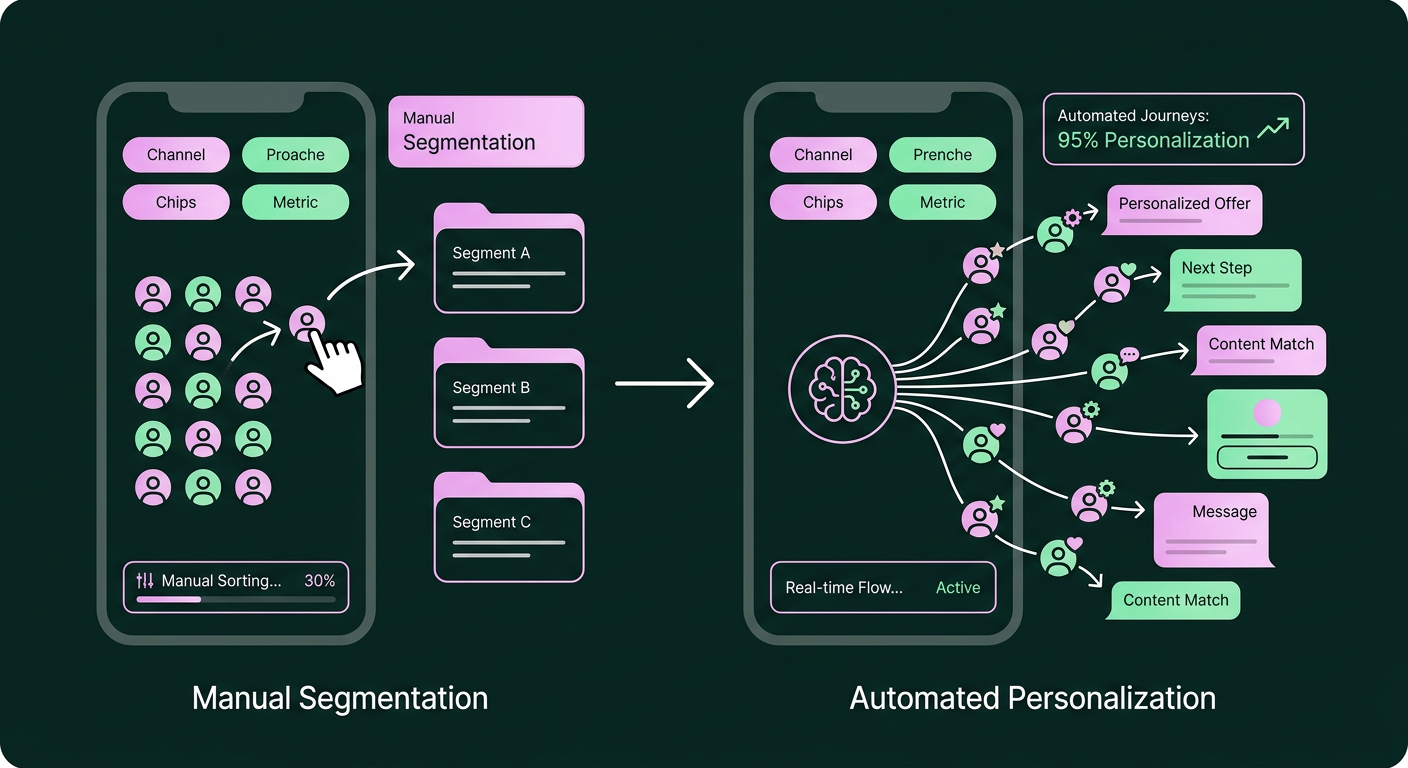
Customer journey automation is no longer about setting static triggers. The core idea is now using AI to continuously optimize messaging based on individual user behavior. This marks a shift from a deterministic model, where you define every "if-then" rule, to a probabilistic one, where the system learns which message, channel, and timing will most likely produce a desired outcome for each user. Instead of just sending a standard welcome series, the platform itself can now test and learn, automatically adjusting the journey to guide users toward activation and long-term retention.
Leading engagement platforms are pouring resources into this area because the market demands it. The old model of broadcasting campaigns to broad segments fails to meet user expectations for relevance and personalization. As AI becomes more integrated into these systems, the focus shifts from merely executing a pre-defined journey to optimizing it in real time. This means the system can identify that User A, who came from a specific ad campaign, responds best to an in-app prompt after 24 hours, while User B, who installed organically, needs a direct message after three days of inactivity. It's a profound change from building rigid workflows to managing a self-tuning growth engine.
From Static Campaigns to Dynamic Conversations
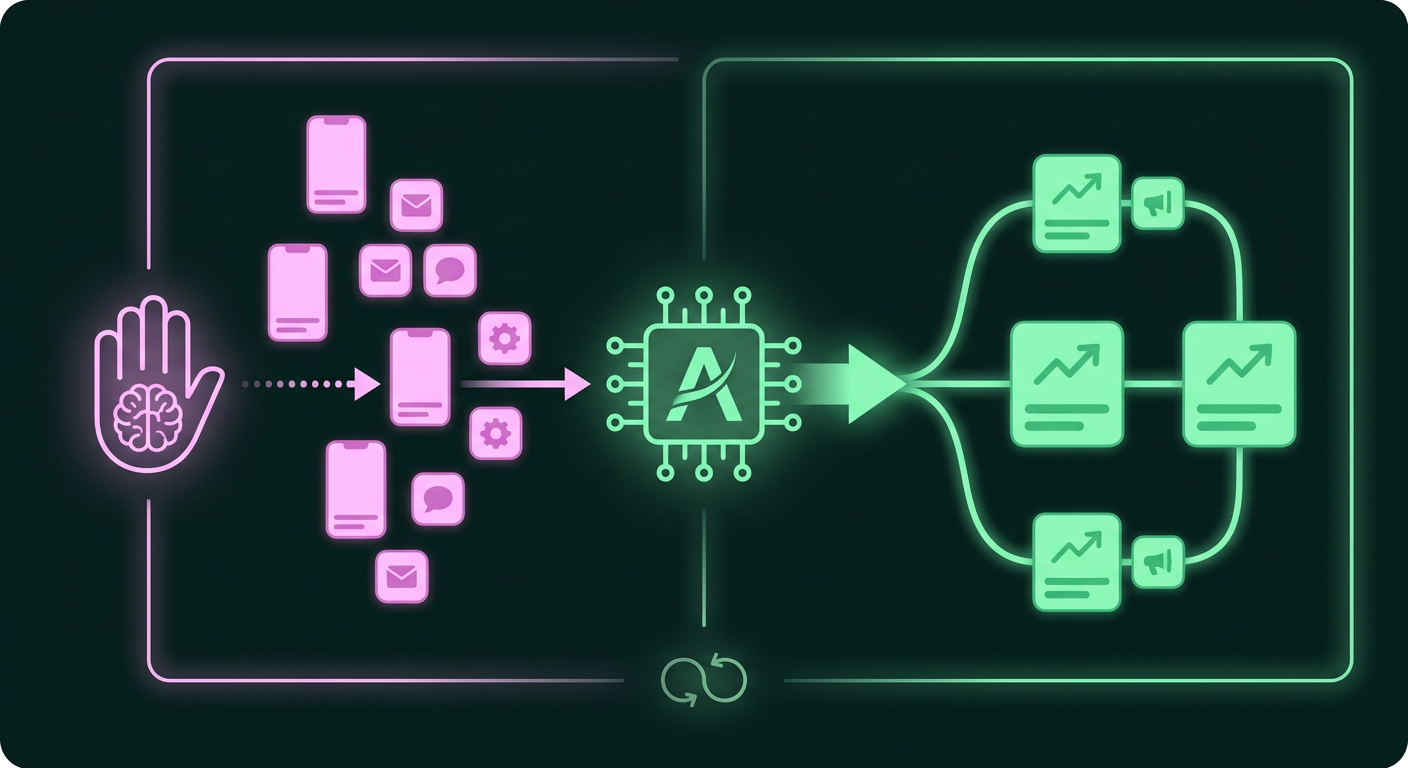
The old approach of broadcast-style push notifications and generic email drips is being replaced by personalized, responsive messaging that adapts to what users actually do in your app. For years, the standard playbook involved creating a few core campaigns: a welcome series for new installs, a re-engagement push for lapsed users, and maybe a promotional bulk send for everyone. This was a one-to-many strategy that treated users as a uniform group, a compromise dictated by the limitations of older tools. While better than silence, this approach often feels impersonal and irrelevant, leading to muted notifications and overflowing inboxes.
Today, the landscape is entirely different. The market for tools that enable this deeper understanding is expanding rapidly, with the customer journey mapping software market projected to grow from USD 16.8 billion in 2025 (opens in a new tab) to USD 76.2 billion by 2035. This growth is fueled by a simple truth: users now expect more. A 2025 study found that 74% of consumers anticipate more personalized experiences (opens in a new tab) from the brands they interact with, turning journey automation from a nice-to-have into a core part of any successful app-growth strategy. Instead of a static flow, the modern journey is a dynamic conversation that listens as much as it talks, tracking which features a user has tried, which milestones they've hit, and where they might be stuck, so it can tailor each message to their specific context.
This shift isn't just about making users feel seen; it's about driving real business outcomes. It's the difference between a generic "We miss you!" push notification and a targeted message that says, "You're so close to unlocking your next reward! Just complete one more level to get it." The latter isn't just a message; it's a helpful nudge based on specific, in-app behavior. Given that customer journey analytics solutions held a majority share of 54.85% in 2025 (opens in a new tab), it's clear the market has already decided that this sophisticated, data-driven engagement is the new standard.
What This Means for App-Growth Leaders
For app-growth leaders, this new era of automation is the key to fixing the critical activation leak by connecting the dots between how a user is acquired and what they do post-install. You've mastered buying installs efficiently, but the real challenge begins the moment after the download, which is where most apps bleed users and budget. Industry benchmarks show that, on average, only 20-40% of free users ever activate. That means the majority of your acquisition spend is walking out the door before it can deliver any value.
"Yet, benchmark data shows only 20, 40% of free users activate, and over 55% of SaaS teams rate their free-to-paid conversion performance below average." , Arise GTM
The old tools and strategies are ill-equipped to solve this. Generic push and email campaigns can't carry the rich context from your acquisition channels, like the ad creative they saw or the value proposition that drove their click, into the onboarding experience. This disconnect creates a jarring experience where a user who installed your app for a specific feature gets dropped into a generic welcome flow and is left to find their own way. Closing this activation gap requires a platform that can maintain a continuous thread from the first touchpoint to the first "aha!" moment and beyond, using that context to deliver truly individualized guidance. This is particularly important for re-engaging inactive users in your community app, where context is everything.
Where Journeys Are Already Driving Growth
This new approach is already delivering measurable results for companies that have moved beyond broadcast messaging to implement sophisticated, behavior-driven lifecycle campaigns. These aren't theoretical gains; they are tangible improvements in activation, retention, and revenue that prove personalized, timely communication is one of the most powerful growth levers available.
For example, one company saw a remarkable 18% jump in its activation rate and a 22% increase in 90-day retention after implementing a lifecycle campaign that combined onboarding emails with well-timed in-app tips and push notifications. This wasn't about sending more messages; it was about sending the right one at the right time, based on where the user was in their journey. Similarly, the social media analytics SaaS Keyhole achieved a 25% increase in Annual Recurring Revenue (ARR) by simplifying its sign-up process and using in-app prompts to guide new users to core features more quickly. The impact can be even more dramatic; a 2025 report revealed that conversions increased by a staggering 405x when shoppers received personalized emails based on their specific behavior. These examples all point to the same conclusion: growth comes from understanding and reacting to user actions, not from sending generic messages. Exploring these kinds of use cases (opens in a new tab) can provide a blueprint for your own lifecycle strategy.
How to Recalibrate Your Engagement Strategy
To make this shift, you have to move from a channel-centric to a user-centric mindset, focusing on connecting specific app events to individualized outreach that guides users toward value. This isn't about replacing your entire marketing stack overnight. It's about reorienting your strategy around the user's experience and using your tools to support that, rather than letting the tools dictate it.
Connect Acquisition Source to Onboarding Flow
Your user's journey starts with the ad, social post, or search result that brought them to you, not at install. That initial context is marketing gold, yet most apps discard it the moment the user opens the app. An effective journey automation strategy uses this data to tailor the onboarding experience. If a user downloaded your gaming app after seeing an ad for a specific character, your welcome message and initial tutorial should guide them directly to it. This creates a seamless, rewarding experience that immediately validates their decision to install.
Trigger Messages Based on Value Milestones (or Lack Thereof)
Map out the key actions a new user must take to experience your app's core value, the "aha!" moment. These are your value milestones, and your messaging strategy should be built around guiding users to them. Trigger encouraging messages when they complete a step (e.g., "Great job creating your first project! Now, try inviting a collaborator.") and helpful nudges when they get stuck (e.g., "We noticed you haven't uploaded a photo yet. Here's a quick guide to get started."). This proactive guidance is crucial for preventing the drop-off that happens when users are left to figure things out on their own.
Measure Lift, Not Just Opens and Clicks
The goal of journey automation isn't to get more opens or clicks; it's to drive activation, retention, and monetization. To know if your strategy is working, you must measure its direct impact on these bottom-line metrics. Use control groups to measure the lift generated by your campaigns. Are users who receive a particular onboarding journey more likely to activate than users who don't? Do they have a higher 90-day retention rate? Answering these questions requires a platform that goes beyond vanity metrics and provides true business intelligence, allowing you to prove your messaging is causing the desired outcomes, not just correlated with them.
What to Watch: The Rise of Conversational Commerce
As you master behavior-driven journeys, the next frontier is making those interactions truly conversational by meeting users on the high-engagement channels they use every day, like direct messaging. While email and push notifications will continue to have a role, their effectiveness is limited. The real conversations are happening in DMs. Channels like Instagram, WhatsApp, and Facebook Messenger offer an immediacy and engagement that traditional channels can't match.
DM open rates often exceed 80%, with platforms like WhatsApp reaching 90-98%. More importantly, conversion rates from these messages are typically 3-5x higher than those from push notifications. This is because a DM feels like a one-to-one conversation, not a one-to-many broadcast. As AI-powered customer journey automation matures, it will increasingly route its intelligent, behavior-triggered messages through these conversational channels. This represents the ultimate evolution from static campaigns to dynamic conversations, creating a powerful engine for building lasting customer relationships. For those looking to get ahead, exploring a new conversational marketing platform is the logical next step.
Frequently asked questions
How can I connect my app's events to my automated journeys?
To connect app events to your journeys, you need an engagement platform with a robust SDK (Software Development Kit) that you can integrate into your mobile app. Once installed, your developers can define and send custom events, such as user_signed_up, completed_tutorial, or made_first_purchase, from the app to the platform. These events then become the building blocks for your automation, allowing you to trigger messages, add users to segments, or move them to different parts of a journey based on their real-time actions.
What's the best way to use acquisition source to personalize the user lifecycle?
The most effective method is to pass attribution data from your ad network or mobile measurement partner (MMP) into your customer engagement platform. By tagging installs with data like the campaign name, ad creative, or keyword, you can create distinct onboarding paths for different user cohorts. For example, a user who installed from a "50% off first order" campaign should immediately see that offer reflected in their initial in-app experience, reinforcing the message that brought them in and increasing the likelihood of conversion.
What should I look for in a customer engagement platform for a mobile app?
For a mobile app, prioritize a platform that offers a lightweight and reliable mobile SDK, robust segmentation based on both user attributes and in-app events, and support for mobile-first channels like push notifications, in-app messages, and direct messaging (DMs). Most importantly, look for strong journey orchestration capabilities that allow you to build dynamic, multi-channel campaigns that adapt to user behavior, along with A/B testing and control group features to measure the true lift of your efforts.
How can I measure whether my messages are actually causing activation?
The gold standard for measuring causality is to use control groups. When you launch a journey designed to drive activation, you should hold back a small, randomized percentage of eligible users (the control group) who do not receive the messages. After a set period, you can compare the activation rate of the group that received the journey to the rate of the control group. The difference between these two rates is the "lift," which represents the causal impact of your messaging campaign on user activation.
What are the key metrics for tracking app activation and retention?
For activation, focus on the percentage of new users who complete a specific "aha!" moment or a predefined set of critical actions within their first 7 or 14 days. For retention, the key metrics are Day N retention (e.g., D1, D7, D30), which shows the percentage of users returning on a specific day, and cohort retention, which tracks the percentage of a user group (e.g., all users who installed in May) that remains active over weeks or months. It's also vital to track feature adoption rates to understand which parts of your app are driving that retention.