
For years, the growth playbook was simple: pour the budget into acquiring new customers. But a market shift is underway, driven by a simple truth: it now costs 5-7 times more to acquire a new customer than to keep an existing one. While most marketing departments still operate in an acquisition-first world, that widening cost gap makes the old model unsustainable. The relentless pursuit of new users at any cost is no longer a viable path to profitable growth. Instead, the focus is shifting from the top of the funnel to the middle, toward a more resilient and rewarding approach centered on customer retention.
The Broken Model: Chasing Acquisition at All Costs
The traditional growth model, which prioritizes new customers above all else, is broken because its costs are spiraling while its results diminish. This creates a treadmill effect where brands have to spend more and more just to stand still. The core issue is a misalignment between where businesses spend their money and where the real opportunity for profitable growth lies.
Despite the clear economic advantages of retention, a surprising number of companies remain fixated on acquisition. In fact, nearly 44% of businesses report prioritizing customer acquisition (opens in a new tab), while a meager 18% say they focus on retention. This disconnect is expensive, funneling the majority of marketing budgets into the most uncertain part of the customer journey and creating a constant, costly churn-and-burn cycle. Brands pour money into ads to attract a first-time buyer, only to see them disappear after a single purchase. This isn't just inefficient; it's a direct cause of the sales plateaus many direct-to-consumer brands experience. Without a strong retention engine, the average U.S. company loses up to 30% of its customers every single year (opens in a new tab) simply from a lack of loyalty, forcing them back to the expensive world of paid acquisition to replace those they lost.
From One-Time Buyers to Loyal Fans
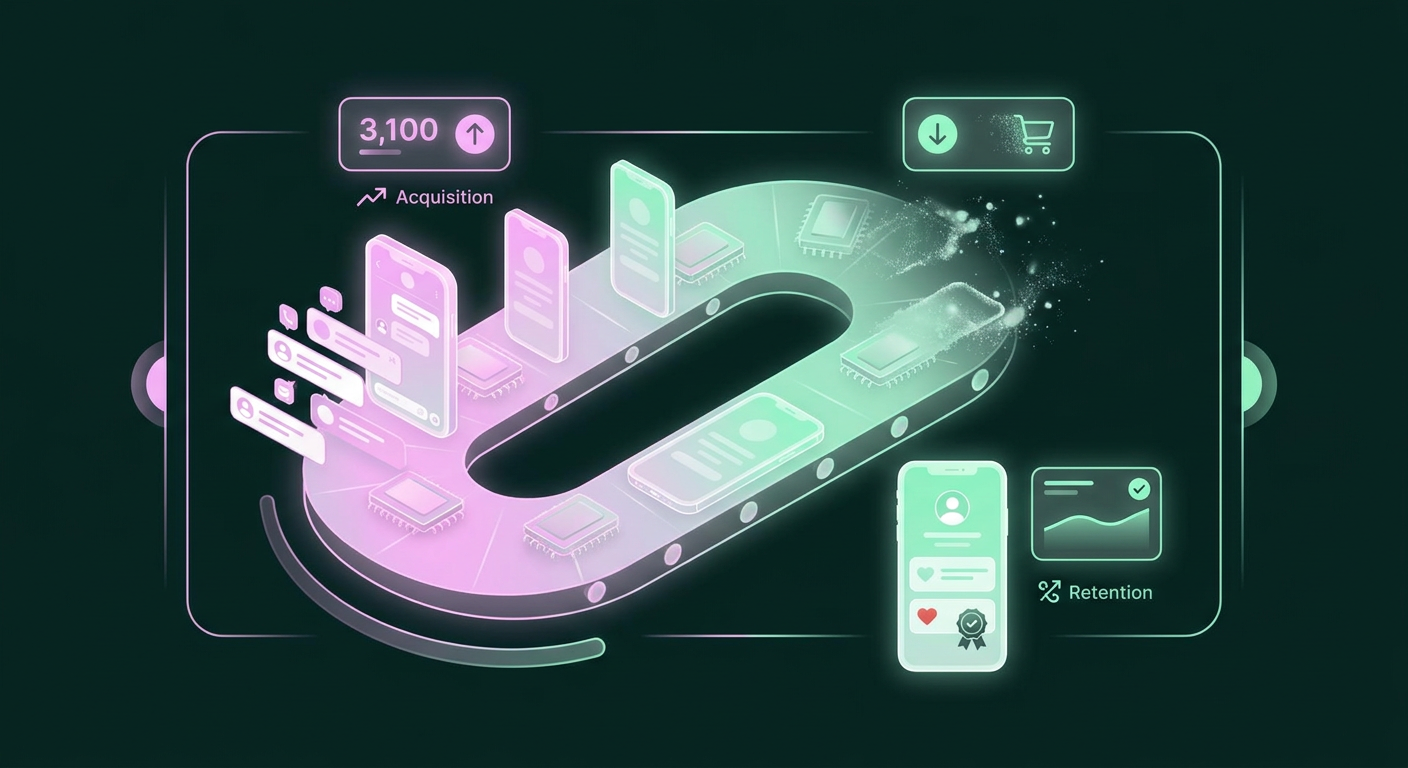
To break that cycle, the new model for sustainable growth shifts focus from chasing one-time transactions to cultivating a loyal base of repeat purchasers who become more valuable over time. Instead of treating every sale as a finish line, this approach sees the first purchase as the starting point of a long-term relationship. The economics behind this shift are compelling and point to a clear path toward greater profitability.
The probability of selling to an existing customer is dramatically higher than converting someone new. According to the foundational book Marketing Metrics, businesses have a 60-70% chance of selling to an existing customer (opens in a new tab), compared to just a 5-20% chance for a new prospect. This isn't just about easier conversions; it's about building a more profitable business from the ground up. Investing in the customers you already have pays dividends that compound over time, as research from Bain & Company famously highlighted.
"Increasing retention by 5% can increase profit 25-95%." , Bain & Company
This powerful statistic shows that the most valuable asset a company has is its existing customer base. Learning how to increase customer lifetime value by rethinking your ad-centric approach isn't just a tactical adjustment; it’s a strategic necessity for any brand looking to build a durable and profitable future. By focusing on turning one-time buyers into loyal fans, you create a flywheel of recurring revenue that is far more stable and cost-effective than the volatile rollercoaster of acquisition-only marketing.
What This Means for Your Marketing Budget
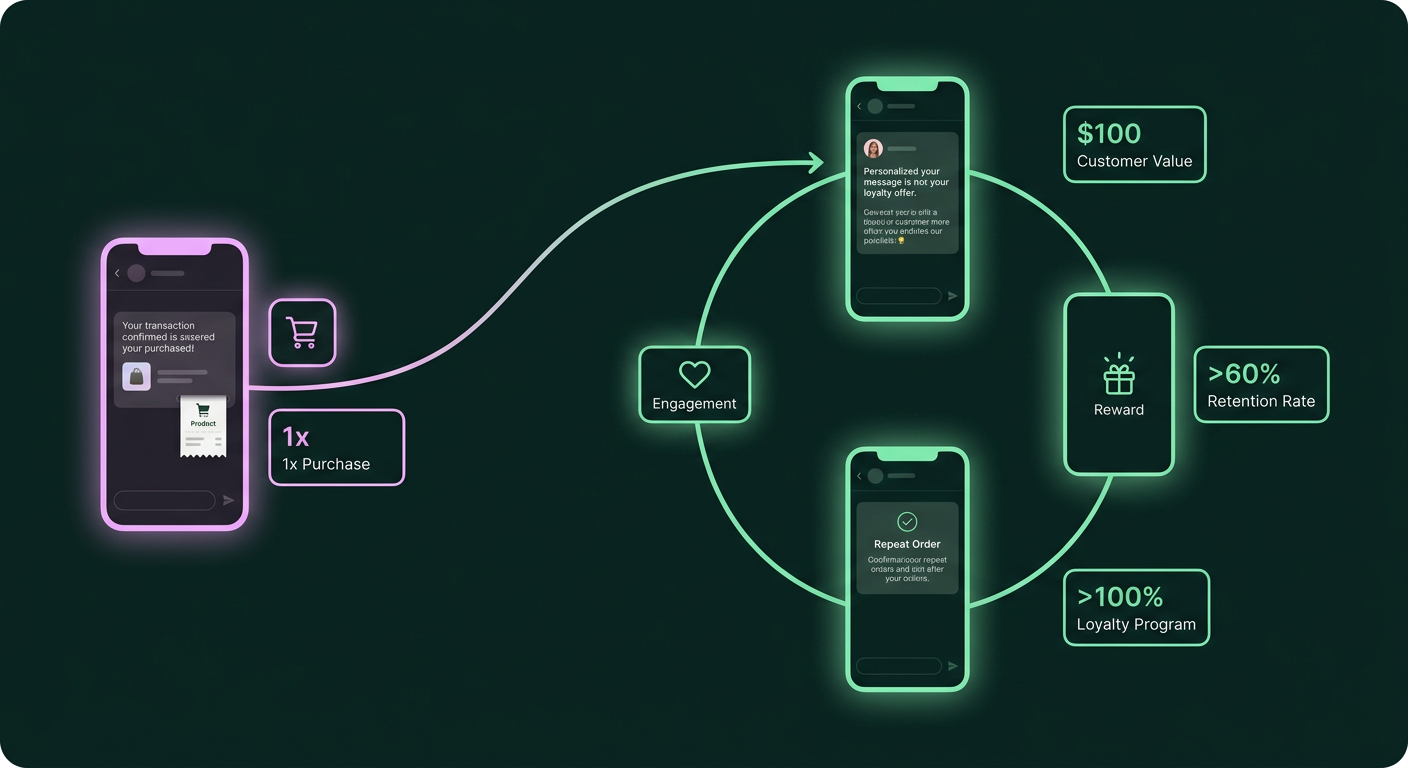
Shifting your strategic focus from acquisition to retention fundamentally changes how your marketing budget works, steering it toward higher-margin activities that increase your company's overall valuation. This isn't about eliminating acquisition spending, but rather rebalancing the portfolio to better invest in the customers you've already paid to acquire. The financial benefits of this rebalancing are significant, affecting everything from campaign ROI to long-term enterprise value.
For too long, marketing budgets have been judged on metrics like cost per click and cost per acquisition, without enough regard for what happens after that first conversion. A retention-focused budget, however, prioritizes metrics like customer lifetime value (CLV), repeat purchase rate, and churn reduction. The impact of this shift is profound. For subscription-based businesses, a marketing team that successfully reduces churn creates immense value. According to modeled investor benchmarks, reducing churn by just 1% could increase a company's valuation by over 12% for subscription businesses. This proves that every dollar invested in keeping a customer happy can generate a far greater return than a dollar spent chasing a new one. It redefines marketing's role from a cost center focused on lead generation to a profit center focused on maximizing the value of your existing customer base.
How Top Brands Drive Repeat Purchases in DMs
So, with the financial benefits clear, how are leading brands putting retention strategies into practice? They're moving the conversation to direct messaging channels like Instagram and WhatsApp. By using the immediacy and personal feel of DMs, they can build relationships, automate engagement, and drive repeat purchases without pouring more money into ads. These brands are proving that the most effective way to retain a customer is to connect with them in the channels where they already spend their time.
Lifecycle Messaging on Instagram
The key to successful retention is communicating with customers at the right moment in their journey. Instagram DMs have emerged as a uniquely powerful channel for this kind of lifecycle messaging, largely because engagement is so high. Unlike email inboxes, which are often crowded and ignored, DMs feel personal and command attention. With first-DM engagement rates hitting 75% and open rates consistently exceeding 80%, messages sent on this channel are actually seen and acted upon. This allows brands to create meaningful touchpoints that guide a customer from their first purchase to their second and beyond.
Automated Campaigns for One-Time Buyers
The real power of using DMs for retention is the ability to automate these high-engagement conversations. By connecting CRM data to a direct messaging platform, brands can trigger personalized campaigns based on user behavior. For example, a customer who just made their first purchase can automatically receive a welcome message, a thank you, and a few weeks later, a check-in with a relevant cross-sell or restock reminder. These automated drip campaigns can achieve conversion rates of 8%, turning one-time buyers into repeat customers without a marketer needing to manually intervene. Explore the various use cases (opens in a new tab) to see how this applies across the entire customer lifecycle.
Your Strategy Shift: From Ads to Conversations
To truly put retention marketing to work, you need to make a fundamental shift in strategy: from a mindset dominated by paid ads to one centered on building customer relationships through conversation. This means re-evaluating where your team spends its time and budget, moving resources away from endlessly fighting for clicks and toward nurturing the customers you already have. This is a core part of building a new direct-to-consumer marketing strategy that's built for profitability, not just top-line growth.
An ad-centric strategy treats customers as targets to be acquired, while a conversational strategy treats them as people to be understood and served. The goal is no longer just to win the click, but to earn the customer's trust and loyalty. This involves using direct, personal channels to deliver value beyond the transaction itself by offering support, sharing relevant content, and creating moments of delight. Instead of shouting at the market through broad-reach advertising, you begin talking to your most valuable customers in the channels they prefer. This approach doesn't just feel better; it's a more efficient and effective way to drive long-term growth. It's about owning the customer relationship, not just renting their attention from ad platforms.
What's Next: The Future of Customer Loyalty
Once you've recalibrated your strategy toward retention, the next frontier for building loyalty lies in proactive support and world-class service recovery. This moves beyond simple transactional marketing into a more holistic and responsive approach to the customer relationship. The brands that win in the long run will be those that not only sell to their customers but also actively look out for them, especially when things go wrong.
The data shows a clear consumer desire for this level of care. A striking 78% of consumers report they are willing to forgive a brand for a bad experience if the company provides excellent service recovery. This presents a huge opportunity. Instead of viewing customer issues as a cost to be minimized, you can see them as critical moments to build even stronger loyalty. The benefits of getting ahead of problems are enormous. Research from 2025 indicates that proactive support, which means reaching out to a customer about a potential issue before they even complain, [can reduce churn by as much as 27%](https://shno.Research (opens in a new tab) indicates that proactive support, which means reaching out to a customer about a potential issue before they even complain, can reduce churn by 27% among customers who had a problem. This is the new gold standard: a customer-centric operation that anticipates needs, solves problems before they escalate, and turns every interaction into a chance to deepen the relationship.
Frequently asked questions
Should I prioritize acquisition or retention right now?
While both are important, the current economic landscape makes a greater focus on retention far more profitable. It costs 5 to 7 times more to acquire a new customer than to keep an existing one, yet most businesses still overspend on acquisition. Since nearly 44% of all companies prioritize acquisition while only 18% focus on retention, shifting your strategy toward retention gives you a significant competitive and financial advantage by focusing on the higher-margin segment of your audience.
Why can’t I seem to break my DTC sales plateau?
Many DTC brands hit a plateau because their business model relies too heavily on a leaky bucket of expensive, one-time customer acquisitions. If you're constantly churning customers, you have to run faster and spend more on ads just to stay in the same place. The average U.S. company loses as much as 30% of its customer base every year from a simple lack of repeat business. Breaking through the plateau requires shifting focus from replacing those lost customers to building a system that keeps them coming back.
How do I calculate and increase customer lifetime value (CLV)?
Customer lifetime value is a measure of the total profit your business can expect from a single customer. While the specific formula can vary, it generally involves calculating the average purchase value, purchase frequency, and customer lifespan, then subtracting acquisition and servicing costs. The most powerful way to increase CLV is by improving retention. As research from Bain & Company shows, a mere 5% increase in customer retention can boost profitability by 25% to 95%, as loyal customers tend to buy more over time and cost less to service.
What are the best ways to turn my one-time buyers into repeat customers?
The most effective approach is to focus your marketing efforts on your existing customer base, as they are far more likely to convert. Your business is 60-70% more likely to sell to an existing customer than to a new prospect, who has only a 5-20% chance of converting. To put this into practice, use direct communication channels like email and DMs to create personalized follow-up campaigns, offer relevant cross-sells, and build a loyalty program that rewards repeat purchases.
How can I use Instagram DMs to get first-time buyers to come back without more ad spend?
Use Instagram DMs to create automated, personal-feeling conversations that nurture the relationship after the first purchase. Because DMs have incredibly high open rates of 80%+ and first-message engagement rates of 75%, you can be confident your message will be seen. You can set up automated flows that trigger after a first purchase to send a thank you message, ask for feedback a week later, and then offer a special incentive for a second purchase a few weeks after that, all without any new ad spend.
Why do so many DTC brands struggle with their Facebook Ads?
Many brands struggle because the cost of acquisition on platforms like Facebook has become prohibitively expensive, especially when customers don't stick around. The core issue isn't always the ad creative or targeting; it's the underlying business model. If you have to pay the platform to acquire a customer who only buys once, the math often doesn't work. The problem is magnified by the fact that it costs 5-7 times more to acquire a new customer than to retain an old one, making an ad-only strategy a recipe for diminishing returns.