
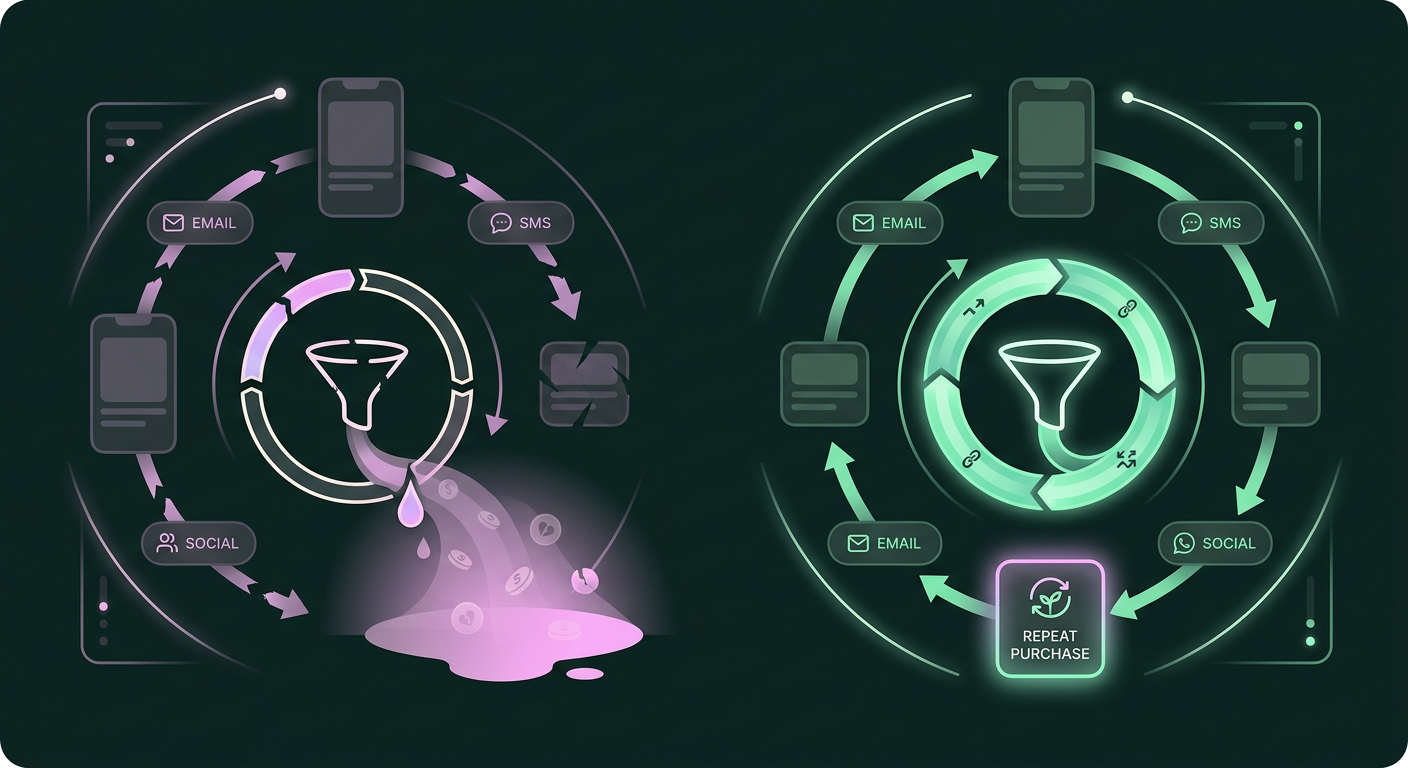
It's a frustrating feeling for any ecommerce brand: ad spend is climbing and new buyers are flowing in, but overall revenue is stubbornly flat. The growth you're paying for simply isn't sticking. This happens when a business gets stuck on an acquisition treadmill, pouring money into finding new customers because the old ones don't make a second purchase. If this sounds familiar, you're not alone. The average [ecommerce repeat purchase rate is just 18.8%](https://bsandco.The (opens in a new tab) average ecommerce repeat purchase rate is just 18.8%, which means 81% of customers you acquire will buy once and never return. This isn’t just a leaky bucket; for many brands, it’s a broken business model.
Your Ad Budget Is Burning, but Your Customers Aren’t Returning
The core problem is a near-total dependence on paid acquisition, which becomes unsustainable when those expensively acquired customers don't become repeat buyers. This creates a cycle where every dollar of revenue requires another dollar of ad spend, leading to stalled growth and shrinking margins.
After all the work of refining ads and optimizing your checkout, you finally convert a new customer. It feels like a victory, but then there's only silence. Once their order ships, they disappear. You might send them generic promotional emails, but without a real way to build a relationship, you're forced to go right back to the ad platforms to pay for another new customer, hoping this one will be different.
This cycle leaves brands feeling trapped. You're doing everything right on the acquisition side, yet the business isn't building any real momentum. That’s because a business with a repeat purchase rate below 20% is considered almost entirely acquisition-dependent (opens in a new tab). It's a hamster wheel of spending that leads to stagnation, not sustainable growth. Constantly having to start from scratch each month is a direct symptom of a low repeat purchase rate.
Why One-Time Buyers Are the Norm, Not the Exception
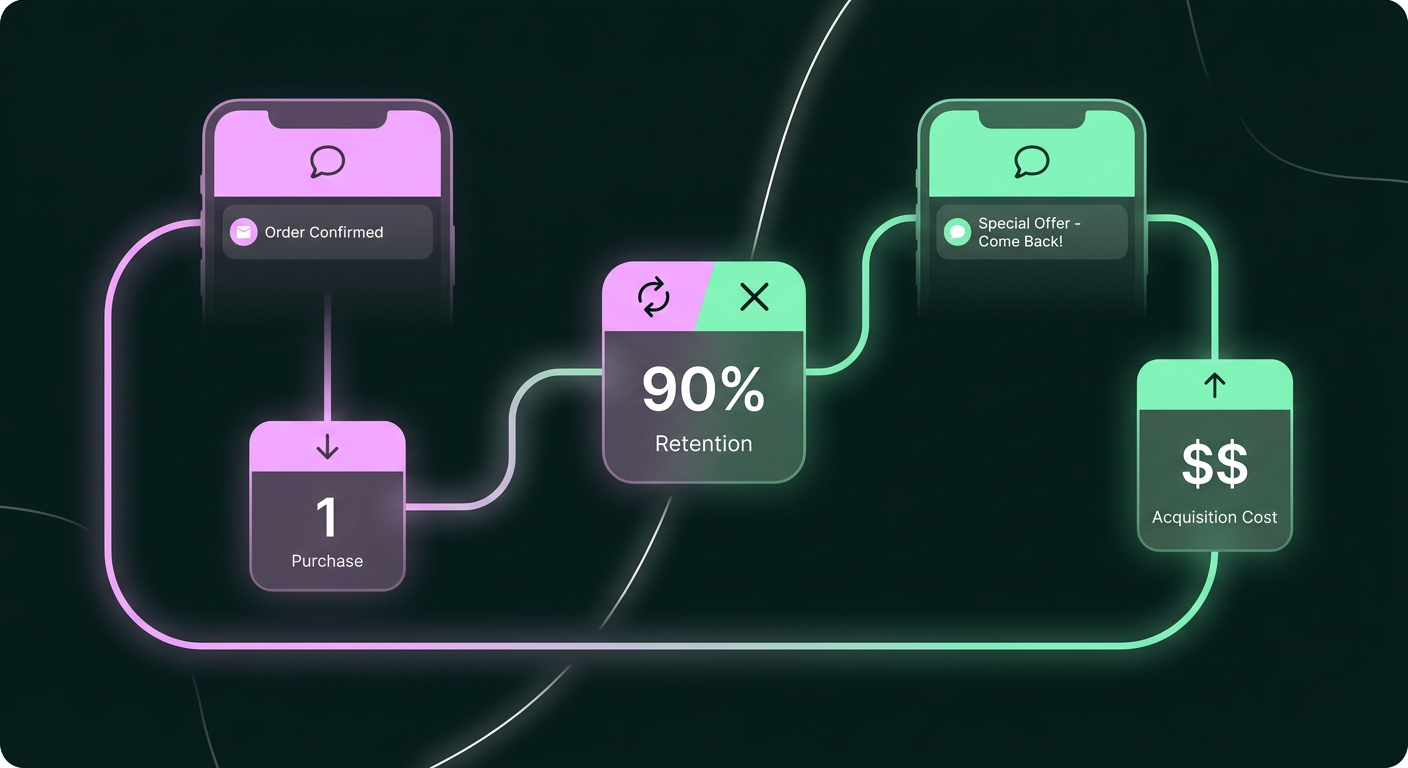
**One-time buyers have become the (opens in a new tab) default because acquiring new customers is incredibly expensive, while most brands neglect the far more profitable path of retaining the customers they already have. The issue isn't that your ads are broken; it's that your post-purchase strategy is missing.**
The Surface Cause: My Ads Aren't Working
When new customers don't return, (opens in a new tab) marketers often blame the top of the funnel by questioning their targeting, ad copy, or offer. While those elements are always worth optimizing, they are rarely the root cause of a retention problem. If your ads are cost-effectively generating a first purchase, they've done their job. Blaming acquisition for a retention failure is like blaming an introduction for a conversation that fizzles out. The real problem is what happens next.
The Real Cause: Acquisition Is Expensive, Retention Is Profitable
The reason one-time buyers are so common is purely economic: brands over-invest in expensive acquisition and under-invest in profitable retention. The data is clear on this point, showing that acquiring a new customer is 5 to 25 times more expensive (opens in a new tab) than keeping an existing one. This cost difference is the mathematical foundation for a retention-focused strategy.
The value of a repeat customer is also significantly higher. Beyond just saving on acquisition costs, they become better customers over time. On average, repeat customers spend three times more per visit (opens in a new tab) than first-time buyers. Viewing a first purchase as the start of a relationship, not the finish line, is what transforms a business's economic model. The problem isn't your ad spend; it's the missed opportunity to convert that first-time buyer into a long-term asset.
How to Diagnose Your Funnel’s Breaking Point
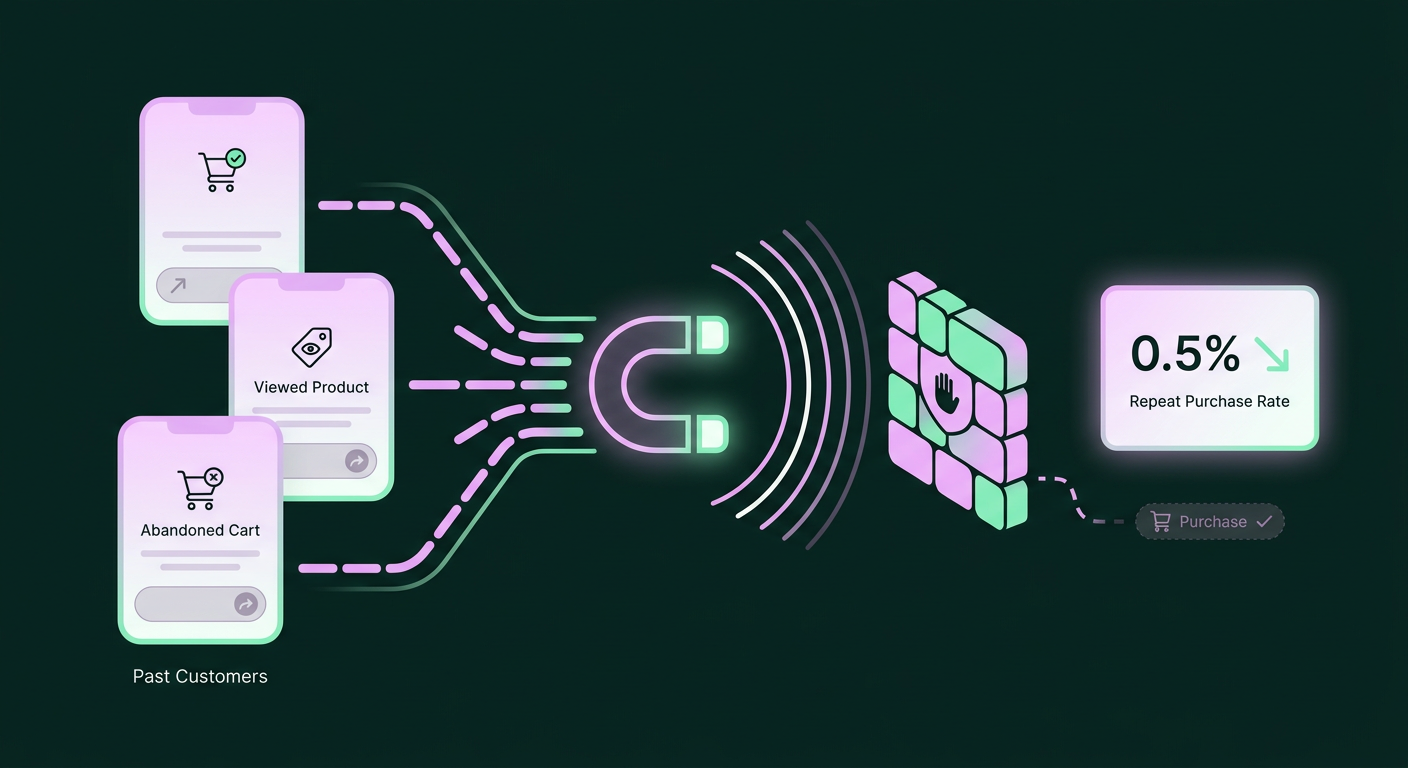
You can diagnose your funnel's breaking point by looking for key symptoms like stalled revenue growth despite continuous ad spend, an overly long gap before a second purchase, or a complete lack of meaningful post-purchase communication. These signals indicate that your retention engine is broken.
To pinpoint where your funnel has failed, look for these signs in your business.
Symptom: You’re stuck at a revenue plateau.
A flat revenue chart despite continuous ad spend is a classic sign of a broken retention funnel. This happens when customer churn equals or outpaces customer acquisition, forcing you to refill a leaky bucket as fast as it drains. According to industry benchmarks from Q1 2026, this pattern often starts early, with a reported 67% of brands stalling permanently between $25k-$40k/month (opens in a new tab) on their growth journey. But at any scale, the cause is the same: without a system for driving repeat purchases, growth is capped by your ad budget.
Symptom: Your second purchase window is too long.
The period right after a first purchase is a critical window when your brand is top-of-mind and excitement is high. Failing to follow up during this time causes the likelihood of a return purchase to plummet. Data shows that of the customers who do buy again, 50.3% make their second purchase within 30 days, and over 76% do so within 90 days. If your "time between purchases" metric is several months or more, you're failing to capitalize on crucial post-purchase momentum.
Symptom: You have no post-purchase communication.
Review what happens after someone buys from you. For most brands, the journey is impersonal: a transactional order confirmation, a shipping notification, and then silence. The customer is dropped into a generic email flow with no personalized welcome, no product check-in, and no helpful guidance. This silence is a massive unforced error that lets the new relationship wither before it can even begin.
Fixing the Leak: Re-Engage Buyers Where They Are
The fix is to shift your re-engagement strategy from crowded channels like email to the direct, personal channels where your customers actually live, like Instagram DMs. By delivering personalized post-purchase messages, you can start a conversation that naturally leads to the crucial second sale.
The solution requires a fundamental shift from one-to-many broadcasts toward one-to-one conversations that build relationships and drive action. Adopting this mindset is how you can increase your second purchase rate with DM automation.
Stop Relying on Email Alone
Email's effectiveness as a lifecycle marketing channel is fading. Consumer inboxes are overflowing with promotional messages, so people have learned to tune them out. As a result, your post-purchase flow is often lost in a sea of noise. While email still has its place, relying on it alone to drive repeat purchases is a recipe for disappointment. To actually break through, you need to meet customers on a personal channel they already use and pay attention to.
Use Post-Purchase DMs to Secure the Second Sale
To re-engage a first-time buyer, you need to connect with them directly on an app like Instagram. A well-timed, personalized 1:1 DM transforms the relationship from transactional to conversational. Instead of sending a generic "Thanks for your order," you can send a truly helpful message like, "Hey [Name], saw you just picked up the [Product Name]. Great choice! We have a quick video on how to get the most out of it if you're interested."
This kind of personalized communication is remarkably effective. A 2024 analysis from Twilio Segment confirmed just how much of a difference it makes.
"First-time buyers who receive personalized post-purchase communications show 45% higher second-purchase rates than those who receive no post-purchase outreach." , Twilio Segment, 2024
This lift is driven by real conversation. You can use DMs to check in, answer questions, or offer early access to new products. Each interaction deepens the relationship and makes the next purchase feel natural and welcome. Securing that second sale is the key, because from there, the probability of another purchase increases dramatically. Getting a customer to buy a second time makes a third purchase 45% more likely, creating a powerful compounding effect. Building your retention engine around DM conversations is what turns one-time buyers into loyal, repeat customers.
How You’ll Know It’s Working: The Flywheel Effect
You'll know it's working when you see a virtuous cycle, or flywheel effect, begin to turn: your repeat purchase rate climbs, your customer lifetime value (LTV) increases, and your reliance on expensive paid acquisition diminishes. Each purchase will start to fuel the next, creating sustainable, profitable growth.
The goal isn't just to plug a leak; it's to build a self-sustaining growth engine. The metric to watch is your ecommerce repeat purchase rate, and as it climbs past the 20% and 25% marks, you'll see a profound shift in your business dynamics.
This is the flywheel effect in action. As more first-time buyers become second-time buyers, your business builds momentum. That second purchase makes a third 45% more likely, and a third purchase makes a fourth 54% more likely. Each turn of the flywheel adds more energy to your business, building a base of loyal fans instead of just a list of one-off customers. As you focus on this journey, you can increase customer lifetime value without more ads.
This momentum directly boosts LTV and creates predictable revenue, since customers with a personal connection to your brand buy more often and have higher average order values. A loyalty program can amplify this even further, as members typically generate more revenue than non-members. This is how you build a resilient business that isn't dependent on ever-rising ad costs. It gets you off the acquisition treadmill and onto a path of profitable, long-term growth.
Frequently asked questions
How do I know if I should prioritize acquisition or retention right now?
A key benchmark to look at is your repeat purchase rate. If your rate is below 20%, your business is considered almost entirely dependent on paid acquisition. In that scenario, every dollar of revenue requires a new marketing dollar to produce it, which is an unsustainable model. Prioritizing retention to lift that rate above 20% is critical for building a more stable and profitable business.
What's the best way to turn my one-time buyers into repeat customers?
The most effective method is timely, personalized post-purchase communication. Instead of relying solely on generic emails, reaching out via a direct channel like an Instagram DM can make a significant impact. A 2024 study from Twilio Segment confirmed that first-time buyers who receive this kind of personalized outreach have a significantly higher second-purchase rate compared to those who receive none.
Why does it cost so much more to acquire a new customer than to keep one?
Acquiring a new customer involves significant costs across the entire marketing and sales funnel, from advertising spend and content creation to promotional offers just to get their attention. Retaining a customer, on the other hand, builds on an existing relationship where the initial trust has already been established. Research shows that it can cost anywhere from 5 to 25 times more to attract a new customer than to keep a current one, making retention a far more efficient path to growth.
What kind of lift can I expect from a loyalty program?
A well-designed loyalty program can be a powerful tool for increasing customer retention and revenue. By rewarding repeat business, you give customers a clear incentive to continue purchasing from your brand. On average, members of a loyalty program generate more revenue over time than non-member customers. By rewarding repeat business, you give customers a clear incentive to continue purchasing from your brand. On average, members of a loyalty program generate between 12% and 18% more revenue over time than non-member customers.
Why do so many DTC brands get stuck and plateau?
Many direct-to-consumer brands plateau because their business model becomes overly dependent on paid acquisition without a strong retention engine. This creates a "leaky bucket" where they must spend more and more on ads just to replace the customers who don't return. Industry data from early 2026 shows that 67% of brands get stuck and stall permanently in their growth phase because they can't make the leap from an acquisition-only to a retention-focused model.
How can I increase my customer lifetime value if I don't have a subscription model?
How can I increase my customer lifetime value if I don't have a subscription model? You can significantly increase LTV by focusing on driving the second and third purchases. The probability of a customer returning grows with each purchase they make. For instance, securing a second purchase makes a third purchase 45% more likely, and a third makes a fourth 54% more likely. The probability of a customer returning grows with each purchase they make. For instance, securing a second purchase makes a third purchase 45% more likely, and a third makes a fourth 54% more likely. Using personalized DMs to guide customers to their next purchase is a highly effective, non-subscription strategy for building this momentum.