
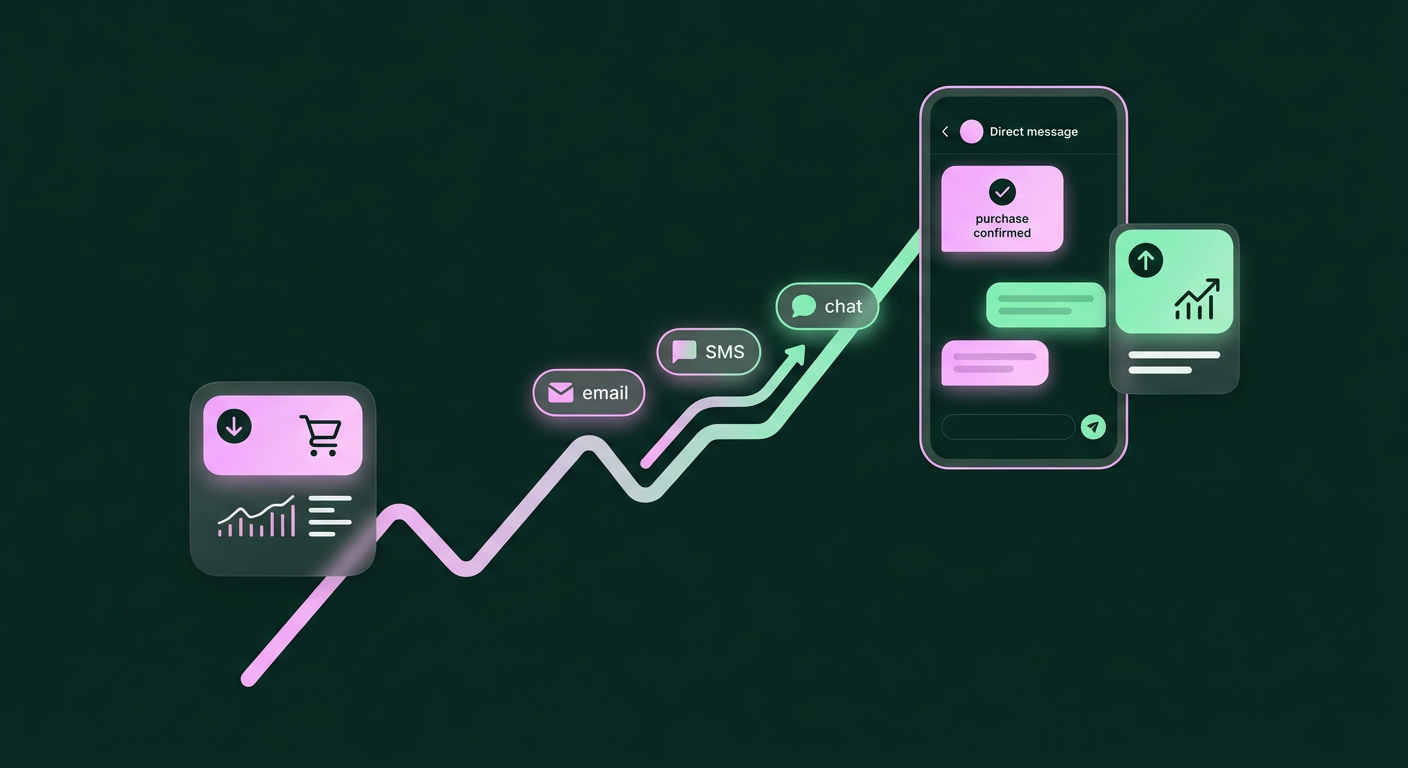
For years, the e-commerce world has been stuck trying to fix a single, stubborn number. Despite endless optimization, the average cart abandonment rate remains a massive problem, projected to hold steady at 70.22% in 2026 (opens in a new tab) based on a meta-analysis of dozens of studies. That figure has barely moved for years. The real story isn't the rate itself, but the fact that our tools for fighting it are breaking. The traditional playbook, which relies almost entirely on abandoned cart emails, is rapidly losing its punch, with projections showing email recovery rates are set to decline to just 12% by 2026 (opens in a new tab). This widening gap between a persistent problem and a failing solution means it's time for a new way to win back your most valuable shoppers.
The Unchanged Problem: A 70% Cart Abandonment Rate
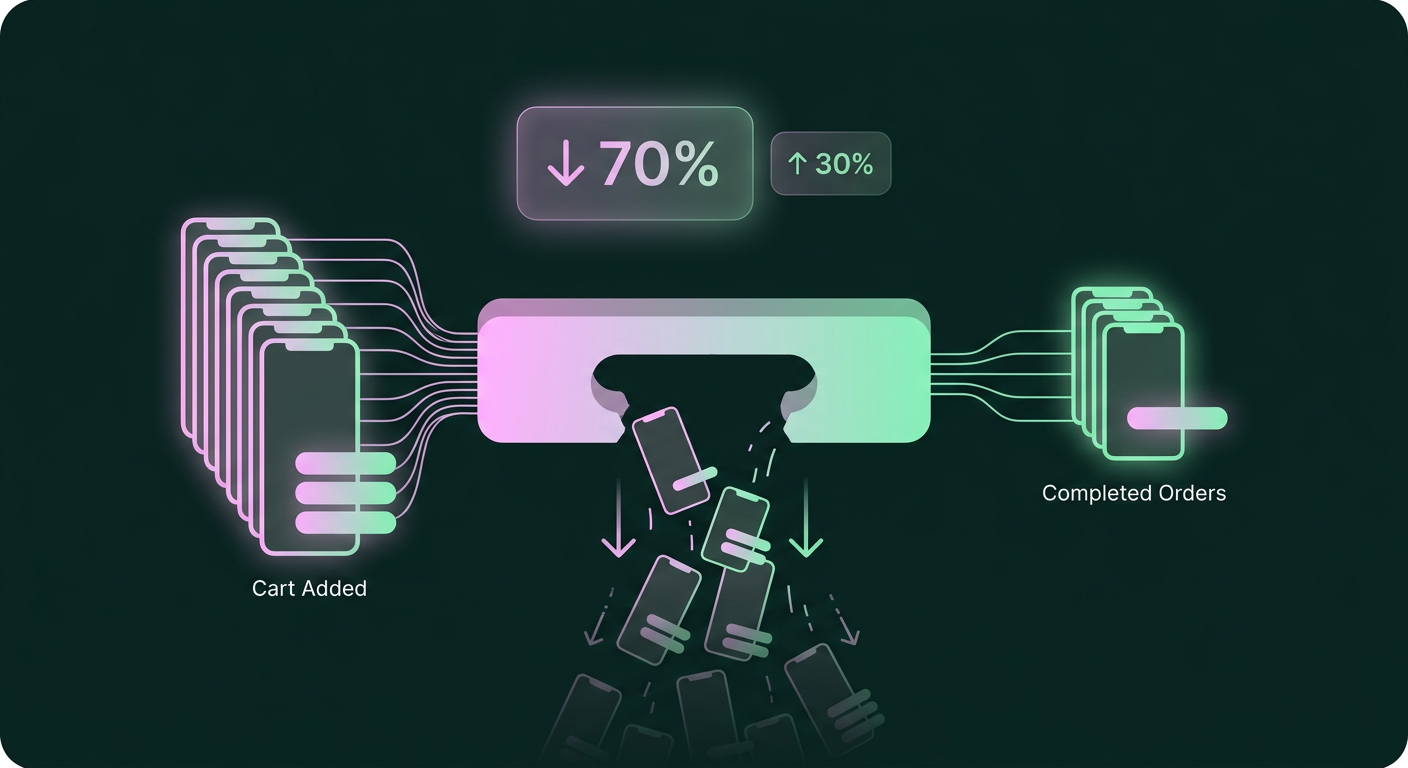
The core challenge for e-commerce brands has not changed: roughly seven out of every ten shoppers who add an item to their cart will leave without buying. This isn't a new trend, but a frustrating reality confirmed by years of data. What has changed is that our primary weapon against it, email automation, is becoming a much weaker tool.
For any head of e-commerce, that 70% figure is a constant source of frustration. You invest heavily in driving traffic, optimizing product pages, and building a brand, only to watch the majority of potential revenue evaporate at the final step. This isn't just an anecdotal feeling; a detailed analysis of 49 different studies confirmed the average cart abandonment rate was 70.19% in 2025 (opens in a new tab), showing just how little this metric has budged over time.
Each abandoned cart represents a high-intent customer who was just moments away from a purchase. The old strategy was simple and, for a while, effective enough: send a sequence of automated emails to remind them of what they left behind. But with inboxes more saturated than ever and customers growing numb to marketing messages, the reliability of that approach is collapsing, forcing brands to confront a difficult truth: the old playbook no longer delivers.
Then and Now: Why the Old Recovery Playbook Is Fading
Your old cart recovery playbook is failing because it was built for a desktop-first world where email was the main way to communicate online. Today, your customers shop on their phones, where they live in messaging apps, not their email inboxes. This creates a massive disconnect between where you're sending messages and where they're actually paying attention.
Think back to the golden age of email marketing. Inboxes were less crowded, so a well-timed message from a brand could feel personal and helpful. Sending an abandoned cart email was a reliable tactic because it landed in a space where customers were actively engaged. That world is gone. Now, promotional emails are often automatically filtered, buried under dozens of other messages, or simply ignored. Customers have developed a kind of banner blindness for their own inboxes, which helps explain why email open rates are declining across the board.
This decline is amplified by a fundamental shift in customer behavior. Most e-commerce browsing and shopping now happens on mobile, which completely changes the context of cart abandonment. According to 2026 projections, mobile devices see a staggering 80.02% cart abandonment rate (opens in a new tab), much higher than on desktop. When a shopper abandons a cart on their phone, they aren't sitting in front of an email client. They're in a mobile-native world, moving between social media, messaging apps, and other apps. Sending an email to this user is like leaving a note on their desk when they've already left the office. The message is completely disconnected from their immediate context and, as a result, is far less likely to be seen or acted upon.
The Real Cost: Losing Your High-Intent Shoppers
When your recovery playbook is broken, the direct cost is the lost revenue from your highest-intent shoppers. These aren't casual browsers. They are customers who have signaled a clear desire to buy, and when your outreach fails to connect with them, you are letting your most qualified leads walk away unanswered.
It’s easy to write off cart abandonment as just a cost of doing business, but this overlooks the quality of the revenue you're losing. A person who adds a product to their cart has already cleared multiple hurdles. They found your site, browsed your products, evaluated their options, and made a conscious decision to move forward. They are as close to a guaranteed sale as you can get. When your email or generic SMS reminder gets ignored, you’re not just losing a transaction; you’re losing a customer who was actively trying to give you their money.
This problem is universal, though its intensity varies by industry. For instance, some analyses show that the finance sector experiences the highest cart abandonment rate of all at 83.6%, which shows how severe the issue can be when complex decisions or forms are involved. But regardless of the sector, the dynamic is the same: a high-intent shopper’s journey is interrupted, and the brand’s attempt to re-engage them is sent to a channel they aren't even watching. The result is a silent, continuous bleed of bottom-of-funnel revenue that no amount of ad spend can fix. This isn't a failure of customer intent; it's a failure of the communication channel.
Where It’s Working: The Move to Conversational Recovery
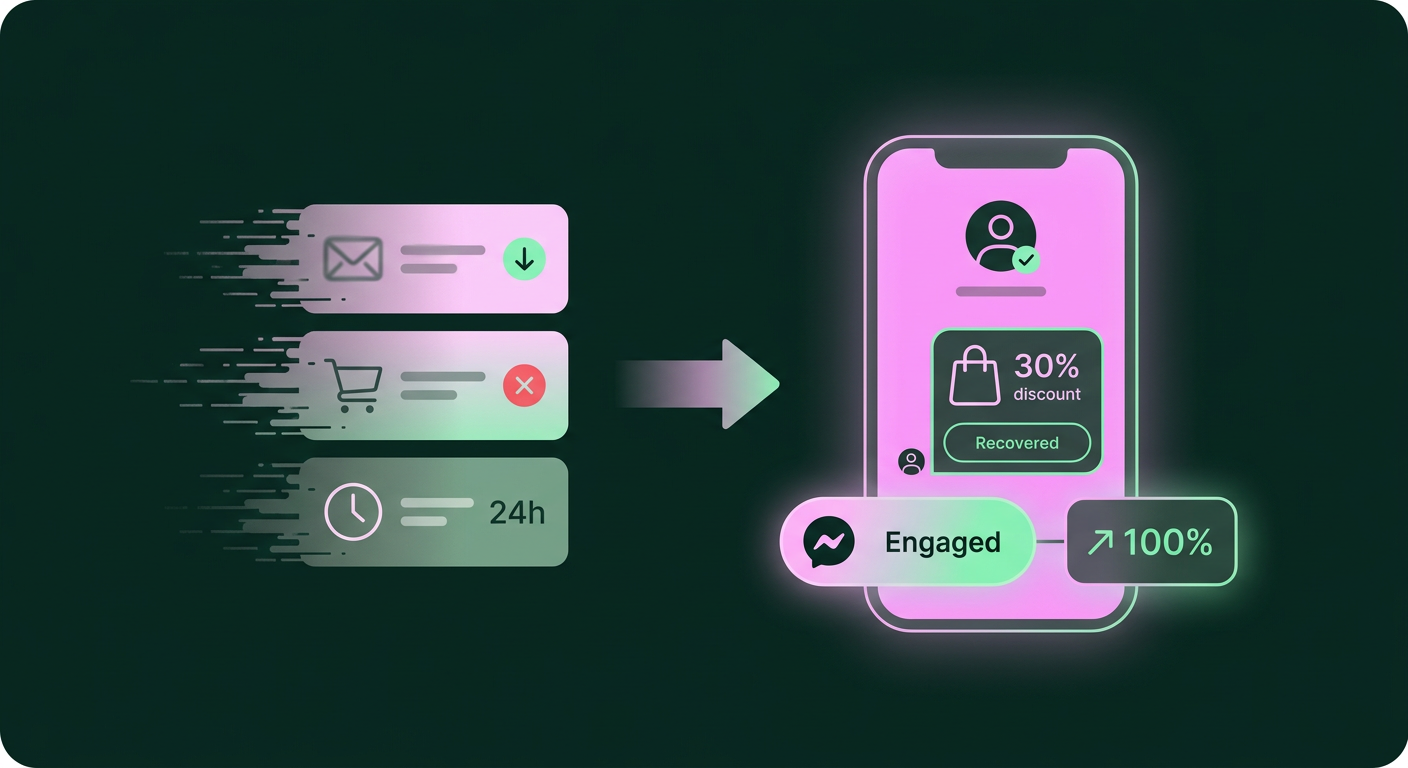
The smartest brands are finding success by shifting their recovery efforts from one-way email campaigns to two-way conversations inside direct messaging apps. Instead of just sending a reminder, they are starting helpful, personalized 1:1 conversations on platforms like Instagram and WhatsApp, meeting customers in the apps they already use every day.
If the old channels are failing, the next step is to find the channels where customers are actually engaged. For the modern mobile shopper, that means messaging apps. This is where conversations with friends and family happen, making it an environment built for immediate, personal interaction. Forward-thinking brands are tapping into these platforms for cart recovery, and the results show a clear path forward. This approach leaves behind the static, one-to-many model of email and embraces a dynamic, one-to-one conversational style.
Instead of an automated email that says, "You left something in your cart," a conversational DM might ask, "Hey, saw you were looking at the running shoes. Did you have any questions about sizing before you check out?" This simple shift changes the entire dynamic from a generic marketing prompt to a helpful, personal touch. It opens the door for a real conversation, allowing you to overcome last-minute hesitation, answer questions, or even offer a small incentive in a way that feels supportive, not automated. It’s a strategy that fundamentally rethinks what cart recovery can be: not just a reminder system, but a powerful conversion and customer service tool rolled into one. By using these kinds of conversational use cases (opens in a new tab), brands are turning abandoned carts into sales while creating a better customer experience.
How to Recalibrate Your Cart Recovery Strategy
You can recalibrate your strategy by systematically shifting resources away from optimizing a declining channel (email) and toward piloting a new, high-engagement one (DMs). This means using AI to automate personalized, context-aware outreach at scale, so you can start these valuable conversations without overwhelming your team.
Making this shift doesn't require tearing down your existing systems overnight. It’s about a strategic recalibration. The first step is to acknowledge that pouring more effort into email subject lines will only produce tiny gains. The real opportunity lies in diversifying your approach and embracing the channels where your customers are most active. This is where you can follow the new rules of abandoned cart recovery software by moving into conversational channels.
A pilot program for DM-based recovery is a practical way to start. You can integrate a system that triggers a personalized DM on Instagram or WhatsApp when a cart is abandoned. The key to making this work at scale is automation, but not the impersonal kind from the past. Modern AI can generate context-aware messages that feel human, referencing the specific items in the cart, asking relevant questions, and responding intelligently to replies. This isn’t about replacing human agents but empowering them, letting automation handle the initial outreach so your team can focus on the high-value conversations that close a sale.
The financial upside is significant. In 2026, projections show that AI-powered recovery methods are estimated to reclaim $14.2 billion in revenue globally.
"14.2B Revenue recovered via AI-powered methods globally (2026 est.)" , Digital Applied
This figure highlights the immense potential of using intelligent automation to engage customers in a more direct and effective way. Your goal should be to transform cart recovery from a passive, easily ignored email flow into an active, engaging, and revenue-generating conversation.
What to Watch: The Future is AI-Powered, 1:1 Conversations
The future of cart recovery, and much of customer communication, is in scaling personalized, AI-powered 1:1 conversations across the entire customer lifecycle. The current move to DM-based recovery is just the beginning. The next evolution will make these interactions even more contextually aware, predictive, and seamlessly integrated into the customer journey.
As you begin to implement a conversational recovery strategy, it’s important to see it not as a final destination but as the first step in a much larger shift. The technology enabling personalized 1:1 DMs is advancing quickly. Soon, AI won't just start a conversation; it will be able to predict a customer's potential objections, proactively offer relevant information, and maintain a consistent, helpful personality that reflects your brand. This move toward a more intelligent, full-funnel communication strategy is how you can increase customer lifetime value in a sustainable way.
This means the same systems used for cart abandonment will extend to other parts of the customer experience, from welcoming new subscribers to re-engaging lapsed customers with a timely, personal win-back message. The lines between marketing, sales, and support will continue to blur as these AI-assisted conversations handle queries and guide customers from one stage to the next.
The ultimate goal is to build genuine relationships with your customers at scale. Instead of treating every interaction as a transaction to be optimized, you'll be nurturing a long-term connection through helpful, timely, and personal communication. The brands that master this will not only solve their cart abandonment problem but will also build a more resilient and loyal customer base for years to come.
Frequently asked questions
Why is trying to lower my cart abandonment rate so frustrating?
It's frustrating because you're fighting a massive, persistent problem where around 70% of potential sales disappear at the last second. What makes it worse is that the traditional solution, email marketing, is becoming less and less effective. You end up pouring effort into a system that delivers diminishing returns, which feels like running in place.
Are abandoned cart emails still worth sending?
Abandoned cart emails can still have a place in your strategy, but they should no longer be your primary method. With email recovery rates projected to fall to as low as 12% by 2026, relying on them exclusively means accepting a very low success rate. It's better to think of them as a secondary touchpoint within a broader approach that prioritizes more direct channels like DMs.
What is the best way to recover abandoned carts now?
The most effective modern approach is conversational recovery through direct messaging platforms like Instagram and WhatsApp. By using AI-powered automation to send personalized 1:1 DMs, you can engage shoppers in a real-time conversation, answer their questions, and guide them back to the checkout. This method meets customers on the platforms they actually use and replaces impersonal reminders with helpful, engaging interactions.
How can I reduce my Shopify store's cart abandonment rate?
To reduce cart abandonment on your Shopify store, you need to focus on the channels where your users are most active. Since cart abandonment on mobile devices is significantly higher at over 80%, a mobile-native recovery strategy is essential. Integrating an app that automates personalized cart recovery via Instagram DMs or WhatsApp is one of the most direct ways to engage these mobile-first shoppers and bring them back to complete their purchase.
What's the difference between browse abandonment and cart abandonment?
Browse abandonment is when a visitor looks at product pages but leaves your site without adding anything to their cart. Cart abandonment is when a visitor adds one or more items to their cart but leaves before completing the purchase. Cart abandonment signals a much higher level of purchase intent, which makes those shoppers a more valuable and urgent group to re-engage.
Can I use Instagram bots to help recover abandoned carts?
Yes, but it's more effective to think of them as AI-powered conversational assistants, not old-school "bots." The goal isn't to send spammy, robotic messages. Instead, modern tools use AI to send personalized, context-aware DMs that start a human-like conversation. This automated outreach can ask relevant questions about the products in the cart, creating a helpful interaction that recovers the sale without feeling intrusive.