
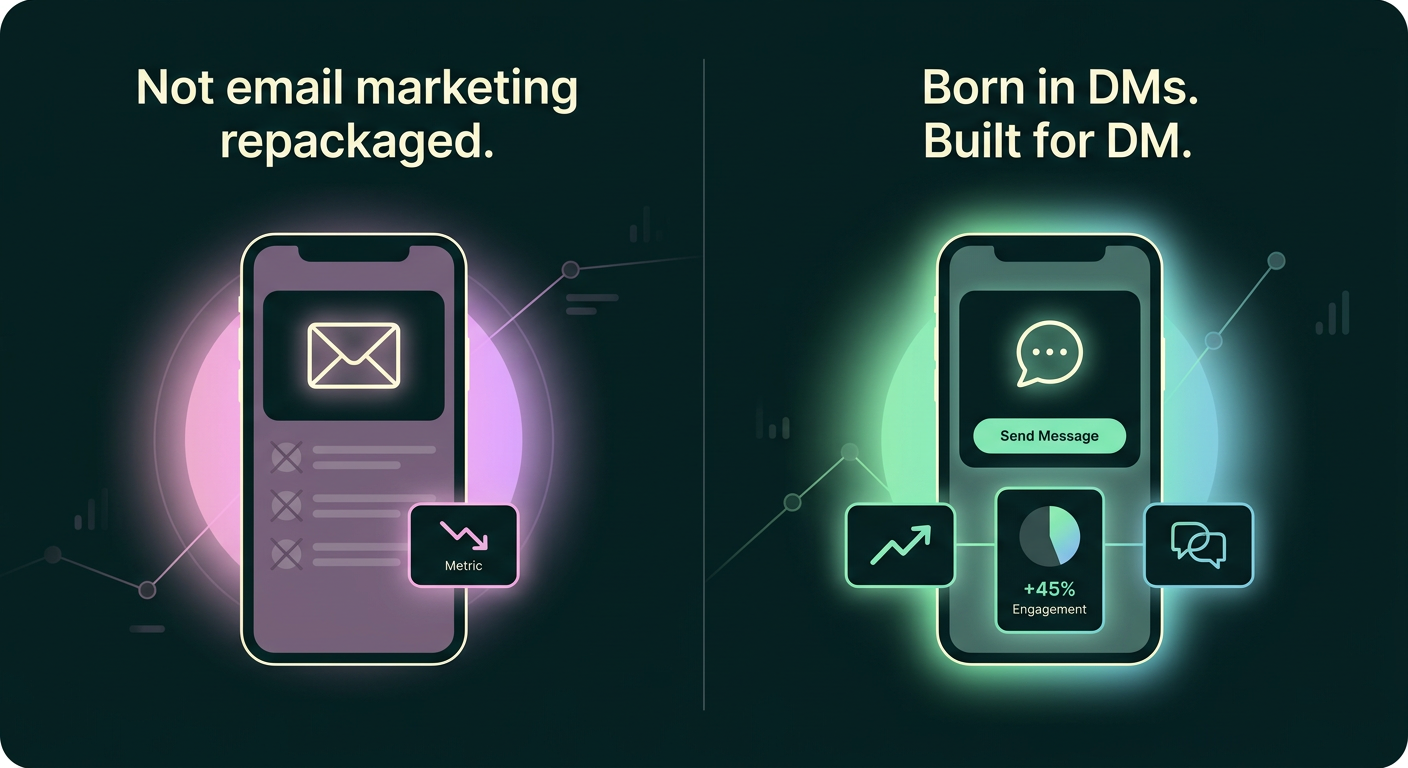
For user acquisition managers, the writing has been on the wall for a while. The once-reliable engine of direct install campaigns is starting to sputter as costs climb to unsustainable levels. You’re likely watching your Cost Per Install (CPI) rise, squeezing margins and making you wonder if your Customer Acquisition Cost (CAC) will soon outpace the Lifetime Value (LTV) of the users you're fighting to acquire. The choice is no longer about which creative to run, but which fundamental acquisition strategy to bet on. Sticking with the familiar means competing in an ever more expensive arena, while exploring a new funnel can feel like a step into the unknown.
Are Your Install Ads Hitting a Ceiling?
In many cases, yes. The steady increase in ad costs and channel saturation means the traditional model of paying directly for installs is delivering diminishing returns for many mobile brands. For years, the UA playbook was simple: run an ad, send the user to the app store, and measure the install. That simplicity has become a liability as competition intensifies, making the cost of that direct path unsustainable for many.
The numbers bear this out. By 2022, the average cost for a single mobile app install had already climbed to $2.60, and more recent data from October 2023 shows the average CPI still hovering around $2.09 (opens in a new tab). When you're paying that much for every install, your app needs to monetize users quickly and effectively just to break even, putting immense pressure on your entire in-app economy. This isn't a temporary spike; it’s the new reality of a mature ad ecosystem where everyone is bidding for the same limited user attention.
The 4 Dimensions That Define a Winning UA Strategy
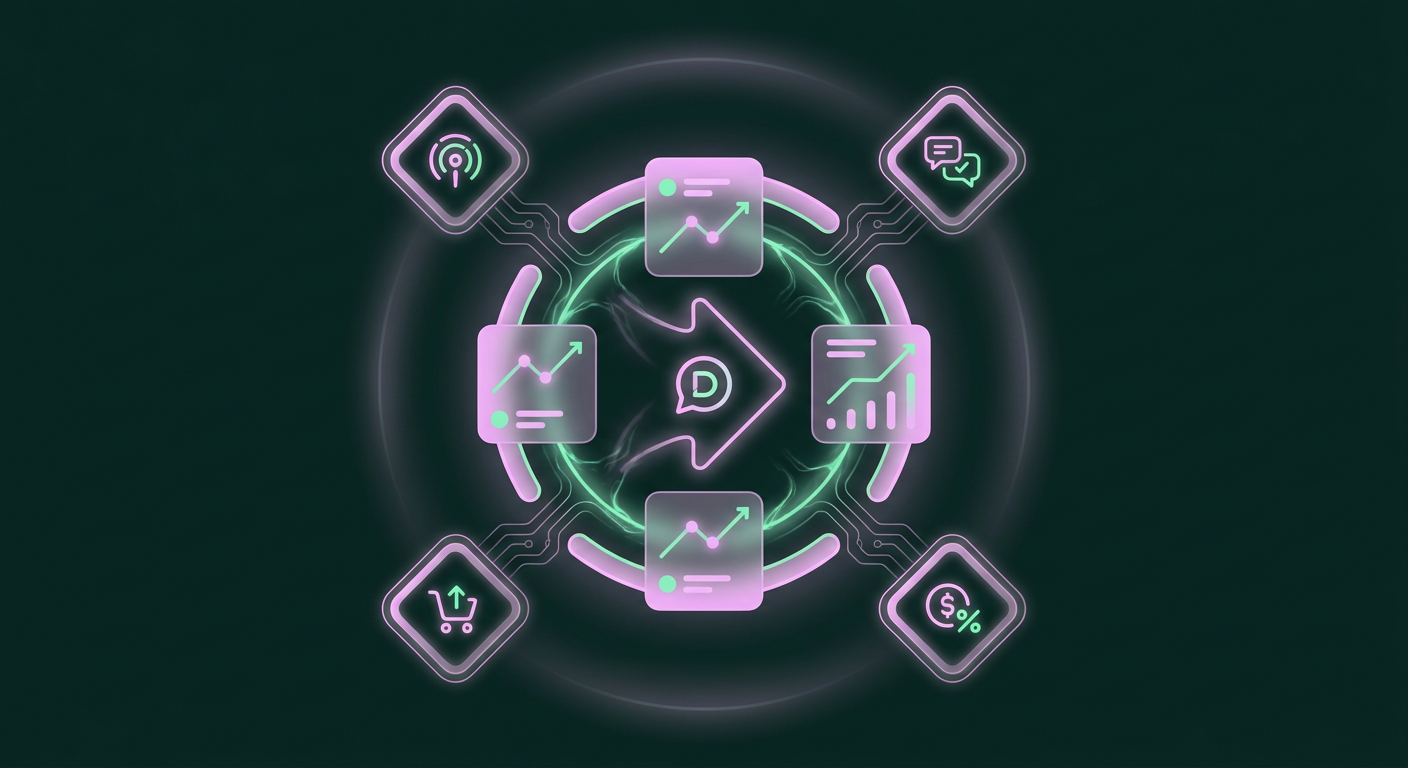
Since the old install-ad cycle (opens in a new tab) is becoming too expensive, the only way forward is to find a new funnel. But "new" doesn't automatically mean "better." A truly effective UA strategy does more than find a low CPI on a single campaign; it builds a sustainable, long-term growth engine. To find an approach that actually improves your return on ad spend (ROAS), you should evaluate it across four key dimensions.
Direct Acquisition Cost (CPI)
This is the most obvious metric: the bottom-line cost to get a user to install your app. What's more important, however, is the blended cost across all your channels. A winning strategy doesn't just find the single cheapest install; it finds a channel that can lower your overall acquisition cost, creating a healthier margin between what you spend and what a user is worth.
User Experience & Engagement Quality
What happens in the moments before the install? A traditional ad is a transactional, impersonal jump from A to B. Funnels that introduce a conversational step can pre-qualify users, answer their questions, and build a sense of connection before they even open the app. This better initial experience often leads to higher-intent users who are more likely to retain and spend.
Long-Term Asset Building
This is arguably the most overlooked dimension of acquisition. When a user sees your ad and doesn't install, that budget is usually lost forever. A superior strategy gives you a second chance by building a retargetable audience you own. Creating a subscriber list in a channel like DMs gives you a valuable asset that decouples your marketing from the constant need to pay platform ad tolls, which is the foundation of a new direct-to-consumer marketing strategy.
Attribution & ROI Measurement
How easily can you connect ad spend to a final install and later in-app purchases? The elegance of traditional install ads is their straightforward, click-to-install attribution. More complex funnels require more sophisticated tracking to connect an initial ad engagement to an install that might happen hours or days later. You have to be able to accurately measure ROI to justify the strategy, even if it requires a bit more setup.
Head-to-Head: Click-to-Messenger vs. Traditional Ads
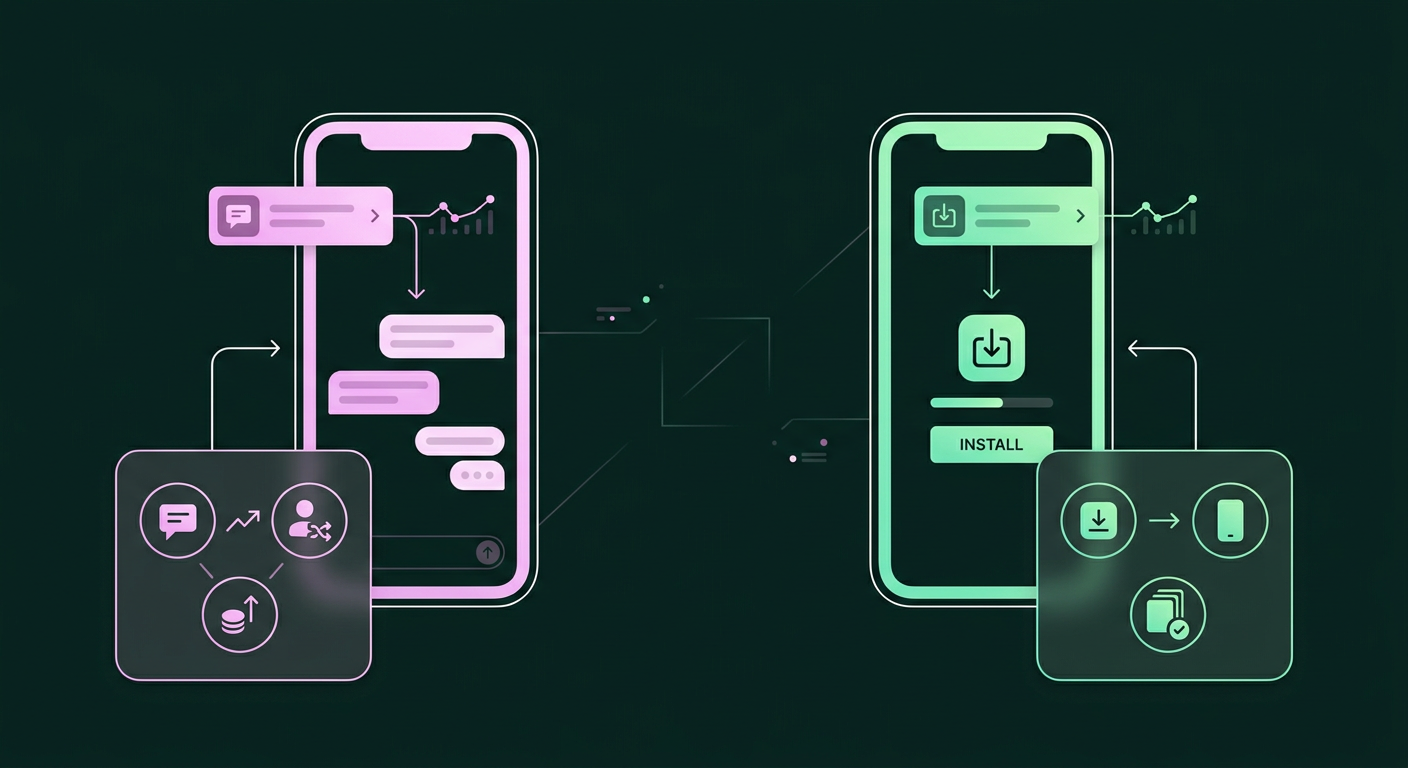
When you compare them directly, Click-to-Messenger ads offer a lower cost per engagement and build a long-term asset, while traditional ads provide simpler attribution and a more direct path to an install. The best choice hinges on which of these trade-offs aligns with your goals. By introducing a conversation as a middle step, CTM fundamentally changes both the economics and the user experience of your acquisition funnel.
Now, using the criteria we just defined, let's see how the two strategies stack up.
| Criteria | Click-to-Messenger Ads | Traditional Install Ads |
|---|---|---|
| Acquisition Cost | Lower cost per engagement | Higher direct CPI |
| User Experience | Conversational & personal | Direct & transactional |
| Long-Term Asset | Builds a subscriber list | No retargetable asset |
| ROI Attribution | Requires multi-step tracking | Simple, direct tracking |
The core difference in cost comes from what you're asking the ad platform to optimize for. Traditional app install campaigns optimize for an install, which is a high-value and therefore expensive action, often costing between $0.80 to $3.00 per install (opens in a new tab) in competitive markets.
Click-to-Messenger (CTM) ads, on the other hand, optimize for a much less expensive event: starting a conversation. Because sending a message is a lower-friction action than downloading an app, the initial cost per engagement is significantly lower. Your budget goes further, initiating conversations with more potential users for the same price. The goal then shifts to converting that engaged user into an installer through a personalized DM flow. Dynamo's own metrics show a cost per subscriber of just $1.20, with a final install cost that is often 15-50% cheaper than direct UA campaigns. This approach provides a clear path for brands who are tired of high CAC and need a more efficient way to grow.
From a user experience perspective, the difference is profound. A standard ad is a monologue; a CTM campaign is a dialogue. It gives you the chance to greet a user personally, highlight a specific benefit of your app, or even offer a small in-game bonus for downloading. This conversational warm-up creates a much stronger first impression than being dropped onto a sterile app store page. The trade-off, however, lies in attribution. Tracking a click that leads directly to an install is simple. Tracking a user who clicks an ad, chats in Messenger, and then installs the app three days later requires a more robust attribution model to connect the dots and accurately calculate your ROI. While entirely possible, it's an added layer of complexity.
Finally, and most critically, CTM builds an asset. Every user who messages you becomes a subscriber you can contact again. Even if they don't install right away, you haven't lost them, you've gained a contact on a high-engagement channel. You can nurture them toward an install, re-engage them if they churn (opens in a new tab), or cross-promote to them in the future. With traditional install ads, there's no consolation prize. If the user doesn't click or install, your money is simply gone.
Which Ad Funnel Is Right for You?
The right choice depends on your immediate goals and budget. If you need maximum install velocity and have the budget for high CPIs, traditional ads are still a viable option. But if your priority is lowering your blended CAC and building a durable marketing asset, Click-to-Messenger is the clear winner. This isn't about one being universally "better," but about which tool is right for the job.
Stick with Traditional Ads if: You have a large budget and need maximum install velocity right now.
There are situations where the simplicity and speed of traditional install ads are exactly what's needed. If you're launching a new app and must hit a critical mass of users quickly, or if your primary KPI is raw install volume, the direct-to-store funnel is the most straightforward path. You pay a premium for that speed, accepting that the average install cost rose to $2.60 in 2022, but you get a predictable, high-volume firehose of new users without the added complexity of a multi-step funnel.
Switch to Click-to-Messenger if: You need to lower your blended CAC and build a long-term audience.
If your focus is on capital efficiency and sustainable growth, the CTM funnel is a more strategic choice. This approach is designed for UA managers who are hitting a wall with rising costs. By optimizing for a cheaper initial action (a conversation), you lower your entry cost and get the chance to convert engaged users through a personalized messaging flow. Even if only a fraction of them install immediately, you're building a list of warm leads for the future. Facebook's own data supports this, showing that on average, ads that click to Messenger can deliver 11% more purchases (opens in a new tab) compared to optimizing for conversations alone. This strategy is an investment in an owned audience that reduces your long-term dependency on expensive ad clicks.
How to Start Your First CTM Campaign
Getting started is more straightforward than you might think. Instead of creating complex, branching dialogues, you can launch your first campaign by focusing on a simple flow that turns public engagement into a private conversation using automation.
A popular and powerful method is to use comment automation on your Facebook or Instagram posts. You can run an ad or a regular post asking users to comment with a specific keyword to receive a special offer, a download link, or exclusive content. When a user comments, an automated system can instantly send them a personalized DM with the promised asset and a link to install your app.
This is a feature that works reliably. For instance, some of the most popular platforms allow you to set a keyword trigger on your post or Reel, and every commenter gets an automatic public reply and a private DM.
, Filipkonecny.com (opens in a new tab)
This approach, sometimes called comment-to-DM, is an ideal first step into conversational acquisition because it leverages public social proof (all the comments on a post) to drive private, one-on-one conversations where you can make your pitch directly. From there, you can measure engagement, track installs, and begin building the valuable, long-term audience that makes this strategy so powerful.
Frequently asked questions
How much can I actually save on acquisition costs with Click-to-Messenger?
You can potentially save a significant amount because you're optimizing for a cheaper initial event than a direct install. The cost of a traditional app install ad on Facebook has been rising, with the click leading to an install reaching $1.30. In contrast, CTM focuses on starting a conversation, a much lower-cost event. While your final CPI will depend on your conversion rate from chat to install, platforms like Dynamo report a cost per subscriber of around $1.20, with an effective CPI that is 15-50% lower than direct UA.
What kind of conversion rate should I expect from a Messenger conversation to an actual app install?
This can vary widely, but you can use app store conversion rates as a helpful benchmark. Once you send a user a link to the app store from your Messenger conversation, their behavior will be similar to anyone else landing on that page. The average page view to install conversion rate is 33.7% for the Apple App Store and 26.4% for the Google Play Store. Your specific rate will depend on how well your Messenger conversation pre-qualified the user and the quality of your app store listing.
Do I have to use a chatbot or can I handle the messages manually?
You could start manually with very low volume, but automation is essential for scaling. The primary benefit of CTM ads is their ability to engage thousands of users at scale, 24/7. Using an automation platform lets you instantly reply to every user, guide them through a personalized 1:1 conversion flow, and ensure no lead is left waiting. Most brands use automation to handle the initial conversation and then have human agents step in for more complex questions.
How do I track the ROI of a user who clicks an ad but installs the app a week later?
This requires multi-touch attribution with the right tools. Unlike direct install ads, the conversion path is longer, so you have to connect the initial ad click to the Messenger conversation and then to the eventual app install. This is typically done by passing user IDs through the flow or by working with an attribution partner that can connect events across different platforms and time windows. You would set an attribution window (e.g., 7-day or 28-day) to give credit to the CTM campaign for installs that happen after the initial interaction.
Can I use Click-to-Messenger ads on platforms other than Facebook?
Yes, the "Click-to-Message" concept extends beyond just Facebook Messenger. This ad format is also available for Instagram Direct Messages and WhatsApp, allowing you to start conversations on the Meta platform where your audience is most active. Automation platforms can often manage conversations across multiple channels, including Messenger, Instagram, and WhatsApp, all from a single hub.
Does this strategy work better for games or for utility apps?
This strategy is effective for both, though the messaging and offers will differ. For a mobile game, you can offer in-game currency or a starter pack to incentivize an install. For a utility or travel app, you might offer a free trial, a discount on a first purchase, or a useful guide. Data shows that install-to-purchase rates vary by industry, with travel apps at 2.41% and retail at 1.38%, suggesting that any app with a clear value proposition can successfully convert users. The key is to tailor the conversational flow to what a prospective user would find most valuable.