
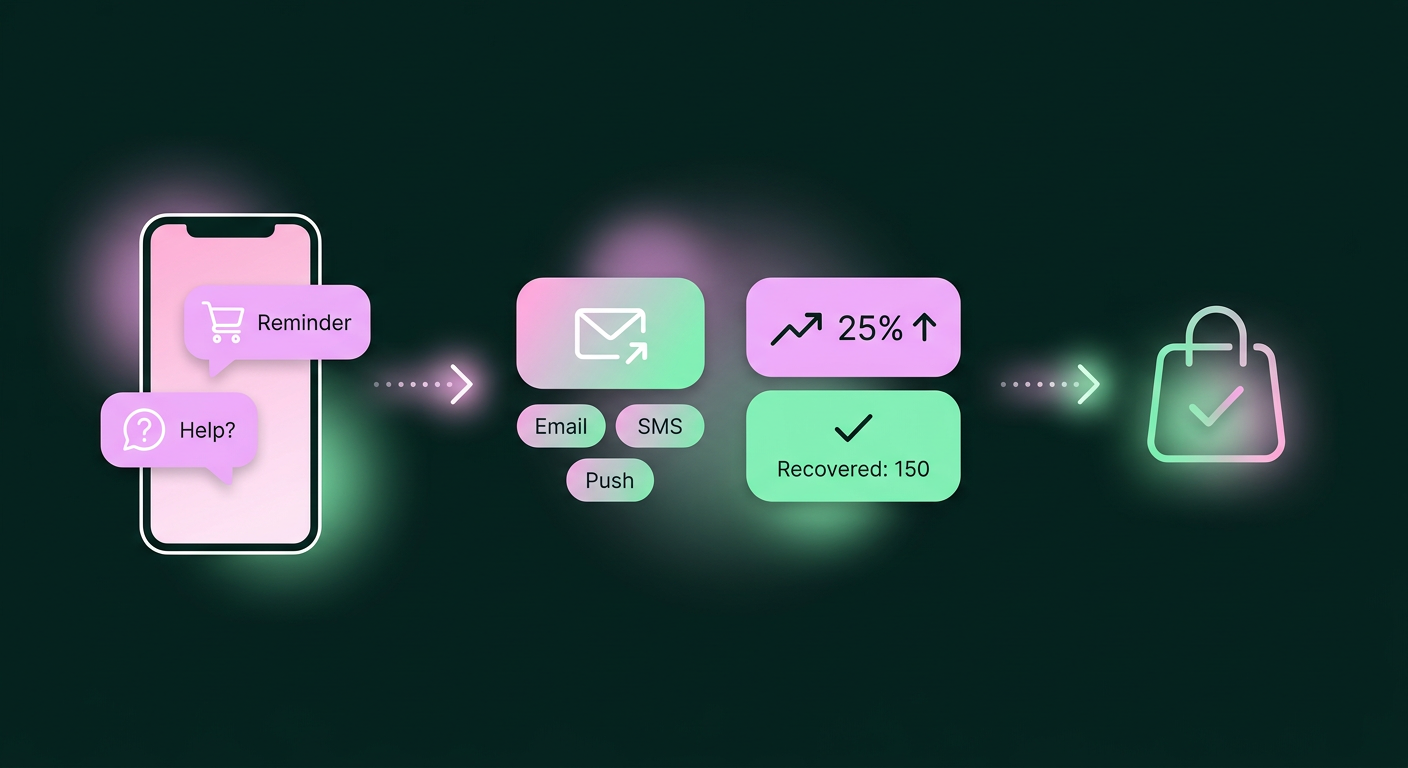
It’s one of the most frustrating parts of running an e-commerce brand: a customer adds products to their cart, shows every sign of buying, and then vanishes. You’ve likely set up the standard abandoned cart email and SMS flows, but the results are probably underwhelming. It feels like your messages are being ignored, leaving a huge amount of revenue on the table. The fix isn't to send more emails or louder alerts; it's to shift your strategy to the channels where your customers actually spend their time, like their social media DMs. By meeting shoppers with personalized, conversational messages on platforms such as Instagram and WhatsApp, you can recover these high-value carts before they go cold.
You can’t solve cart abandonment with ignored emails
You’re losing the majority of your potential sales at the last moment because traditional recovery methods are only catching a fraction of them. This isn’t just a feeling; the data shows a staggering amount of leakage. Across e-commerce, the average cart abandonment rate is 70.19%, based on 50 studies.19%](https://monei.com/blog/cart-abandonment (opens in a new tab)). That means for every ten customers who show clear buying intent by adding an item to their cart, seven of them walk away before completing the purchase. This is the single biggest point of friction in the entire customer journey.
For years, the default response has been to trigger an automated email sequence. While not entirely without merit, this approach is showing its age. Even though abandoned cart emails are said to have a respectable 41% open rate (opens in a new tab), that statistic can be misleading. A 41% open rate still means that nearly 60% of your carefully crafted reminders are never even seen. In a world of overflowing inboxes and aggressive junk filter, your message is more likely to be buried than read. Relying solely on a channel that most of your audience ignores is no longer a viable strategy for capturing these bottom-of-funnel shoppers. The core issue isn't your email copy; it's that you're using a channel your customers have learned to tune out, which is exactly why your cart abandonment rate isn’t budging.
Why abandoned cart recovery matters so much
This isn't just a matter of missed connections; it represents the single largest and most immediate opportunity for revenue growth for most e-commerce stores. The gap between "added to cart" and "purchase completed" isn't a vanity metric, it's money left on the table every day. That 70% abandonment figure means that while you're successfully attracting interested buyers, for every 10 shoppers who add items, only 3 finish the purchase at the most critical moment.com/blog/cart-abandonment) at the most critical moment.
To put that in concrete terms, for a store doing $50,000 per month in sales, that means about $116,000 in lost sales walk out the door every month.com/blog/cart-abandonment). This isn't lost revenue from browsers who were just looking; this is revenue from shoppers who were on the verge of buying. One analysis found that the average cart abandonment rate was 70.19% in 2023, underscoring that this is a persistent and costly problem. Fixing the leaks in your cart recovery process isn't a minor optimization. It's a critical business function that can dramatically impact your bottom line without spending a single extra dollar on top-of-funnel advertising.
Meet shoppers where they actually are: DMs
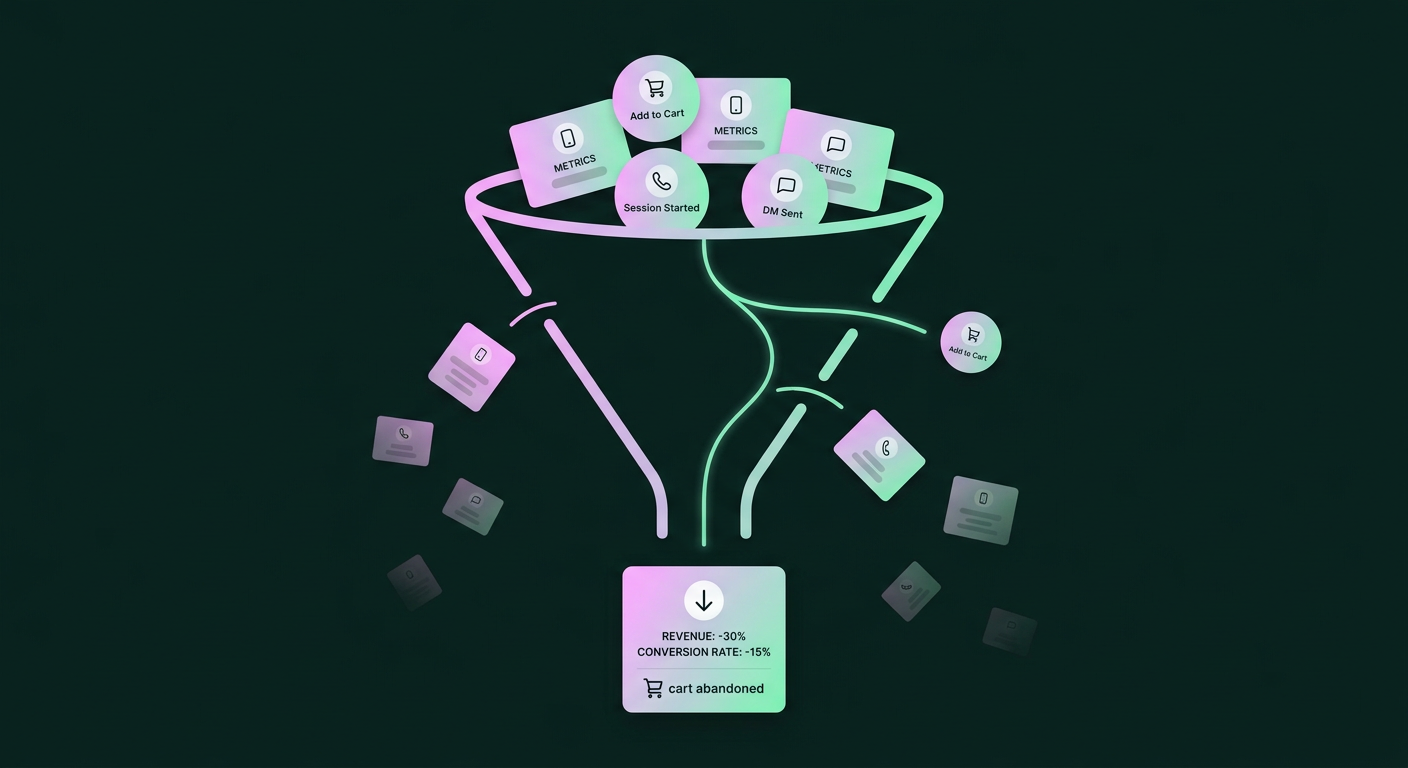
Since email is an increasingly unreliable channel for recovering this high-value revenue, the most effective path forward is to move the conversation from the crowded inbox to the personal, immediate environment of social DMs. The answer to re-engaging these shoppers lies in meeting them on the platforms they use for daily communication. While email has become a repository for receipts and newsletters, platforms like WhatsApp and Instagram Messenger are where real conversations happen, and that's where your brand needs to be.
The data on mobile engagement is compelling. One analysis found that 70% of American shoppers say they would like to get offers from businesses on their phones, with 95% of text messages being read within five minutes of receipt.io/blog/essential-shopping-cart-abandonment-strategies). This highlights a massive shift in consumer behavior toward instant, mobile-first communication. While that statistic refers to SMS, the principle is even stronger for DMs on social platforms, which feel more native and personal. Dynamo's own data from facilitating billions of DMs shows that open rates on these platforms are 80%+, with WhatsApp reaching a near-guaranteed 90-98%. This isn't a marginal improvement over email; it's a completely different level of engagement. When a message comes from a brand on Instagram, it feels like a personal note, not a marketing broadcast. This personal touch, delivered at scale, is why DM conversion rates are 3-5x higher than push notifications. For the nearly 100 brands using this approach, it has transformed cart recovery from a low-percentage email game to a high-conversion conversational strategy.
What could go wrong? Common recovery mistakes
But simply switching to DMs isn't a silver bullet. To be effective, you have to understand that the channel is only half the battle; the message and timing are just as important. A poorly executed DM can be just as ineffective as an ignored email, and a common mistake is treating it like just another notification. A generic "You left something in your cart!" message misses the point entirely because it fails to address the reason for the abandonment. Research from the Baymard Institute shows the top reason people abandon carts is unexpected extra costs at checkout, such as shipping costs, cited by 47% of people surveyed.com/blog/ecommerce/how-can-ecommerce-brands-reduce-cart-abandonment). A smart DM recovery flow can address this head-on, perhaps by offering a one-time free shipping code to close the deal.
Another frequent error is obsessing over message copy while neglecting the timing. The first reminder needs to arrive while the purchase is still top-of-mind, typically within the first hour. As a May 2026 analysis notes, timing is often more critical than the words themselves.
Brands often spend more time polishing copy than setting send delays correctly. That is backwards. The first email needs to arrive while the... , Omnisend, 2026
Finally, don't forget the checkout experience itself. If your checkout process is long and complicated, no amount of recovery messaging can fully compensate. Given that 70% of users will ditch a form that asks for too many fields (opens in a new tab), simplifying your checkout is a vital preventative measure. Your recovery messages have to work in concert with an easy-to-use checkout. It’s a reminder that you have to consider the whole process, which is why it's useful to compare DM vs. email for cart abandonment effectiveness from start to finish.
What a modern cart recovery engine looks like
So what does it look like when you avoid those mistakes and build a cart recovery system that actually works? A truly effective engine is an automated, personalized, and conversational system that operates in the channels customers actually use. It goes beyond simple reminders by creating a helpful, one-to-one dialogue that resolves a shopper's hesitation. Instead of a one-way message, it initiates a two-way conversation, an approach that helps e-commerce stores using two-way texting conversations see a 17% improvement in their abandoned cart recovery rates.io/blog/essential-shopping-cart-abandonment-strategies). Done right, it feels less like marketing and more like helpful customer service.
This modern engine is built on intelligent automation. When a shopper abandons a cart, a workflow triggers a personalized DM on a platform like Instagram or WhatsApp. The message can acknowledge the specific items in the cart and even proactively address common barriers, like offering a shipping discount or asking if the customer has any questions. With the near-instant, 80%+ open rates of DMs, you can engage the customer in a real-time conversation while their purchase intent is still high.
This shift transforms the interaction from a passive notification lost in an inbox to an active dialogue that solves problems and drives sales. By using the power of DMs, you're not just reducing cart abandonment; you're building a stronger, more direct relationship with your customers. You can explore a variety of use cases for DM automation (opens in a new tab) that extend far beyond just cart recovery. This is what a modern system looks like: a seamless, automated engine that recovers revenue by talking to customers like people, right where they are.
Frequently asked questions
Why do my abandoned cart emails feel so ineffective?
Your abandoned cart emails likely feel ineffective because, for a large portion of your audience, they are. While industry figures suggest a 41% open rate for these emails, that means a majority of shoppers never even see your message. Furthermore, email inboxes are noisy and crowded, and marketing messages are easily ignored or sent to unwanted messages. An open also doesn't guarantee a click, let alone a conversion, which sits at a much lower rate for email marketing overall.
How can I effectively recover abandoned carts on Shopify?
To effectively recover abandoned carts on Shopify, integrate a tool that moves beyond email and SMS into conversational channels like Instagram and WhatsApp DMs. The key is to set up automated flows that trigger a personalized, two-way conversation. Instead of just sending a reminder link, your message can ask if they have a question or offer a small incentive. This conversational approach has been shown to improve recovery rates by as much as 17% because it feels more like personal customer service than an automated marketing message.
What's the real difference between abandoned browse and abandoned cart?
The real difference between abandoned browse and abandoned cart is the level of purchase intent. A "browse abandonment" happens when a known user looks at product pages but doesn't add anything to their cart. They are showing interest, but it's top-of-funnel. "Cart abandonment," on the other hand, is when a user adds one or more items to their cart but leaves before completing the purchase. This signifies a much stronger, bottom-of-funnel intent to buy, making these users the highest priority for recovery efforts.
Are abandoned cart emails even worth the effort anymore?
Yes, but they shouldn't be your only strategy. A multi-step email series can still be a valuable part of your recovery efforts, as stores using them see significantly more revenue recovered than those sending a single email. However, you should view email as one tool in a larger toolbox. By layering on more immediate and engaging channels like DMs, you can capture the large segment of shoppers who are tuning their email out, creating a more resilient and effective overall strategy.
How can I use Instagram bots to help with cart recovery?
You can use an Instagram automation platform to connect with your e-commerce store and automatically send a personalized DM to users who abandon their carts. When a shopper leaves your site, the system can send a friendly message directly to their Instagram account, saying something like, "Hey, it looks like you left something behind! Did you have any questions about the items in your cart?" With DM open rates of 80%+, this is an incredibly effective way to re-engage shoppers in a place they are already active and start a conversation that leads them back to checkout.
Is it normal for my e-commerce revenue to feel this unstable?
Yes, it's a very common feeling, largely because of the high rate of cart abandonment. When you know that on average, 7 out of every 10 carts are abandoned, it creates inherent volatility at the final stage of a sale. For a store making $50,000 a month, this can translate to about $116,000 in lost opportunities.com/blog/cart-abandonment). This instability is a direct result of losing so many customers at the last step, which is why strengthening your cart recovery process is one of the most direct ways to create more predictable revenue.