
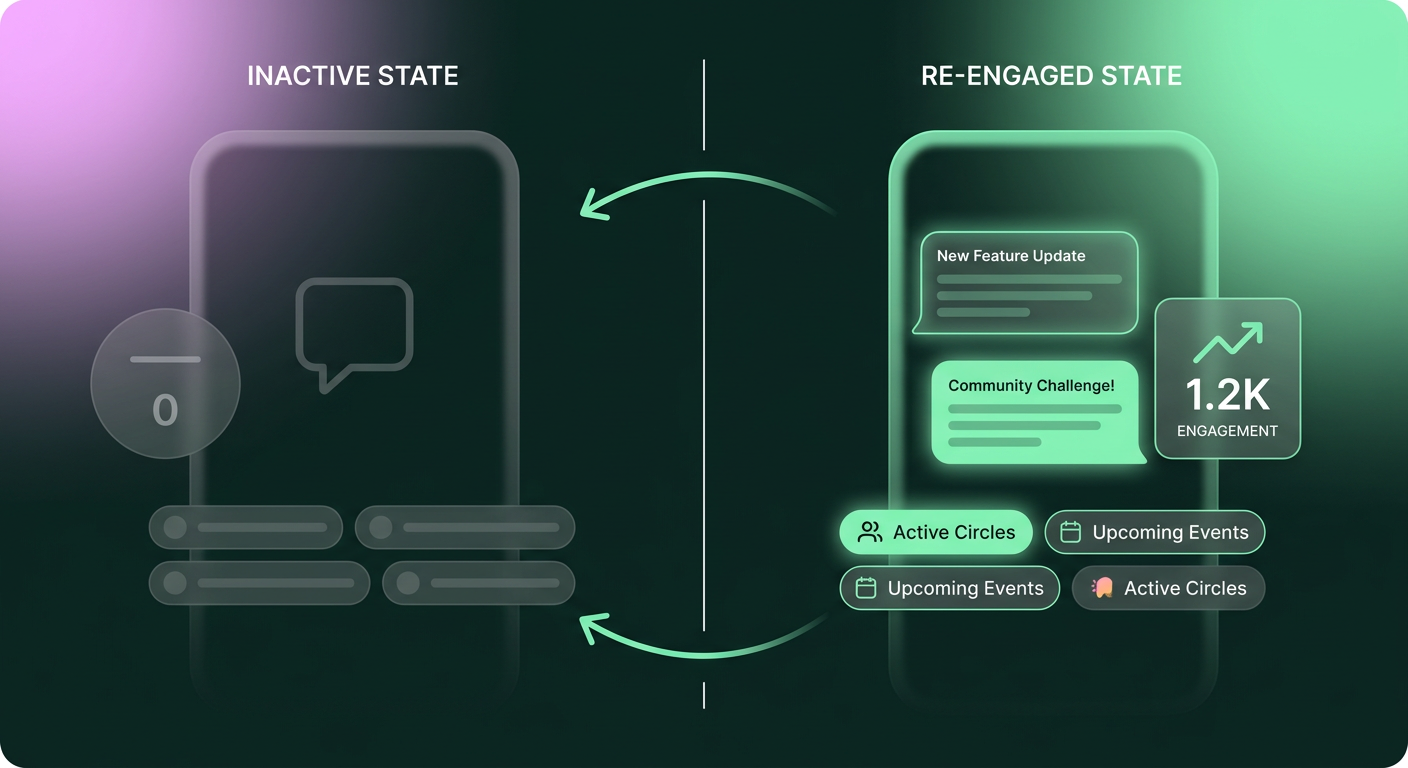
For lifecycle marketers, it's a familiar story: the channels you've relied on for years, like push notifications, are failing. You can meticulously segment your audience and craft what seems like the perfect message to re-engage inactive users, but the campaign comes and goes with open rates that barely register. This isn't a vanity metric problem. It's a direct threat to retention and LTV. When your main tool for pulling users back stops working, you aren't just losing engagement, you're leaking revenue.
The High Cost of Ignored Re-Engagement Messages
The core problem is that users have gone numb to push notifications. While there are occasional success stories, like Upday reactivating 528,000 lapsed users (opens in a new tab) with a push campaign, these are becoming exceptions. For most brands, the constant buzzing from the lock screen means your message gets lost in a sea of alerts from other apps, group chats, and system updates. The result is that users ignore it or, worse, disable notifications for your app entirely.
This isn't about a single (opens in a new tab) failed campaign. It's a compounding loss. Every user who churns because your message went unseen represents a wasted acquisition cost. When you can't reliably reach your own audience, you're left with a leaky bucket, forced to spend more and more on acquisition just to stand still. Choosing the right re-engagement channel isn't just about optimization anymore. It's a strategic imperative.
How to Choose a Re-engagement Channel That Works
So if the old channels (opens in a new tab) create a leaky bucket, how do you fix it? You need a better channel, and choosing one requires a structured approach that cuts through vendor hype. Instead of focusing on feature lists, evaluate your options based on four simple, outcome-driven criteria.
Channel Effectiveness: Will your users actually see the message?
This is the fundamental question. A re-engagement campaign is worthless if the message is never opened or read. You need a channel that commands attention and feels personal, not programmatic. This means bypassing the cluttered lock screen and landing in a space where users are already having conversations. It also means the channel should support compelling content that makes users want to return. Incorporating gamification, for instance, is a powerful way to recapture interest.
People love games. Various experiential incentives and tangible rewards, from progress bars and challenges to leaderboards and point systems, are highly effective tools for bringing back those who have grown indifferent and motivating them to engage again.
, Reteno, "How to Re-Engage Inactive Customers on a Mobile App (opens in a new tab)"
Automation & Scalability: Can you reach segments at scale without manual work?
Sending one-off manual messages to a handful of users isn't a strategy; it's a time-consuming chore. A viable re-engagement solution must be able to trigger personalized messages to specific user segments automatically. Whether a user has been inactive for 7 days or 30 days, or whether they dropped off after a specific level in your game, the system should handle the outreach without requiring a member of your team to hit "send" each time.
Integration: Does it connect to your existing user data stack?
Your re-engagement channel can't operate in a silo. It needs to connect smoothly with your CRM, analytics platform, and other user data sources. This integration is what allows for powerful segmentation. A quality solution should be able to receive triggers from your existing tools (like Braze or Klaviyo) and, in turn, feed data back into them, so you have a complete, unified view of the user journey. The goal is to enhance your current lifecycle marketing, not force you to rebuild it from scratch.
Cost-to-Impact Ratio: What's the ROI on your time and budget?
Finally, the investment has to make sense, and that's about more than just the monthly subscription cost. You have to consider the total cost, including the team resources required to manage it, against the potential impact on your key metrics like retention and LTV. A cheap solution that produces no results is infinitely more expensive than a premium one that demonstrably moves the needle on revenue. The goal is to find a channel that delivers outsized impact for the investment required.
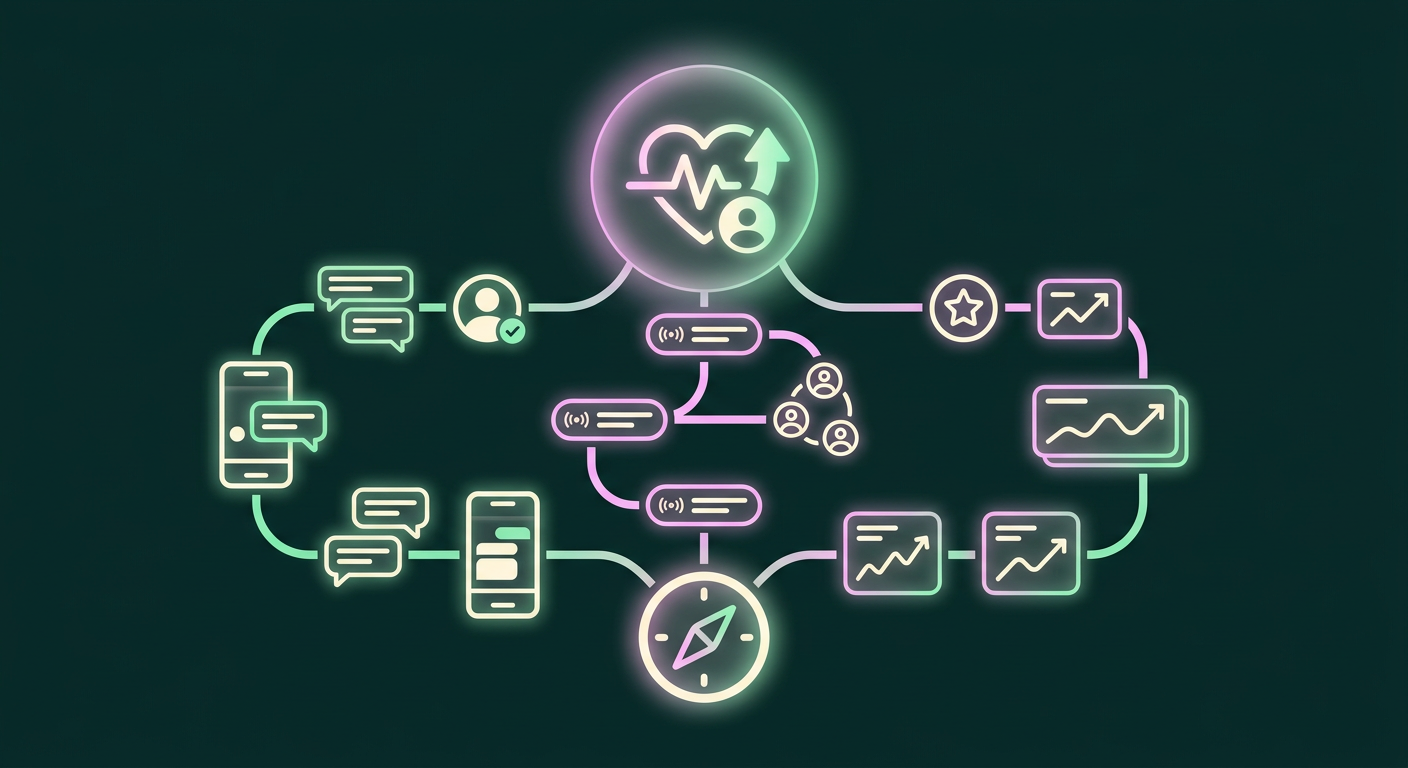
Direct-to-DM Platforms vs. Traditional Push Notifications
Putting the old way and the new way side-by-side using these criteria makes the right choice obvious. One channel is designed for broadcasting into a crowded space, while the other is built for personal conversations in a space the user actually values.
Head-to-Head Comparison
| Criteria | Traditional Push Notifications | Direct-to-DM Platforms |
|---|---|---|
| Channel Effectiveness | Low / Often ignored or disabled | High / Feels personal, gets read |
| Automation & Scalability | High, but for impersonal broadcasts | High, for personalized 1:1 DMs |
| Integration | Standard with most CRMs | Increasingly standard via APIs |
| Cost-to-Impact Ratio | Low cost, very low impact | Higher cost, massive impact |
The table above highlights a stark reality. Because push notifications are easy to automate and often included with your CRM, their initial cost feels low, but so is their impact. Since users are inundated with them, your message has a very small chance of being seen, let alone acted upon. The channel has become so saturated that its primary advantage, scalability, is rendered almost moot by its ineffectiveness.
Direct-to-DM platforms on Instagram, Facebook Messenger, and WhatsApp operate on a completely different principle, letting you send AI-personalized 1:1 DMs that don't feel like marketing. Because they arrive in a user's private message inbox, they have a much higher open rate, often north of 80%. While initial setup might require more thought than a simple push campaign, the ability to build automated, trigger-based flows changes the entire dynamic. For example, some platforms have a powerful comment-to-DM feature (opens in a new tab) that can automatically start conversations with users who engage with your content, capturing intent at scale. The impact is significant. Where push notifications might get a tiny fraction of a percent engagement, DM campaigns can achieve dramatic results, with some users reporting conversion rates as high as 77% (opens in a new tab) for specific funnels. This is the difference between broadcasting to a distracted crowd and having a focused, compelling conversation.
Recommendation: Which Strategy Should You Choose?
So, which strategy should you choose? The right answer depends on your goals and resources. For teams serious about stopping churn, a DM-based strategy is the clear winner. For teams with no budget, push notifications are a limited, last-resort option.
If you are a lifecycle or CRM marketer at a mobile brand, especially in gaming or community apps, and your primary goal is to drive meaningful re-engagement and increase retention, you should invest in a direct-to-DM platform. Your pain point is that users have gone deaf to push notifications, and it's directly impacting your D7/D30 retention KPIs. You need a channel that actually gets seen and can be automated based on the sophisticated user segments you already have. The ability to send personalized 1:1 messages at scale is precisely what you need to win back your audience and prove the ROI of your retention efforts. Exploring platforms that specialize in the end of manual DMs is your logical next step.
If you are a solo creator or a very small business with almost no budget and only need to send simple, generic broadcast announcements, then traditional push notifications might be your only choice. This approach is for situations where "free" and "easy" are the most important criteria, and you are willing to accept extremely low engagement as the trade-off. While some tools targeting this segment can start for as little as $15 per month, it's important to understand the limitations. This is not a strategy for arresting significant user churn or for building robust, personalized lifecycle journeys. You are essentially accepting the low effectiveness of the channel in exchange for its low upfront cost. For any business that relies on repeat engagement, this is a dangerous compromise to make long-term, and you should consider looking into better alternatives to re-engage your customers.
The trend is undeniable. As users become more protective of their attention, the channels that respect their time and deliver personal value will win. The future of re-engagement isn't in finding clever ways to interrupt users; it's in earning their attention by showing up in the right place, at the right time, with a message that feels like it was meant just for them.
Frequently asked questions
What's the most scalable way for my app to re-engage inactive users?
The most scalable and effective method is using automated, trigger-based Direct Messages (DMs) on platforms like Instagram, Facebook Messenger, or WhatsApp. While a manual approach doesn't scale, using a specialized DM automation platform allows you to set up rules that automatically send personalized messages to users based on their behavior, such as inactivity for a specific duration. For example, some tools feature a comment-to-DM automation that can capture engagement from your social posts and pull those users into a conversation, turning a public broadcast into a scalable one-to-one re-engagement funnel.
How do I decide if it's worth trying to re-engage a user versus just letting them churn?
The decision should be data-driven, based on a user's past and potential value. Segment your inactive users. High-value users, those who previously made purchases, engaged frequently, or invited friends, are always worth a significant re-engagement effort. For low-value users who showed minimal engagement before going dormant, the cost of re-engagement may outweigh the potential return. Focus your budget and most compelling offers on the segments that have proven their value in the past.
How should I segment my inactive users for a re-engagement campaign?
Good segmentation goes beyond a simple "inactive" tag. You need to break down lapsed users into more specific groups based on their behavior. Consider segments like: recent inactives (7-14 days) vs. long-term inactives (30+ days), one-time purchasers who never returned, users who reached a certain level in your game and stopped, or users who abandoned a cart. Each of these segments has a different context, and your messaging should be tailored to that specific reason for their inactivity to be most effective.
Should I use incentives or product features to re-engage users?
A combination of both is often most effective. Instead of just offering a flat discount (an incentive), you could challenge a user to complete a small in-app task to earn that reward. This reacquaints them with the product's value. Using game-like elements like challenges and point systems is a powerful way to motivate users, and it's a growing trend; it's predicted that by 2026, 70% of Global 2000 companies will use gamification as a standard business practice.
How can I create a sense of urgency to get hibernating users to come back?
Urgency is best created through limited-time offers or events that feel exclusive and valuable. Instead of a generic "We miss you!" message, try something specific like, "Your exclusive 2x bonus on all points expires in 24 hours," or "A special event just for returning players starts tomorrow." Linking the offer to a specific, time-sensitive event within your app makes the call to action much more compelling than a simple, open-ended plea.
What kind of conversion rate from inactive to active should I expect from a good campaign?
Conversion rates can vary wildly depending on the channel, your industry, and the quality of your offer. For standard push notification or email campaigns, even a 1-2% conversion rate can be considered decent. However, with more personal and engaging channels like automated DMs, the potential is much higher. For example, one user of a leading DM automation platform reported collecting thousands of emails through their funnels with a stunning 77% conversion rate over several years. While that represents an upper limit for a specific type of conversion, it illustrates the massive jump in performance possible when you switch to a channel users actually read.