
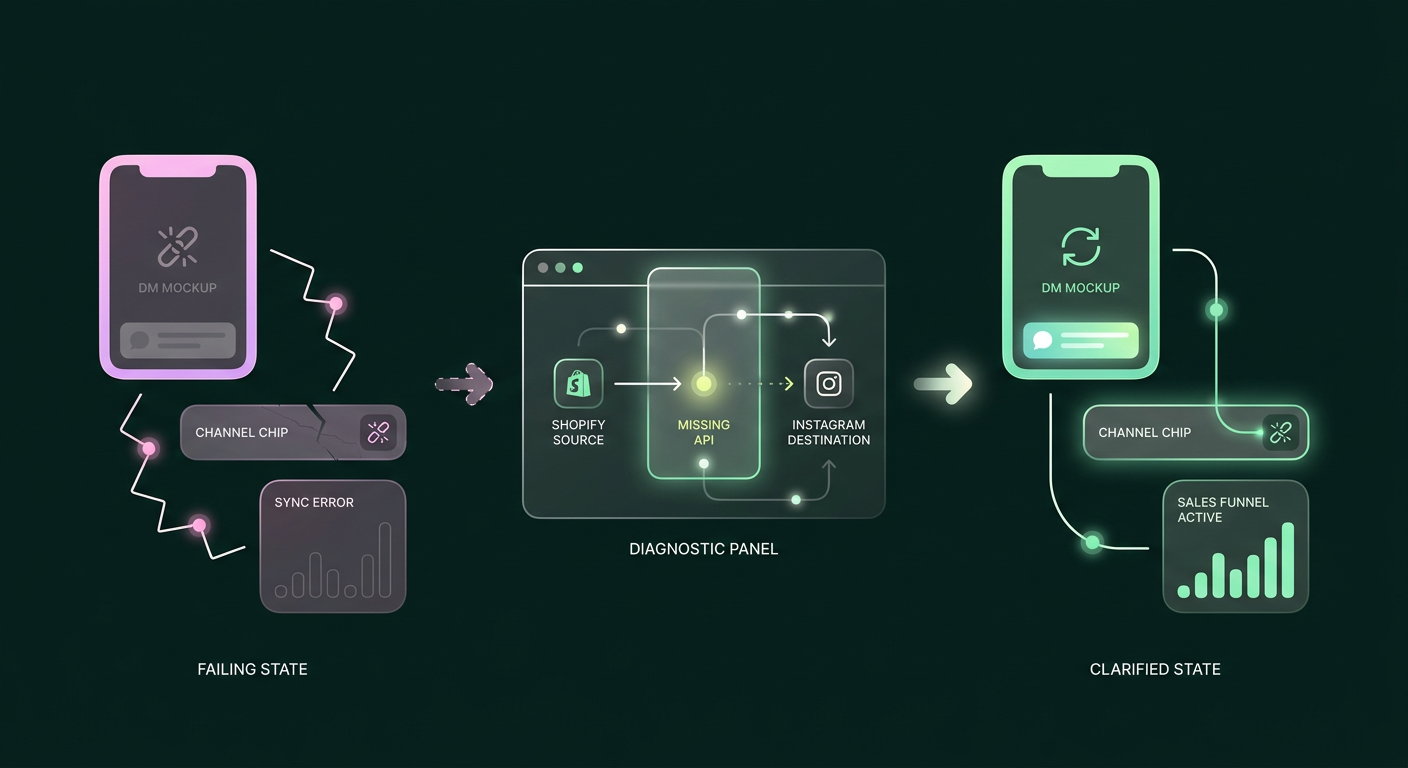
For many growing Shopify brands, connecting to Instagram feels like a major milestone. You set up the sales channel, your products are tagged, and inquiries are flooding your DMs. On the surface, this looks like success. Customers are engaging right where they discover you. But if you're spending hours every day personally replying to those DMs and feel like you can't step away from your phone without losing a sale, you aren't succeeding. You've created a bottleneck that stops your business from scaling and turned your most valuable channel into a source of stress.
The Surprising Signal Your Integration Is Broken
The problem isn't that you're getting too many messages; it's the belief that you, or someone on your team, must manually answer every single one. Pre-sale questions about sizing, availability, and customizations are the lifeblood of conversational commerce, but for most small businesses, they create a huge operational drag. Even a manageable 20 DMs a day can add up to 250 hours of manual labor per year (opens in a new tab), a hidden cost that brings growth to a standstill. The pressure to respond instantly is immense. Brands that reply within one minute see dramatically higher conversion rates (opens in a new tab), while a delay of just a few hours can cause a potential customer to lose interest and move on. You're trapped in a cycle where your most promising leads are also your biggest time commitment, which is a clear signal that simply connecting your accounts isn't a real solution.

Integration vs. Conversation: The Real Root Cause
This trap exists because the term "Shopify Instagram integration" creates a false sense of completion. For most brands, this integration is just a technical product feed for shoppable posts and tags. While that's useful, it's a technical connection, not a conversational one. It does nothing to manage the most critical part of the customer journey: the conversation that happens before the click. Many founders assume the problem is simply the volume of DMs, but the real cause is that their tools were never designed to manage high-touch sales conversations at scale.
This disconnect shows up in other ways, too. Many brands hit technical roadblocks just trying to establish this basic link, from issues connecting a business portfolio to persistent errors with product syncing (opens in a new tab) or account verification rejections. Some find they're locked out because their social accounts were previously connected to another store (opens in a new tab), highlighting the inflexibility of these standard integrations. Even when the tech works, it defaults to a funnel that pushes users away from the conversation. A typical "link in bio" strategy can lose up to 80% of your traffic before a user even reaches your site. The entire model is built to redirect traffic, not nurture it where intent is highest. You've connected two systems without creating a process to manage the human interaction that drives sales between them.
Diagnosis: Are You the Human Bottleneck?
How do you know if you're the one stuck in this trap? Ask yourself: do you spend your days tethered to your Instagram inbox, personally answering the same questions about shipping, sizing, and stock levels over and over? Do you hesitate to run campaigns that encourage DMs because you dread the inevitable flood of inquiries? This is a common pain point for founders who see incredible potential in their DMs but are swamped by the manual effort required. With targeted Instagram DM campaigns converting as high as 15-20%, and our own data showing DM conversion is often three to five times higher than push notifications, every unanswered message feels like a lost sale. This pressure can force you into the role of a full-time support agent.
If you find yourself thinking that only you can provide the "personal touch" needed to close a sale, you've officially become the bottleneck in your own business. You are the manual system that cannot scale. You know the conversations work, but you're so deep in the day-to-day execution that there's no time left for strategy, product development, or any other growth activity. The very thing that fuels your business, direct customer interaction, has become the biggest constraint on its growth.
The Fix: How to Automate Without Sounding Robotic
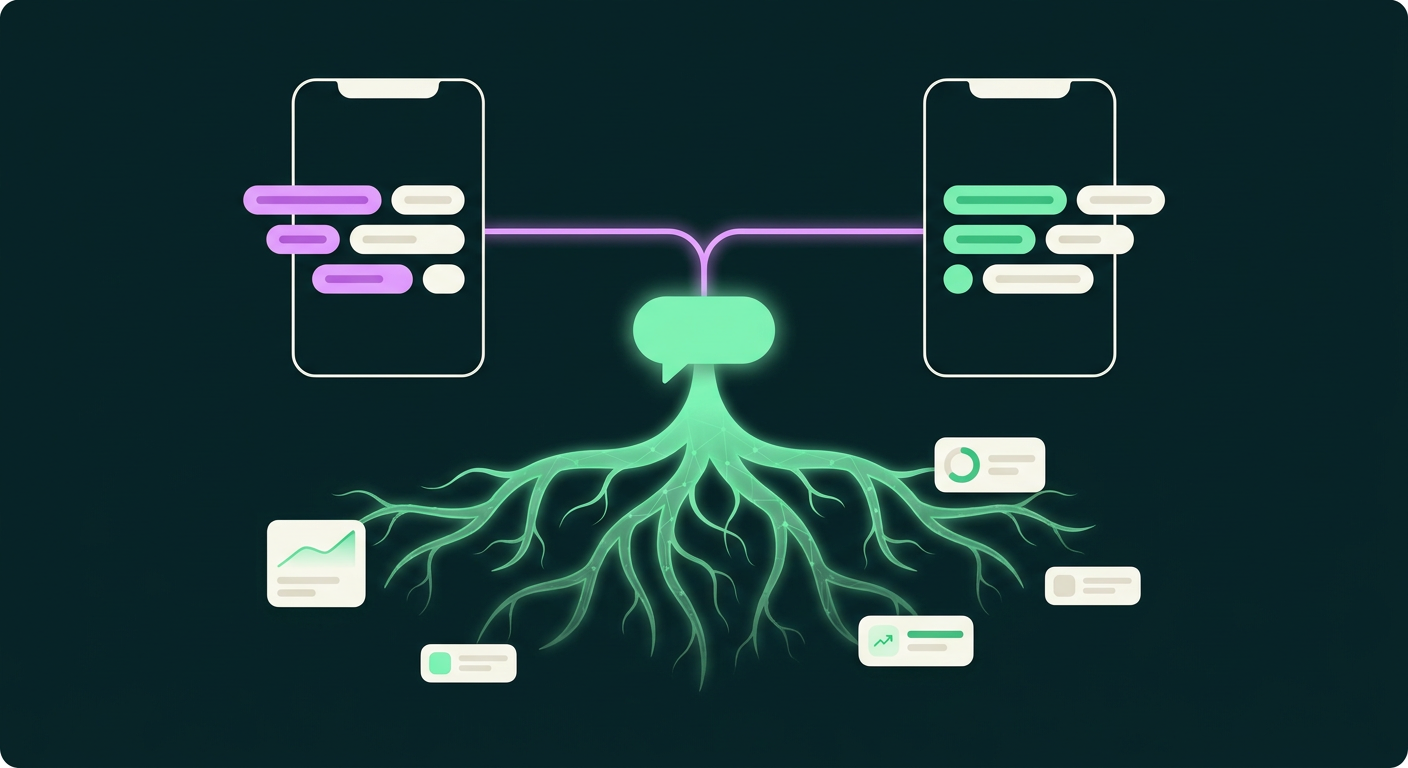
Once you realize you've become the bottleneck, the solution isn't to hire more people to sit in the inbox or to give up on DMs as a sales channel. The fix is to reframe your Shopify Instagram integration from a simple product feed into a full-funnel conversational commerce engine. This means adopting an intelligent automation process that handles the conversation for you without sacrificing the personalized 1:1 interaction that makes DMs so effective. Modern systems go far beyond the robotic, keyword-based responses that alienate customers.
True conversational AI can be trained on your brand voice and product catalog to provide instant, context-aware answers. Platforms like Dynamo provide this kind of automation, which can handle 70-80% of common questions about order tracking, returns, and product details right inside the DM. Because these systems integrate directly with Shopify, they can check your inventory in real time, ensuring they never send a customer a link to an out-of-stock product. This turns a simple Q&A into a guided shopping experience that happens entirely within the DM. You can learn more about how to automate Instagram messages to see how this approach fundamentally changes the dynamic. The goal is to free you from the inbox while giving every customer an immediate, helpful, and personal response that feels like it came from a dedicated member of your team.
How to Know It Worked: Measuring True Integration
So what does success look like after you've made this change? The primary metric isn't a quieter inbox; it's a scalable system for growth. The most obvious change will be in your own schedule. Instead of spending hours each day on manual replies, you'll spend minutes handling only the most complex customer escalations. Some brands have cut their time in the DM inbox from three hours per day to just 30 minutes. An automation solution can generate a significant ROI from time savings alone, giving you back dozens of hours per month to focus on building your business.
Beyond time savings, you'll finally be able to accurately measure the financial impact of your DM channel. By capturing a customer's contact information during the AI-driven conversation, your CRM can attribute future purchases back to that initial Instagram DM interaction, giving you a clear picture of its ROI. You'll also see a dramatic improvement in engagement metrics that translate directly to sales. While a "link in bio" call-to-action might get a click-through rate of 0.5-2%, a well-designed comment-to-DM flow can see first-message click rates of 40-70%.social/blog/instagram-dm-sales-funnel). This happens because you're meeting customers where they are, in a channel with an 80%+ open rate, and giving them a frictionless path to purchase. You'll know it's working when your DM sales are growing, and you finally have the freedom to work on your business, not just in it. To see what's possible, you can review the metrics achieved by brands using this approach (opens in a new tab).
Frequently asked questions
How can I keep Instagram DM replies personal without spending hours doing it myself?
The best approach is to use an AI-driven automation system trained on your specific brand voice and product information. This allows it to handle the majority of common customer inquiries, like questions about sizing or order status, with personalized 1:1 responses that feel human. This strategy can reduce the time you spend on manual replies from three hours a day to just 30 minutes, freeing you to handle only the most complex conversations while ensuring every customer gets a fast, personal reply.
My Instagram DMs convert really well, so why is it so hard to manage as my brand grows?
This is a classic scaling problem. Instagram DMs have exceptionally high conversion rates, sometimes 3-5 times higher than push notification conversion rates, because the interaction is immediate and personal. However, that manual, personal touch is precisely what makes it so difficult to scale. As your message volume grows, the need to respond within a minute to maximize conversions becomes impossible for a small team. You're feeling the tension between a high-performing channel and a manual process that can't keep up.
Is there a way to automate my Instagram DMs that doesn't sound like a generic robot?
Yes. The key is to move beyond simple keyword-trigger tools. Modern AI automation platforms can generate context-aware, full-funnel conversations that guide a user from inquiry to purchase. Instead of just replying with a canned answer, they can ask follow-up questions, make personalized recommendations, and maintain your brand's unique voice. These modern automation platforms offer direct integrations that move far beyond what people typically think of as a "chatbot."
Why don't the usual Instagram DM automation tools work for my brand?
Many generic automation tools fail because they are built on simple keyword triggers and lack deep integration with your e-commerce platform. They can't handle nuanced questions, check real-time inventory, or personalize responses based on a customer's history. Furthermore, setting up even basic integrations can be fraught with technical issues related to account permissions or previous connections, making them unreliable for a seamless customer experience.
What's a better way to scale my e-commerce sales from Instagram DMs?
The best way to scale is to implement an intelligent automation system that serves as a conversational sales engine. This system should handle the bulk of initial inquiries, guide customers to the right products, and answer their questions instantly. This not only improves the customer experience but also turns your DM channel into a predictable revenue stream. With campaigns achieving 15-20% conversion rates, automating this channel allows you to scale that success without scaling your manual workload.
How can I actually track the ROI of sales that start in Instagram DMs?
Effective tracking requires connecting the DM conversation to the final purchase. A good automation system can capture a user's email or phone number during the chat. When that contact information is passed to your CRM, you can attribute any future purchases from that customer back to Instagram as the original source. This creates a clear and defensible metric for the ROI of your conversational commerce efforts.