
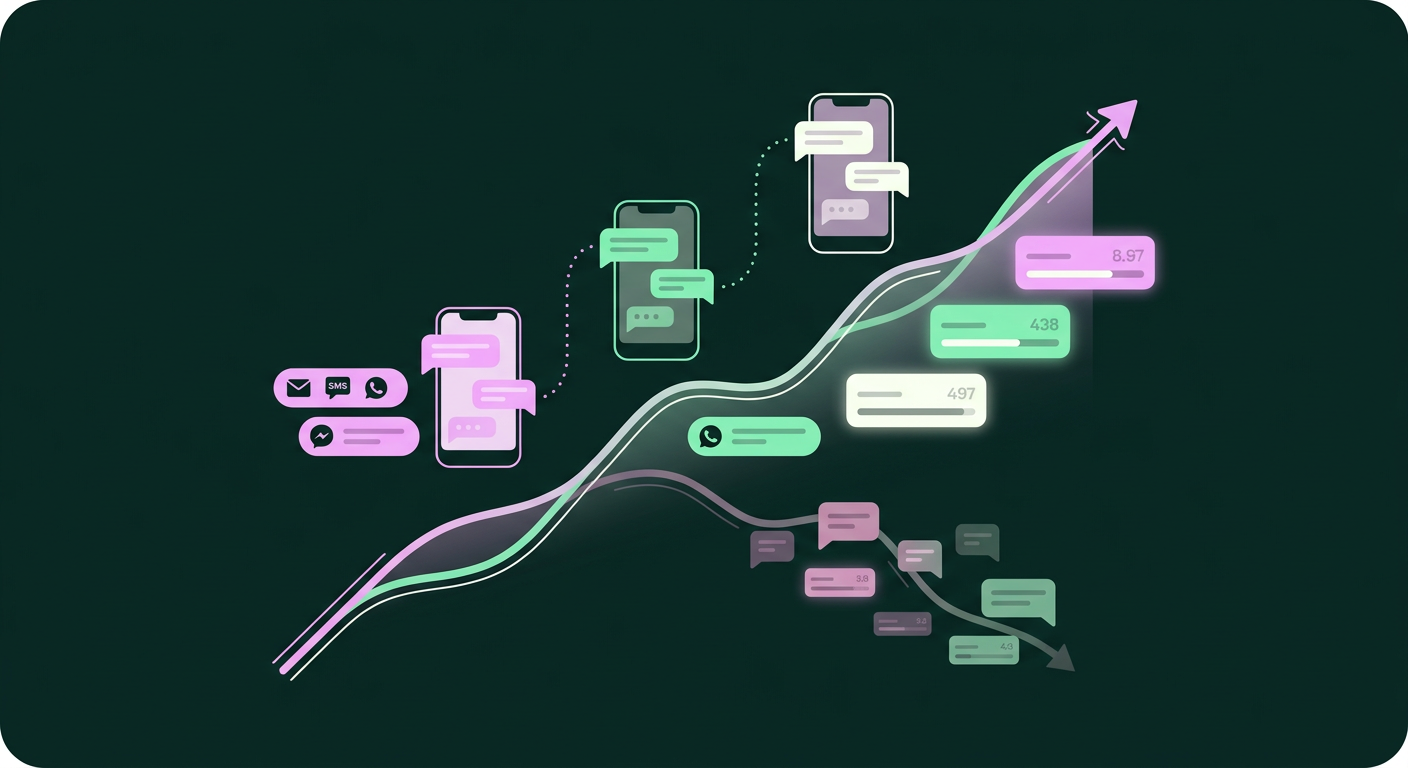
It’s one of the most frustrating realities of running an e-commerce business: the vast majority of shoppers who add an item to their cart will leave without buying. For years, the average cart abandonment rate has hovered around a staggering figure, and today the rate for Shopify stores is just above 70%. According to 2025 data from the Baymard Institute, the broader e-commerce benchmark sits at 70.19% (opens in a new tab), meaning seven out of every ten potential customers disappear just before the finish line. In the past, a standard email or SMS follow-up sequence was the default playbook to win them back. But that playbook is quickly becoming outdated as shoppers grow increasingly numb to the very channels brands have relied on for years.
Your Cart Recovery Emails Are Now Background Noise
Most Shopify abandoned cart strategies are underperforming for a simple reason: traditional methods, especially email, have become so common that shoppers automatically ignore them. We've all been trained to recognize a generic "You left something behind!" email. It lands in a promotions tab we rarely check, sits alongside dozens of other marketing messages, and feels completely impersonal. What was once a helpful reminder is now just part of the digital noise that modern consumers have become experts at tuning out.
The core issue isn't that shoppers no longer want what's in their carts; it's that the way brands try to re-engage them is broken. When a customer adds a product to their cart, they're expressing a clear, high-intent desire to buy, but that moment is perishable. When the follow-up message arrives hours or even a day later in a crowded inbox, that intent has faded, and the message itself feels less like a personal nudge and more like an automated marketing campaign. This growing immunity to old-school tactics means that even if your analytics show an email was "delivered," it’s likely not being seen or felt, leaving significant revenue on the table.
From Inbox to Unread: The Decline of Email Efficacy
This growing immunity is a direct result of a larger shift. The simple truth is that where customers spend their time and attention has changed, but most recovery strategies haven't kept up.
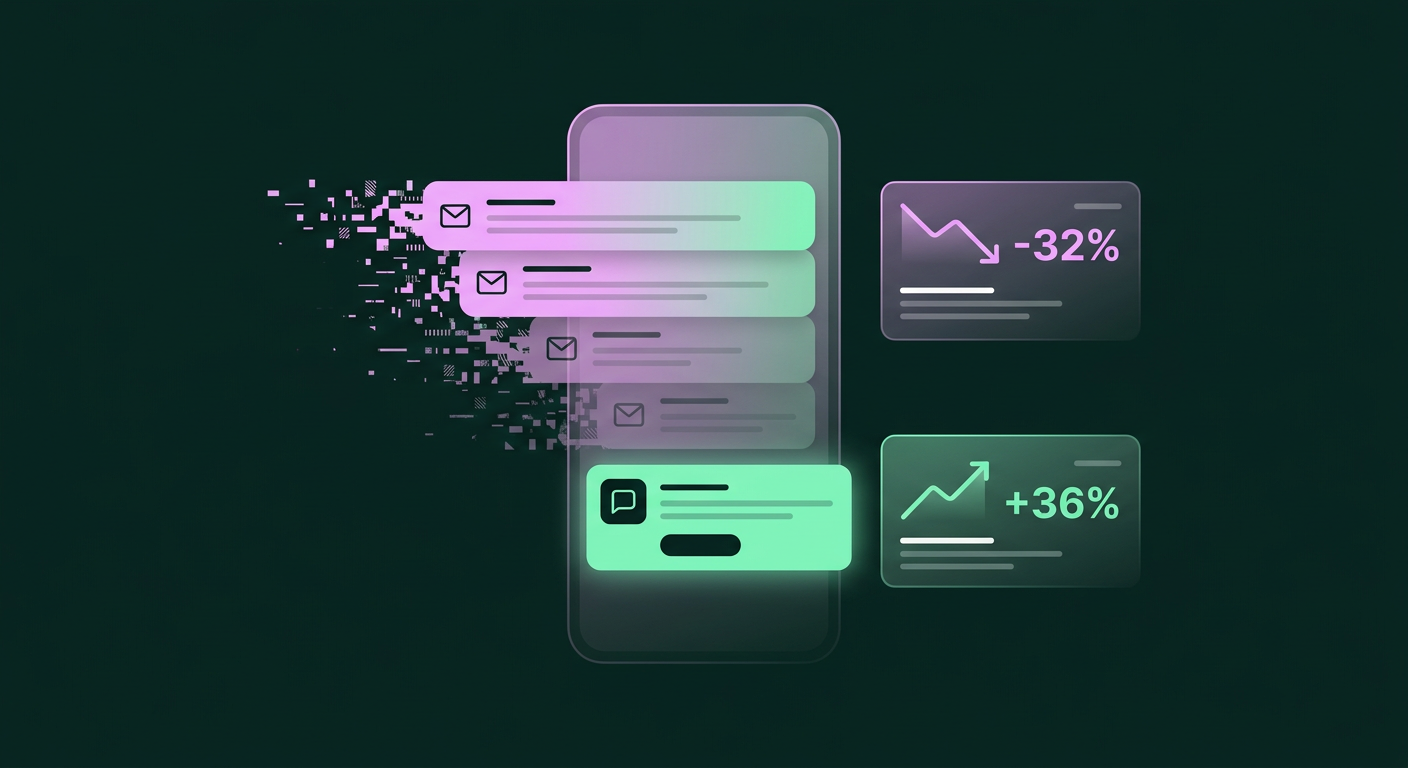
Email and SMS were once undisputed channels for direct communication, but their effectiveness is no longer a given now that customers are dealing with inbox overload and changing their communication habits. While these channels still have a role, relying on them as your primary tool for Shopify abandoned cart recovery is like trying to have a meaningful conversation in the middle of a loud concert. You might get a few words across, but the message is almost certainly getting lost.
The Rise of "Inbox Zero" Culture
For many people, the email inbox is a source of stress, a to-do list managed by others. This has given rise to the "inbox zero" philosophy, where users aggressively archive, delete, and filter messages to maintain a sense of control, and promotional emails are the first to go. Gmail's automatic sorting of messages into Promotions and Social tabs has only accelerated this trend, effectively creating a holding pen for marketing content that users can ignore en masse. Your carefully crafted recovery email is often relegated to this digital purgatory before it even has a chance to be read, fighting for attention not just against your direct competitors, but against every other brand a person has ever interacted with.
Why Even High-Open-Rate Channels Are Ignored
At first glance, SMS seems like the perfect solution. While text messages boast a near-perfect open rate of around 98% that dwarfs email's performance, an "open" doesn't guarantee a conversion. Because SMS feels more personal and urgent, it can also feel more intrusive when used for marketing. A text from a brand can feel jarring, and if it’s not perfectly timed and worded, it can lead to an immediate unsubscribe.
Even with email, more isn't always better. While data shows that sending a series of recovery emails can bring back more revenue than a single message, it also contributes to the very noise that causes shoppers to tune out. Analysis of over 11,000 stores (opens in a new tab) since 2016 found that a multi-step sequence recovers significantly more revenue.
"Recapture’s data from 11,000+ stores since 2016 shows that stores using a multi-step email series (instead of just one) see 153-231% more revenue won back." , Recapture.io
This highlights that persistence can pay off, but it doesn't solve the underlying problem of channel fatigue. You’re simply knocking on the same ignored door, just more frequently. You might get a few more answers, but you’re also annoying a lot of people in the process.
What This Means for Your Revenue Goals
This reliance on less effective channels isn't just a theoretical problem of low open rates; it's a direct and measurable drain on your bottom line.
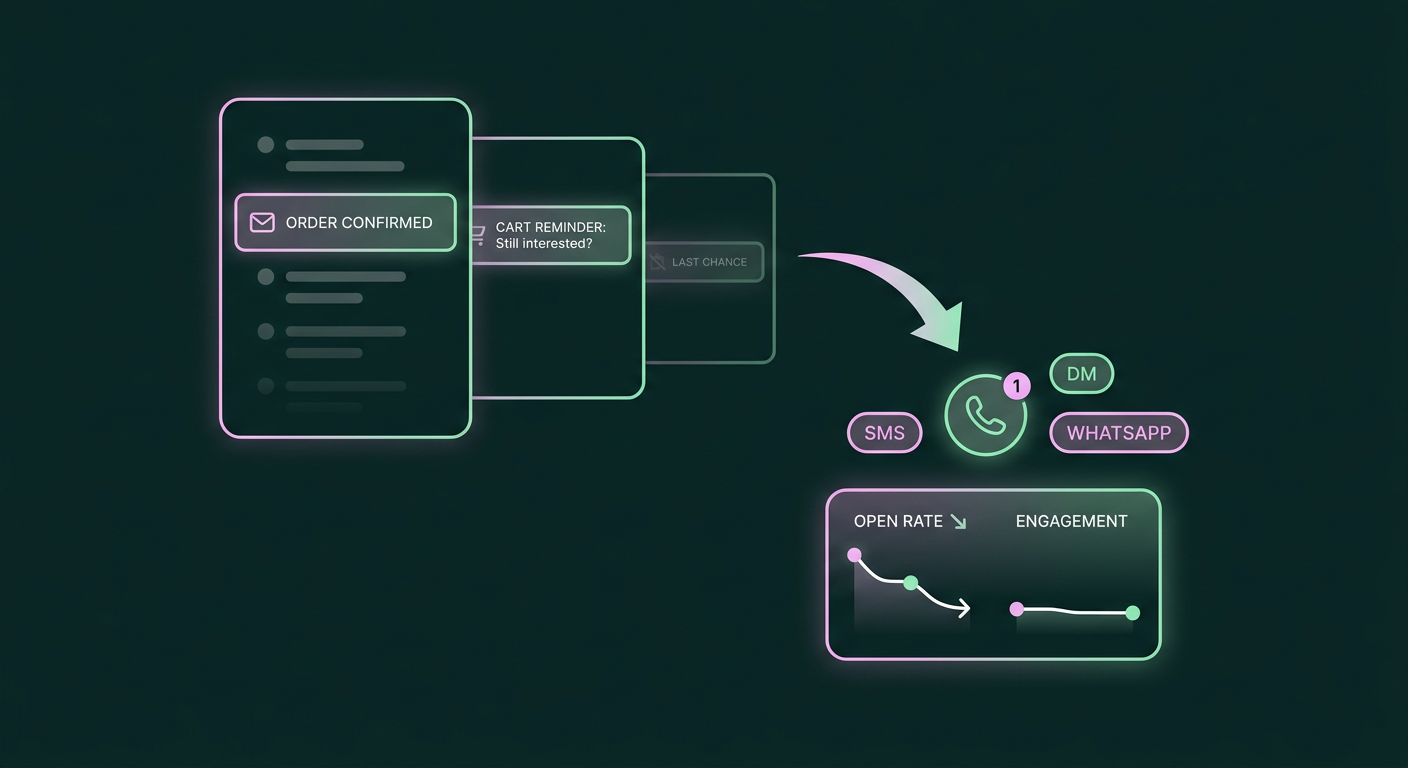
When your Shopify abandoned cart recovery messages go unseen, you are bleeding revenue from your highest-intent customers at the final step of their journey. These aren't casual browsers. These are shoppers who have gone through the effort of finding a product they like, selecting the right size or color, and adding it to their cart. They are on the verge of converting, yet a communication gap is preventing the sale.
While the average revenue generated per abandoned cart email recipient is a modest $3.65, elite stores that have mastered their recovery process can see that number climb as high as $28.89. This massive gap shows just how much potential is being wasted by ineffective, outdated strategies. It proves that the right message in the right place can make a huge difference. When your emails are ignored and your texts feel intrusive, you're operating at the low end of that spectrum, essentially leaving money for your competitors to pick up.
Where Recovery Is Working: Meeting Shoppers in DMs
So if the old channels are failing, where are brands actually finding success? They're moving away from crowded inboxes and into the apps where their customers already spend hours every day having conversations.
The most effective cart recovery is happening not through email or SMS, but through personalized, conversational nudges in messaging apps like Instagram DMs and WhatsApp. Instead of adding to the digital noise, smart brands are learning to start a quiet conversation in the one place they know they'll be heard. This approach works because it meets customers on their own terms, in a context that feels native and personal rather than overtly promotional. A DM feels like a message from a person, not a marketing machine.
This isn't just a theory; the results speak for themselves. While a good email recovery rate might be in the single digits, more direct and personal channels see far better outcomes. For example, some brands have found that for carts with high purchase intent, SMS recovery can achieve conversion rates of 15-25% or more. Even more impressively, one business that implemented automatic text messages to follow up on abandoned carts saw an astonishing 58% of those carts recovered (opens in a new tab). These figures demonstrate the power of moving the conversation to a more immediate and personal channel. The strategy is simple: go where your customers are and talk to them like a person. By shifting the focus from email to DMs, brands build a more direct and effective relationship that turns abandoned carts into completed sales. This is a core part of rethinking the direct-to-consumer marketing strategy in a world beyond ads.
How to Shift Your Strategy: From Blasting to Conversing
Achieving these kinds of results requires a fundamental shift in mindset: moving from broadcasting one-way messages to facilitating two-way conversations.
To truly improve your Shopify abandoned cart recovery, you must stop sending generic reminders and start automating personalized, 1:1 conversations on the channels your customers actually use. This means moving beyond the traditional email and SMS automation that everyone else is doing and embracing a more modern, conversational approach that feels helpful, not spammy.
Prioritize Channels Your Customers Actually Use
Your customers don't live in their email inboxes, but they do live on Instagram, WhatsApp, and other messaging platforms. The first step is to build your recovery strategy around these channels. Instead of making an email sequence your primary tool, treat it as a fallback. Your first and most important touchpoint should be a personalized DM, which ensures your message lands in a place where it's likely to be seen within minutes, not hours or days. It's a fundamental change in priorities that aligns your marketing with modern communication habits and gives you a powerful advantage over competitors still stuck on email.
Automate Personalization, Not Just Messages
The true power of this new approach comes from using automation to deliver personalization at scale. The goal is not just to send an automated DM that says "You forgot this," but to create a message that feels like it was written by a helpful human. This involves referencing the specific item left behind, perhaps asking a gentle question ("Did you have any questions about the fit?"), or offering a small incentive in a conversational way. Dynamo, for example, allows you to see how this works (opens in a new tab) by generating context-aware messages that feel personal. When you automate the personalization and not just the sending of the message, you transform a transactional reminder into a relationship-building moment that dramatically increases the chances of recovery. If you're wondering why your cart abandonment rate isn't budging, a lack of true personalization is often the answer.
What to Watch: The Rise of Conversational AI
Moving the conversation to DMs is the crucial first step, but the technology powering these interactions is evolving just as quickly.
The future of cart recovery, and e-commerce engagement as a whole, is using conversational AI to make every automated interaction feel genuinely personal, helpful, and human. This is about moving beyond simple, trigger-based messages and toward AI-powered conversations that can understand context, answer questions, and guide a customer back to purchase in a natural way.
Imagine a shopper abandons a cart containing a pair of running shoes. Instead of a generic reminder, they receive a DM that not only reminds them of the shoes but also asks, "Are you training for a specific race?" The AI could then offer relevant advice or even suggest complementary products like performance socks. This level of interaction builds trust and provides real value beyond the sale itself. We are already seeing the impact of sophisticated, tech-driven improvements; one recent initiative saw a brand A/B test a new checkout flow that resulted in a 14% increase in conversion and a 35% recovery rate (opens in a new tab) on abandoned carts. This shows that investing in smarter, more user-centric technology pays enormous dividends. As AI becomes more advanced, it will become the engine that powers this new generation of personalized, conversational commerce, turning a simple recovery tactic into a core part of the customer experience.
Frequently asked questions
Why do my abandoned cart emails feel so ineffective?
Your abandoned cart emails likely feel ineffective because they are competing in an incredibly crowded space. Most consumers have developed "banner blindness" for promotional emails, and automated sorting by providers like Gmail often sends these messages straight to a promotions tab that is rarely checked. Even channels with high open rates aren't a silver bullet; while SMS messages have a much higher open rate of approximately 98% compared to email, they can be ignored or feel intrusive. The core issue is channel fatigue, shoppers are desensitized to the old methods.
How should I actually try to recover abandoned carts now?
The most effective modern approach is to meet customers on the platforms where they are already active and conversational, like Instagram DMs or WhatsApp. Instead of sending a one-way message, the goal is to initiate a personalized, 1:1 conversation. Automate a message that references the specific item in their cart and asks a gentle, helpful question. This feels less like marketing and more like customer service, which dramatically increases engagement and recovery rates.
What are the best ways to reduce my Shopify cart abandonment rate?
While recovering abandoned carts is crucial, preventing them in the first place is even better. The single biggest reason for cart abandonment is unexpected costs at checkout, which accounts for 48% of all abandoned carts according to 2025 data. To combat this, be completely transparent with all costs, including shipping, taxes, and fees, as early as possible in the shopping process. Other effective methods include offering guest checkout, simplifying the checkout form, and displaying trust signals like security badges and return policies.
Are abandoned cart emails even worth the effort anymore?
Yes, but with a major caveat: they should not be your primary or only strategy. While their individual effectiveness has declined, they can still contribute to your overall revenue. For example, data shows that sending a multi-step email series can recover 153-231% more revenue than a single email, even if the average revenue per recipient is only around $3.65. Think of email as a supporting channel in a broader strategy that prioritizes more immediate and personal touchpoints like DMs first.
What's the difference between abandoned browse and abandoned cart recovery?
Abandoned cart recovery targets shoppers with very high intent; they have found a product, selected it, and added it to their cart, signaling a strong desire to buy. Abandoned browse recovery, on the other hand, targets shoppers with lower intent. These individuals may have only viewed a product page or a category page before leaving your site. Recovery strategies should reflect this difference. Cart abandonment follow-ups can be more direct, while browse abandonment messages should be gentler, perhaps suggesting related items or highlighting a category they seemed interested in.
Why is winning in e-commerce so difficult these days?
Winning in e-commerce is challenging largely because of structural issues like high cart abandonment. With the average rate for Shopify stores [hovering over 70%](https://redstalkfulfillment.With (opens in a new tab) the average rate for Shopify stores hovering just above 70%, you are constantly losing the vast majority of your potential customers at the very last step. This, combined with rising customer acquisition costs and intense competition, means that brands can no longer rely on basic marketing tactics. Success now requires a more sophisticated, multi-channel approach that focuses on building real relationships and optimizing every single touchpoint in the customer journey.