
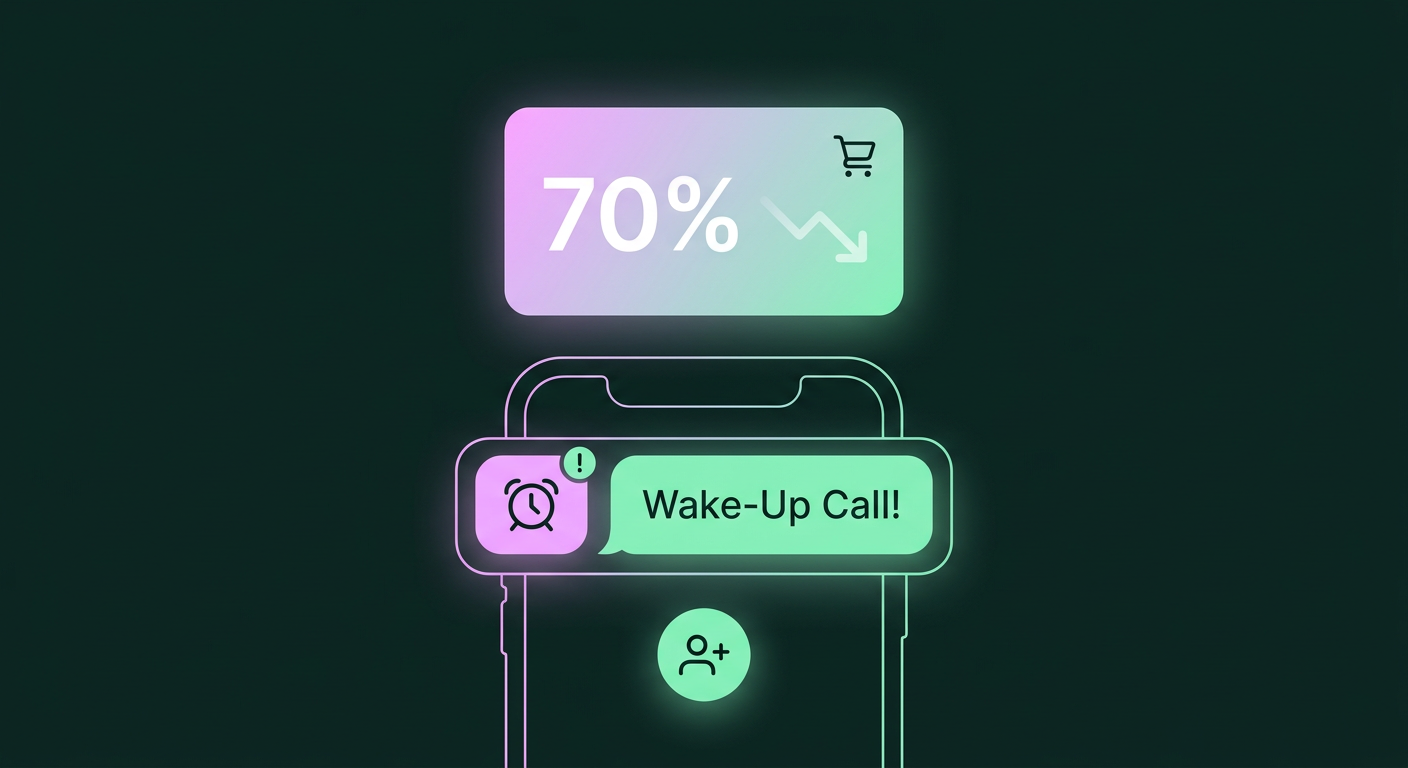
For years, e-commerce leaders have treated cart abandonment as a solvable problem, a leak in the funnel that could be patched with enough A/B testing, email sequencing, and SMS reminders. Yet despite all this optimization, the core metric has barely budged. The average cart abandonment rate was a staggering 70.2% in 2025, and it's projected to hold steady at 70.22% in 2026. This isn't a temporary spike; it's a structural reality of online retail. The old playbook is no longer delivering the returns it once promised, and strategies that felt like best practices a few years ago are now showing their age. For brands still relying on them, this means leaving a significant amount of revenue on the table every day.
Why Is Cart Abandonment So High?
The simple answer is that abandoning a cart is a natural part of online shopping, and standard recovery methods haven't kept pace with how customer behavior has changed. For over a decade, the industry has assumed that the right sequence of timed emails and texts could reclaim a big portion of these "lost" sales. The data tells a different story. With the rate remaining stubbornly high, it’s clear the problem isn’t just forgetfulness, but a more complex mix of shopper indecision, cost sensitivity, and distraction.
This persistence has enormous financial consequences. Across the e-commerce landscape, this behavior adds up to an estimated $18 billion in lost sales revenue annually. The number is so large it can feel abstract, but for any individual store owner, it represents a constant, frustrating drain on growth. These aren't casual browsers. These are customers who have shown clear purchase intent by finding a product, adding it to their cart, and often even starting the checkout process. They are the most qualified leads a brand could ask for, yet the majority of them still walk away.
The average cart abandonment rate across all eCommerce sites is 70.2%, based on analysis of 49 different studies. , Baymard Institute, July 2025
This data makes it clear that cart abandonment isn't an anomaly to be fixed, but a fundamental behavior to be understood. The friction isn't just in the checkout flow; it's in the communication channels we use to try and bring shoppers back.
The Old Playbook: Why Email and SMS Aren’t Enough
For years, the standard abandoned cart playbook has relied almost exclusively on email and SMS, but these channels are becoming less effective because of saturation and low engagement. When a shopper leaves a cart, the automated response is almost always a multi-part email drip campaign, sometimes supplemented by a text message. While this approach is better than doing nothing, its impact has clearly hit a ceiling.
The numbers tell the story. While abandoned cart emails have been a workhorse for e-commerce marketers, their performance is modest on closer inspection. A 2024 analysis found that while open rates hovered around 39.07%, the average click-through rate was just 23.33% (opens in a new tab). This means that for every 100 reminder emails sent, fewer than a quarter lead to a click back to the store. On their own, these email campaigns typically help recover only about 10% of lost revenue.
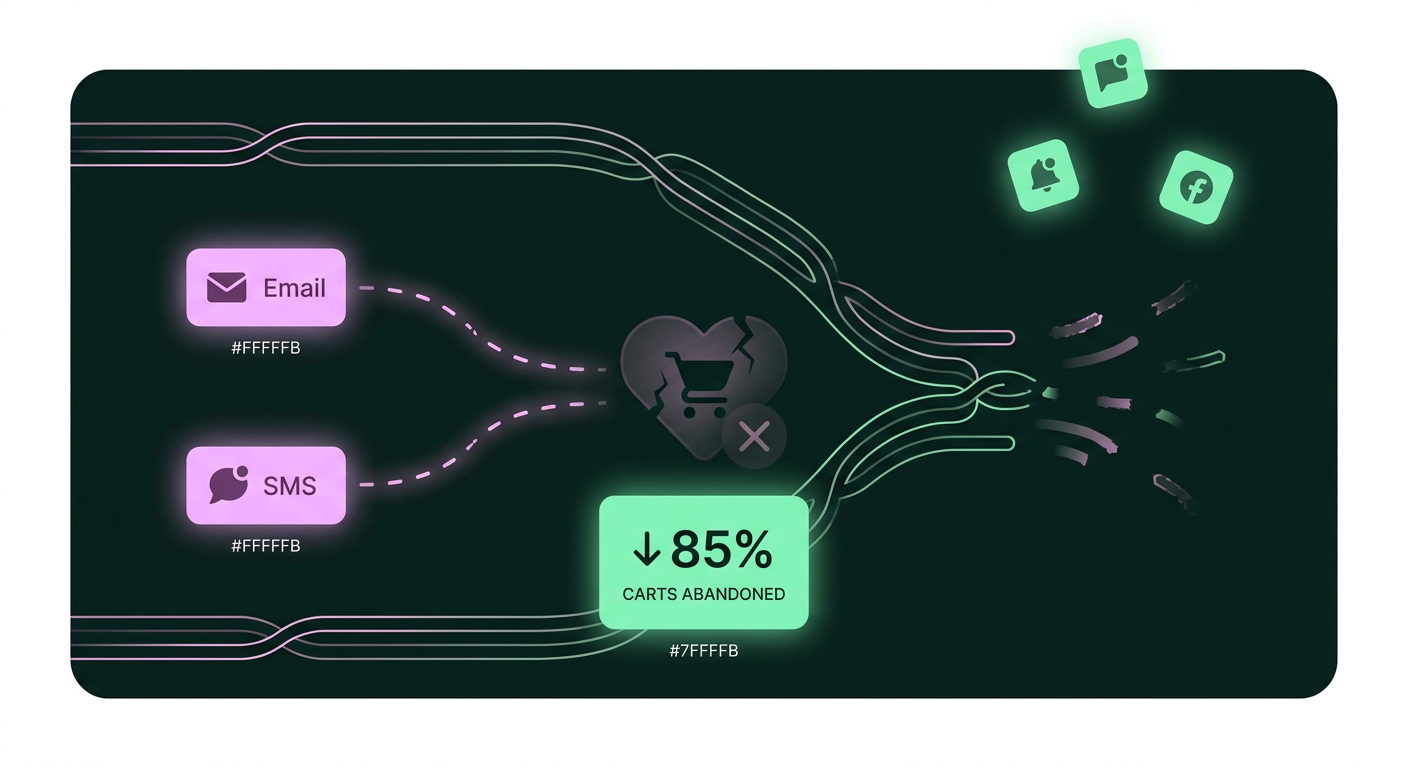
To combat this, many brands adopted a multi-channel strategy, coordinating email with SMS and retargeting ads. This more aggressive approach can improve results, with some multi-channel programs recovering between 25% and 30% of abandoned carts (opens in a new tab). However, this still leaves the vast majority of carts unrecovered. It also adds complexity and cost, all while contributing to the marketing noise that makes customers tune out in the first place. The core issue remains: these messages are sent to channels that are crowded, easily ignored, and feel impersonal.
The Real Cost: Ignored Messages and Lost Revenue
Because these traditional channels are underperforming, the consequences are significant. It’s not just that messages are being ignored; it’s that the opportunity to have a real conversation with a high-intent shopper is being lost. The plateau in recovery rates isn't just a number on a dashboard, but a direct reflection of shoppers actively tuning out marketing. An inbox full of promotional emails or a stream of generic SMS alerts simply doesn't command the attention it once did.
This is where that $18 billion in annual lost revenue comes from. It's the cumulative effect of thousands of brands sending messages that get filtered, deleted, or swiped away without a second thought. The frustration for e-commerce managers is that these aren't cold leads. A person who abandons a cart was, moments before, on the verge of making a purchase. Often, the reason they left is something that could be addressed with the right conversation. For instance, studies show that 48% of shoppers abandon carts because of unexpected extra costs (opens in a new tab) like shipping or taxes that appear late in the checkout.
A generic email saying, "You left something behind!" doesn't address that specific friction point. It's a one-way broadcast in a world where customers expect two-way conversations. The real cost, therefore, is the missed opportunity to engage a warm lead, answer their question, and guide them back to a purchase they were already inclined to make. Relying solely on the old playbook means accepting that most of these opportunities will be lost for good.
Where Recovery Is Working: The Shift to DM Commerce
While the old playbook is failing, many brands are finding success by shifting their recovery efforts to the channels where customers already have personal conversations: direct messaging platforms like Instagram and WhatsApp. Instead of trying to pull shoppers back into their inboxes, these brands are meeting them where they are, which represents a fundamental shift from broadcasting to conversing.
This lines up with actual user behavior. People live in their DMs. It's where they talk to friends, share content, and engage with creators and brands they genuinely like. A message in this context feels different, it's more personal, more immediate, and far more likely to be read. While email open rates struggle to pass 40%, open rates for personalized 1:1 DMs regularly exceed 80%. The difference in engagement is night and day because the channel itself implies a higher level of personal connection.
This approach transforms cart recovery from a generic reminder into a helpful, contextual nudge. A well-timed DM can feel less like an advertisement and more like a customer service touchpoint that offers to answer a question about shipping or clarify a product detail. It reopens the door for a conversation at the moment of highest intent, in a place where the customer is already comfortable. The effectiveness of DM vs. email for cart recovery is becoming clearer as more brands adopt this conversational approach.
How to Adapt: Meet Shoppers Where They Are
The most effective way to adapt your own strategy is to rebalance your efforts away from over-optimizing saturated channels and toward building recovery flows in the messaging apps your customers use every day. This doesn't mean abandoning email and SMS entirely, but rather integrating a new, more personal layer into your recovery strategy that prioritizes the channels with the highest engagement.
The first step is to create opportunities for customers to opt into conversations on platforms like Instagram and WhatsApp, which you can do through click-to-message ads, story replies, or simple on-site widgets. Once a customer has engaged, you have an open channel to reach them with a personalized 1:1 message if they later abandon a cart. This approach is built on permission and existing engagement, which is why it feels so much more natural to the customer.
By shifting focus, you can start treating cart abandonment not as a lost sale, but as an invitation to start a conversation. You can build automated flows that feel human, addressing common friction points and offering assistance at scale. To see what this looks like in practice, you can explore different use cases for conversational recovery (opens in a new tab) that go beyond simple reminders. This strategic recalibration lets you connect with shoppers in a way that traditional tools simply can't, helping you to reduce cart abandonment and win back shoppers who would otherwise be lost.
What to Watch: The Rise of AI-Powered Personalization
Once you've adopted this channel, the next frontier for optimizing it is using AI to automate and personalize these conversational recovery messages at scale. While sending manual DMs is effective, it isn't scalable for a growing business. The future of this trend lies in using AI to generate context-aware, personalized messages that maintain a human touch without requiring moment-to-moment human intervention.
This isn't about deploying a simple automated responder with canned replies. Instead, modern AI can analyze a user's behavior, the specific items in their cart, and their past interactions with your brand to craft a unique message that feels genuinely one-to-one. It can reference the product they were looking at, anticipate a question about sizing or shipping, or even offer a small, strategic incentive to complete the purchase, all within the natural flow of a DM conversation.
This combination of a high-engagement channel like DMs with the intelligence of AI is what can truly improve the stubborn cart abandonment rate. It allows brands to deliver a personal touch for every abandoned cart, not just the highest-value ones. As this technology becomes more accessible, the brands that master AI-powered conversational commerce will be the ones who successfully turn abandoned carts from a persistent cost into a reliable revenue stream.
Frequently asked questions
Why do my abandoned cart emails feel like they aren't working anymore?
If your abandoned cart emails seem less effective, you're not alone. The primary issue is channel saturation. In 2024, the average click-through rate for these messages was only around 23.33%, which means most of your emails fail to bring shoppers back, even if they're opened. Customer inboxes are flooded with promotional content, so your messages are likely getting lost in the noise or automatically filtered, diminishing their impact.
How can I reduce my store's cart abandonment rate?
While you can't eliminate cart abandonment completely, you can reduce it by moving beyond just email. The most effective method is a multi-channel strategy that meets customers on the platforms they actively use. While coordinating email, SMS, and retargeting ads can recover up to 30% of carts, the real opportunity is in adding conversational channels like Instagram DMs or WhatsApp. These platforms provide a direct, personal way to re-engage shoppers and resolve the friction that caused them to leave.
Is it normal for my e-commerce revenue to feel so fragile?
Yes, it's a common feeling in the industry because so much potential revenue is lost at the final stage of the purchase journey. E-commerce stores lose an estimated $18 billion in sales each year from cart abandonment alone. This means a huge portion of your hard-won traffic and interested buyers are dropping off at the last second, which can make revenue feel unpredictable and fragile.
What's the best way to recover abandoned carts without just sending more emails?
The most effective modern alternative is to use direct messaging platforms like Instagram DMs and WhatsApp. Instead of sending another message to a crowded inbox, you can start a personalized, 1:1 conversation in an app where the customer is already active and engaged. This approach feels more like a helpful customer service interaction than a marketing bulk send, leading to significantly higher open rates and a better chance of recovering the sale.
Should I be using Instagram bots to help with abandoned carts?
It's better to think in terms of AI-powered personalization rather than basic automated responders. While simple automations can feel impersonal, sophisticated AI can be used to generate and send personalized 1:1 DMs that feel human and context-aware. The goal is to automate the outreach without losing the personal touch. Used correctly, this technology can help you engage abandoned cart shoppers at scale, answer their questions, and guide them back to checkout in a way that feels helpful, not intrusive.
How do I even calculate my cart abandonment rate to see if it's a problem?
Calculating your cart abandonment rate is straightforward. First, track the total number of completed purchases over a specific period, like a month. Next, track the total number of shopping carts created during that same period. The formula is: [1 - (Completed Purchases / Carts Created)] x 100. For example, if you had 1,000 carts created and 300 completed purchases, your abandonment rate would be [1 - (300 / 1000)] x 100 = 70%.