
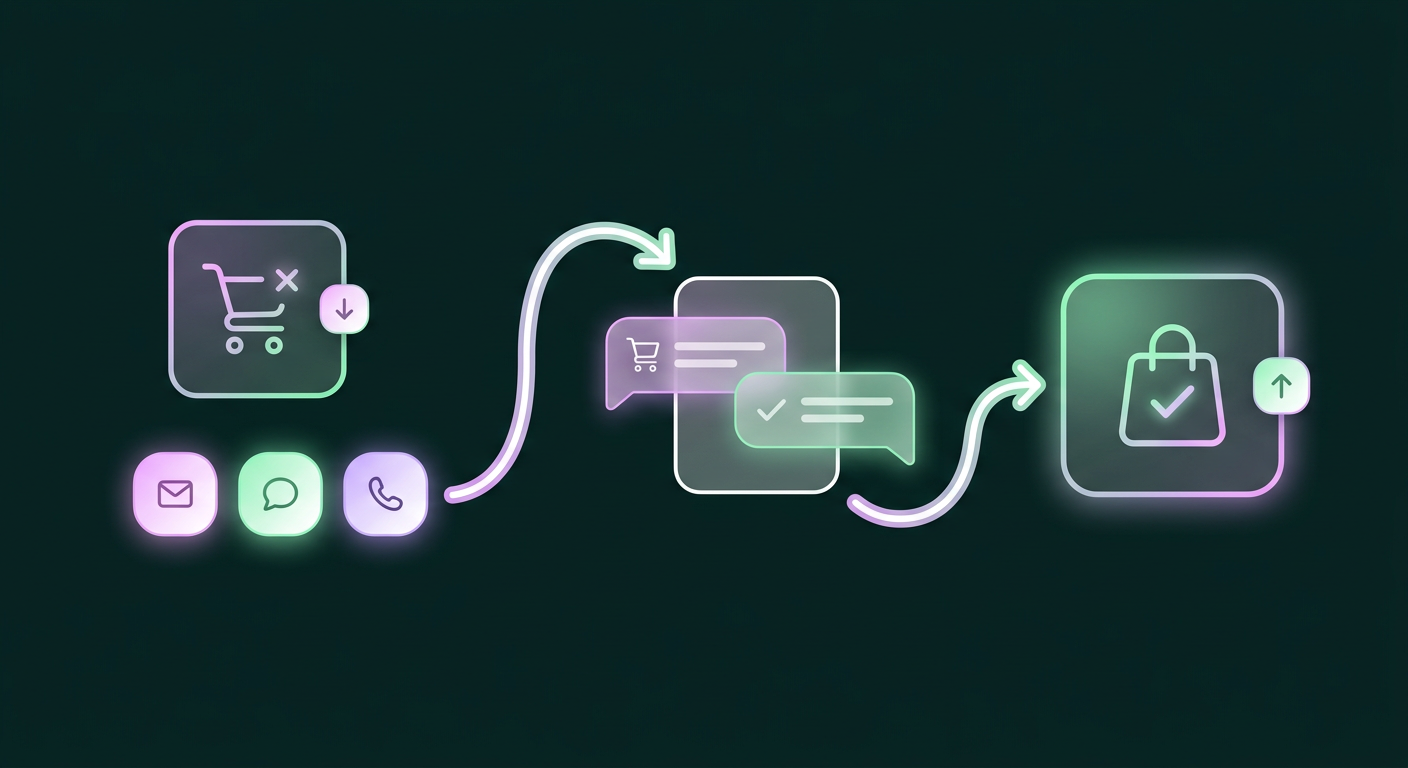
Even a perfectly tuned abandoned cart strategy can fail to move the needle on revenue. The email sequences are polished, the SMS reminders are timed just right, yet high-intent shoppers who were a click away from buying still seem to vanish. The problem usually isn't your messaging or your offer; it’s the channels you're forced to use. Standard abandoned cart recovery software relies on email and SMS, platforms where your helpful nudge gets buried in an avalanche of promotions. To actually fix abandoned cart recovery, you need a new approach: one that stops broadcasting into a void and starts a real conversation on the channels your customers actually use, like Instagram DMs and WhatsApp.
Your Abandoned Cart Emails Are Failing. Here's What to Do.
Start by shifting your focus from low-engagement channels like email to conversation-first channels like direct messaging. This means adopting abandoned cart recovery software that integrates directly with platforms such as Instagram and WhatsApp. Your current flows underperform because they are fighting for attention in crowded, noisy environments where they are often perceived as just more marketing noise. By meeting customers in their DMs, you transform a generic notification into a personal, helpful, and timely interaction that gets noticed and acted upon.
This frustration is common across e-commerce. You've identified a shopper with high intent who has gone as far as adding items to their cart, only to have them slip away at the last second. The reality is that you aren't just losing a single sale. With an average cart abandonment rate of a staggering 70.19% (opens in a new tab), you're consistently losing the majority of your most interested customers right at the finish line. The old methods of sending a generic "You forgot something!" email are no longer enough. It's time to fundamentally rethink where and how these recovery conversations happen.
Why High-Intent Shoppers Ignore Emails and SMS
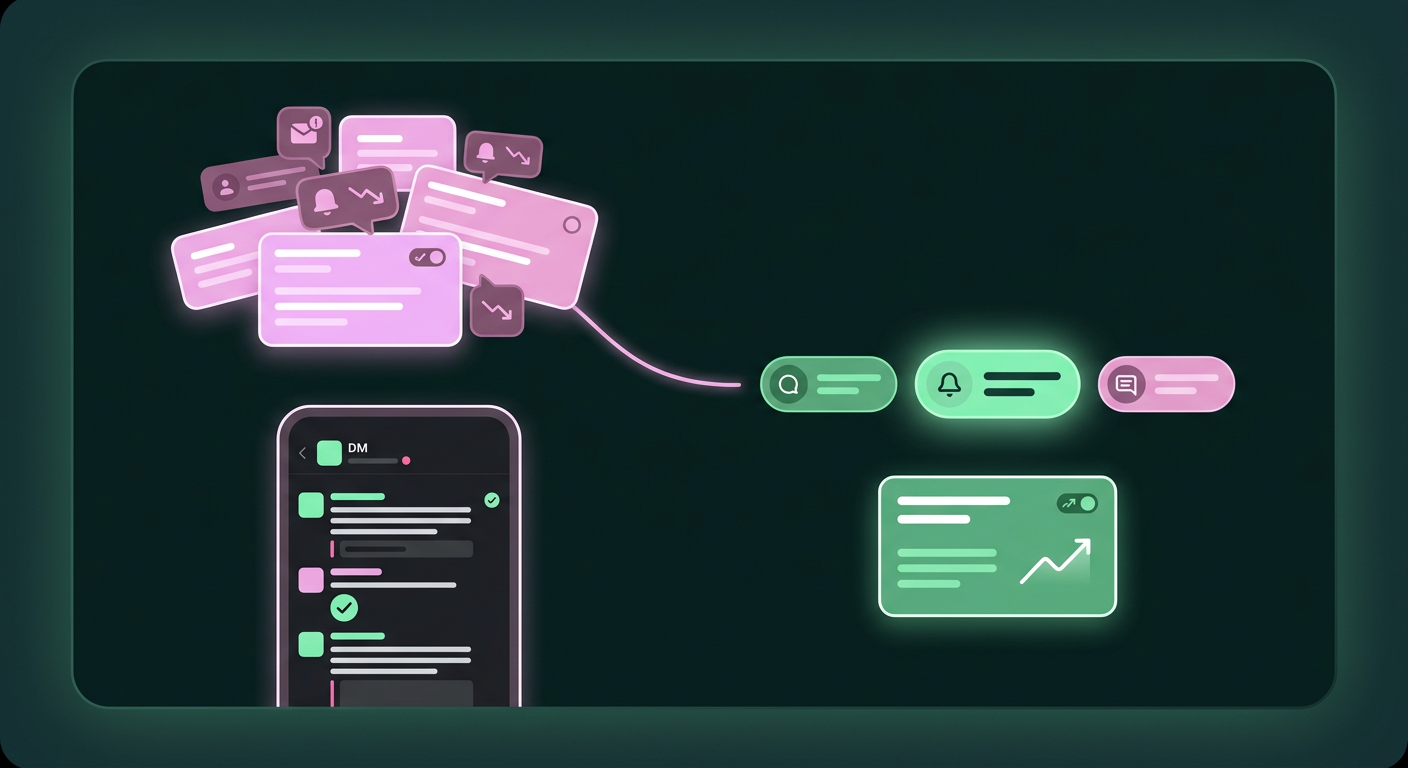
High-intent shoppers ignore traditional recovery (opens in a new tab) attempts because email inboxes and SMS have become so oversaturated with promotional content that users are trained to tune them out. Your carefully crafted message lands next to a dozen other brand emails, all shouting for attention. The result is dismal engagement and a feeling that your brand is just contributing to the noise. In contrast, direct messaging platforms are still reserved for more personal, 1:1 conversations, which makes a well-timed message from a brand feel more like a helpful customer service interaction than an advertisement.
The data paints a clear (opens in a new tab) picture. Even as far back as 2019, the global online shopping cart abandonment rate was 69.57% (opens in a new tab), a number that has remained stubbornly high. And while some studies suggest that abandoned cart emails can have a 45% conversion rate (opens in a new tab) when opened, the real challenge is getting them opened in the first place. Email clients are increasingly aggressive with junk filter and promotional tabs, which means your message may never even be seen. As more brands have adopted SMS, it too has started to feel just as intrusive and easy to ignore as email.
The power of shifting to DMs lies in the user's inherent behavior on these platforms. People open their Instagram and WhatsApp messages. Engagement is the default expectation, not the exception. A message here arrives with a different context, one of dialogue rather than monologue. This is where modern brands can build a real connection, answer a last-minute question, or offer assistance that feels genuinely personal, dramatically increasing the likelihood of winning back the sale.
How to Recover Carts with Automated DMs
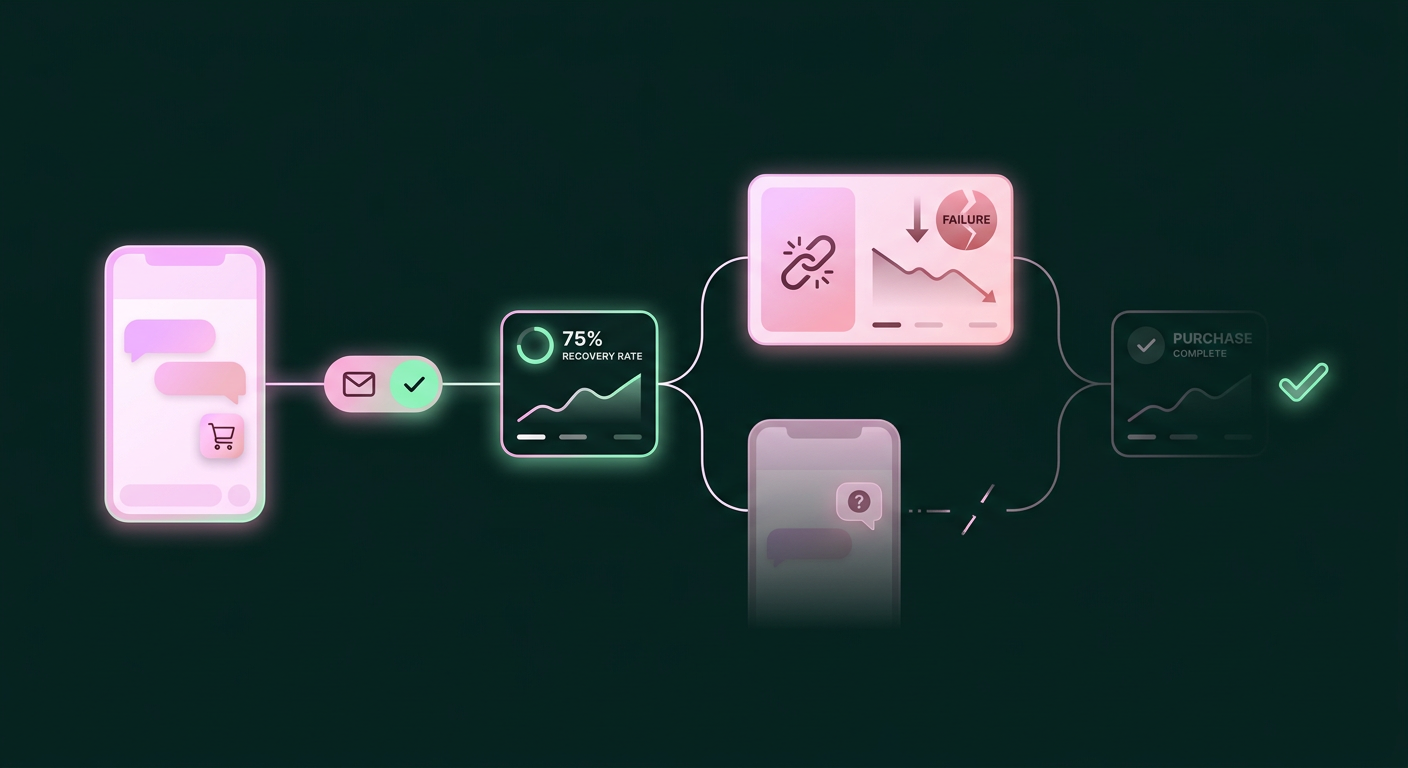
Putting this strategy into practice involves connecting your e-commerce platform to a DM automation system, using AI to personalize the outreach, and then rigorously tracking the recovered revenue. This isn't about replacing your team; it's about giving them tools to have personal conversations at a scale that's impossible to manage manually. By automating the initial outreach in a thoughtful way, you can engage every abandoned cart with a timely, context-aware message that opens the door for a successful recovery.
Phase 1: Connect to Your Shopify Store
The first step is to establish a real-time connection between your e-commerce platform and your messaging system. For a Shopify store, this means authorizing an application that can receive webhook notifications the moment a cart is abandoned. This integration is the foundation of the whole strategy, because timeliness is everything. A message sent within the first hour of abandonment is a helpful reminder; a message sent a day later is an afterthought. This direct connection ensures you have immediate access to the crucial data you need: who the customer is, what was in their cart, and the cart's total value. Without this link, any attempt at outreach will be too slow and generic to be effective.
Phase 2: Use AI to Personalize Outreach at Scale
Once the connection is established, the next phase is to craft the outreach itself. This is where a platform like Dynamo shines, using AI to generate personalized 1:1 messages that feel human. Instead of a generic "Did you forget something?" message, the system can reference the specific items in the cart. For example, a message could say, "Hey [First Name], saw you were checking out the Trailblazer Backpack. Just wanted to see if you had any questions about the material or sizing before it's gone!" This level of personalization shows the customer you're paying attention and are there to help, not just to push a sale. It turns a potentially intrusive message into a valuable customer service touchpoint, which can be the difference between a lost sale and a loyal customer. You can learn more about this approach by exploring how to reduce cart abandonment and win back shoppers with modern strategies.
Phase 3: Track Recovery Revenue, Not Just Open Rates
Finally, you have to measure what matters. While the exceptionally high open rates of DMs are a great leading indicator, the ultimate goal is to recover revenue. Your abandoned cart recovery software needs to have robust attribution. This means tracking which conversations lead to a completed purchase and, ideally, using unique discount codes or tracking links to tie the recovery directly back to a specific DM interaction. This allows you to calculate the precise ROI of your DM automation efforts. By focusing on recovered revenue, you can continuously refine your messaging, timing, and offers to maximize performance and prove the business impact of this new conversational channel.
Common Pitfalls in DM-Based Recovery
Now that you have the process, it's just as important to understand the common pitfalls. The biggest mistakes are sending robotic, one-size-fits-all messages and failing to create a seamless handoff to a human for complex issues. While automation is essential for scaling this strategy, its purpose is to initiate a natural conversation, not to conduct a sterile transaction. If the customer perceives your outreach as just another automated message, you'll lose the trust and engagement that make DMs so powerful in the first place.
A major reason shoppers leave is friction in the checkout process. For example, forecasts suggest that in 2026, 46% of shoppers will abandon their carts because a coupon or discount code doesn't work (opens in a new tab). A generic automated message can't solve this, but a well-designed DM flow can. The initial message can acknowledge the abandoned cart and ask if there was an issue. If the user replies about a broken code, the system should be smart enough to either provide a new one or immediately flag the conversation for a human support agent to resolve the problem personally.
Another pitfall is thinking one message is enough. The same principles of sequencing that apply to email are relevant here, but with a conversational twist.
Recapture's data from 11,000+ stores since 2016 shows that stores using a multi-step email series (instead of just one) see 153-231% more revenue won back. That's 2-3x the result from the same lost carts. That’s 2-3x the result from the same lost carts., Recapture.io
While you don't want to harass a customer with DMs, a thoughtful follow-up that offers help or creates a sense of urgency can be highly effective. The key is to make the entire flow feel like a single, coherent conversation, even if parts are automated. For a deeper dive into common issues, see this analysis on why your cart abandonment rate isn’t budging. Success requires a blend of smart automation for the initial outreach and an accessible human element to handle the nuances that build real customer relationships.
What 'Done' Looks Like: From Abandoned to Recovered
A successful DM-based recovery system, done right, transforms your list of abandoned carts from a daily source of lost revenue into a queue of opportunities for meaningful engagement. "Done" isn't a static, finished state but a dynamic, conversational flow where your brand is proactively solving problems and guiding customers over the finish line. You'll no longer watch shoppers silently disappear from your checkout page. Instead, you'll see active conversations where your team is answering questions, fixing discount codes, and providing the personal touch that turns a moment of hesitation into a completed purchase and a positive brand experience.
This new approach fundamentally changes the metric for success. Instead of fixating on email open rates, you'll be tracking how many conversations are initiated and, more importantly, how much revenue is directly attributed to these 1:1 interactions. You will have successfully moved your recovery efforts from a channel where you are easily ignored to one where you are immediately seen. The result is a more resilient e-commerce business that doesn't just broadcast promotions but builds relationships one conversation at a time, ultimately capturing sales that your old abandoned cart recovery software would have left behind.
Frequently asked questions
How do I actually recover abandoned carts if emails aren't working?
If emails are failing, the most effective next step is to engage customers on channels they use for conversation, like Instagram DMs or WhatsApp. This means using abandoned cart recovery software that connects to your e-commerce store (like Shopify), identifies abandoned carts in real time, and sends a personalized, automated DM to start a conversation. The goal is to offer help and feel personal, not to send a generic marketing message.
Why is my abandoned cart rate so high on Shopify?
A high abandoned cart rate isn't specific to Shopify; it's an industry-wide challenge. The average rate across the web is about 70.19%. Common reasons include unexpected shipping costs, a complicated checkout process, requiring account creation, or technical glitches like a discount code not working. While your store is on Shopify, the reasons are usually related to the customer experience during the final steps of a purchase.
Are abandoned cart emails even worth the effort anymore?
Yes, but with a major caveat: they shouldn't be your only strategy. While their overall effectiveness has been diluted by inbox saturation, studies show that abandoned cart emails can have a 45% conversion rate.dweb.si/abandoned-cart-recovery-statistics). They are best used as one component of a multi-channel recovery strategy that also includes more immediate and conversational channels like DMs, giving you multiple ways to reach a customer.
What’s the difference between abandoned browse and abandoned cart?
Abandoned cart happens when a shopper adds one or more items to their cart but leaves the site without completing the purchase, signaling a very high level of purchase intent. Abandoned browse, on the other hand, occurs when a user views a product page (or several) and then leaves without adding anything to their cart. While still a signal of interest, it's generally considered lower intent than a cart abandonment.
How can I use Instagram bots for cart recovery without sounding like a robot?
The key is to use automation for timeliness and personalization, not to fake being a human. Use the shopper's name and reference the specific items in their cart. Frame the message as a helpful question ("Did you have any questions about sizing?") rather than a demand ("Complete your purchase!"). Most importantly, ensure there is a seamless and obvious way for the user to connect with a real person if they have a complex question the automation can't handle.
Why does recovering revenue in e-commerce feel so fragile?
It often feels fragile because customer attention is fragmented across so many channels, and the final decision to buy can be derailed by the smallest amount of friction. A customer might be distracted, have a question about shipping, or encounter a technical bug. Because the process is so dependent on a perfect, uninterrupted journey, any small hiccup can cause them to abandon the purchase. This is why a proactive, conversational recovery strategy is so important, it allows you to intervene and fix that friction.