
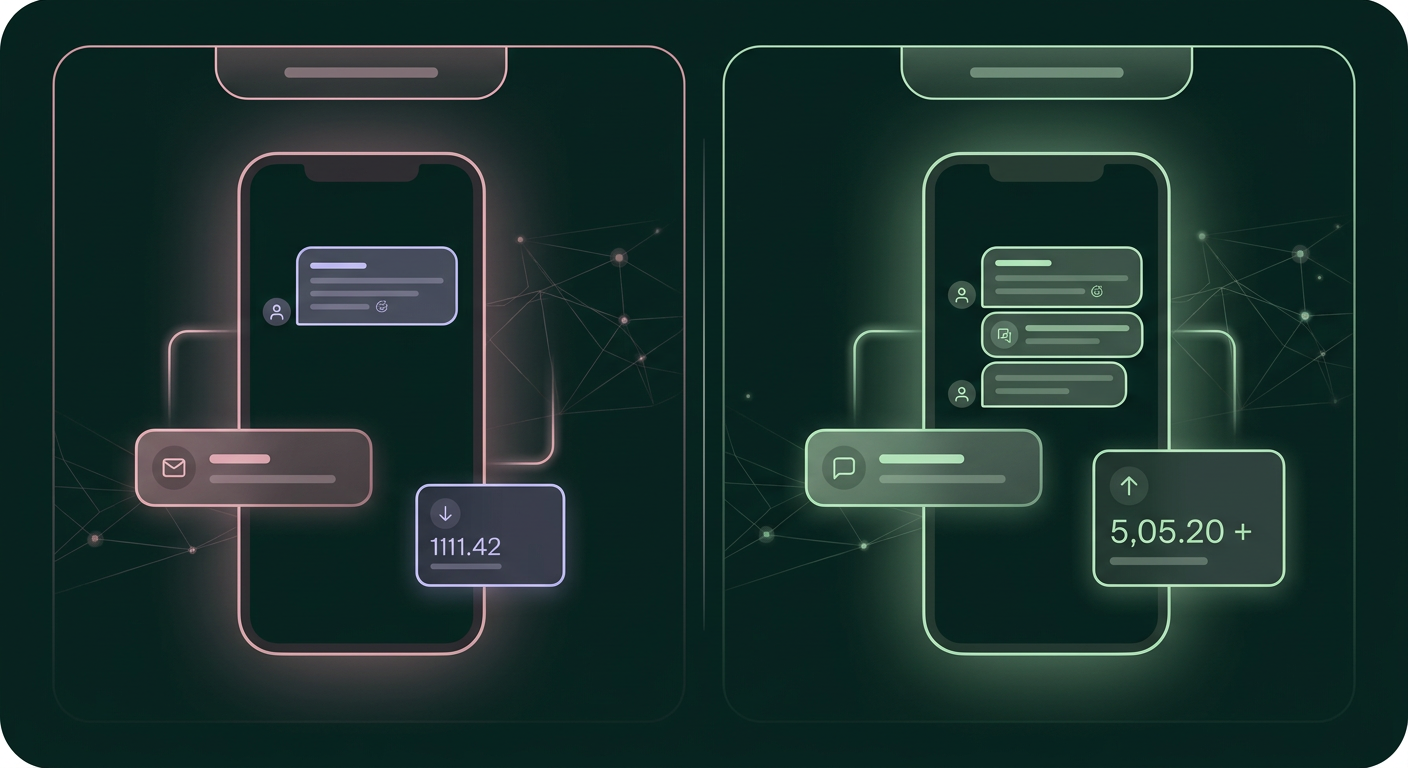
For many direct-to-consumer brands, the marketing playbook has been the same for years: pour money into Facebook ads, drive traffic, and use a platform like Klaviyo to capture emails for promotions. But this model is breaking down. The choice facing CMOs today isn't just about replacing an email platform; it's about shifting an entire strategy away from expensive, acquisition-focused tactics and toward a more profitable, retention-based approach. The wrong choice means continuing to burn cash on a customer acquisition treadmill that never speeds up, while the right choice means building a sustainable business on the back of loyal, repeat customers.
Why Your 'Klaviyo' Strategy Is Burning Ad Spend
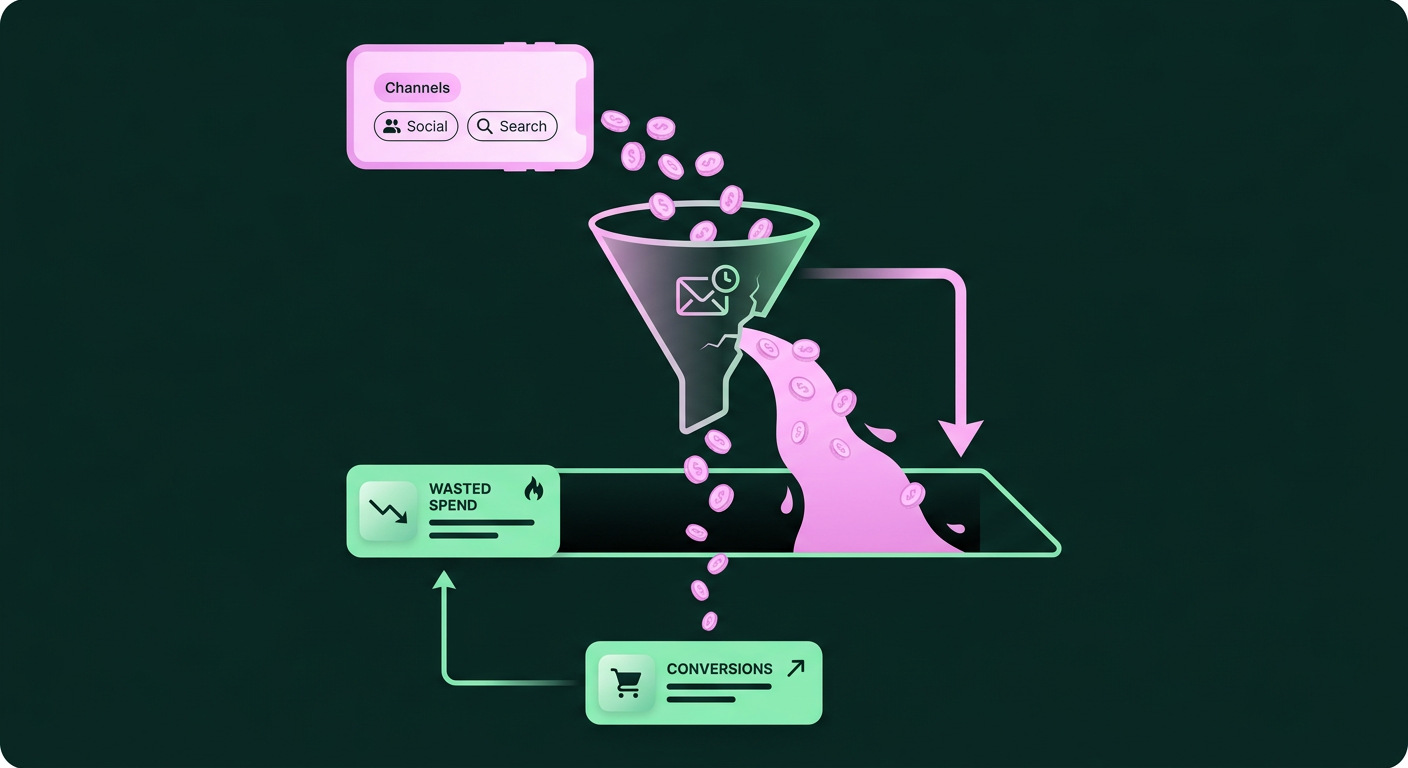
Your current strategy is likely becoming unprofitable because it over-relies on renting access to customers through paid ads and email, which are channels with rising costs and falling engagement. This traps you in a cycle of constantly acquiring one-time buyers who never return, making it impossible to build sustainable growth. The core issue is a dependency on an acquisition-first model in a world where acquisition costs are spiraling.
For years, the engine of D2C growth was paid social media, but that engine is sputtering as brands find they have to spend more and more just to stand still. For example, one founder estimated that a $100 million business needs to spend a minimum of $50,000 a month on Facebook ads (opens in a new tab) just to see a return. This immense pressure forces a relentless focus on bringing in new customers, because the old ones aren't sticking around. The strategy becomes a loop: spend on ads, acquire a customer, lose them, and then pay to acquire them all over again.
The tools that once felt essential, like traditional email marketing platforms, are now showing their limitations because they are fundamentally designed for a one-to-many approach that feels increasingly impersonal. While email has its place, it’s a crowded channel where you’re competing with hundreds of other brands for a sliver of attention in an inbox people are actively trying to ignore. This inevitably forces you back to paid ads to re-engage the very customers you already acquired, perpetuating the expensive cycle. The reality is that the nature of advertising itself is changing, and manual optimization will be less effective by 2025 (opens in a new tab) as AI-powered systems make rapid adjustments that are impossible to match by hand.
How to Choose an Alternative: The 4 Key Criteria
A strong alternative to a traditional platform should be judged on its ability to drive profitable repeat purchases, not just manage email lists. To break free from the acquisition treadmill, you need a system built for retention. This means prioritizing channels with high engagement, focusing on customer lifetime value, automating personal touchpoints, and creating a clear path to profitability that isn't dependent on ad spend.
When evaluating a new platform, your focus needs to shift from email-centric features to metrics that actually drive business health. Here are the four criteria that matter most:
- Channel & Engagement Model: Where do the conversations happen? Traditional platforms are centered on email and maybe SMS, which are channels where it's hard to stand out. A true retention engine needs to engage customers on platforms where they are already active and receptive, like social media DMs. Businesses are 60% to 70% more likely to sell to current customers (opens in a new tab) than to new ones, but only if they can actually reach them.
- Primary Goal: Is the tool built for acquisition or retention? Most marketing automation platforms are designed to cast a wide net and convert leads into a first sale. A retention-focused alternative, however, is obsessed with the second sale, and the third, and the tenth. Its success is measured by its ability to increase customer lifetime value (CLV).
- Automation & Required Effort: How much manual work does it take to create a personal experience? Sending a generic "we miss you" email is easy, but it's also ineffective. A powerful alternative should let you automate highly personalized, 1:1 conversations based on a customer's specific actions and lifecycle stage, without requiring a marketer to be in the loop for every interaction.
- Path to Profitability: Does the tool create a new revenue channel or just optimize an existing one? The goal is to build a system that generates sales without a corresponding increase in ad spend. The right platform becomes a profit center by turning your existing customer base into a reliable source of revenue. The financial impact is significant, as research shows that increasing customer retention by just 5% can boost profits by 25% to 95% (opens in a new tab).
Comparison: Traditional Platforms vs. DM Automation
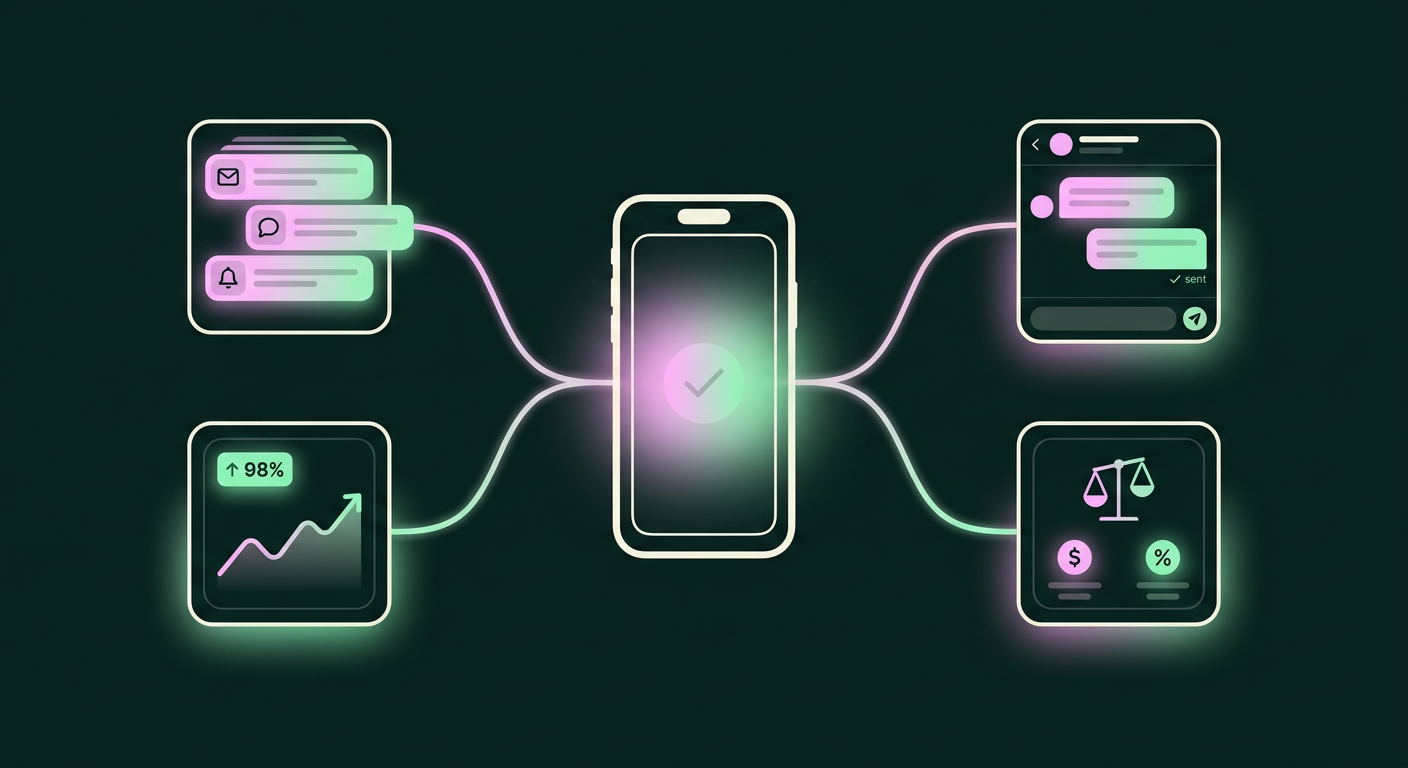
When stacked against these criteria, DM automation platforms are clearly better for brands focused on retention and profitability, while traditional platforms remain stuck in an outdated, acquisition-focused model. The fundamental difference is moving from a strategy of "blasting" messages into crowded channels to one of "conversing" with customers in personal, high-engagement spaces.
With those criteria in mind, the strategic choice becomes clear. While traditional email and SMS platforms are excellent at managing lists and sending broad campaigns, they fall short when the goal is to build genuine, long-term relationships that drive repeat purchases. DM automation, on the other hand, is purpose-built for this exact challenge.
| Criteria | Traditional Platforms (e.g., Klaviyo) | DM Automation |
|---|---|---|
| Channel & Engagement | Email & SMS; low open rates | Instagram & WhatsApp DMs; high engagement |
| Primary Goal | Acquisition, top-of-funnel | Retention, high CLV |
| Automation & Effort | Generic flows, high manual setup | Personalized 1:1, low ongoing effort |
| Path to Profitability | Dependent on paid ad traffic | Creates revenue from existing customers |
Channel & Engagement Model
The most significant difference lies in the channel. Traditional platforms operate in email inboxes and SMS logs, which are increasingly saturated, ignored, and feel like a one-way street for communication. DM automation meets customers on Instagram and WhatsApp, platforms they use daily for personal conversations. This isn't just about higher open rates; it's about shifting the entire dynamic from a brand broadcasting at a customer to a brand having a conversation with a person. This is where you can successfully nurture relationships with existing customers, who are far more likely to buy from you again if you can connect with them effectively.
Primary Goal: Acquisition vs. Retention
Email-centric platforms are fundamentally geared towards capturing a lead and getting the first conversion. Their workflows, templates, and metrics are all optimized for the top of the funnel. DM automation flips the script to focus almost entirely on post-purchase engagement. The primary goal is to increase the second purchase rate, drive loyalty, and maximize CLV. While you can use DMs for acquisition, their real power lies in turning a one-time buyer into a lifelong fan, which is a far more profitable endeavor. After all, even a small increase in retention has an outsized impact on the bottom line.
Automation & Required Effort
While traditional platforms have "automation," it often results in generic, predictable flows that customers quickly learn to tune out, and setting up truly personalized journeys can be complex. Modern DM automation tools can plug directly into your CRM to run personalized, full-funnel lifecycle messaging. This lets you automatically send relevant, 1:1 messages based on triggers like a recent purchase or cart abandonment, all without a marketer having to manually intervene. It's the difference between a canned response and a relevant, timely conversation. This approach is effective, with some brands seeing a 35% jump in monthly orders without additional ad spend by implementing automated flows.
Path to Profitability
This is the bottom line. With a traditional platform, profitability is tied to the constant, expensive flow of new leads from paid ads, which means you're always feeding the machine. With DM automation, you're building an asset. By nurturing your existing customer base in a high-engagement channel, you create a reliable, predictable revenue stream that is decoupled from your ad budget. This is how you shift marketing from a cost center to a profit center, transforming it from an expense into an investment with a clear return. It's a fundamentally new direct-to-consumer marketing strategy that builds sustainable value.
Which Is Right for You?
If your primary goal is to grow profitably by turning one-time buyers into repeat customers, a DM automation platform is the right choice. If you are content with the high-cost, high-churn acquisition model, your existing email platform may be sufficient. The decision hinges on whether you want to continue renting your audience or start owning the relationship.
Let’s be direct. If your brand is struggling with the economics of paid acquisition and you see a huge number of customers who buy once and never return, you have a retention problem. Continuing to use a tool designed for acquisition to solve a retention problem is like using a hammer to turn a screw. It might work eventually, but it's messy, inefficient, and you'll probably break something along the way.
Choose a traditional platform if: Your business model isn't reliant on repeat purchases, and you primarily need a tool for sending mass email newsletters and basic top-of-funnel campaigns. You are comfortable with the economics of constantly acquiring new customers to replace the ones who churn.
Choose a DM automation platform if: You recognize that customer retention is the key to profitable growth. You want to stop paying Meta to re-acquire your own customers and instead build an owned channel for re-engagement. Your goal is to increase metrics like second-purchase rate and customer lifetime value. You want to automate personalized, 1:1 conversations at scale, like recovering abandoned carts with a simple DM that can increase recovery rates from a typical 6% up to 22%.
For most D2C brands hitting a growth plateau, the choice is clear. The path forward isn't about finding a slightly better email tool; it's about adopting a new strategy and a new category of technology built for the modern consumer.
Your Next Move: Automate Your Retention
The first step is to stop thinking in terms of campaigns and start thinking in terms of conversations. The most effective way to do this is by using a platform that can automate personalized, 1:1 messages across the full customer lifecycle. Your goal is to create a system that automatically welcomes new customers, encourages repeat purchases, and wins back those who have lapsed.
Instead of another massive email blast, imagine sending a perfectly timed DM to a customer who just made their first purchase to ask about their experience. Imagine automatically reminding a customer to re-order a consumable product right before they run out. Imagine recovering an abandoned cart not with a generic email, but with a helpful DM that feels like personal shopping assistance. These are the kinds of interactions that build real relationships and lasting loyalty.
The technology to do this exists today. Platforms like Dynamo allow you to plug directly into your existing CRM or e-commerce store and use that data to power automated, full-funnel conversations on Instagram and WhatsApp. You can explore a variety of proven use cases (opens in a new tab) that leading brands are using to drive retention and profitability. The shift from acquisition to retention doesn't have to be a massive, multi-quarter project. You can start by automating one key touchpoint, like post-purchase follow-up or abandoned cart recovery, and build from there. The sooner you start owning your customer relationships, the sooner you can get off the ad-spend treadmill for good.
Frequently asked questions
Why are my Facebook ads so expensive and not bringing back past customers?
Your Facebook ads are expensive because you're competing in a crowded auction for new customers, and relying on them to bring back past customers is inefficient by design. You're paying to reach people you've already paid to acquire. The cost is high because that's how the ad platforms make money. On top of that, as AI-powered ad systems become more common, manually optimized campaigns will struggle to compete, as predicted for 2025. For a $100 million business, one founder estimated a minimum monthly spend of $50,000 on Facebook is necessary just to see a return. A better strategy is to move customer conversations to an owned channel like DMs after the first purchase.
What’s the best way to increase my customer lifetime value (CLV)?
The most direct way to increase CLV is to drive more repeat purchases from your existing customers through a dedicated retention strategy. Instead of spending more to acquire new, low-value buyers, you can get a much higher return by nurturing the ones you already have. Even small improvements can have a huge impact. For instance, studies show that a 5% increase in customer retention can lead to profit boosts ranging from 25% to 95%. This is achieved by creating automated, personalized touchpoints that encourage customers to make a second, third, and fourth purchase.
Is it really that much cheaper to keep a customer than to find a new one?
Yes, it's dramatically more cost-effective to sell to an existing customer. The numbers are stark: the probability of selling to an existing customer is between 60% and 70%, while the probability of selling to a new prospect is only 5% to 20%. This data highlights a fundamental business truth: your most valuable audience is the one that has already purchased from you. Investing in tools and strategies that cater to this group provides a much higher and more reliable return than pouring all your resources into top-of-funnel acquisition.
When should my brand shift its focus from customer acquisition to retention?
You should focus on retention from day one, but the urgency becomes critical when the cost of acquiring a customer (CAC) approaches or exceeds the profit from their first purchase. If you find yourself on a treadmill of acquiring one-time buyers just to keep revenue flat, it's past time to shift your focus. A healthy business builds a foundation of repeat customers early on. The moment you have your first customer is the moment you should be thinking about how to earn their second purchase.
Can I really use Instagram DMs to get first-time buyers to purchase again?
Absolutely. Instagram DMs are one of the most effective channels for encouraging repeat purchases because they are personal, immediate, and have extremely high engagement rates. Using DM automation, you can send a personalized message after a customer's first purchase to check in on their experience, offer a thank-you discount on their next order, or notify them of a complementary product. This kind of 1:1 interaction builds a real relationship and has been shown to drive significant results, like the case where a brand used automated WhatsApp flows to increase monthly orders by 35% with no new ad spend.
What's the best strategy for turning one-time buyers into loyal, repeat customers?
The best strategy is to create an automated, post-purchase conversational flow that makes customers feel valued and keeps your brand top of mind. This begins immediately after the first sale with a welcome message, followed by order tracking updates, a check-in to see if they're happy with the product, and incentives for a second purchase. Recovering abandoned carts for subsequent purchases is a key part of this, and by moving the process into DMs, you can see dramatic improvements, like one brand that saw its abandoned cart recovery rate jump from 6% to 22%.