

You moved to an "owned" marketing channel like SMS to escape the rising costs of Meta ads, only to discover you've traded one expensive, inflexible system for another. The promise was control and direct access to your audience. But for many brands using enterprise SMS platforms, the reality is steep minimums, opaque fees, and restrictive contracts that feel suspiciously like the ad-spend treadmill you were trying to leave behind. The search for Attentive alternatives isn't just about finding a new tool, it's about finding a real solution to the problem of building a profitable, scalable marketing channel you actually own.
Your Owned-Channel Strategy is Broken
For years, the growth playbook was simple: pour money into Facebook and Instagram ads, acquire customers, and scale. But as ad costs continue to climb, that model has become a trap. Many brands now face a difficult choice between funding growth and protecting their bottom line, as the cash required for ads is tied up in the very inventory needed to fulfill orders from that expensive traffic. This cycle has made building an owned audience a top priority for any growth team trying to reclaim its margins.
To escape this trap, the logical move was to invest in an owned channel like email or SMS. Platforms in this space promised a direct line to the customer, free from the whims of ad algorithms. Yet, many marketers quickly found their new "owned" channel came with its own set of constraints. Instead of owning the relationship, they were renting access from a platform that dictated the terms, the pricing, and the rules for measuring success. This is the core friction driving the search for a true alternative, not just a different logo on the invoice, but a fundamentally different approach.

The Real Cost of Rented Channels
This distinction between a rented channel and an owned one gets to the heart of the problem. Whether it’s an ad network or a monolithic SMS provider, a "rented" channel means your business's health depends on a third party's platform and pricing. When a platform can change its algorithm, raise its prices, or lock you into a long-term contract at any time, you don't have an asset; you have a liability. This dependency is why the traditional marketing spend of 7-10% of gross revenue is becoming a fantasy (opens in a new tab) for so many businesses, your ability to grow profitably is capped by factors entirely outside your control.
This is precisely why so many organizations are now evaluating alternatives to major SMS platforms (opens in a new tab) as their needs for attribution accuracy, pricing flexibility, and control evolve. When you can't accurately measure what's working, can't adjust your spend without penalty, and can't easily integrate data with other systems, you haven't escaped the walled garden of paid social. You've just moved into a different one with a new gatekeeper. The real cost isn't just the monthly bill; it's the strategic risk of building a core part of your business on rented land.
The Path to a Truly Owned Audience
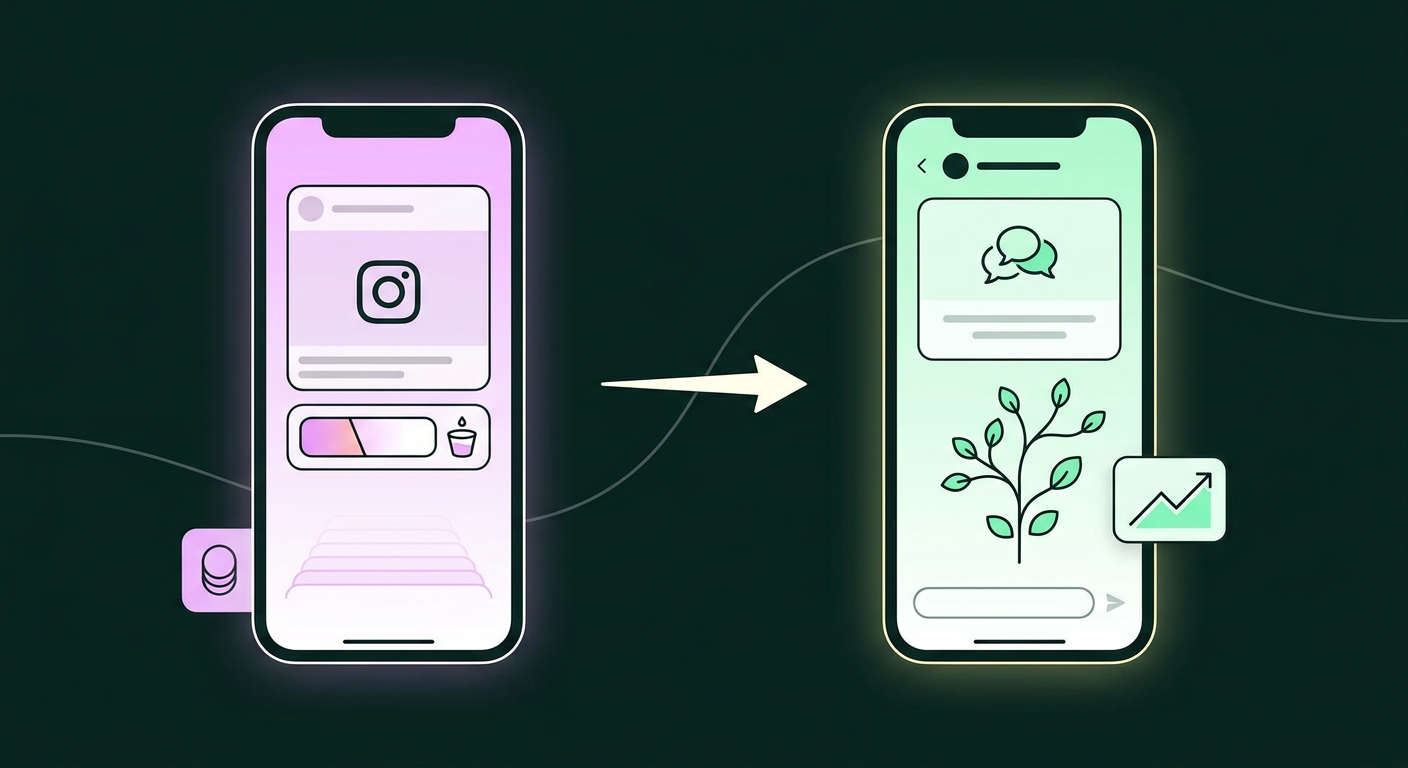
Breaking the cycle and building a channel you actually control requires shifting your focus from one-way broadcasts to two-way conversations, using the apps where your customers already spend their time. Conversational marketing through direct messages (DMs) on Instagram and WhatsApp represents a fundamental departure from the old model. Instead of paying a platform for the privilege of sending a text, you're building a list of engaged subscribers who have opted into a personal dialogue with your brand.
Why DMs Outperform Traditional SMS
This approach works because it meets customers where they are, in a format they prefer. Unlike SMS, which is increasingly saturated with promotional messages, DMs on social platforms are inherently conversational. This context is what drives such high engagement. Brands using this strategy regularly see DM open rates of over 80%, with WhatsApp conversations reaching 90-98%. This is an audience that isn't just receiving your message but actively opening and reading it.
The impact on performance is significant. Because the engagement is so much higher and the interaction feels more personal, the path to purchase is far more effective. In fact, a well-executed DM strategy can produce a conversion rate that is three to five times higher than traditional push notifications. It’s the difference between shouting a promotion at a crowd and having a helpful, one-on-one conversation with an interested shopper.
Phase 1: Acquire Subscribers, Not Just Followers
The first step is to convert your existing audience, your Instagram followers, website visitors, and ad traffic, into opted-in DM subscribers. This isn't about simply gaining more followers; it’s about building a marketable list of people who have explicitly given you permission to message them directly. You can do this through automated triggers like setting up a keyword reply in your Instagram DMs, running click-to-Messenger ads, or using story replies to initiate a conversation. Each new subscriber becomes a durable asset, moving a portion of your audience from a platform you just participate in to a channel you own. With subscriber acquisition costs often as low as $1.20, this becomes a highly efficient way to build your most valuable marketing asset.
Phase 2: Monetize the Conversation
Once you have an active subscriber list, you can use personalized, automated DM flows to nurture the relationship and drive revenue across the entire customer lifecycle. This goes far beyond just sending discount codes. You can build sophisticated campaigns for everything from welcome sequences to abandoned cart recovery flows. Imagine a shopper who leaves an item in their cart receiving a friendly DM a few hours later asking if they have any questions. This helpful, conversational approach is why initial DM engagement rates often reach 75%. You can also use this channel for new product launches, post-purchase follow-ups, re-engagement campaigns, and win-back offers, all within a context that feels personal and helpful, not intrusive.
Watchouts When Choosing an 'Alternative'
As you start exploring conversational marketing, it's important to know that not all platforms are created equal. If you're not careful, you can easily end up in a slightly different version of the same flawed model you're trying to escape. The goal is to secure more control, transparency, and better economics, so you have to scrutinize any potential partner on these key points.
Trap 1: Opaque Pricing and Hidden Fees
One of the biggest complaints with incumbent SMS platforms is a pricing model that feels designed to confuse and lock in customers. It's common to see quotes that hide the true total cost of ownership. For example, some legacy platforms lock you into quarterly spending minimums of $2,000 to $3,000 and hidden carrier fees (opens in a new tab) that can nearly double your monthly bill. Worse, contracts often include 12-month auto-renewal clauses and exclusivity language that make it a technical breach of contract to even evaluate other providers. A true partner offers transparent, usage-based pricing that scales with your business, not one that penalizes you for growing or ties you down with long-term commitments.
Trap 2: Inflexible Attribution and Control
Another major frustration is the lack of control over attribution. Many legacy platforms use their own black-box attribution models that make it difficult to compare performance against other channels or verify ROI. This is a huge issue for growth leaders who need to justify their budget and understand what's actually driving results. The best alternatives for enterprise marketing offer customizable attribution (opens in a new tab) that can align with your source of truth, whether that's Google Analytics or your e-commerce platform's own reports. You should also demand full self-serve control over your campaigns, data, and reporting, rather than being forced to rely on an account manager to make basic changes or pull performance data.
What 'Done' Looks Like: Profitable, Scalable Growth
When you avoid those traps and build a truly owned channel with conversational DMs, you create a marketing engine that serves as a stable, predictable source of profitable growth. You are no longer at the mercy of volatile ad costs or restrictive platform contracts. Instead, you have a direct line to your most engaged customers, one that you own and control completely.
"Done" looks like an audience that opens your messages at rates above 80% because they see your brand as a helpful partner, not just another advertiser. It looks like a channel that drives conversion rates 3-5 times higher than push notifications, significantly improving your overall marketing efficiency. Most importantly, it looks like a scalable growth loop where you can consistently acquire new subscribers at a low cost and nurture them into loyal, high-value customers. This is the real promise of an owned channel: a durable asset that decouples your growth from your ad spend and gives you a foundation for long-term profitability. You can see the revenue and engagement results that brands achieve (opens in a new tab) when they adopt this conversational approach.
Frequently asked questions
How can I grow my e-commerce store without relying so heavily on Meta ads?
The most sustainable way to grow is to shift your focus from "renting" an audience on paid channels to building an "owned" one. While ads can be part of your strategy, over-reliance creates a cycle of escalating costs. By building an owned channel through DM marketing on platforms like Instagram and WhatsApp, you create a direct, low-cost way to consistently reach your most engaged customers, reducing your dependency on expensive, third-party ad platforms.
What's causing Meta ad costs to rise so much?
While more competition is a factor, a significant driver is Meta's strategic shift toward AI and automation. The platform's algorithm now relies more on broad targeting and creative performance rather than manual audience controls. This means the algorithm has more power to find audiences, but it also leads to more volatility and less granular control for advertisers, which often translates into higher and less predictable customer acquisition costs.
What are the best Attentive alternatives if I'm concerned about pricing and control?
The best alternatives are platforms that prioritize transparency, flexibility, and true ownership. Look for partners that offer customizable attribution, transparent pricing without hidden fees, and full self-serve control. Many brands seek alternatives because they've been burned by inflexible long-term contracts, opaque carrier fees that inflate costs, and black-box attribution models. The goal is to find a platform that empowers you to own your channel, not just rent access from another vendor.
How can I lower my customer acquisition costs but still drive engagement?
To lower CAC while boosting engagement, you should strategically reallocate budget from high-cost acquisition channels (like paid social) to building a low-cost, high-engagement owned channel. With DM marketing, you can acquire subscribers for a fraction of what it costs to acquire a customer through ads. From there, you can foster engagement with personalized, conversational messages that see dramatically higher open and conversion rates, creating a more efficient and profitable growth loop.
Why is a DM-based marketing approach better than traditional SMS?
A DM-based approach is better because it's inherently more conversational and achieves significantly higher engagement. While SMS is often perceived as a one-way marketing blast, DMs on Instagram and WhatsApp happen on platforms where users are already having personal conversations. This context makes the interaction feel more natural and less intrusive, leading to exceptional open rates of 80% or more. This high engagement translates directly into higher performance, with conversion rates often 3-5 times higher than channels like push notifications.
Should my brand stop using paid ads on Facebook and Instagram altogether?
Not necessarily, but the role of ads in your strategy should evolve. Paid ads can still be effective, but they should be used to complement and fuel your owned channel strategy, not as your sole method of acquisition. You can use them more strategically to acquire DM subscribers, allowing you to pay for the initial touchpoint but then continue the conversation and nurture the relationship on your owned channel at a much lower long-term cost.