
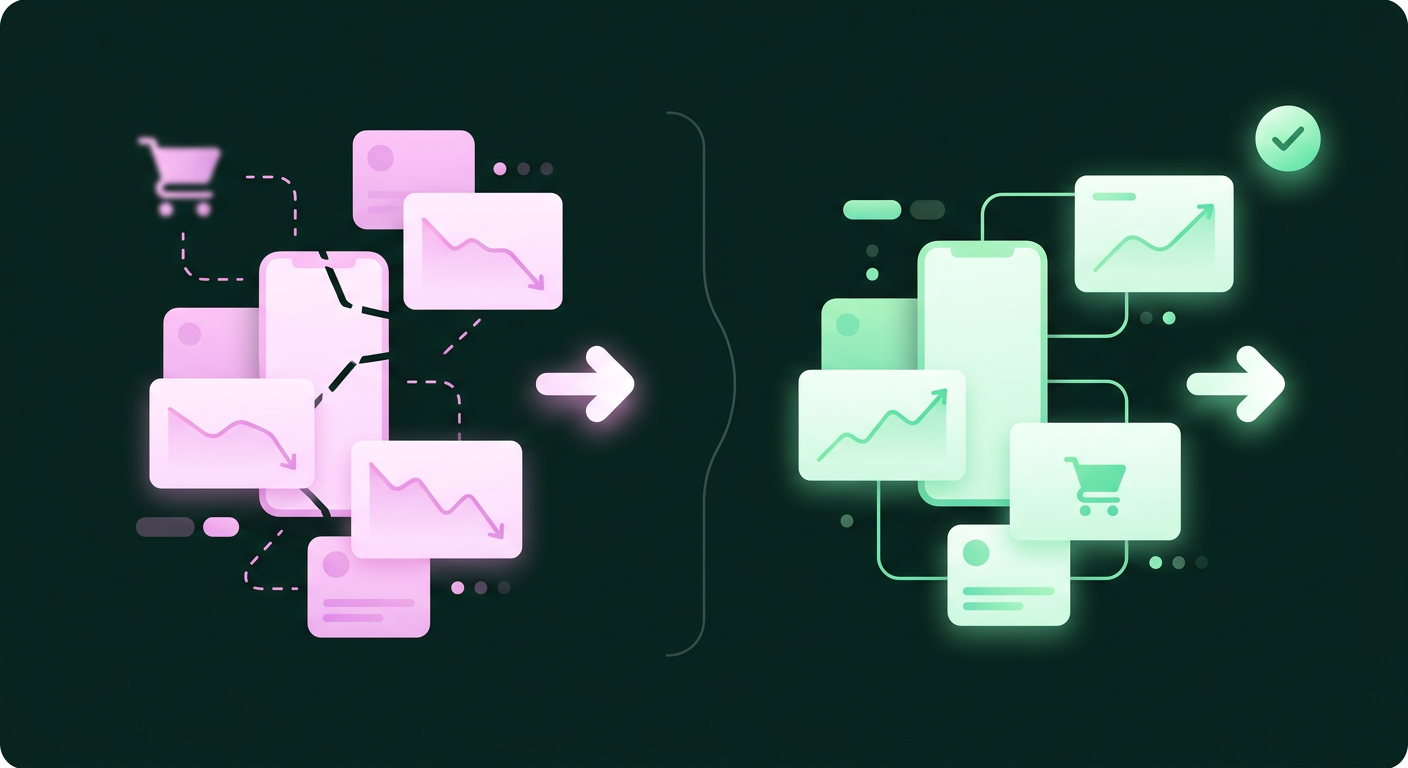
It’s a common frustration for e-commerce leaders: you do everything by the book to win back abandoned carts. A shopper leaves, your automated email and SMS sequences kick in, and the analytics even show decent open rates. But the revenue you recover is a trickle, not a flood. You have a system in place, yet it's failing to make a dent in the roughly 70.19% of carts that were abandoned in 2023.com/blog/cart-abandonment). The tools are running, but they aren't producing results, leaving a huge amount of revenue on the table at the last possible moment.
Your Cart Recovery Strategy Is Leaking Revenue
Your cart recovery strategy is leaking revenue because it relies on channels customers have learned to ignore. Even with high open rates, traditional email and SMS messages fail to convert because they feel impersonal and get lost in a sea of promotional noise, creating a disconnect between a shopper's attention and their willingness to act.
The problem isn't that shoppers don't see your messages. In fact, abandoned cart emails have a surprisingly high open rate of 51.21% (opens in a new tab), which is far better than standard marketing emails. The issue is what happens after the open. The shopper sees the reminder, acknowledges it, and immediately moves on. The message lands, but it doesn't compel action because it’s treated as just another piece of marketing in an already-cluttered inbox. This gap between visibility and conversion is where your revenue disappears. You’re getting their attention for a second, but you’re not getting the sale.
Why Shoppers Ignore Your Emails and SMS
**While shoppers abandon carts for (opens in a new tab) straightforward reasons like unexpected costs, they ignore your recovery attempts because email and SMS have become saturated marketing channels. Customers develop a "message blindness" where your reminder doesn't register as personal or urgent, so it fails to prompt a return to checkout.**
The reasons people abandon carts (opens in a new tab) are often tactical and easy to understand. The real puzzle is why our attempts to win them back are so ineffective, even when they seem to be working on the surface.
Surface Cause: Friction at Checkout
The initial decision to leave a cart is often a rational response to friction in the buying process. Research consistently shows that the top reason for abandonment is seeing unexpected costs at the final stage.
The Baymard Institute conducted research into why people abandon their purchases. The most common reason was unexpected extra costs at checkout, such as shipping costs. 47% of people surveyed had abandoned a purchase for this reason. , TrueLayer, "How can ecommerce brands reduce cart abandonment?"
Beyond shipping fees, other snags like concerns about payment security or a complicated checkout process (opens in a new tab) can introduce just enough doubt to derail a purchase. While these are critical issues to fix on your site, they only explain why the cart was abandoned in the first place, not why your recovery campaigns are failing to bring those high-intent customers back.
Real Cause: Channel Overload and Message Blindness
The deeper problem lies in the channels we use for recovery. Email inboxes and SMS threads are no longer personal spaces; they are battlegrounds for brand attention. Even with an astonishingly high open rate of up to 98% for SMS campaigns (opens in a new tab), visibility doesn’t guarantee engagement.
Shoppers have developed "message blindness." They’ve been conditioned to recognize the format and tone of an automated marketing message and mentally filter it out. The abandoned cart email, with its predictable subject line and template, looks and feels exactly like the dozen other promotional emails they got that day. It doesn't feel like a helpful nudge from a brand they like, but like an automated script. This lack of human touch and personal context prevents it from breaking through the noise and motivating someone to finish their purchase. The channel itself signals that this is a low-priority, mass communication, even if the shopper was just moments from buying. To truly reduce cart abandonment, you have to look beyond simply reaching the customer and focus on actually connecting with them.
Is Your Recovery Strategy Built for Modern Shoppers?
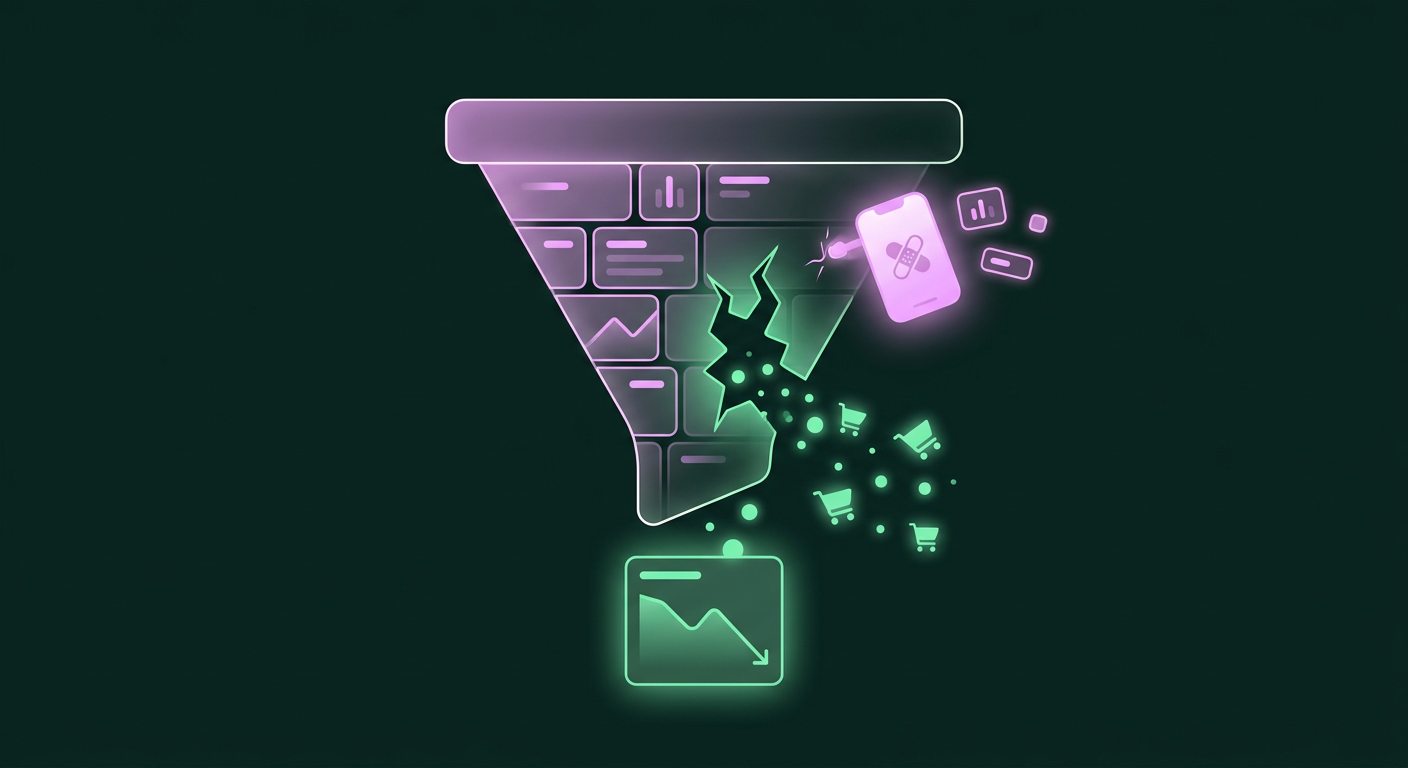
If your analytics show high open rates but low conversion for cart abandonment campaigns, your recovery strategy is outdated. That pattern is a clear sign of channel fatigue. A modern approach, by contrast, uses channels where personal, 1:1 conversations are the norm, which drives both high open rates and high engagement.
Take a look at your own data. You might see that your abandoned cart emails perform significantly better than your regular campaigns and achieve a conversion rate of around 16.69%.69%](https://iwdagency.com/blogs/news/abandoned-cart-emails (opens in a new tab)). On paper, this looks like a win. But the real story is the revenue you're still leaving behind. The fact that over 83% of shoppers who open the email still don't convert means they are seeing your message and actively choosing to ignore it.
This is a classic channel problem, not a message problem. The shopper had high intent and built a cart. Your email reminded them of that intent, but the context of the email inbox framed your message as ignorable marketing.
Now, contrast this with the channels customers use for actual conversations with friends and family, like Instagram and WhatsApp DMs. These are spaces reserved for personal interaction, so messages sent here are treated with more importance. While a 50% email open rate is celebrated, DM open rates are typically 80% or higher, with WhatsApp often reaching an incredible 90-98%. When a brand can respectfully enter this space with a helpful, personalized 1:1 message, it breaks through the noise in a way email simply can't. You can see a direct comparison in the data on DM vs. email for cart abandonment recovery effectiveness.
Meet Shoppers Where They Actually Are: DMs
The most effective way to recover abandoned carts is to stop sending messages to crowded inboxes and start engaging shoppers where they have real conversations: social media DMs. A personalized, context-aware DM creates a 1:1 interaction that feels helpful, not automated, leading to dramatically higher engagement and conversion.
Instead of another email that gets lost in the "Promotions" tab, imagine sending a friendly message on Instagram moments after a shopper leaves your site. The message isn't a generic bulk send; it's a personalized DM that references the items they were considering and maybe offers to answer a question. This approach shifts the dynamic from a brand broadcasting at a customer to a person-to-person conversation.
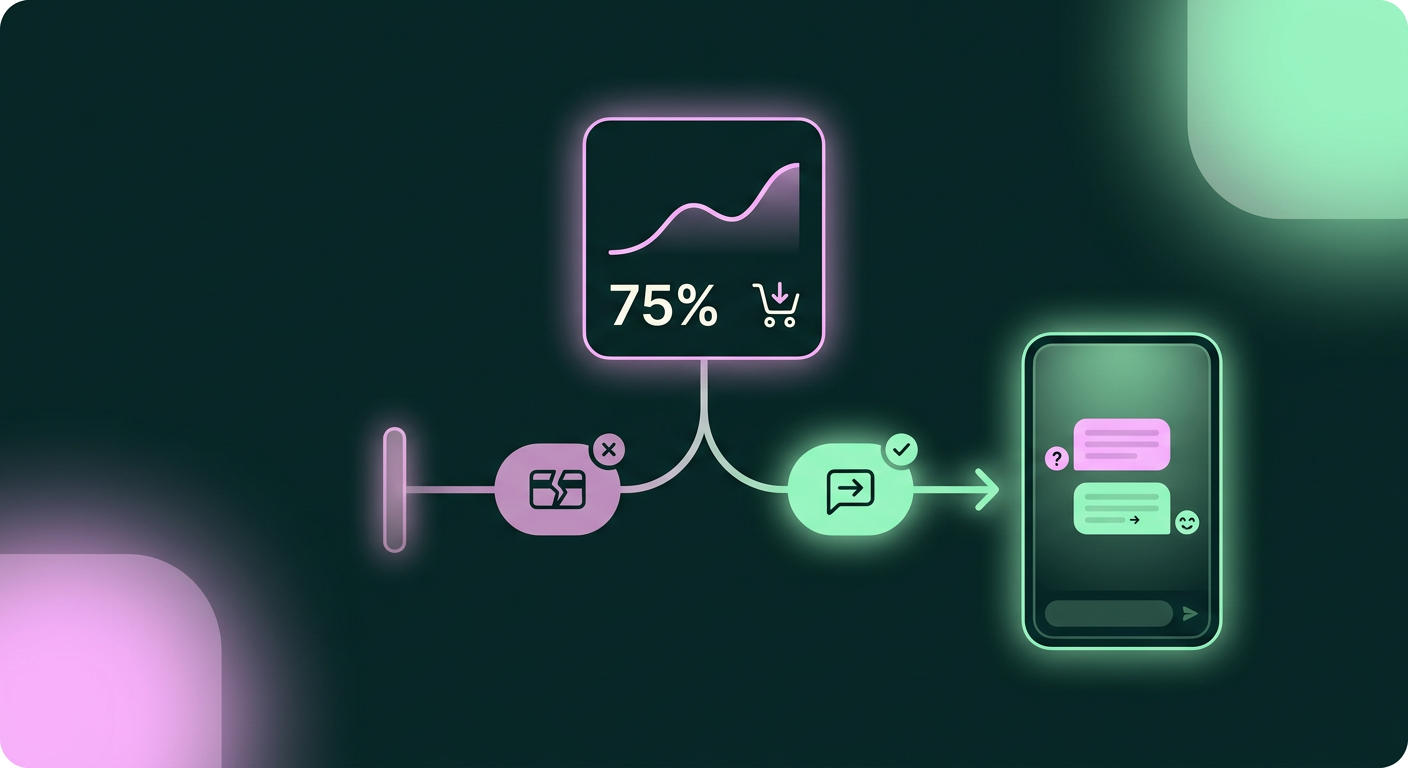
This is where modern shoppers live and communicate, and the engagement rates reflect this reality. The first DM in a sequence often sees a 75% engagement rate, which is unheard of in email marketing. People don't just see the message; they read it and respond. This conversational context is what drives action. Your message becomes a helpful touchpoint that guides the customer back to their cart, rather than just another unread notification.
The results speak for themselves. Conversion rates for recovery campaigns run through DMs are often three to five times higher than those for push notifications. By meeting customers in a channel they prefer and trust, you’re not just recovering a sale; you’re building a stronger, more personal relationship. This is a core part of building a resilient direct-to-consumer marketing strategy beyond ads.
What a Healthy Recovery Rate Looks Like
A healthy recovery strategy generates conversations, not just opens. Success isn't a 50% open rate, but a 75% engagement rate where shoppers reply, ask questions, and return to their carts because they received a timely, personal message in a channel they actually use. This leads to a measurable lift in recovered revenue and stronger customer loyalty.
When you move your cart recovery efforts to DMs, the metrics you track will fundamentally change. You'll stop obsessing over open and click rates and start focusing on engagement and conversation. You'll see customers replying to your automated messages to ask about sizing, shipping, or product details. Each of these interactions is an opportunity to help, build trust, and secure a sale that would have otherwise been lost forever. This is what a modern, effective recovery approach looks like.
This shift is more critical than ever, as trends show the problem is only getting worse. Some industry tracking suggests that in 2026, the average cart abandonment rate could climb to a record high of 72.32%.32%](https://retention.com/blog/how-to-reduce-cart-abandonment-and-recover-revenue (opens in a new tab)). Relying on a leaky email funnel in that environment is unsustainable. A healthy recovery rate isn't just a number on a dashboard; it's the stability that comes from knowing you have a reliable system to win back high-intent shoppers. It's about turning a moment of friction into a positive brand interaction that not only saves the sale but also encourages that customer to come back again.
Frequently asked questions
Are abandoned cart emails still worth the effort?
Yes, but they shouldn't be your only strategy. Abandoned cart emails perform much better than standard marketing emails, with data showing an average conversion rate of 16.69%. They can certainly recover some revenue. However, their effectiveness is capped by channel fatigue. For a complete recovery strategy, they should be used alongside more personal channels like DMs, which can capture the majority of shoppers who now ignore email.
Why does my eCommerce business feel so fragile when I see high abandonment?
High cart abandonment feels unsettling because it's a constant revenue leak at the very last step of the customer journey. With the average rate around [70.19% as of 2023](https://monei.With (opens in a new tab) the average rate at 70.19% as of 2023, it means for every three customers who add items to their cart, two leave without buying. This makes growth feel precarious because you're constantly losing customers who showed clear purchase intent, forcing you to spend more on acquiring new ones just to keep up.
Should I use Instagram bots to help with recovering carts?
You should focus on tools that enable personalized 1:1 DMs, not what people typically think of as "bots." The goal is a conversational experience that feels human and helpful, not an automated bulk send that feels like unwanted messages. A sophisticated platform uses automation to send context-aware, personal messages at scale, but the end result should feel like a one-on-one interaction. This approach respects the personal nature of the DM channel and is far more effective for recovering carts.
Why do shoppers with high intent still ignore my emails and texts?
High-intent shoppers ignore emails and texts because of channel overload and message blindness. They receive so many promotional messages in these channels that they've learned to automatically filter them out, even when the content is relevant. A DM on a platform like Instagram or WhatsApp, however, cuts through that noise. With [DM open rates often exceeding 80%](https://dynamo.With (opens in a new tab) DM open rates often at 80%+, these messages land in a conversational context where users are primed to pay attention, making them far more likely to engage and complete their purchase.
What's the difference between abandoned browse and abandoned cart recovery?
Abandoned browse recovery targets shoppers who looked at a product but didn't add anything to their cart. Abandoned cart recovery targets shoppers who took the next step of adding items to their cart but left before buying. Because adding an item to a cart shows much higher purchase intent, these recovery campaigns are a more valuable and immediate priority for e-commerce brands.