
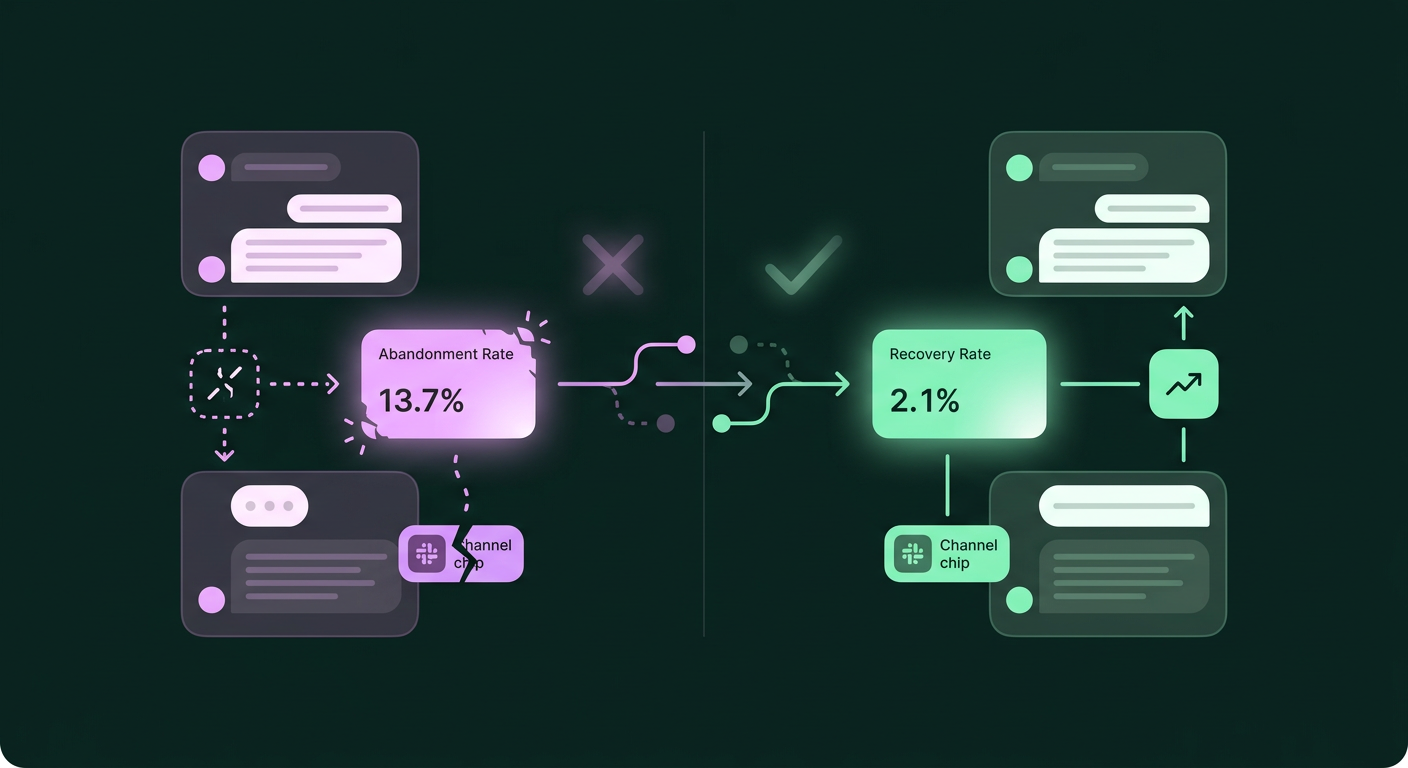
It’s one of the most frustrating metrics in e-commerce. You do the hard work of getting qualified traffic to your site, they find products they love, and they even add them to their cart. Then the trail goes cold. That customer, who was moments away from a purchase, simply vanishes. When you check your analytics, the cart abandonment rate is a stubbornly high number representing a constant leak of your most valuable, high-intent revenue. You have email sequences and SMS flows running, but each notification feels less like a helpful nudge and more like a message sent into a void, making little impact on that bottom-line number.
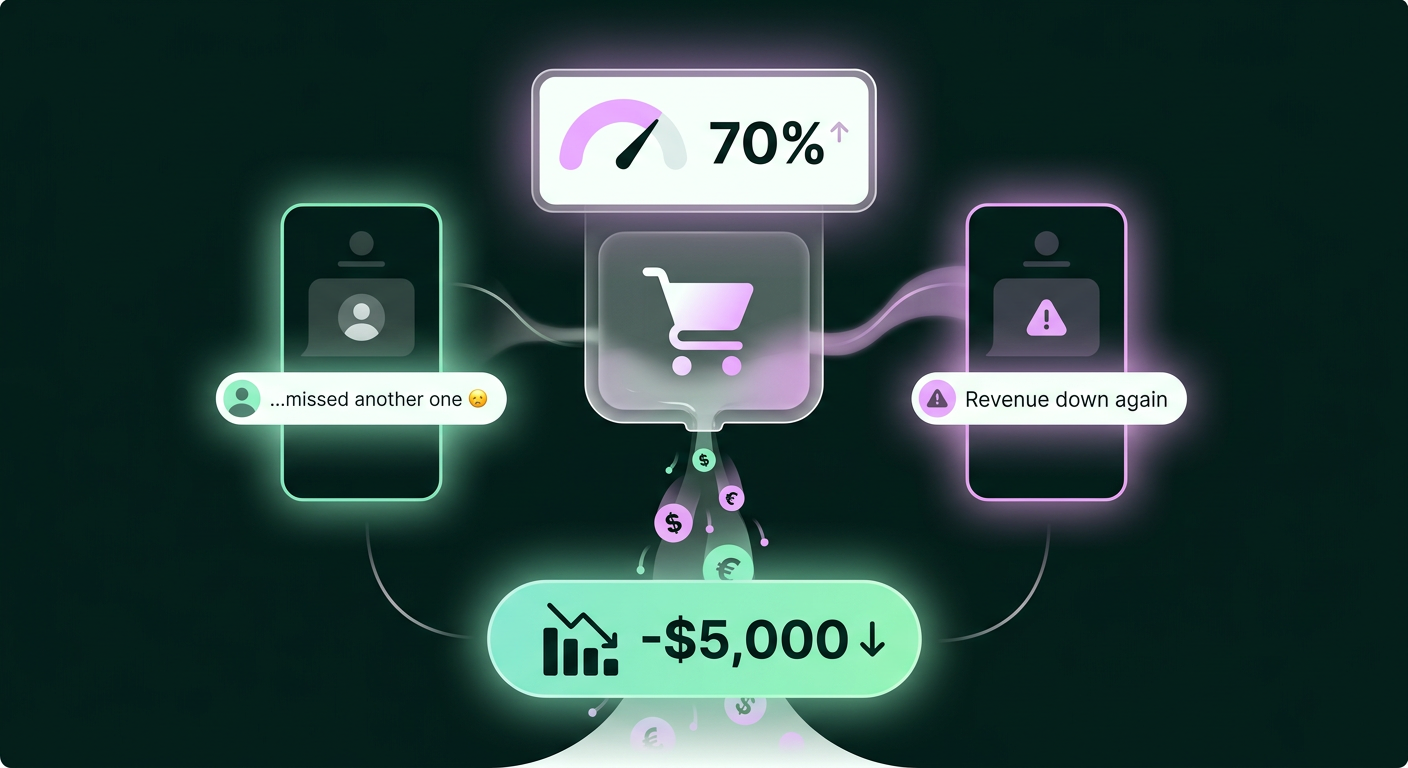
This frustration is backed by hard numbers. The average cart abandonment rate across dozens of studies sits at a staggering 70.22% (opens in a new tab), which means for every ten shoppers who add an item to their cart, seven of them walk away. Worse, the problem isn't getting better. Data shows that as of 2026, the rate of abandoned carts saw a 1.6% increase over the past decade. The standard playbook is becoming less effective, not more. The result is a constant drain on potential sales and a sense that, despite your best efforts, you're leaving a significant amount of money on the table every single day.
That "Normal" Cart Abandonment Rate Is Costing You
The industry-average cart abandonment rate (opens in a new tab) is often accepted as a cost of doing business, but it’s really a symptom of a deeper problem: a disconnect between how brands try to recover sales and where customers actually spend their time. While many factors cause shoppers to leave, the failure to win them back stems from relying on communication channels that people have learned to ignore. Passively accepting a 70% loss at the final stage of the funnel masks a huge opportunity, because it means overlooking the revenue that is closest to conversion, from shoppers who have already signaled clear intent.
The financial cost is immediate, (opens in a new tab) but the secondary costs are just as damaging. You've already paid to acquire that customer through ads, content, or organic search. When they abandon their cart and your recovery efforts fail, that customer acquisition cost is wasted. This locks you into a cycle of constantly needing to spend more at the top of the funnel to replace the revenue you're leaking at the bottom. It creates a fragile business model where growth feels entirely dependent on pouring more money into advertising, rather than efficiently converting the interest you’ve already generated. That’s why learning how to craft AI personalized abandoned cart messages that work is so critical for breaking the cycle.
The Real Reason Your Recovery Emails Are Ignored
Standard abandoned cart recovery messages usually fail because of their channel, not their content. While issues like unexpected shipping costs and mandatory account creation contribute to the initial abandonment, the reason your email and SMS reminders don't bring customers back is that they're delivered into environments that are overwhelmingly saturated with marketing noise. Your well-intentioned reminder becomes just one more notification among hundreds, making it easy to overlook, dismiss, or ignore entirely.
When experts discuss the causes of a high cart abandonment rate, they almost always point to friction in the checkout process. For instance, unexpected extra costs like shipping and taxes cause 48% of shoppers to abandon their carts (opens in a new tab). A complicated checkout is another major deterrent.
A 2024 Baymard study found that the requirement to create an online account, a complicated checkout process, and slow delivery are top reasons customers abandon carts. What do they all have in common? The lack of convenience... Long and complicated checkout processes cause over 22% of shoppers to abandon their purchases.
, Primer.io, 2024
These factors are absolutely real, and you should optimize them by making your checkout smoother and your pricing more transparent. But this only explains why a customer leaves in the first place. It doesn't explain why your follow-up fails to bring them back. The real underlying problem is one of attention. Your abandoned cart email lands in an inbox already overflowing with promotions. Your SMS arrives in a feed that people increasingly reserve for friends and family, which can make marketing texts feel intrusive. Your message, no matter how clever or incentivized, is often dead on arrival because it never gets the shopper's focused attention.
Diagnosis: Is Your Recovery Strategy Actually Backwards?
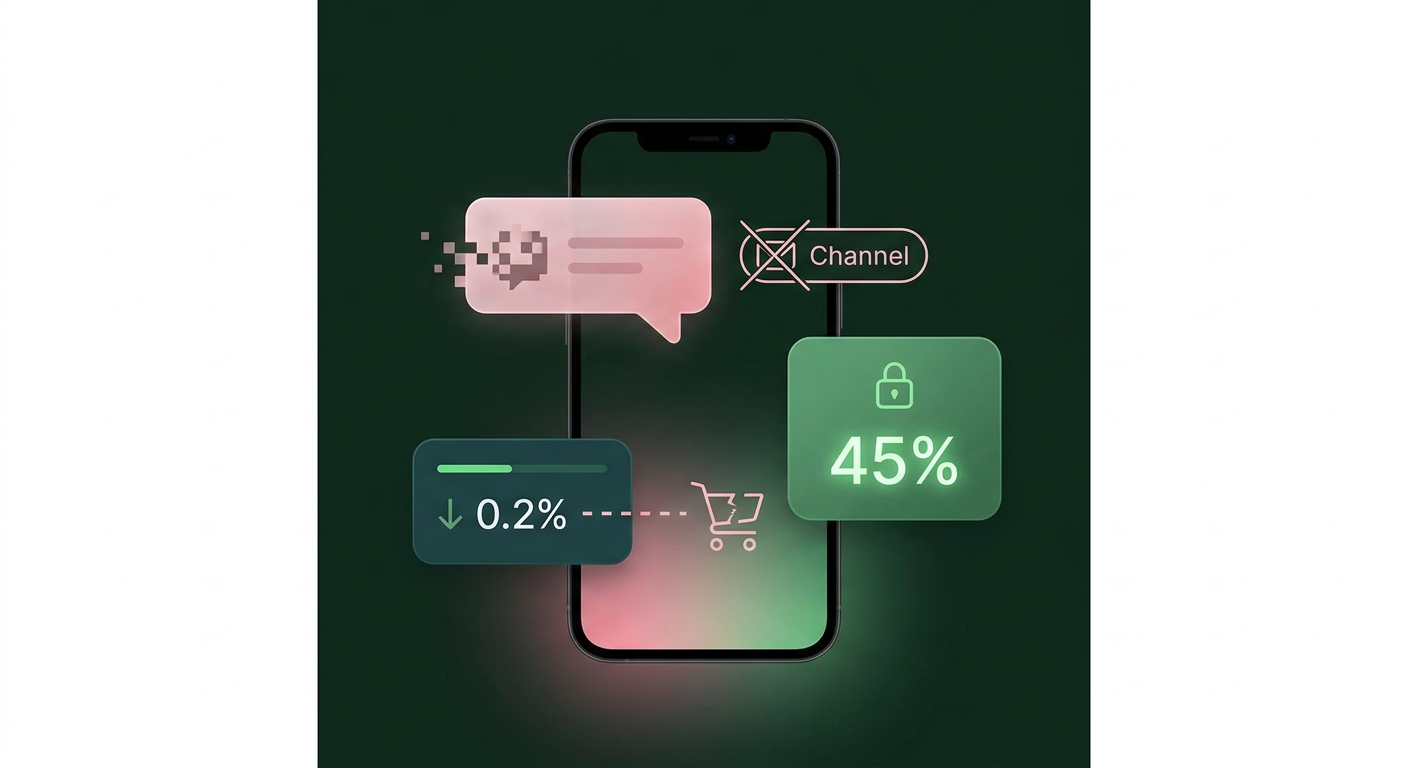
So if your meticulously crafted emails and SMS flows aren't moving the needle on cart abandonment, the problem is almost certainly your channel. You can diagnose this by looking at your current results. Even if your email open rates seem decent, the actual recovery rate is likely underwhelming because you're failing to reach a huge portion of your audience, especially on mobile where shoppers live in DMs, not their inbox.
Here’s a simple diagnostic test. Look at your abandoned cart email flow. Industry data suggests that the average open rate for these emails is 50.5%.5%](https://ringly.io/blog/ecommerce-cart-abandonment-statistics-2026 (opens in a new tab)). On the surface, that might seem positive, since it's much higher than a standard marketing email. But flip that statistic on its head: it means that for every 100 reminders you send, roughly 50 are never even opened. That’s a 50% failure rate right at the starting line, before your copy or your discount even has a chance to work.
Now, consider where your customers are when they abandon their carts: on their phones. Mobile commerce is dominant, yet mobile shopping carts have an abandonment rate of 80.02% (opens in a new tab), far higher than on desktop. When a customer is on their phone, their digital life is centered around messaging apps like Instagram and WhatsApp. Sending an email to a mobile-first shopper is like leaving a note on their front door when you know they spend all their time in the backyard. The message is there, but it’s not where their attention is. If this dynamic sounds familiar, it’s a clear sign that your channel is the issue, confirming one of the main reasons why your email open rates are declining.
The Fix: Reach Shoppers Where They Actually Are
Once you've diagnosed that your recovery attempts are failing on the wrong channel, the solution is to move the conversation to the platforms where your customers spend their time willingly. Instead of sending emails that get lost in a crowded inbox, you can automate personalized, one-to-one DMs on Instagram and WhatsApp to remind shoppers about their carts. This approach shifts the interaction from a generic broadcast to a helpful, personal conversation.
This works by meeting customers in their native environment. When a reminder about a cart arrives as an Instagram DM, it feels fundamentally different from an email. It’s a notification from an app they already have open, and it lands in the same place as messages from friends. This context makes the message feel more personal and urgent, which is why DM-based recovery consistently sees engagement rates that traditional channels can't match. Dynamo helps brands automate these highly personal, context-aware messages at scale, turning a forgotten cart into a completed purchase simply by starting a conversation in the right place.
This isn't about sending spammy or intrusive messages. It's about using automation to deliver a thoughtful, helpful, and timely reminder that feels like it came from a person. A well-crafted DM can reference the exact items in the cart, answer a potential question about shipping, or offer a small incentive to complete the purchase, all within a conversational thread. This creates a customer experience that feels helpful, not demanding, and it recovers sales that would otherwise be lost. By shifting channels, you’re not just changing the delivery mechanism; you’re changing the entire dynamic of the interaction. It's one of the new direct to consumer marketing strategies brands are using to build stronger relationships.
How You’ll Know It’s Working: More Than Just Opens
After shifting your cart recovery to DM-based channels, the first sign of success will be a tangible increase in your cart recovery rate and a corresponding drop in your overall abandonment rate. Beyond the numbers, you'll know it's working when you see genuine two-way engagement from customers and feel like you're building relationships rather than just sending notifications.
The primary metric, of course, is recovered revenue. You will see a direct, measurable lift in the number of carts that are successfully converted into orders after a DM reminder is sent. This is the ultimate validation that you're reaching shoppers more effectively. But the secondary indicators are just as important. You'll see that open rates for your messages on platforms like WhatsApp and Instagram are dramatically higher than email, with DM open rates of 80%+ and WhatsApp open rates of 90-98%. This confirms you’ve solved the attention problem.
More than that, you will start seeing replies. Customers will ask questions, thank you for the reminder, or even complete their purchase and reply to let you know. This is a clear signal that the communication feels like a real conversation, not a one-way marketing message. It transforms the recovery process from an automated function into a customer service and relationship-building opportunity. The feeling of sending messages "into a void" will be replaced by the confidence that you are connecting with customers in a way that helps both your conversion rate and your brand's reputation.
Frequently asked questions
How can I reduce my cart abandonment rate on Shopify?
To reduce your cart abandonment rate on Shopify, first optimize the fundamentals: ensure transparent pricing with no surprise shipping costs, simplify your checkout process to as few steps as possible, and offer guest checkout. Beyond that, the most effective modern tactic is to shift your abandoned cart recovery strategy from email and SMS to direct messaging apps like Instagram DMs and WhatsApp, where you can reach customers with personalized messages in a less saturated environment.
Are abandoned cart emails actually worth the effort anymore?
Abandoned cart emails can still be worth the effort, as they perform better than standard marketing emails. With an average open rate around 50.5%, they are capable of recovering some sales. However, their effectiveness is declining as inboxes become more crowded. They should be seen as one part of a multi-channel strategy, with higher-engagement channels like DMs taking priority to capture the roughly 50% of shoppers who never open the recovery email.
What's the best way to recover abandoned carts now?
The best way to recover abandoned carts today is to meet shoppers on the channels they use most for personal communication. This means implementing an automated DM strategy on platforms like Instagram and WhatsApp. A personalized 1:1 message that references the items in their cart and arrives in their direct messages feels more like a helpful reminder from a person than a marketing email, leading to significantly higher open rates and conversion.
What's the difference between abandoned browse and an abandoned cart recovery?
Abandoned cart recovery targets shoppers who have added at least one item to their shopping cart but left the site before completing the purchase. This signals very high purchase intent. Abandoned browse recovery, on the other hand, targets visitors who viewed specific product pages but left without adding anything to their cart. It addresses a lower-intent but still valuable audience, aiming to nurture their interest and bring them back to the site.
Can I really use Instagram bots to help with e-commerce conversions?
Yes, but it's important to differentiate between a simple "bot" and sophisticated DM automation. A basic tool that sends generic messages will annoy customers. However, an intelligent automation platform can send timely, personalized, and context-aware DMs that feel native to the platform and genuinely helpful. By using this kind of personalized 1:1 messaging for cart recovery, you can have helpful conversations at scale that directly lead to higher e-commerce conversions.
Why does my e-commerce business feel so fragile and unpredictable?
An e-commerce business often feels fragile when it's overly reliant on paid customer acquisition at the top of the funnel while leaking high-intent customers at the bottom. A high, unaddressed cart abandonment rate creates this unpredictability, as you're constantly spending to replace revenue that you almost captured. By implementing a more effective recovery strategy, you convert more of the interest you've already generated, creating a more stable, efficient, and profitable business model that is less dependent on fluctuating ad costs.