
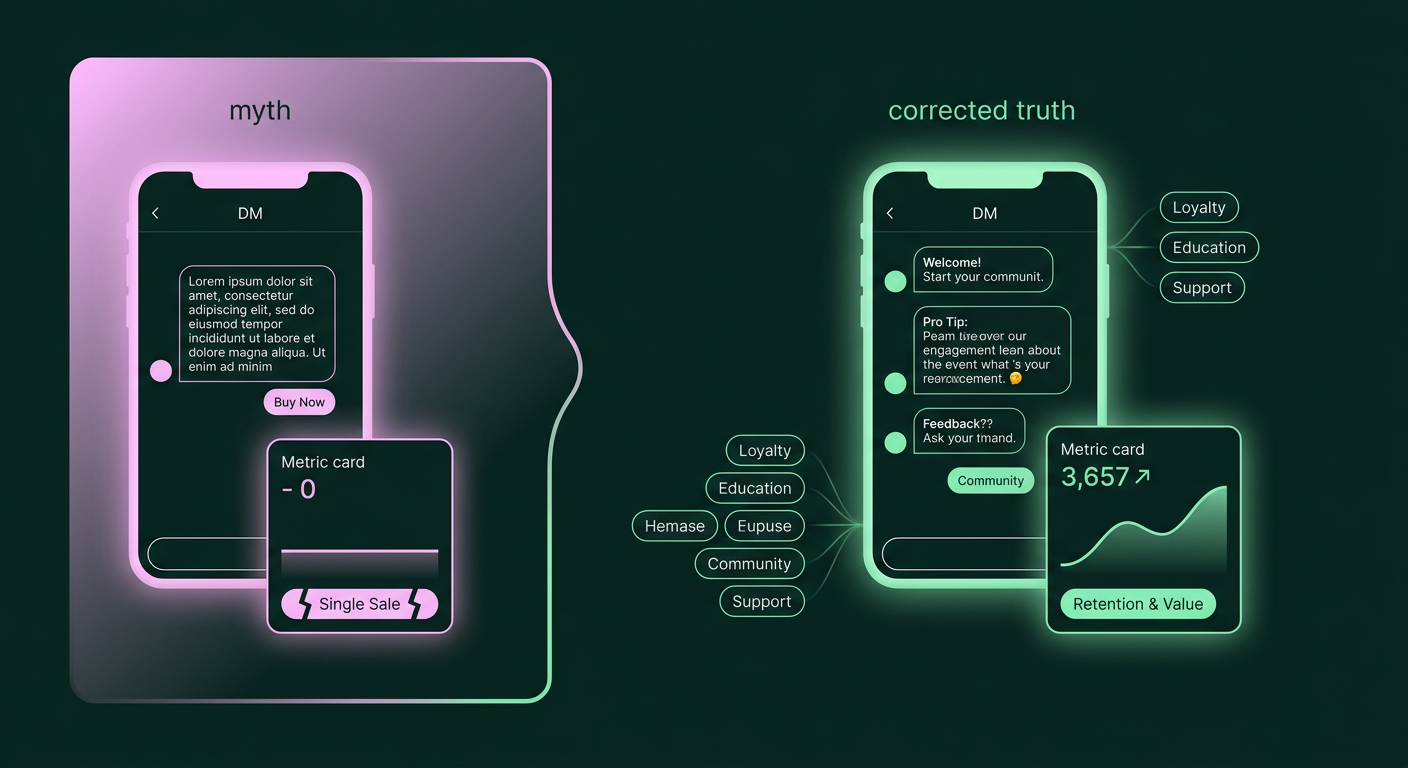
If you think spending more on ads, or just getting better at them, is the clearest path to increase customer lifetime value, you're not alone. It seems logical, since that’s how you acquired most of your customers. But this reflects a fundamental misunderstanding of what CLV actually is. Pouring money into retargeting campaigns isn't retention; it's re-acquisition. You're paying platforms like Meta and Google to talk to customers you already paid to acquire, trapping your brand in a costly, unprofitable cycle that kills your margins and makes real growth impossible.
You think more ad spend will increase customer lifetime value. It won't.
This is a false premise. Continuously spending on ads to bring back existing customers is the definition of re-acquisition, not retention, and it actively destroys your profit margins. Focusing on paid channels to grow CLV is like trying to fill a leaky bucket by just opening the tap wider. You're addressing the symptom, not the root cause, which is the leak itself: the fact that customers aren't coming back on their own. The cost of this approach is staggering, as it can be anywhere from five to 25 times more expensive to acquire a new customer (opens in a new tab) than to keep a current one. The real path to higher CLV lies in plugging that leak by fostering genuine loyalty and encouraging repeat purchases through owned, direct channels where conversation, not cost per click, is the metric that matters. When you shift your focus, the rewards are immense; research shows that even a modest 5% lift in customer retention can increase profits by as much as 25% to 95% (opens in a new tab).
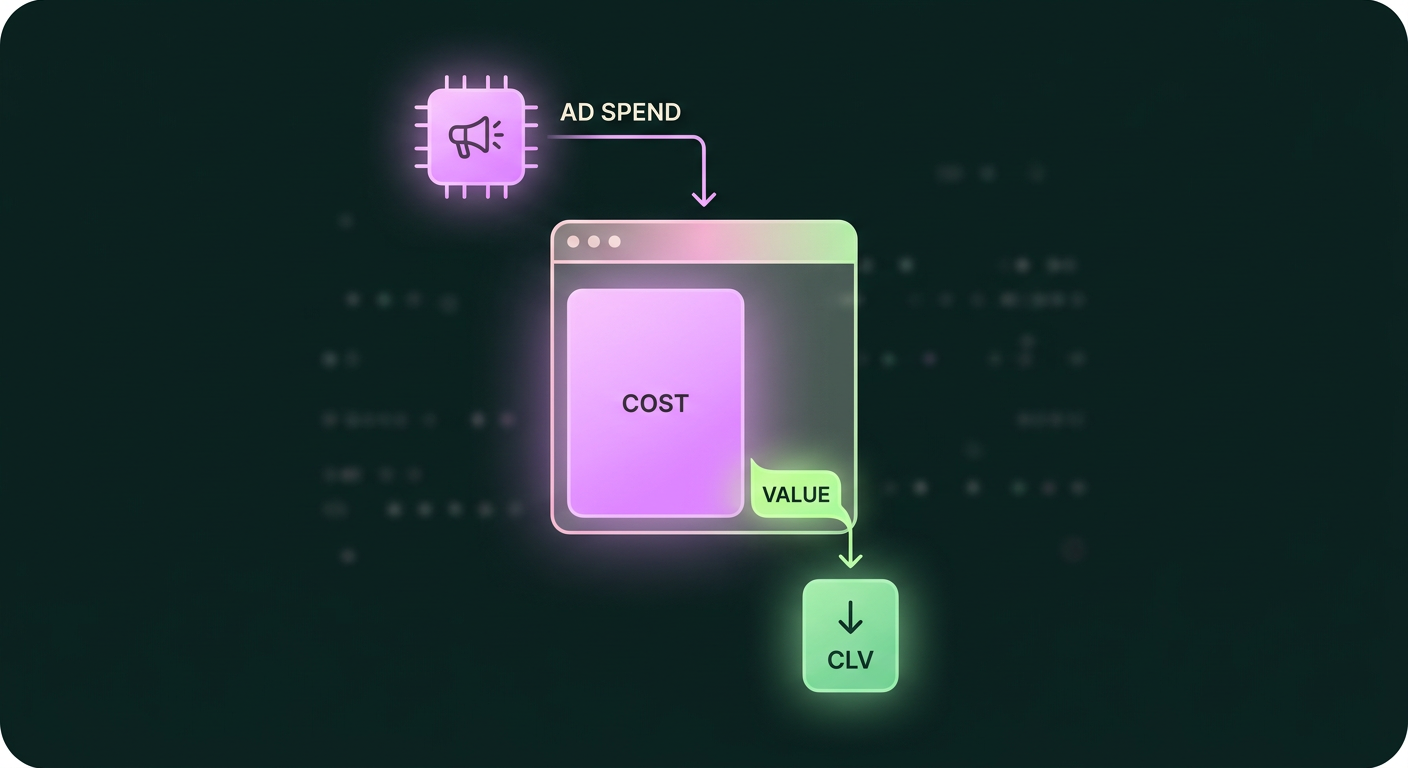
Why every marketer defaults to paid acquisition anyway
Given how powerful retention is, (opens in a new tab) it's worth asking why so many smart marketing teams stay fixated on acquisition. The answer is simple: it’s familiar, it’s measurable, and for a long time, it’s what worked. The entire digital marketing ecosystem, from analytics dashboards to ad platforms, is built around the top of the funnel. It's far easier to quantify the return on ad spend for a specific campaign than it is to measure the nuanced, long-term impact of a positive customer experience.
For most direct-to-consumer brands, paid (opens in a new tab) ads were the growth engine that got them off the ground. Optimizing creative, bidding on keywords, and targeting new audiences are all well-understood skills, so it feels like the most direct and controllable lever for growth. You put money in and see new customers come out. This predictable, if increasingly expensive, loop creates a powerful inertia. The systems, budgets, and even the structure of marketing teams are often designed around this acquisition-first mindset, which can make a pivot toward retention feel like a daunting leap into the unknown.
The hard math of one-time buyers
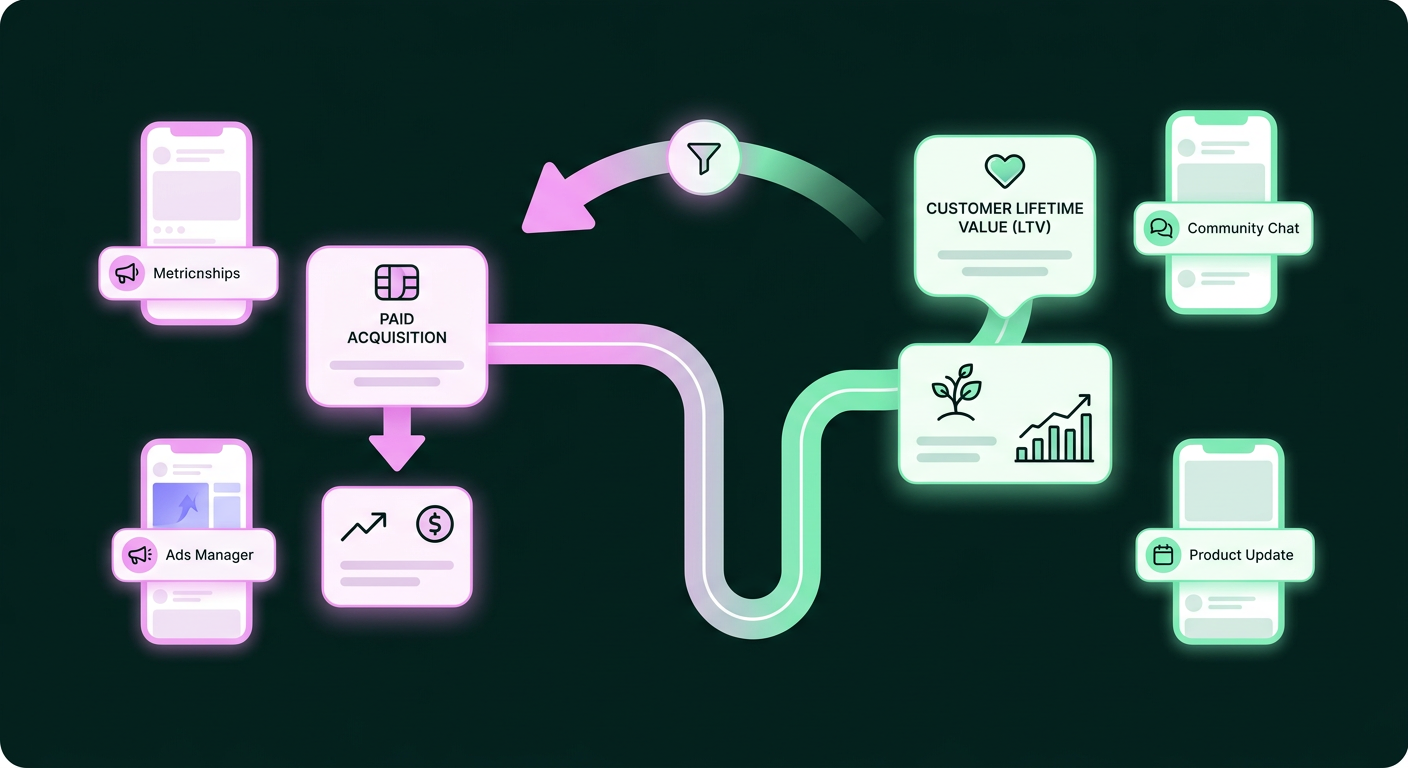
The numbers behind this default acquisition strategy are starting to break down for a lot of brands. The core issue is that for all the money spent bringing a customer in the door, the vast majority never return for a second purchase. The data consistently shows that for most customers, their first purchase is also their last.
This isn't a minor issue; it's a catastrophic one for any model built on repeat business. Industry analysis paints a stark picture of this one-and-done phenomenon.
"97% of first-time buyers never purchase again. That's not a typo, it's a massacre." , MoEngage
When nearly every customer you acquire is a single-transaction event, your business isn't building a customer base; it's just treading water. You're forced to pour more and more money into the top of the funnel just to replace the customers who churn out after their first order. This is what leads to a dangerously low CLV to Customer Acquisition Cost (CAC) ratio. While a healthy ratio is generally considered to be around 3:1 (opens in a new tab), meaning a customer generates three times their acquisition cost in value, a one-time buyer often results in a ratio closer to 1:1, or even less. At that point, you're effectively paying just to break even, with no margin left for profit, operations, or future growth.
The real growth lever is retention, not re-acquisition
This data points to a new model for growth, one that shifts the focus from the crowded, expensive arena of paid re-acquisition toward the intimate, high-leverage world of true retention. The goal is to move from a series of expensive, transactional encounters on public platforms to an ongoing conversation in a private channel you own, which is the core of a new direct-to-consumer marketing strategy that looks beyond ads. Instead of paying Meta for the privilege of retargeting a customer who already bought from you, you should be engaging them directly in channels like Instagram DMs or WhatsApp, where the conversation is personal and the cost is effectively zero.
The cumulative power of retention is where significant lifetime value gets built. It’s not about landing one massive order, but about fostering a relationship that generates a steady stream of smaller, repeat purchases over time. For example, a customer who makes a modest purchase of $50 four times a year for three years generates a total lifetime value of $600 (opens in a new tab). This consistent, predictable revenue is the bedrock of a sustainable business, and it's only achievable through a dedicated retention strategy. Your goal should be to make that second, third, and fourth purchase a natural next step for the customer, not a whole new acquisition campaign for your team.
How to build a system for repeat purchases
In practice, building a retention system means moving beyond sporadic campaigns and creating an automated, intelligent process for communicating with customers at scale. The key is to connect your customer data, which often lives in a CRM like Klaviyo or Braze, with a direct messaging channel like Instagram DMs. This connection allows you to use rich lifecycle data to trigger personalized, one-to-one conversations that feel helpful and relevant, not robotic.
For example, instead of silence followed by a generic retargeting ad a month later, imagine a customer who just made their first purchase receiving an automated, personalized DM from your system a week after delivery. It wouldn't be a hard sell, but a simple check-in: "Hey [Name], just wanted to see how you're liking the [Product]? Any questions I can help with?" This simple, human touch starts building a relationship. From there, you can create automated flows for all kinds of crucial moments: reminding a customer their subscription is about to renew, offering a complementary product, or winning back a customer who hasn't purchased in 90 days with a special offer.
This approach works because it directly improves the customer's experience. Better communication and proactive support drive satisfaction, and even a 1% improvement in customer satisfaction can increase retention by 5%. By implementing these automated yet personal lifecycle messaging flows, you create a system that works to increase your second purchase rate without a marketer needing to be in the loop for every message. You’re turning your CRM from a passive database into an active engine for generating repeat revenue.
Your first retention play (without spending on ads)
To start putting this into practice this week, you can run a small, manual experiment to prove the concept to yourself and your team without needing a sophisticated new software stack.
Here's the play: go into your customer database and export a list of customers who made their first and only purchase between 60 and 90 days ago. This is a critical segment of customers who are at high risk of churning forever. A manageable list of 25 to 50 people is all you need.
Next, find these customers on Instagram and manually send a simple, direct message to 5-10 of them each day for the next five days. Don't use a template or a sales pitch. Just write a genuine, low-key message from the brand's account, like: "Hi [Name], I'm [Your Name] from [Brand]. I saw you picked up our [Product Name] a couple of months ago and wanted to personally check in and see how you're enjoying it. We love hearing what our customers think."
This is a real conversation starter, not a hard sell with a discount code. Observe the responses you get, how many people write back, and the tone of their replies. This simple test will give you a powerful, firsthand taste of how differently customers behave when you engage them personally in a channel they actually use, moving you one step closer to building a true retention engine.
Frequently asked questions
Should my brand focus more on customer acquisition or retention right now?
The right balance depends on your brand's maturity, but the data strongly suggests that most companies should shift more focus toward retention. Acquiring a new customer can cost five to 25 times more than retaining an existing one. Furthermore, improving retention has a much more dramatic impact on profitability. Research from Bain & Company shows that a mere 5% increase in customer retention can boost profits by 25% to 95%. While new customer acquisition is always necessary, a retention-first mindset often yields a much higher return on investment.
Why should I bother calculating customer lifetime value (CLV) in the first place?
Calculating CLV is critical because it shifts your perspective from short-term transactions to long-term profitability and business health. It helps you understand the total net profit a single customer generates over their relationship with your brand. This metric allows you to identify your most valuable customer segments, make smarter decisions about marketing spend, and focus your efforts on activities that foster loyalty. A healthy business typically sees a CLV to Customer Acquisition Cost (CAC) ratio of around 3:1, and you can't know if you're hitting that target without calculating CLV.
How much more does it cost to get a new customer versus keeping an existing one?
The widely cited industry benchmark is that it costs between five and 25 times more to attract a new customer than it does to retain an existing one. This cost difference comes from the expenses associated with acquisition, such as advertising spend, sales outreach, and introductory offers, which are not required for engaging someone who has already purchased from you.
Why are my Meta retargeting ads not increasing my CLV?
Meta retargeting ads often fail to increase true CLV because they represent re-acquisition, not retention. You are paying a platform to regain the attention of a customer you've already acquired, which eats directly into your profit margin for their subsequent purchases. Furthermore, ads are a blunt instrument that lacks the personal touch and contextual relevance that builds genuine loyalty. A customer is more likely to feel marketed at rather than cared for, which does little to foster the kind of relationship that leads to long-term value.
What kind of Instagram DMs actually bring first-time buyers back for a second purchase?
The most effective Instagram DMs are personal, timely, and helpful. Instead of a generic "20% off" sales message, focus on conversational touchpoints. For example, a week after a product is delivered, you could send a DM asking how they're enjoying it and if they have questions. If they bought a specific type of product, you can follow up later with tips on using it or suggest a relevant complementary item. The key is to demonstrate that you remember them and their initial purchase, making the interaction feel less like a sales pitch and more like a helpful conversation.
How is customer lifetime value different for a subscription model?
For subscription-based businesses, CLV is even more critical and is often easier to calculate and predict. Instead of relying on unpredictable repeat purchases, the model is built on recurring revenue. In this context, CLV is primarily a function of two things: the average monthly recurring revenue (MRR) per customer and the customer churn rate. The main lever for increasing CLV in a subscription model isn't just getting another one-off purchase; it's about extending the duration of the subscription by consistently delivering value and minimizing churn. This focus on long-term relationships is becoming the standard across all business models, not just subscriptions. For instance, in 2021, Forrester found typical B2B customer retention rates were around 76-81%, For instance, in 2021, Forrester found typical B2B customer retention rates were around 76-81%, and it's projected that by 2026, 74% of B2C companies will have an annual retention rate of around 74%.