
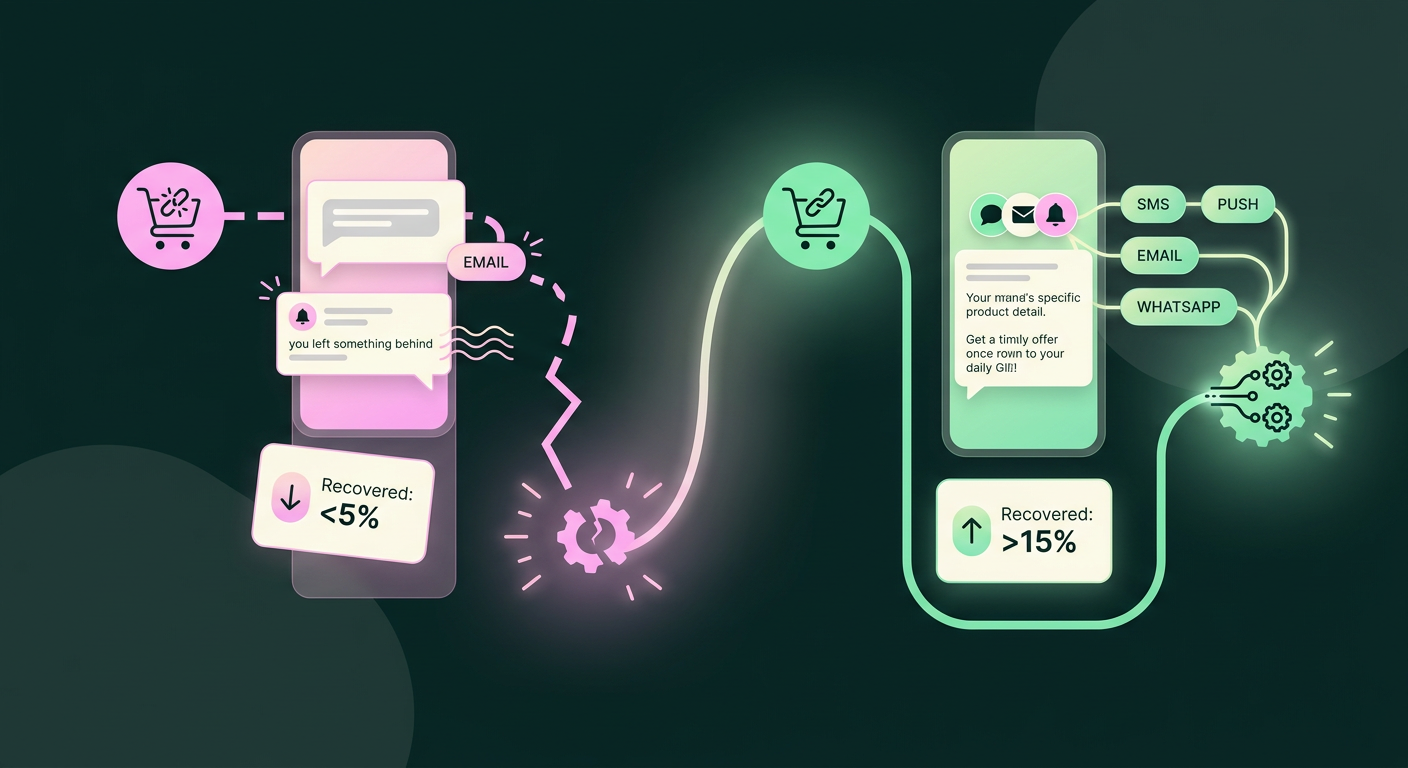
If you're in e-commerce, you're likely running the standard abandoned cart playbook: a multi-step email sequence, careful tracking of your abandonment rate, maybe even A/B testing subject lines. But when you look at the actual revenue you're clawing back, it feels more like a trickle than the flood you were hoping for. The dashboard says the automation is running, but the impact on your bottom line is frustratingly small. This isn't just a minor annoyance; it's a symptom of a much larger, more expensive problem.
The scale of cart abandonment is staggering. For every ten shoppers who add items to their cart, a full seven of them will leave without completing the purchase (opens in a new tab). This isn't just a handful of lost sales, but a massive opportunity cost. Industry-wide, this collective indecision adds up to an estimated $260 billion in recoverable revenue (opens in a new tab) that’s simply left on the table each year. When a problem is that large, a solution that delivers only marginal improvements isn't really a solution. It’s a band-aid on a leaky dam.
Why Your Current Recovery Emails Are Falling Short
When cart recovery campaigns underperform, it's easy to blame tactical elements like weak email copy, an unappealing offer, or poor subject lines. Teams spend cycles tweaking a discount from 10% to 15% or rewriting a header, assuming a small content change will fix a fundamental performance issue. While those elements matter, they're often just surface-level symptoms of a much deeper problem.
Surface Cause: You're in the 'Promotions' Tab
The most common reasons shoppers abandon carts have little to do with your email copy. Research shows the biggest culprit is high extra costs like shipping and taxes, which accounts for 48% of abandoned carts (opens in a new tab). Another significant factor is being forced to create an account, which turns away 26% of potential buyers. A generic marketing email, no matter how clever, can't have a personal conversation about these very specific points of friction.
Even if your message was perfectly tailored, it first has to be seen. The reality of email today is that it's an incredibly crowded and noisy channel. Your well-intentioned recovery email probably lands in a Gmail "Promotions" tab or an Outlook "Other" folder, a digital graveyard where marketing messages go to be ignored or bulk-deleted. You’re competing for attention not just against other brands in your space, but against every brand a person has ever given their email to.
Root Cause: Your Channel Lacks Immediacy and Personalization
The real issue isn't what your email says, but where and when it says it. Email by its nature is an asynchronous, low-urgency channel, which means it lacks the immediacy needed to recapture a user's attention in the critical moments after they've left your site. Their buying intent is highest right after they abandon the cart and decays rapidly with every passing hour.
Contrast that with a channel like SMS or a direct message on a social platform. While your email sits unread, a text or DM has a near-perfect delivery rate. In fact, SMS messages see an open rate of over 98% (opens in a new tab), and most are read within minutes. This is the kind of direct, immediate connection needed to re-engage someone whose attention has already started to drift. The channel itself sends a signal of importance and personal attention that a generic email simply cannot replicate. The failure of your current strategy isn't a content problem; it's a channel problem.
Diagnosing Your Abandonment Problem
Before you can find a fix, you need to honestly assess where your current strategy is falling down. It's likely a combination of issues with personalization, timing, and segmentation. Asking yourself these questions can help pinpoint the weak spots.
Is Your Personalization More Than Just a First Name?
Look at your current recovery emails. If the only personalized element is a Hi {first_name} tag, you aren't really personalizing; you're just using a mail merge. True personalization goes deeper. Does your message acknowledge the specific item they left behind? Does it reference their status as a first-time shopper or a long-time loyal customer?
A generic "You left something in your cart!" message feels automated because it is. It doesn't speak to the user's specific context or intent. A better approach acknowledges their relationship with your brand and the specific product they were considering, making the outreach feel less like an automated campaign and more like a helpful reminder from a person.
Is Your Timing Helping or Hurting?
Purchase intent is a rapidly depreciating asset. The moment a user closes that tab, the clock starts ticking. Many standard email automation flows are set to trigger 12 or even 24 hours after a cart is abandoned, but by that point, the customer's attention has moved on entirely. They may have forgotten what they were shopping for, lost the initial impulse, or even purchased from a competitor.
The data is clear: speed is essential. Studies show that sending a recovery message within the first hour of abandonment can help recover at least 20% of those potential sales. Check the delay on your current automations. If you're waiting a day, you're waiting too long, and your channel and your timing are working against each other to create a gap large enough for even the most interested customer to fall through.
Are You Treating All Abandoned Carts the Same?
Not all abandoned carts are created equal. A first-time visitor abandoning a single, low-cost item is fundamentally different from a VIP customer abandoning a cart full of high-value products. Their motivations are different, their value to your business is different, and your recovery strategy should be, too.
If your current setup sends the exact same three-email sequence to every single person regardless of who they are or what they're buying, you are leaving an immense amount of money on the table. A one-size-fits-all approach is inefficient. It might over-incentivize a user who would have bought anyway with a simple reminder, while failing to give the right nudge to a high-value customer who needs a more personal touch.
The Fix: Use Your CRM to Power a Better Channel
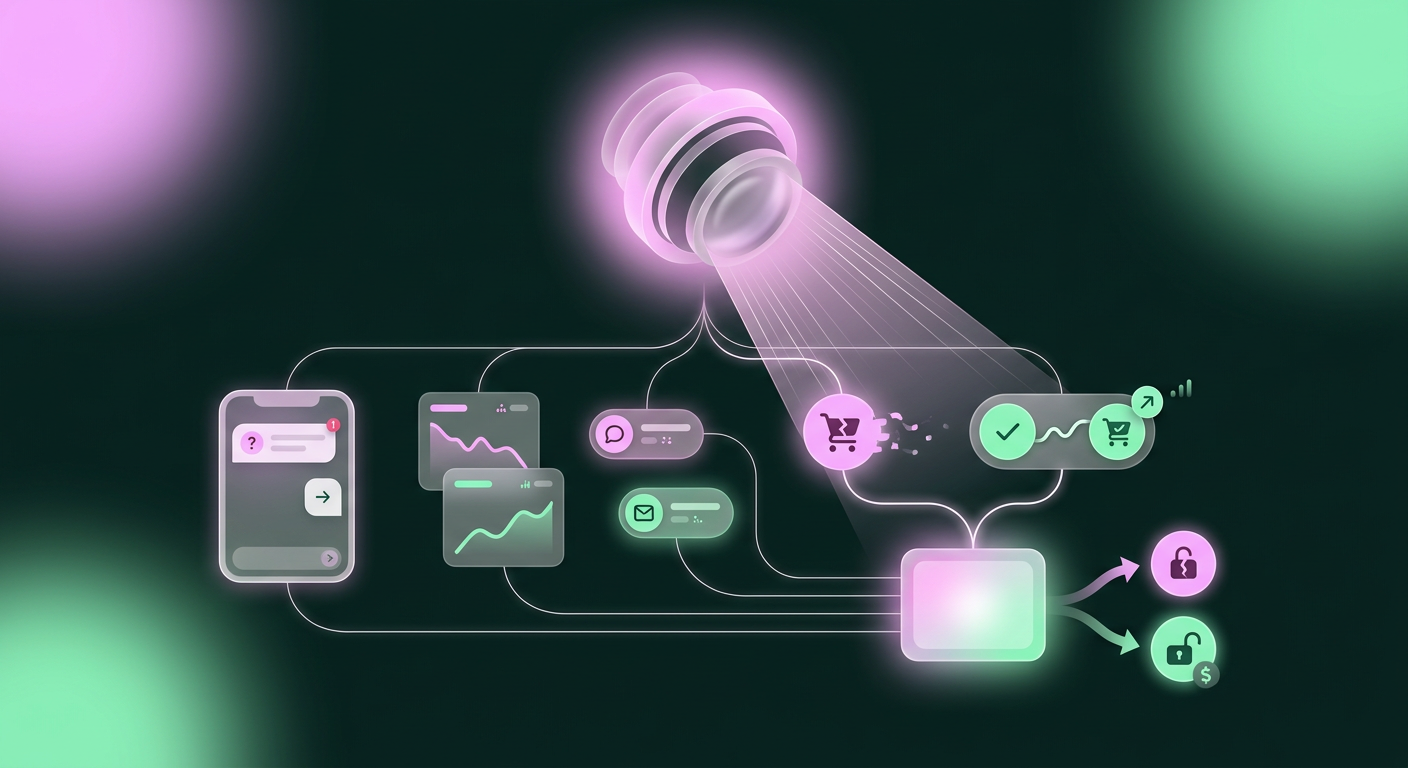
The good news is that you likely already have the data you need to solve this. Your CRM, whether it's a platform like Braze or Klaviyo, is filled with rich customer information and behavioral segments. You know who your VIPs are, who has abandoned a cart in the last hour, and what items they were looking at. The problem isn't the data; it's the channel you're using to act on it.
The solution is to connect that powerful CRM data to a more immediate and personal communication channel. Instead of using your "VIPs with abandoned cart" segment to trigger yet another email that gets lost in a promotions tab, you can use it to automatically send a personalized 1:1 DM on Instagram or a text message via WhatsApp. This is a fundamental shift in thinking about the difference between DMs and email for cart recovery effectiveness.
By moving the conversation to a channel with near-perfect open rates, you meet customers where they already are. The message feels more like a personal note and less like an impersonal marketing campaign. You can automate messages that say, "Hey, saw you were checking out the X. We've only got a few left in your size, did you have any questions before they're gone?" This approach is not only more effective but can also be more profitable. Often, the improved channel and personal touch are enough to drive conversion without even needing to offer a discount. For example, one business was able to achieve a 15% increase in their recovery rate for a specific segment without offering any discount at all, simply by improving its targeting and engagement.
Tools now exist that can plug directly into your existing CRM (opens in a new tab) to handle this entire workflow. They pull from the segments you’ve already built and use AI to generate and send personalized DMs, turning a complex process into a hands-off, automated flow that brings in revenue.
How to Know Your New Recovery Solution Is Working
When you shift from a generic email strategy to a personalized, multi-channel approach powered by your CRM, success is measured by more than just a single recovery rate. You'll know it's working when you see improvement across a broader set of more meaningful metrics.
First, look at segment-specific performance. Are you finally converting that high-value VIP segment that was ignoring your emails? Is your recovery rate for new customers improving? Bringing back a new user is particularly valuable, as a successful recovery can be the start of a long-term customer relationship. In one case, a targeted offer strategy for new customers resulted in a 30% recovery rate for that group, turning a lost sale into a loyal fan.
Second, monitor engagement with the messages themselves. Compare the open and click-through rates of your old emails with the open and reply rates of your new DMs or text messages. The dramatic difference will immediately show you that you're communicating on a channel people actually see. Finally, and perhaps most importantly, track your profitability. An effective strategy doesn't just rely on steeper discounts to buy back customers. As you get better at delivering the right message on the right channel at the right time, you’ll find you can recover more sales while protecting your margins, a clear sign that you’ve moved from simply chasing abandoned carts to building smarter, more personal customer relationships.
Frequently asked questions
How can I use my CRM data for more personal cart recovery messages?
Your CRM is the key to moving beyond generic messages. Instead of just using a first name, leverage your customer segments. You can create distinct automated flows for different groups, such as "VIP customers who abandoned a high-value cart" versus "new visitors who abandoned their first cart." The message for the VIP might be a concierge-style check-in, while the message for the new visitor could offer a simple, helpful reminder or a small welcome incentive.
What's the best way to send a personalized DM for an abandoned cart?
The most effective way is to automate it using your CRM triggers. When a customer in a specific segment (like "abandoned cart < 1 hour ago") is identified, a tool can automatically send a pre-approved but personalized DM on a platform like Instagram or WhatsApp. The message should feel human and helpful, referencing the specific product they were considering and opening the door for questions, rather than just pushing a hard sell.
How long should I wait before sending a cart recovery message?
Timing is critical, and faster is almost always better because purchase intent fades quickly. Data suggests that sending a recovery message within one hour of the customer abandoning their cart gives you the best chance of success, potentially recovering 20% or more of those sales. Waiting 12 or 24 hours, as many email systems do, often means the opportunity is already lost.
Can I really recover carts without offering a discount?
Yes, absolutely. While discounts can be effective, they aren't the only tool. A cart is often abandoned due to distraction or a minor question, not price sensitivity. A timely, personal message on a channel like a DM or SMS can serve as a helpful reminder that brings the customer back to complete their purchase. One case study showed a 15% lift in recovery for a segment that received targeted messages with no discount, proving that a better channel and message can be more powerful than a coupon.
How do I know if personalized recovery is working better than generic messages?
You should track more than just the overall recovery rate. Measure the performance lift within specific customer segments. For instance, compare the recovery rate for new customers or VIPs before and after implementing personalized messaging. You should see a significant improvement in these targeted groups. Also, look at engagement metrics like open rates and reply rates; a higher level of interaction indicates your messages are resonating more effectively. Seeing a higher recovery rate among specific groups, like new customers, is a clear signal of success.