
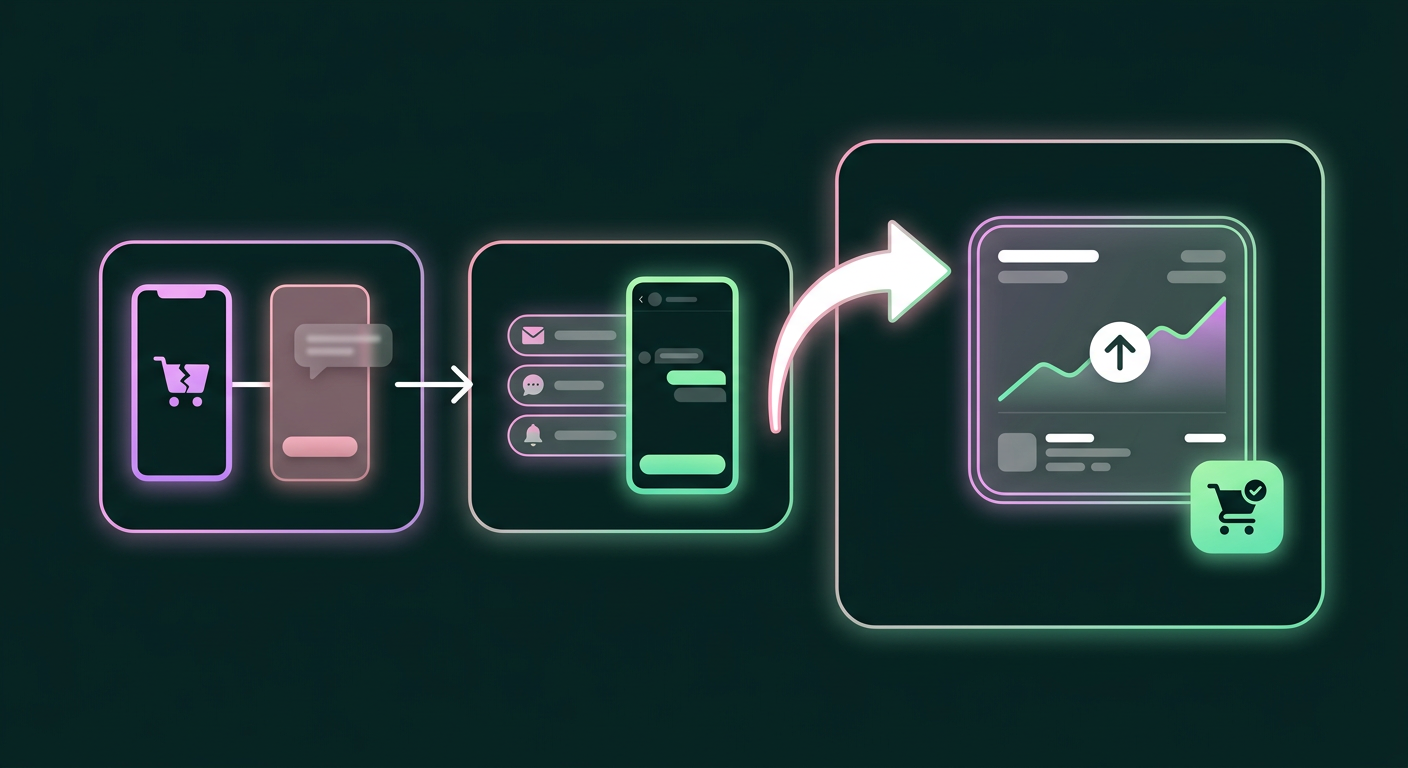
Most Shopify abandoned cart recovery strategies feel underwhelming for one simple reason: they rely on channels like email and SMS that customers are increasingly tuning out. The problem isn't your effort or your offer, but the fact that your messages are getting lost in the noise. To truly fix abandoned cart recovery, you have to stop sending messages into channels where they're ignored and start engaging customers where they actually listen.
Why Your Cart Recovery Emails Aren't Working
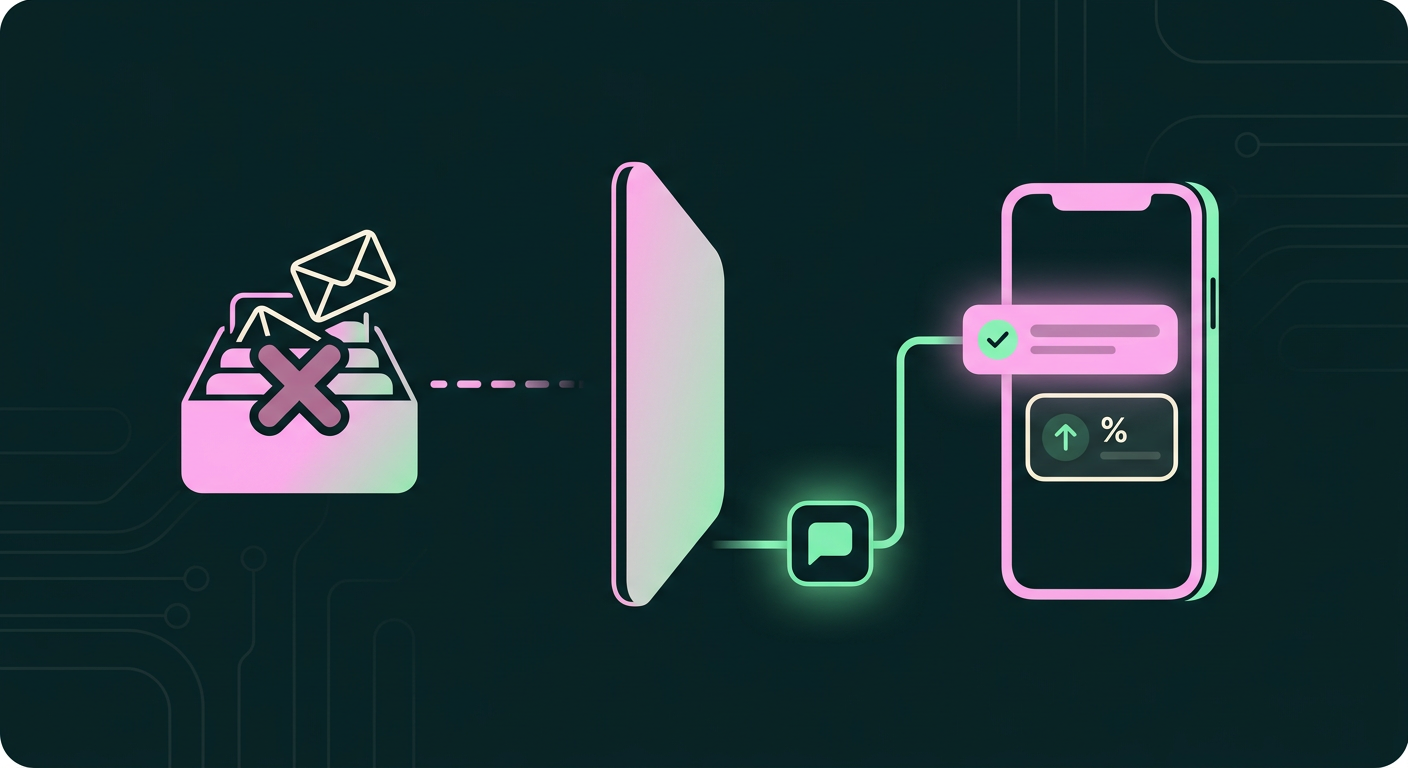
Your current recovery strategy probably relies heavily on email, but the effectiveness of that channel is capped. While abandoned cart emails are the most common recovery tactic, their oversaturation means you are consistently leaving a significant amount of revenue on the table.
For years, the standard playbook has been to set up an automated email sequence. After all, abandoned cart emails remain the most widely used recovery method (opens in a new tab), and doing something is better than doing nothing. The fundamental issue, however, isn't your email copy or your discount; it's the inbox itself. Your carefully crafted message is competing with hundreds of other promotional emails and notifications, making it easy for a high-intent shopper to miss it entirely.
This situation creates a frustrating paradox for e-commerce leaders. You do the hard work of getting traffic to your site and inspiring customers to add products to their carts, only to watch as roughly 7 out of 10 of those online carts are left behind before checkout (opens in a new tab). The email goes out, but you have no real way of knowing if it was even seen. This dependency on a single, noisy channel is a primary reason why e-commerce revenue can feel so fragile and unpredictable.
The Real Cost of Standard Cart Recovery
That feeling of fragility comes from a very real place: the massive, addressable pool of lost revenue that even the best email campaigns fail to capture. The average cart abandonment rate of around 70% isn't just a passive statistic; it's a direct financial hit.
For over a decade, the data on cart abandonment has painted a remarkably consistent picture. As one analysis of multiple studies puts it:
Across ecommerce, cart abandonment has stayed remarkably stable for over a decade: Baymard Institute's aggregation of 50 studies shows an average abandonment rate of about 70%, with recent measurements (2022-2025) clustering in the high-60% to low-70% range.io/blog/ecommerce-cart-abandonment-statistics-2026).
This isn't a temporary trend; it's a fundamental part of online shopper behavior. But framing it as just "the cost of doing business" is a mistake. This 70% represents your warmest audience, shoppers who have already shown clear intent. They found your brand, browsed your products, and liked something enough to add it to their cart. They are on the verge of converting.
When you rely exclusively on email, you're fighting an uphill battle for their attention. A strong, multi-step email series is a valuable tool, but it typically only recovers between 10-15% of your gross revenue (opens in a new tab). That sounds good in isolation, until you consider the 85-90% of abandoned revenue left behind because the messages were never opened or were immediately dismissed as more marketing clutter. The real cost of a standard recovery strategy is the opportunity cost of not connecting with most of your abandoning shoppers.
A New Approach: Recover Carts Where Customers Listen
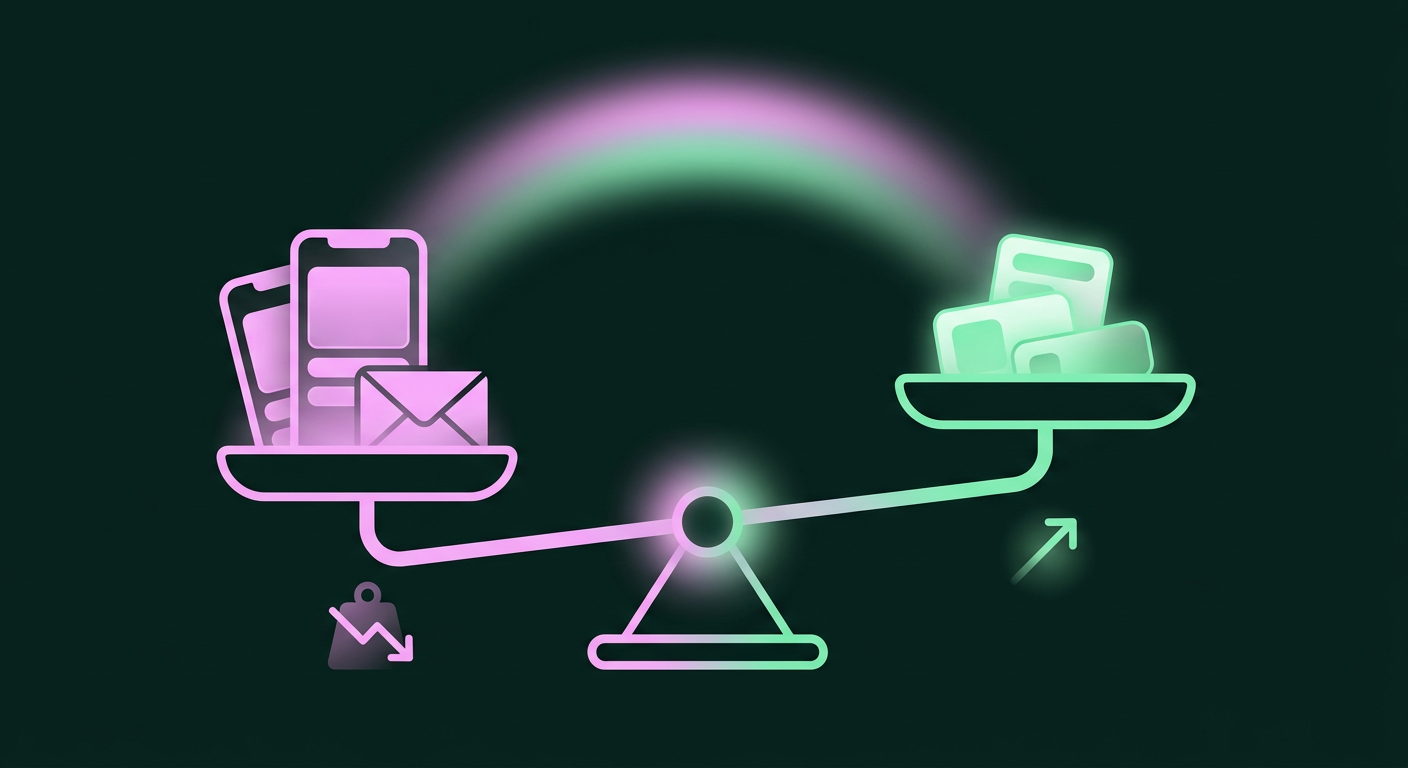
With that much revenue at stake, optimizing email subject lines isn't enough. The most effective approach is to meet your customers where they already spend their time and pay attention: in their direct message inboxes on platforms like Instagram and WhatsApp.
The core principle is simple: go where the open rates are. While a high-performing abandoned cart email might get a respectable 50.5% open rate (opens in a new tab), that still means half of your messages are never seen. By contrast, an automated 1:1 message sent via an Instagram or WhatsApp DM can reach open rates of 80% or more. This isn't about finding a magic bullet; it's about shifting your efforts to a channel where a conversation is more likely to begin. Implementing this strategy involves three phases.
Phase 1: Move Beyond the Inbox
The first step is to integrate a channel built for conversation. DMs feel fundamentally different to a user because they are more personal, immediate, and less associated with mass marketing. A well-timed DM reminder about a forgotten cart doesn't feel like a promotional push; it feels like a helpful, personal nudge. This change in context is what allows your message to break through the noise and get noticed. For a deeper look at this an automated, multi-channel strategy, explore some modern approaches to direct-to-consumer marketing that go beyond just ads (opens in a new tab).
Phase 2: Automate Personalized, 1:1 Messages
Moving to a new channel doesn't mean creating more manual work for your team. The key is to use automation that doesn't feel automated. Platforms like Dynamo allow you to automatically send context-aware, personalized 1:1 messages when a user abandons a cart on your Shopify store. This isn't a generic, robotic response. The system can generate a unique message that references the specific item left behind, offers help, or provides a direct link back to the cart, all within the natural flow of a DM conversation. Your team isn't manually typing messages; they are overseeing an automated system that nurtures high-intent shoppers back to checkout.
Phase 3: Track Your New Recovery Rate
Finally, you need to measure what matters. Your old benchmarks might have been email open rates and click-throughs, but with a DM-based approach, you can track metrics that are much closer to the money: DM engagement, click-to-cart rate from the DM, and most importantly, the total revenue recovered through this new channel. By comparing the performance of your DM automation against your existing email flows, you get a clear, data-backed picture of the ROI. This allows you to see precisely how many sales were saved because you reached a customer in a channel they actually use.
Common Pitfalls in DM-Based Recovery
Before you start sending DMs to recover carts, it's important to understand what can go wrong. The main risks are sounding like a generic, spammy bot, which erodes trust, or failing to automate the conversational flow, which creates an unsustainable workload.
Successfully using DMs for cart recovery requires a different mindset than running an email campaign. This is a conversational medium, and respecting that is the key to getting it right.
Mistake 1: Sounding Like a Generic Bot
The biggest mistake you can make is treating a DM like an email. A message that reads, "DEAR CUSTOMER, YOU LEFT ITEMS IN YOUR CART. CLICK HERE TO COMPLETE YOUR PURCHASE WITH 10% OFF!" is a surefire way to get ignored or blocked. The power of a DM is its personal nature, so your automated messages should feel human. Use a friendly, helpful tone. Ask a question, like, "Hey [Name], saw you were checking out the [Product Name]. Just wanted to see if you had any questions about it before it's gone!" This opens a door for a real conversation and feels like customer service, not a hard sell. The goal is to be a helpful concierge, not an aggressive salesperson.
Mistake 2: Not Automating the Conversation
The second pitfall is trying to manage this process manually. While the messages need to feel personal, it's not scalable to have your team personally track every abandoned cart and send a manual DM. That approach will collapse under the volume. The solution is to use a platform that connects directly to your Shopify store and handles the entire workflow, from triggering the message to personalizing its content. The right automation handles the repetitive tasks, freeing up your team to jump into a conversation only when a customer replies with a question that requires a human touch. This blend of automated outreach and human-assisted conversation is what makes the model so powerful and sustainable.
What 'Done' Looks like: A Modern Recovery Engine
Once you've implemented an automated DM workflow, you'll have a truly modern recovery engine. A completed system doesn't just rely on one channel; it uses intelligent, automated, and personalized 1:1 messages on high-engagement platforms like Instagram and WhatsApp to capture the revenue your email funnels were missing.
The result is a system that works in the background to turn abandoned carts into completed sales. Instead of accepting a 70% abandonment rate as an unavoidable cost, you now have a powerful tool to re-engage a huge segment of those high-intent shoppers. You're no longer just recovering the 10-15% of revenue that a great email campaign might capture; you're going after the rest. This creates a more resilient and predictable revenue stream because you are actively converting shoppers who were previously slipping through the cracks.
Ultimately, a successful Shopify abandoned cart recovery strategy is about more than just clawing back one-off sales. Each recovered cart via DM is also the start of a direct, conversational relationship with a customer on a channel they prefer. It's an opportunity to build loyalty and open the door for future engagement, from new product announcements to customer service inquiries. You're not just closing a sale; you're owning the customer relationship in a way an email inbox can't match. Seeing how this works across the full customer journey shows the real potential of these conversational use cases (opens in a new tab).
Frequently asked questions
Should I still use abandoned cart emails at all?
Yes, absolutely. Abandoned cart emails are still a valuable part of a comprehensive recovery strategy. In fact, among all email marketing tactics, campaigns focused on abandoned carts tend to have the best performance. The key is not to rely on them exclusively. Think of it as a multi-channel approach: email will recover a certain percentage of your shoppers, while DM automation is designed to capture a different segment that is less responsive to email but highly active on social platforms. They work best together.
What's the best way to get started with Shopify abandoned cart recovery?
The most logical starting point is to implement the most common method first to establish a baseline. Begin by setting up a basic automated email sequence through Shopify or your email service provider, as email remains the most widely used recovery tactic. Monitor its performance for a few weeks to understand your current recovery rate, open rate, and click-through rate. This data will clearly show you how much revenue is still being left behind, making a strong case for adding a higher-engagement channel like automated DMs to capture the rest.
How can I reduce my overall cart abandonment rate, not just recover carts?
While recovery tactics are crucial, reducing the initial abandonment rate involves optimizing the shopping experience itself. The primary reasons shoppers abandon carts often have nothing to do with the product; they relate to friction in the checkout process. Consistently high abandonment rates, which have hovered around 70% for over a decade, are often caused by unexpected shipping costs, a long or complicated checkout form, or forcing users to create an account before they can purchase. Simplifying your checkout and being transparent about all costs upfront can significantly lower your initial abandonment rate.
What's the difference between abandoned browse and abandoned cart recovery?
The difference lies in the level of user intent. Abandoned browse recovery targets users who viewed a product page but left your site without adding anything to their cart. Abandoned cart recovery targets users who took the extra step of adding one or more items to their cart but left before completing the purchase. Because of this, abandoned cart recovery is typically more effective and easier to personalize, as you know exactly which products the shopper was interested in.
Can I really use Instagram bots to help increase sales?
Yes, but it's crucial to distinguish between a generic automated response and intelligent automation. Unsolicited, spammy messages are ineffective and can harm your brand's reputation. However, using automation to send personalized, 1:1 DMs in response to a specific user action, like abandoning a cart, is a highly effective sales strategy. When a message is timely, helpful, and conversational, it doesn't feel robotic; it feels like excellent customer service that guides a user toward a purchase they were already considering.
Why does my e-commerce revenue feel so fragile?
That feeling of fragility often comes from seeing a large gap between interest and conversion. When industry data shows that about 7 out of every 10 online shopping carts are abandoned, it means the majority of your potential revenue is in a constant state of uncertainty. Your final sales numbers depend on the small fraction of shoppers who complete their purchase without any friction. By implementing a more robust, multi-channel abandoned cart recovery process, you make your revenue streams more stable and predictable by actively converting a larger percentage of that high-intent audience.