
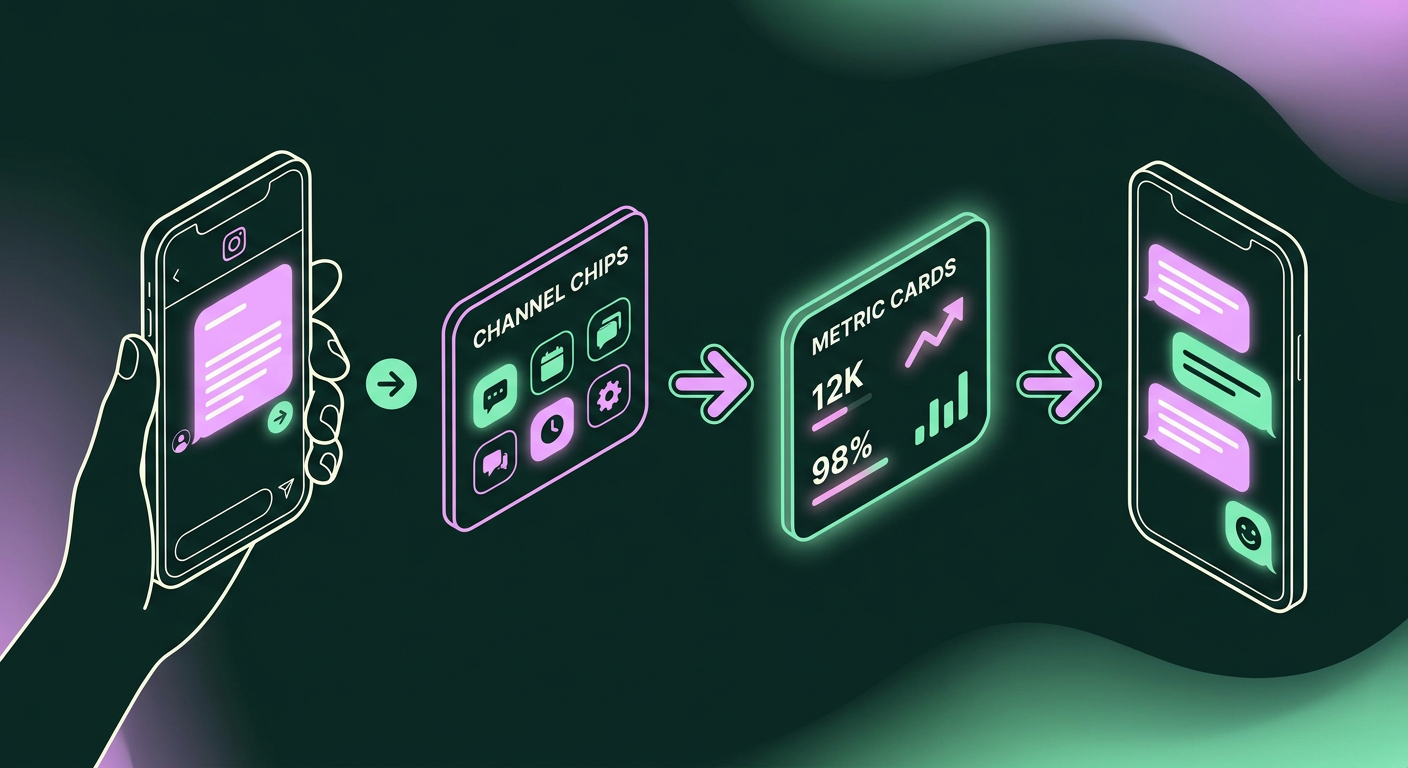
Your brand’s Instagram DMs are a goldmine for sales, but you're hitting a wall. The very conversations that drive revenue are the same ones burying your team in manual replies. You know you need to automate, but the basic keyword bots you’ve seen feel like they’d alienate the exact customers you’re trying to connect with. There is, however, a way to use automation to capture every lead and scale your sales process. It just requires moving beyond simple auto-replies and embracing conversational AI that supports the full customer journey.
Your Best Sales Channel Is Your Biggest Bottleneck
If your Instagram DMs are your best source of engagement and sales, you’re not alone. For many growing brands, the inbox has become their de facto storefront, a place where customers ask questions, get advice, and make buying decisions. This is where your marketing pays off, turning followers into high-intent prospects. The problem is that this success creates its own operational ceiling. Each manual response can take up to a minute to craft (opens in a new tab) as you find a link, personalize the text, and hit send, and that’s just for a simple query. When you’re handling dozens or hundreds of these a day, something has to give.
The result is that your (opens in a new tab) most effective sales channel becomes your single biggest bottleneck. Response delays creep in, and by the time you reply hours later, that initial spark of interest has gone cold. For many businesses, a staggering 60% to 80% of all pre-sale questions (opens in a new tab) now arrive through messages, covering everything from pricing to customization. Manually managing this volume isn't just inefficient; it's a direct cap on your growth. Your team gets bogged down in repetitive work, pulling their focus from strategy, while the mental exhaustion of answering the same questions over and over sets in. You know automation is the answer, but the fear that a robotic system will destroy the personal touch that makes DMs so effective is very real.
Why Scaling DM Conversations Is Non-Negotiable
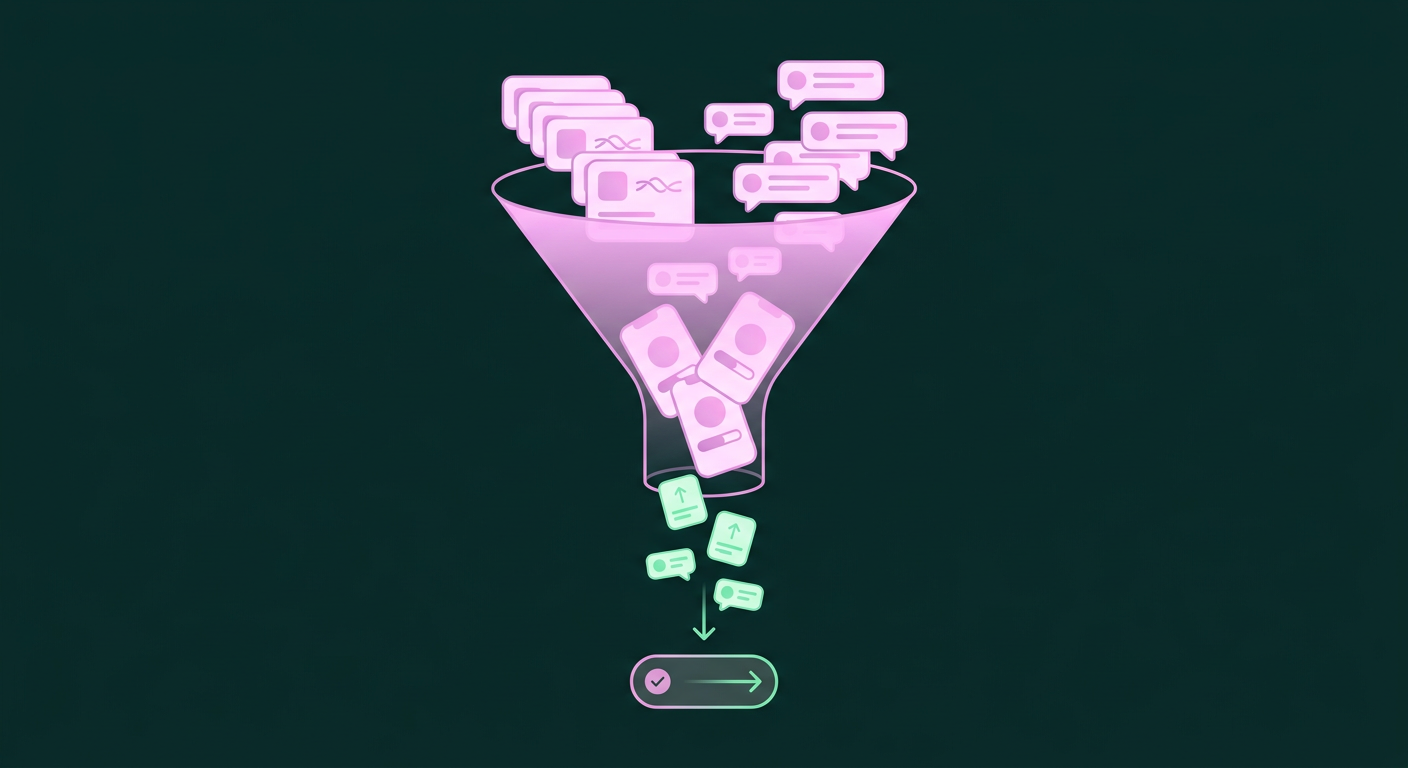
That bottleneck isn't just an (opens in a new tab) operational headache; it's a significant and quantifiable source of lost revenue. Instagram has evolved far beyond a simple image-sharing app. With over 375 million people using the DM feature every month (opens in a new tab), it’s become a primary first touchpoint for customers and a legitimate sales channel in its own right. When a customer slides into your DMs, they are signaling a level of interest that most other channels can only dream of.
The numbers don't lie. Instagram DMs boast an almost unbelievable 90% open rate, while a typical marketing email might only see 20-25% (opens in a new tab). People are simply more likely to read a direct message than an email, which is why DM campaigns for things like cart recovery so often outperform traditional methods. This heightened attention translates directly to sales, with targeted DM campaigns achieving conversion rates between 18-20%, dwarfing the 2-4% seen from generic website popups.
This opportunity comes with a critical requirement, though: speed. A customer reaching out in a DM expects a near-instant response, and data shows that 90% of leads go cold if you don't respond within five minutes. Every hour you delay is another potential sale walking out the door. The cost of inaction is too high, and the potential reward for getting it right is too significant to ignore.
The Path to Automation: From Keywords to Conversations
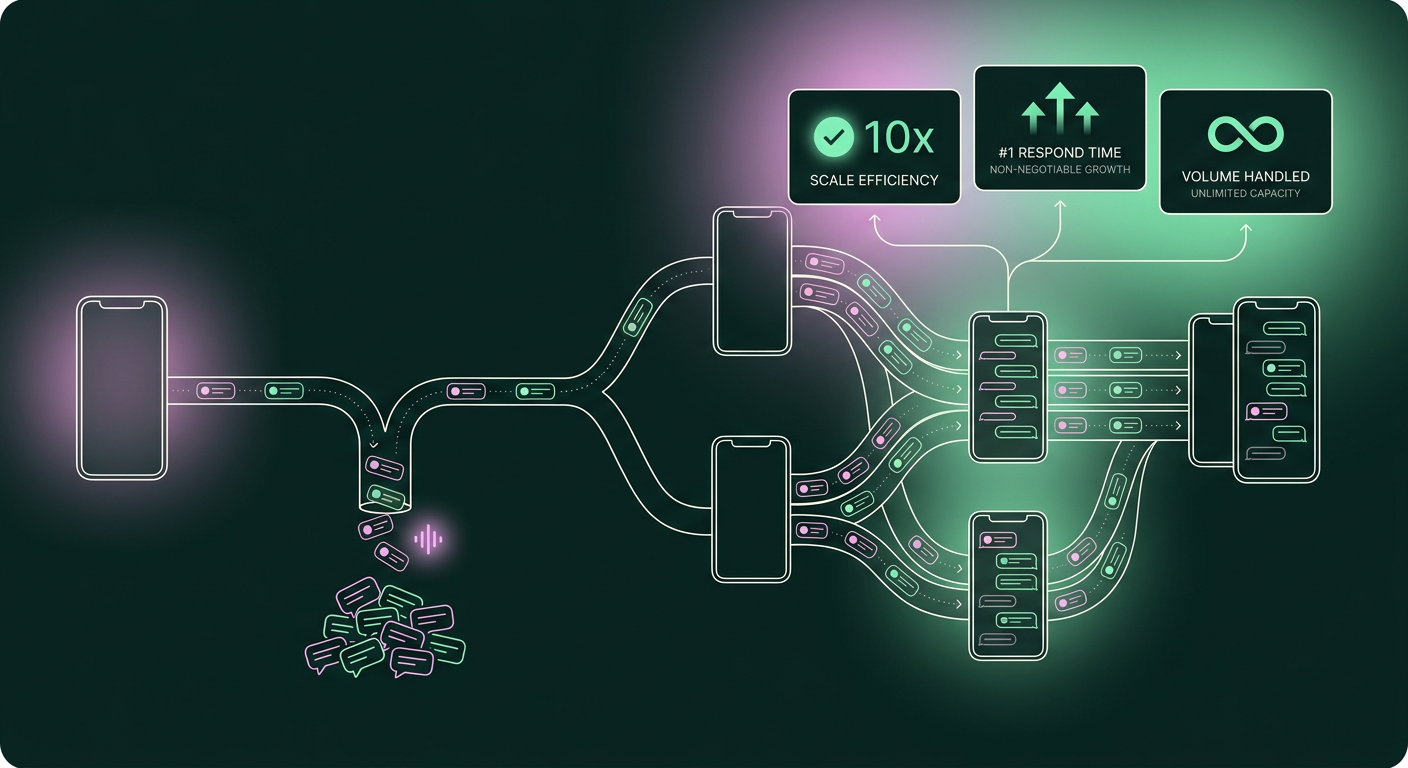
So if inaction isn't an option, how do you implement automation that helps sales instead of hurting them? The path to effective DM automation has two distinct phases, moving from simple, reactive triggers to proactive, intelligent conversations. It's the difference between just sending automated messages and truly managing an automated sales funnel.
Phase 1: Automating the First Touch (and Its Limits)
The most common entry point into DM automation is setting up simple, keyword-based responses. This is the functionality offered by many basic tools: someone messages "PRICE," and an automated reply sends back your pricing info. This approach is certainly better than nothing. It lets you handle the most repetitive questions, respond instantly at any hour, and manage a higher volume of inbound DMs than you could manually, potentially scaling from 200 manual DMs a day to 500 automated ones.
These systems can process inbound messages and respond accordingly, acting as a first line of defense for your support team. This, however, is also where their utility ends. Keyword-based systems are brittle, failing the moment a user asks a question in a slightly different way or combines multiple queries into one message. They can't handle conversational nuance, ask clarifying questions, or guide a user toward a purchase. They are designed to answer one question and stop, which is fundamentally at odds with how a real sales conversation happens.
Phase 2: Scaling Full-Funnel Conversations with AI
To truly scale sales, you need to move beyond single-touch automation to a system that can manage a full-funnel conversation. This is where modern AI comes in, enabling longer, more meaningful exchanges that guide a customer from initial inquiry to final conversion. The data confirms that real conversion happens in the follow-up. In fact, a staggering 53% of Instagram DM conversations die before the third message, which proves that most potential customers need more than just a quick link to be convinced.
A deeper conversation is directly tied to a higher likelihood of conversion. While only 0.4% of leads qualify after just a few messages, that number jumps to 52.1% for conversations that extend beyond 21 messages. At that point, 29% of those leads book a call or complete a purchase.io/blog/instagram-dm-automation). This is the power of conversational AI. It can ask follow-up questions, understand a user's underlying needs, handle objections, and even proactively re-engage someone who has gone silent. For example, an advanced system can automatically send a single follow-up message that can nearly triple the lead qualification rate, ensuring every lead is nurtured to its full potential with personalized 1:1 messages across the entire customer lifecycle.
Common Pitfalls: Why Generic DM Bots Fail
This brings us back to the fear that holds many brands back: the risk of sounding robotic and driving customers away. The concern is valid, because poorly implemented automation can do more harm than good. The reason generic DM bots fail is that they aren't designed for genuine conversation; they're designed for deflection. They operate on simple logic that breaks the moment a customer's query deviates from a predefined script.
Their biggest failure point is the inability to sustain a dialogue. As we've seen, most sales don't happen in the first two messages, so a basic bot that just drops a link and goes silent is abandoning the conversation at its most critical moment. This is why 53% of DM conversations end prematurely, the "automation" killed the momentum instead of building it. A real sales conversation requires back-and-forth, empathy, and the ability to adapt. When a customer feels like they're talking to a wall, they disengage.
Ultimately, the difference between well-configured and poorly-configured automation is massive. It's not just about having the tool, but how you use it. Data shows that the top 10% of businesses using DM automation achieve a lead qualification rate of 31.78%, whereas the bottom 25% qualify at 0.67%.io/blog/instagram-dm-automation). This gap isn't because of the platform itself; it's because of the strategy. The top performers are building systems that engage in helpful, multi-step conversations, while the rest are using glorified auto-responders that feel impersonal and unhelpful.
What "Done" Looks Like: A Fully Autonomous Sales Channel
By avoiding these common mistakes, you can transform your Instagram DMs from a manual bottleneck into a fully autonomous, high-performing sales channel. When properly implemented, AI-driven automation doesn't just answer questions; it actively works to grow your business 24/7 by ensuring no lead is ever missed. Instead of waiting hours for a reply, every inbound inquiry receives an immediate, intelligent, and personalized response.
This is what "done" looks like. Response times drop from hours to seconds, leading to an average engagement increase of 30-50%. Your team is no longer bogged down answering the same questions, freeing them to focus on high-level strategy and building the customer relationships that automation can't handle. The system scales conversations from a handful a day to 500, nurturing each prospect through a complete conversational funnel.
The impact on the bottom line is direct and measurable. For example, one retailer has seen their sales increase by as much as 30% within just three months of deploying conversational AI in their DMs.ai/en/blog/instagram-dm-automation-ai-agent) of deploying conversational AI in their DMs. This is the result of capturing high-intent prospects at their peak interest, guiding them with contextual and helpful replies, and ultimately driving a conversion. Your Instagram becomes more than just a marketing outpost; it becomes a powerful, self-sufficient engine for revenue growth.
Frequently asked questions
Why do my Instagram DMs convert so well but are so hard to manage?
Instagram DMs convert exceptionally well because they have an incredibly high open rate of around 90%, far surpassing traditional channels like email, so your message is almost guaranteed to be seen. They are difficult to manage because of the sheer volume and the expectation of an immediate response. For many businesses, 60-80% of pre-sale inquiries now come through DMs, creating an overwhelming amount of manual work that quickly becomes a bottleneck.
How can I automate my Instagram DMs without sounding like a robot?
The key is to move beyond simple keyword triggers and use AI that facilitates genuine, multi-step conversations. A successful sale on Instagram often requires a real dialogue; data shows over 52% of leads qualify after a conversation of 21 or more messages. Good automation should be able to ask clarifying questions, understand nuance, and continue the conversation naturally. Since 53% of conversations die after just a couple of messages, the goal should be to use AI to sustain and deepen the interaction, not just initiate it.
What kind of sales results can I really expect from automating DMs?
Automating your DMs can lead to significant improvements in both engagement and sales. By responding instantly, you capture leads when their intent is highest, which is critical because delaying a response by just five minutes can cause 90% of leads to go cold. Targeted DM campaigns have been shown to achieve conversion rates of 18-20%, dramatically higher than the 2-4% typical of website popups. One retailer has even reported a 30% increase in sales in the first three months after implementing AI in their DMs.
Will automation help if my current DMs aren't converting?
Yes, especially if your lack of conversions is due to slow response times or conversations fizzling out. Sending just a single, timely follow-up message can nearly triple lead qualification rates (+182%). If your team is too busy to follow up consistently, you're leaving money on the table right now. Well-configured automation ensures every lead gets that crucial follow-up and can guide a conversation toward a sale. The difference is stark: the top 10% of businesses using DM automation qualify over 31% of leads, while the bottom 25% qualify less than 1%, proving that a strategic approach makes all the difference.
How much faster are automated responses compared to a manual approach?
Automated responses reduce reply times from hours to seconds. A manual response can take 45-60 seconds per message to find information, copy, paste, and personalize, and that doesn't account for delays when your team is busy or away. This delay is costly, as engagement drops off significantly after just a few hours. AI-powered automation works 24/7 to provide instant replies, which is why businesses that adopt it see an average engagement increase of 30-50%.
Is Instagram DM automation only for big brands with huge followings?
Not at all. Automation is particularly powerful for smaller, growing businesses, consultants, and agencies because it allows a small team to perform at the level of a much larger one. For instance, automation can help a business scale from managing 5 conversations a day to 500 without hiring more staff. It frees up founders and small teams from spending hours on repetitive DM responses, allowing them to focus on core business growth while the automation handles lead capture and nurturing around the clock.