
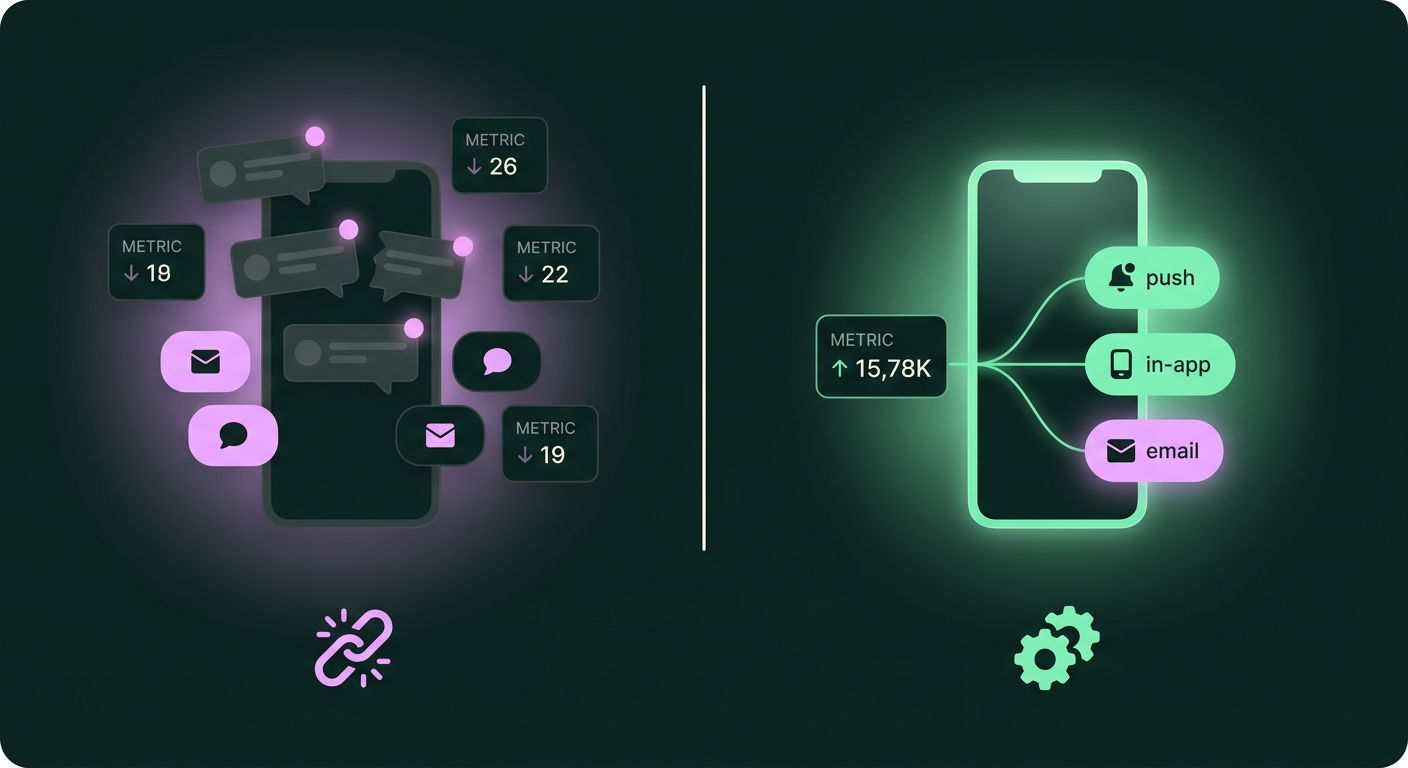
As a lifecycle leader at a mobile game studio, your job is to keep players engaged and grow their lifetime value, but choosing the right software for this is a high-stakes decision. If you opt for a platform that can’t move beyond generic messaging, you’ll keep struggling with churn, burning your budget on push notifications that get ignored, and leaving revenue on the table. The wrong choice isn't just a software problem; it's a strategic dead end that fails to connect with your players in a way that actually works.
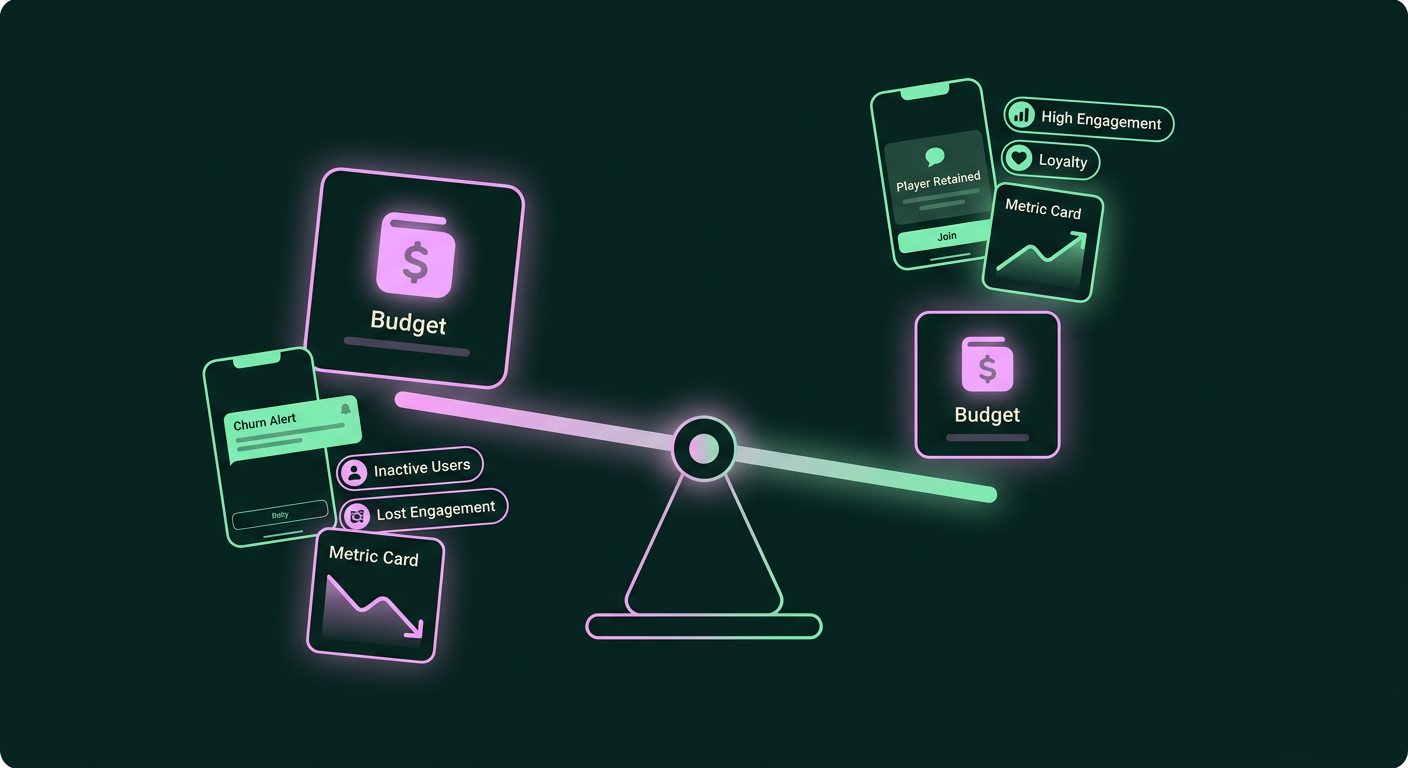
The Wrong Choice Costs More Than Just Budget
Choosing player retention software is a strategic decision that directly impacts player experience, team efficiency, and lifetime value. An inadequate tool will only flag churn after it's too late, while the right one can proactively build relationships that keep players in the game. The pressure to manage live-ops and boost retention is immense, especially as the industry consolidates around this model. That's because the competition for player attention has never been fiercer. In fact, as of November 2023, a staggering 91% of the top 500 mobile games were already using a LiveOps model to monetize and engage their audience.
The core issue with most retention strategies is that they rely on disconnected systems. When your player data, churn signals, and live-ops context are siloed, delivering truly individualized and timely messages is impossible. The result is a dependency on generic push notification bulk sends and broad-stroke email campaigns that don’t resonate. Players grow numb to the noise, and your messages get swiped away without a second thought. This approach doesn't build loyalty; it just adds to the digital clutter.
Many studios mistakenly believe that software can create a reason for players to return to a game, but the reality is more nuanced. The software doesn't invent the reason a player comes back; it simply alerts you when your game's own reason to keep them engaged has failed.
"Player retention software does not create a reason to come back. It tells you when the reason failed." , Guarding Pear Software (opens in a new tab)
This distinction is crucial. (opens in a new tab) When your retention tool is little more than a glorified alert system, you're always one step behind, reacting to churn instead of preventing it. The right software, however, should empower you to use those signals to intervene before a player leaves, using personalized, 1:1 communication that feels like a conversation, not a marketing campaign. Investing in a platform that can't bridge the gap between player data and personalized outreach means you're just paying for a dashboard that documents your failures instead of a system that actively improves your results.
Decision Criteria for Player Retention Tools
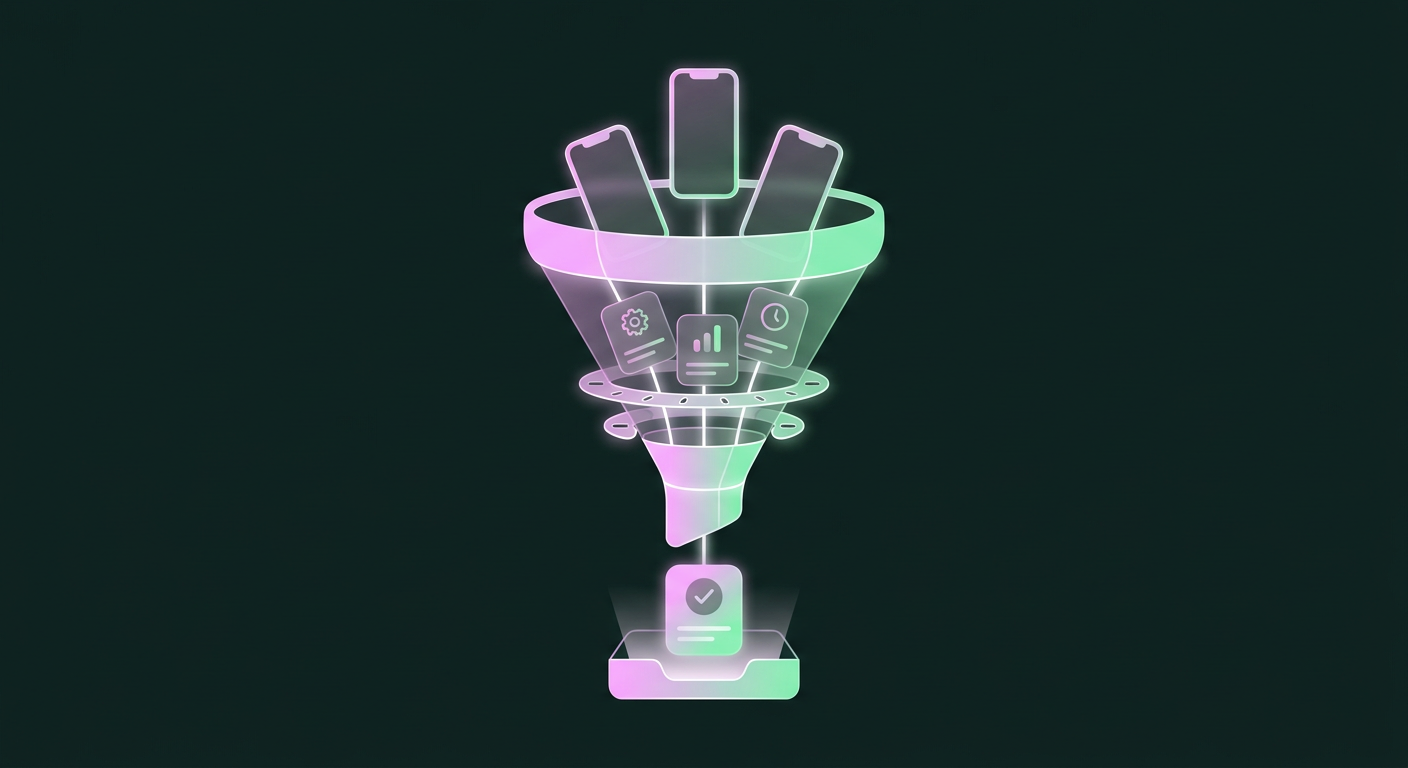
**To choose the right tool, (opens in a new tab) you need to evaluate platforms based on their ability to integrate data, personalize messaging at scale, reach players on the right channels, and measure true impact. These practical capabilities are far more important than a simple list of vendor-supplied features.** Now that the stakes are clear, it's time to move past marketing hype and focus on what actually drives player retention. Don't get distracted by dashboards and feature lists; instead, use these four core criteria to guide your evaluation.
-
Data Intelligence and Personalization: How deeply can the platform understand and act on individual player data? A basic tool might let you segment users by "last seen" or total spend. A truly intelligent platform, however, connects to your raw player event data, level completions, in-app purchases, social interactions, and tutorial drop-offs, then uses it to generate unique messages for each player. The goal isn't just to group similar players together; it's to treat each player as an individual with a unique journey and motivate them accordingly.
-
Effective Channel Reach: Where do your players actually spend their time and pay attention? While push notifications and email have their place, their effectiveness is waning. An ideal platform meets players on the channels where they have active conversations, like Instagram DMs, Facebook Messenger, and WhatsApp. The ability to initiate 1:1 DMs based on in-game behavior is a world away from sending a generic push notification. Evaluate whether a tool is limited to old-school channels or if it opens up these more direct, conversational, and high-engagement surfaces.
-
Speed and Ease of Experimentation: Can your team quickly launch, test, and iterate on new retention campaigns without a heavy engineering lift? The best retention strategies are built on continuous learning. You need a platform that empowers your lifecycle marketers to spin up experiments on their own, testing different offers, messaging, and timing for various player segments. If every new campaign idea requires a multi-week development cycle to pull data and configure logic, your ability to adapt and improve will be severely limited.
-
Measurable ROI and LTV Impact: How does the platform connect its activities to the metrics that matter, like re-engagement, conversion, and lifetime value? It's not enough for a tool to report on its own vanity metrics, like message sends or open rates. You need clear attribution that shows how a specific messaging sequence influenced a player to return, make a purchase, or complete a key action. Look for a platform that provides a clear through-line from the messages it sends to your revenue and retention goals. If you can't tie the tool's cost to a tangible lift in LTV, it's just another expense.
Comparing Your Options: Automation vs. Intelligence
With those criteria in mind, you'll find that player retention software generally falls into two camps: traditional automation platforms that execute pre-defined rules, and modern intelligent systems that use data to generate personalized outreach. The key difference is the shift from manual, rigid workflows to dynamic, individualized conversations that drive real engagement. This distinction is critical because, as experts note, successful mobile game marketing in 2025 will require a sophisticated blend of creativity, data intelligence, and community engagement (opens in a new tab). Simply automating bulk sends is no longer enough to compete.
Traditional automation platforms are the workhorses of digital marketing. They excel at sending messages across a variety of channels, including Instagram DMs, Facebook Messenger, WhatsApp, TikTok, and SMS. Their strength lies in executing straightforward, rules-based campaigns. For example, if a player hasn't logged in for seven days, you can configure a rule to send them a pre-written push notification. While reliable for these simple triggers, they fall short when it comes to true personalization because the logic is rigid and the messaging is static. Every "personalized" journey has to be manually built and maintained by your team, which creates a huge operational burden and fails to adapt to the nuanced, unpredictable behavior of individual players.
Intelligent platforms like Dynamo represent the next evolution. Instead of relying on you to build every possible journey, Dynamo connects directly to your player data sources to understand behavior on a 1:1 level. It then uses this intelligence to generate and deliver the right message to the right player at the right time. This isn't about sending the same "We miss you!" message to every lapsed player; it's about sending a specific player an offer for an item you know they were close to earning, or a tip for a level they were stuck on. This level of personalization is what turns a generic notification into a compelling reason to return. The results are clear: while email struggles, the open rates for Direct Messages can exceed 80% (and 90-98% for WhatsApp), with conversions that are three to five times higher than what you get from push notifications.
Here’s a breakdown of how the two approaches stack up against our decision criteria:
| Criterion | Traditional Automation Platforms | Dynamo |
|---|---|---|
| Data & Personalization | Segment-based, manual rules | Individualized, data-driven |
| Channel Reach | Broad, but often impersonal | Conversational DM channels |
| Ease of Experimentation | Heavy setup, slow to iterate | Fast, marketer-led testing |
| Measurement & ROI | Focus on channel metrics (opens) | Tied to player LTV & revenue |
The table highlights a fundamental trade-off. Traditional tools offer broad automation capabilities but place the burden of intelligence and personalization squarely on your team. Dynamo, on the other hand, is built with intelligence at its core, enabling you to scale 1:1 conversations that would be impossible to manage manually. This allows you to move from simply managing churn to actively building the player relationships that drive long-term value.
Which Tool Is Right for Your Retention Strategy?
Based on that comparison, the right tool depends on your team's goals and sophistication. If you only need to send simple, scheduled reminders, a traditional automation platform might suffice. But if your goal is to proactively prevent churn and increase LTV with individualized messaging, an intelligent system like Dynamo is the clear choice. Making the right decision requires an honest assessment of where your retention strategy is today and where you need it to be tomorrow.
Choose a traditional automation platform if: Your primary need is to schedule and send simple, one-size-fits-all messages. If your strategy revolves around broad announcements, weekly reminders, or basic win-back campaigns triggered by a "last seen" date, these tools can get the job done. They are effective when personalization isn't a primary concern and your team has the resources to manually build and manage every messaging flow. This approach works for studios that are just beginning to explore lifecycle marketing and aren't yet ready to integrate deep player data into their outreach.
Choose an intelligent platform like Dynamo if: Your goal is to make retention a core driver of revenue and player LTV. If you believe that personalized, 1:1 communication is the key to re-engaging players and preventing churn, then you need a system built on data intelligence. Dynamo is designed for lifecycle teams who want to move beyond generic bulk sends and use specific player behaviors to trigger relevant, timely, and conversational DMs. This is the right path if you want to run sophisticated campaigns, like targeted re-engagement for high-value players who are showing signs of lapsing, or personalized onboarding flows that guide new users past common drop-off points. This approach is also more capital-efficient; warm retargeting campaigns using this method can be 50% cheaper compared to traditional user acquisition channels. To learn more about this modern approach, you can explore strategies for re-engaging inactive users in your community app.
Ultimately, the choice comes down to whether you want a tool that simply executes commands or one that provides intelligence. For serious mobile game studios focused on maximizing the value of their player base, the ability to turn data into personalized conversations is no longer a luxury, it's a necessity.
Next Step: Connect Your Data to Your Players
Now that you know what to look for, the next step is to see how an intelligent platform can transform your player retention strategy. The most direct path to fixing the disconnect between your data and your messaging is to see it in action. The theory is clear: real retention comes from personalized, 1:1 conversations triggered by actual player behavior, not from sending generic messages into the void. But it's the implementation that matters.
Instead of trying to force-fit your complex player journeys into the rigid, rules-based logic of a traditional automation tool, you can connect your data to a system designed from the ground up to understand and act on it. Dynamo was built to solve this exact problem for mobile game studios and other top mobile brands. With a track record of facilitating billions of Direct Messages for nearly 100 brands, our platform provides the intelligence layer that turns your player data into effective, revenue-driving conversations.
It's time to stop documenting churn and start preventing it. The best way to understand the impact is to see how your own player data can be used to generate the kind of outreach that brings players back. See for yourself how you can translate player signals into personalized DMs that players actually welcome.
Frequently asked questions
How can I test different messages and timings for a player win-back campaign?
A successful win-back campaign depends on experimentation. You should systematically test variables to see what resonates with lapsed players. For instance, you can A/B test the timing of your outreach to find the sweet spot, determining if players are more likely to re-engage with an offer sent after three months of inactivity versus six. Similarly, you should experiment with the message content by testing different incentives, tones, and calls to action to see what most effectively brings players back. Testing both timing and frequency is a best practice for optimizing these campaigns.
What are the key metrics I need to build useful player segments for retention?
To build effective player segments, you need to go beyond basic metrics like "last login" and focus on a combination of behavioral and value-based data. Key metrics include session frequency and duration, progression velocity (how fast players move through levels), social engagement within the game, and purchase history (both frequency and value). Combining these allows you to create nuanced segments like "high-value players with decreasing session times" or "new players stuck on level 5," which enables you to tailor your outreach far more effectively.
How do I turn our player data into messaging experiments we can actually run?
First, connect your player data source (like a data warehouse or analytics tool) to an intelligent messaging platform. Once connected, you can define specific player behaviors as triggers. For example, you could create a trigger for any player who completes 10 levels but doesn't make a purchase. From there, you can design an experiment: send 50% of those players a DM with a special starter-pack offer and the other 50% a message with tips for the next level. By measuring which group has a higher re-engagement and conversion rate, you turn raw data into an actionable insight.
How can I automate churn prevention without just sending generic reminder notifications?
True churn prevention is about proactive, personalized intervention, not reactive reminders. This means using player behavior data to identify at-risk players before they lapse. Instead of sending a generic "We miss you!" message after 7 days of inactivity, you can set up automations triggered by early warning signs, like a sudden drop in session length or repeated losses on a specific level. The automated message should then be contextual, offering help or a relevant bonus that directly addresses the likely point of friction, which is far more effective than a simple reminder.
What's the best way to re-engage players without just using more push notifications?
To cut through the noise, you need to reach players on channels where they have personal conversations. Direct Messages on platforms like Instagram, Facebook Messenger, and WhatsApp are incredibly effective for re-engagement because they feel more personal and have significantly higher visibility than easily ignored push notifications or emails. With open rates often exceeding 80% and conversion rates three to five times higher than push notifications, DMs are a powerful channel for delivering a personalized win-back offer that feels like it's coming from a person, not a bot.
How can I use player behavior signals to step in before someone churns?
You can identify leading indicators of churn by tracking granular in-game events. For example, a player who previously logged in daily but has only logged in once in the past week is a clear churn risk. Other signals include stalling progress on a level for an extended period, a decrease in social interactions, or a drop-off in in-app purchases for a previously active spender. By setting up automated triggers based on these behavioral changes, you can send a targeted, helpful message, like a tip for the level they're stuck on or a special bonus, to intervene and restore their engagement before they leave for good.